
Managing Your Period on a Manta Ray Night Snorkel
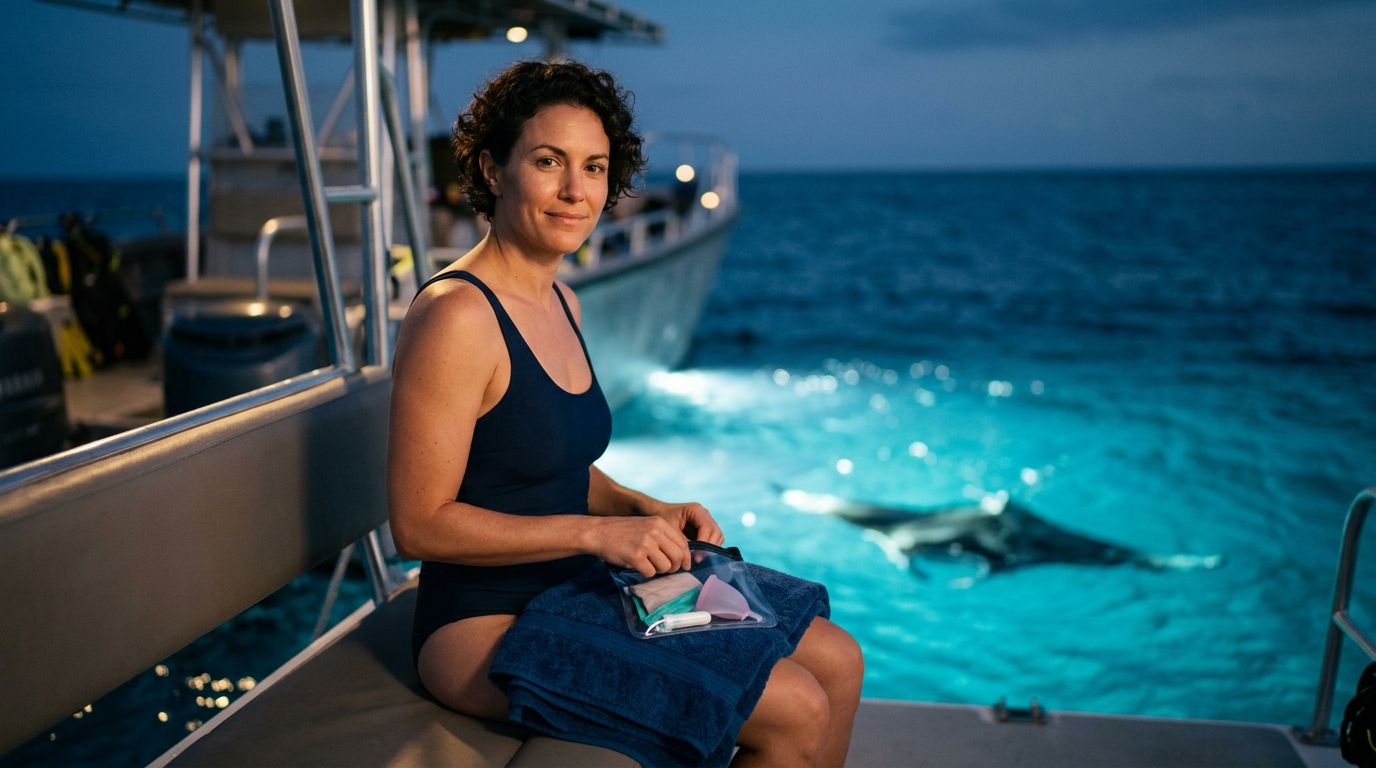
Your period doesn’t have to keep you from enjoying a manta ray night snorkel in Kona. With the right product, a small hygiene kit, and a clear plan for changing before and after the tour, you can focus on the glowing water instead of worrying about leaks.
Night snorkeling adds a few practical concerns. You may spend time in a swimsuit, board a boat without a private bathroom, and enter the ocean after sunset. The good news is that menstruation itself doesn’t prevent you from swimming, and you can prepare for the experience without packing your entire bathroom.
Key Takeaways
- Swimming during your period is generally safe when you feel well enough for the activity.
- Tampons, menstrual cups, and menstrual discs work better in the water than pads.
- Pack backup products, a dark swimsuit, sealable bags, and any medication you normally use.
- Tell your guide about cramps, dizziness, or other health concerns before entering the water.
- Kona’s manta ray tours use lights and experienced guides, so follow the crew’s instructions throughout the night.
Can You Go on a Manta Ray Night Snorkel While Menstruating?
Yes, you can go on a manta ray night snorkel while having your period. Menstruation doesn’t make you unable to swim, and the water pressure may temporarily reduce visible flow while you’re in the ocean. You still need a reliable product because your period continues during the rest of the trip, including boarding, traveling, and changing afterward.
Your comfort matters more than your calendar. If you have mild cramps and feel rested, snorkeling may be manageable. If you have severe pain, heavy bleeding, nausea, faintness, or unusual fatigue, speak with a healthcare professional before participating in a physically active ocean excursion.
Swimming can also feel more comfortable than sitting on a warm boat deck with a pad. However, you should plan for the full tour rather than only the time spent in the water. A typical evening includes getting ready on land, traveling by boat, entering the ocean, returning to the vessel, and riding back to shore.
That sequence makes product choice important. Pads absorb water quickly and can become bulky, loose, or uncomfortable beneath a wetsuit. A tampon, menstrual cup, or menstrual disc is usually more practical for snorkeling because each stays inside your body and doesn’t absorb seawater.
You don’t need to explain your period to everyone on the boat. Still, you should tell a guide if you feel unwell, need help finding a restroom, or want to skip the water portion. Professional crews handle personal needs every day and can help you make a safe choice without drawing attention.
Choosing the Right Period Product for Night Snorkeling
The best product depends on what you already know works for your body. A night tour is a poor time to test a new cup, disc, or absorbency level for the first time.
Tampons
Tampons are familiar to many swimmers and offer a straightforward option for a short snorkeling trip. Choose the absorbency that matches your flow, then insert a fresh tampon shortly before entering the water.
A tampon may absorb a small amount of water, so replace it after swimming rather than leaving it in for longer than recommended. Always follow the product instructions and don’t use a higher absorbency than you need.
Bring at least two spare tampons in a waterproof pouch. One backup covers an unexpected change, while another helps if your boat ride runs longer than expected or you want a fresh product after returning to shore.
If you use a stringed tampon, tuck the string comfortably inside your swimsuit. Avoid cutting it, since you may need the string to remove the tampon.
Menstrual cups and discs
A menstrual cup can work well for swimming because it creates a seal inside the vagina. A menstrual disc sits higher and collects blood without relying on the same type of suction. Both can provide longer protection than a tampon, but comfort depends on fit and personal experience.
Use a cup or disc only if you’ve already worn it successfully during a full day of normal activity. You should know how to insert, remove, clean, and reposition it before you board the boat.
Changing a reusable product on a boat can be difficult. You may not have a private sink or enough room to rinse it. If your flow is heavy or you expect to need a change, carry a backup disposable option and ask the crew about restroom access before departure.
Never rinse a menstrual cup or disc in the ocean. Saltwater, sunscreen, and other residues can irritate sensitive tissue. Use clean water and follow the manufacturer’s cleaning instructions when you return to your accommodation.
Period swimwear
Period swimwear may work for light flow or as added protection, but it shouldn’t be your only plan on a nighttime boat excursion unless you already trust the garment. It can provide reassurance beneath a swimsuit, especially during boarding and the ride home.
Pads are the least practical option once you’re in the water. They can fill with seawater, shift against your skin, and stay damp after you return to the boat. If you prefer pads on land, wear one before the trip and change into a tampon, cup, disc, or swimwear liner before entering the ocean.
A product that works at home is not automatically the best choice on a boat. Test your setup during a regular swim before scheduling an evening ocean tour.
What to Pack in Your Period and Snorkeling Kit
A small, organized kit can remove most of the stress. Use a waterproof pouch or resealable bag that fits inside your day bag, then keep used products separate from clean supplies.
Pack:
- Two or three spare tampons, or your preferred backup product
- A clean pair of underwear and dry clothes for the trip home
- A dark-colored swimsuit or cover-up
- Unscented, biodegradable personal wipes for use on land
- A small opaque bag for used products
- Any pain medication you normally take, kept in its original package
- A waterproof phone pouch if you use your phone for emergency contact
- A towel and a light layer for the boat ride back
Don’t flush tampons, wipes, or other products on a boat. Place used items in a sealed bag and dispose of them in a trash bin on land. Scented wipes and perfumes can irritate the vulva, particularly after saltwater exposure, so choose fragrance-free products whenever possible.
If you use medication for cramps, take it only as directed and only if you normally tolerate it. Some people prefer taking their usual medication before departure, while others wait until symptoms appear. Don’t experiment with a new medication immediately before swimming.
You may also want a simple snack and water bottle. Heat, travel, and physical activity can leave you feeling worse when you haven’t eaten. A small meal before departure can help, especially if your tour begins near dinner time.
Preparing for Your Nighttime Adventure
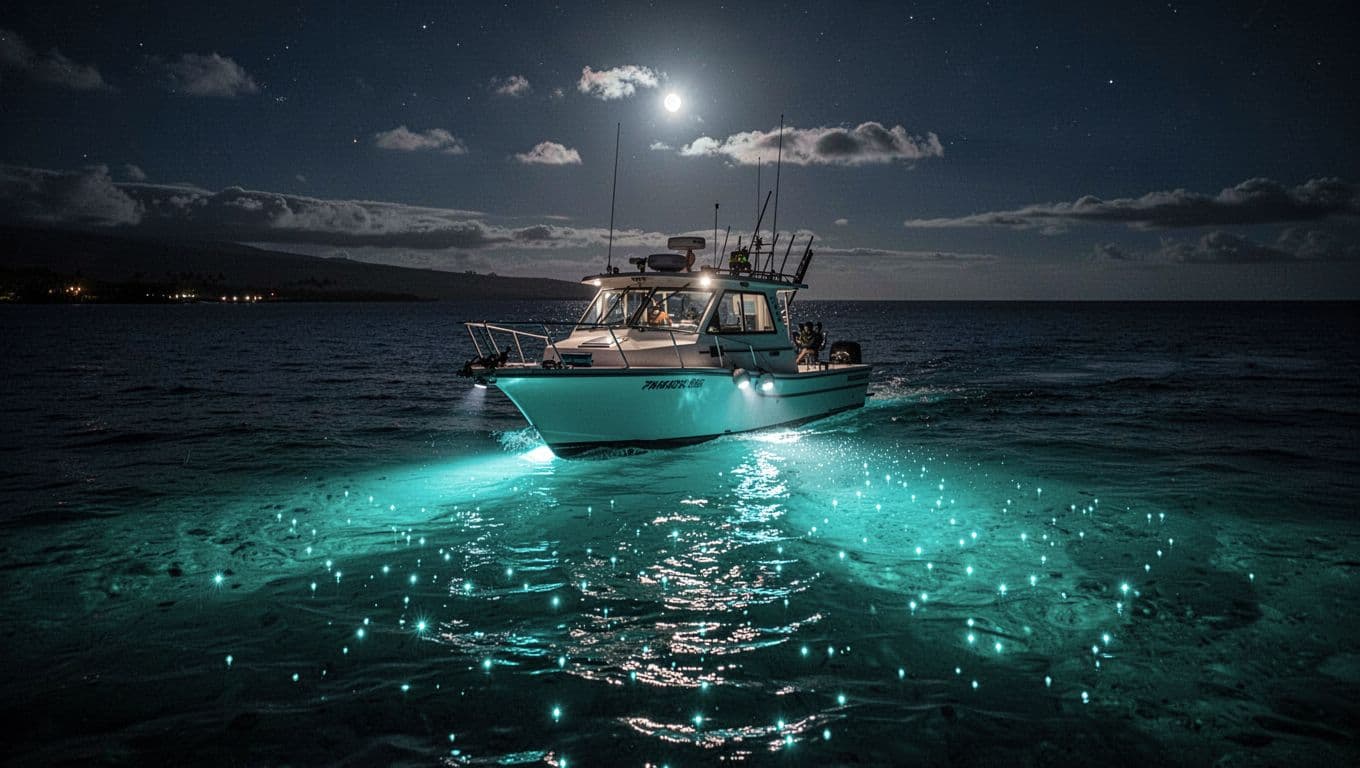
Your preparation starts before you leave the hotel. Check your period product, eat something familiar, drink water, and use the restroom shortly before meeting your tour group. These simple steps give you more flexibility once you reach the harbor.
Choose a swimsuit that stays secure when you swim and climb a boat ladder. A one-piece suit or well-fitting two-piece can make you feel more comfortable than loose fabric. Dark colors may help you worry less about spotting during the ride, though a reliable product matters more than color.
Ask about restroom arrangements when you book. Some boats have onboard facilities, while others may rely on harbor restrooms before departure and after return. Knowing the setup helps you decide whether to use a tampon, cup, disc, or backup plan.
If you are comparing options for snorkeling Big Island Hawaii, look for a tour operator that explains its meeting point, duration, equipment, safety procedures, and water-entry process. You should know where you’ll change and how long you’ll be away before committing to the excursion.
Kona Snorkel Trips operates from the Kailua-Kona area and focuses on small-group ocean adventures. Its guides are Lifeguard Certified, and the company emphasizes guest safety, quality equipment, reef-safe practices, and education about the marine environment. The operation also uses custom-built lighted boards for nighttime manta encounters.
You can review the manta ray snorkel tour in Kona before deciding which evening option fits your schedule. The page includes tour details, departure information, and seasonal choices.
If you want to compare current tour times, you can check availability for a Kona manta ray night snorkeling trip.
The separate Manta Ray Night Snorkel Hawaii company is another resource to review when comparing manta-focused outings. Look at departure times, duration, equipment, and the operator’s policies before booking.
What Happens When You Arrive at the Harbor?
Arrive early enough to use the restroom and speak privately with a guide if you have a concern. Rushing onto a boat can make a manageable period feel stressful.
At check-in, listen for instructions about personal bags, restrooms, life jackets, and water entry. Keep your period kit somewhere accessible rather than burying it under towels or clothing. A small dry bag works well because it protects clean supplies from spray.
The crew may provide snorkeling equipment, including a mask, snorkel, fins, and flotation support. Tell the guide if you need help adjusting equipment over your swimsuit. A comfortable fit prevents chafing and keeps you from spending the first few minutes in the water fixing straps.
Most manta tours take place after dark, when bright lights attract plankton near the surface. The mantas feed on that plankton as they glide through the illuminated water. You generally float at the surface while watching the animals below, rather than diving toward them.
That surface position can be reassuring if you’re managing cramps or lower energy. You still need enough strength to climb a ladder, hold flotation equipment, and follow instructions. Tell the crew before entering the water if any of those tasks may be difficult.
A small-group operator can often give more personal attention than a crowded boat. Kona Snorkel Trips describes its approach as a “Reef to Rays” philosophy, with a focus on responsible wildlife viewing and a personal guest experience.
Understanding Manta Rays and Ocean Safety
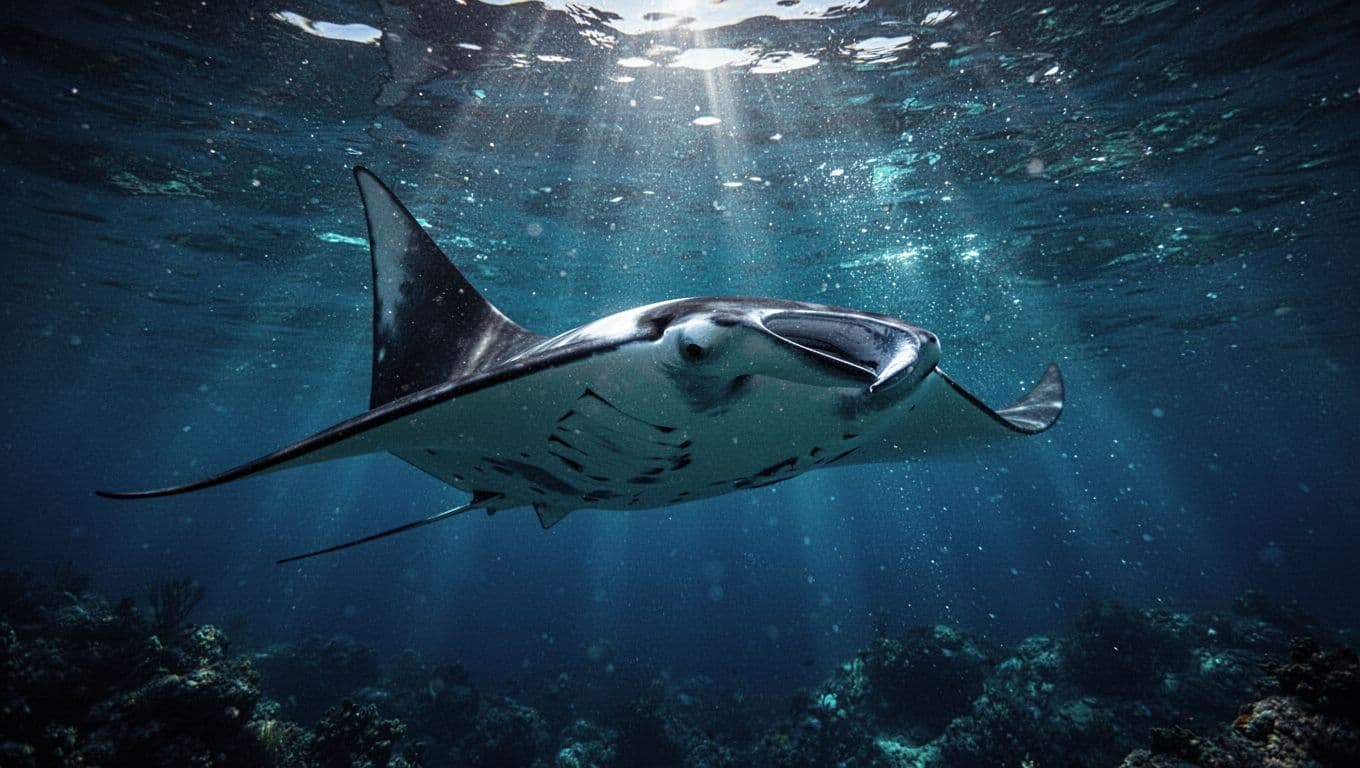
Manta rays are not interested in menstrual blood. They feed on plankton and don’t hunt people. The animals may pass close to swimmers because they follow the concentrated food near the lights, not because of anything related to your period.
Many people also worry that menstruation will attract sharks. The Florida Museum of Natural History’s guidance on menstruation and sharks states that there is no positive evidence that menstruation is a factor in shark bites.
That information doesn’t mean you should ignore normal ocean safety. You should always follow the guide’s directions, avoid touching marine life, and stay within the designated area. Never swim away from the group or place your hands near a manta ray’s wings, tail, or mouth.
Manta rays are gentle filter feeders, but they are still large wild animals. Their movements can be graceful and sudden. Keep your body relaxed, maintain your position, and let the animal choose how close it wants to come.
Night water can feel disorienting at first. You may see only the illuminated water below you and the silhouettes of other swimmers nearby. Your guide and flotation equipment help you stay oriented, so keep your mask on and listen for verbal instructions.
If you have open cuts, a skin condition, or a gynecological issue that causes unusual bleeding, ask your healthcare professional whether swimming is appropriate. Period blood from normal menstruation is different from unexplained bleeding. Pain, faintness, or bleeding that feels abnormal deserves medical attention.
Managing Cramps, Heavy Flow, and Sensitive Skin
Cramps can become more noticeable when you spend time in cool water. Stretch gently before departure, drink water, and use the pain-management approach that normally works for you.
Tell your guide if you have a condition that could affect swimming. You don’t need to share private details with the whole group. A quiet conversation lets the crew know whether you may need extra time on the ladder or a shorter stay in the water.
Heavy flow requires more planning. Use the product you trust for your heaviest hours, then carry a spare. If you expect to change during the trip, ask about the onboard restroom before the boat leaves the harbor.
Some people experience irritation from saltwater, wetsuit seams, or prolonged moisture. Rinse with fresh water after the tour, change out of wet swimwear promptly, and avoid scented soaps. A loose, dry layer can reduce friction during the ride home.
You may also feel colder during your period, although individual experiences vary. Bring a sweatshirt, windbreaker, or towel for the return trip. Even on a warm Hawaiian evening, a wet swimsuit and boat wind can make you uncomfortable.
A period shouldn’t be the reason you feel pressured to enter the water. You can stay aboard, watch the lights, or leave the activity early if symptoms change. A responsible operator will respect that decision.
What to Do After the Snorkel
Use the restroom when you return to the harbor and change your product if needed. Remove wet swimwear, rinse saltwater from your skin, and put on dry underwear and clothing. These steps matter more than trying to maintain a perfect routine on the boat.
Check your swimsuit and towel before placing them in your luggage. Put used products in the sealed disposal bag, then throw them away in an appropriate trash bin. Don’t leave waste on the boat or in the harbor.
If you use a tampon, remove it according to the product directions. If you use a cup or disc, clean it with safe water and follow the manufacturer’s instructions. Avoid washing reusable products with seawater.
Watch how you feel during the next few hours. Mild tiredness after a night on the ocean is common, but severe abdominal pain, dizziness, fainting, fever, or unusually heavy bleeding calls for medical care.
Keep your next day flexible if possible. You may feel ready for another activity, or you may prefer a slower morning. If your Big Island plans include more snorkeling Big Island adventures, schedule demanding water activities around your energy and symptoms rather than forcing a packed itinerary.
A daytime reef outing can offer a different pace if you want another ocean experience. You can explore options through the broader Kona snorkeling tours available in the area.
Should You Reschedule Your Tour?
Rescheduling makes sense when your symptoms interfere with basic safety or comfort. Severe cramps, vomiting, faintness, fever, or unusually heavy bleeding are valid reasons to postpone an ocean activity.
You should also reconsider the tour if you have recently had a medical procedure, are recovering from illness, or have been told by a clinician to avoid swimming. Follow medical advice over travel plans.
For a normal period, rescheduling is usually a personal choice rather than a safety requirement. If you have the right product, feel well, and can follow the crew’s instructions, you can often enjoy the outing as planned.
Check the operator’s cancellation and weather policies before booking. Ocean tours depend on sea conditions, visibility, and safety decisions made by the captain. A clear policy helps you plan without guessing.
When you snorkel Big Island waters at night, your preparation should support the entire evening. That includes transport, changing, hydration, sun exposure earlier in the day, and your ability to recover afterward.
A Simple Plan for a Comfortable Evening
Use this sequence to keep your preparation manageable:
- Choose a product you already trust during swimming or exercise.
- Use the restroom and change into a fresh product before departure.
- Pack at least two backups in a waterproof pouch.
- Bring dry clothes, medication you normally use, water, and a small snack.
- Tell a guide about cramps, dizziness, mobility concerns, or any need for privacy.
- Replace or clean your product after returning to shore.
- Change out of wet swimwear and monitor how you feel that evening.
You can also make a backup decision before the tour begins. If your symptoms worsen, will you remain aboard, return to the harbor, or ask whether another guest can assist you? Knowing your options reduces pressure when you’re tired or uncomfortable.
The best plan is practical rather than complicated. You don’t need special equipment marketed for ocean travel. You need a dependable period product, spare supplies, comfortable clothing, and a crew that treats safety and privacy seriously.
Conclusion
Your period doesn’t have to cancel a night beneath Kona’s manta rays. With a trusted internal product, spare supplies, dry clothing, and honest communication with your guide, you can manage the practical details without losing the experience.
The strongest choice is the one you have already tested and can comfortably use in water. Pair that preparation with responsible wildlife rules and attention to your body’s signals, then let the lights, clear Pacific water, and manta rays take your focus.