
Do Manta Rays in Hawaii Migrate Between Islands?
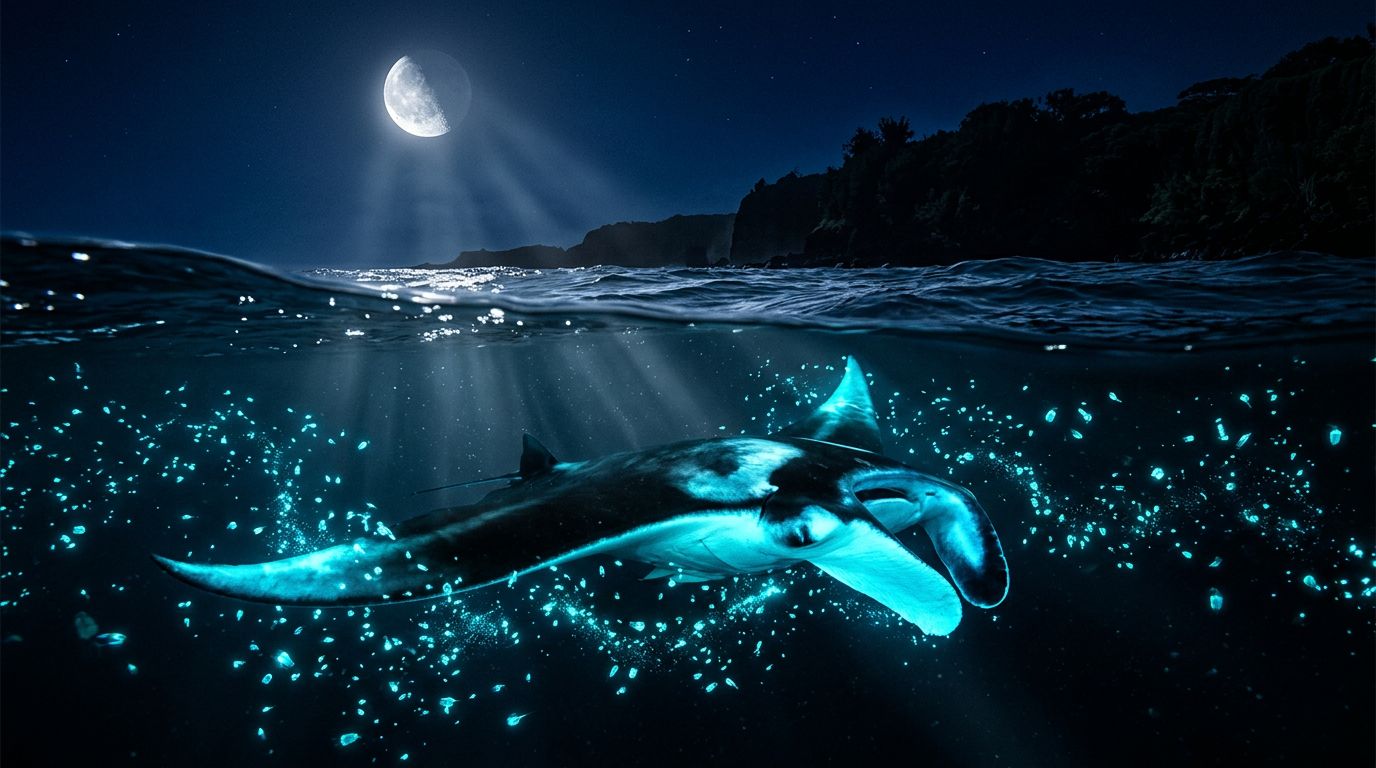
A manta ray can circle beneath you in Kona at night, then disappear before you ever see it again. That movement often leads to a bigger question: does the animal leave Hawaii’s Big Island and travel to another island?
The short answer is usually no, at least not as part of a regular seasonal migration. Most reef manta rays around Kona show strong attachment to local feeding and cleaning areas. If you’re planning snorkeling Big Island Hawaii, understanding that behavior helps you choose the right experience and set realistic expectations.
Kona Snorkel Trips offers small-group ocean tours built around its “Reef to Rays” philosophy. For a manta-focused night experience, you can also visit Manta Ray Night Snorkel, which focuses on observing these animals in their natural environment.
Key Takeaways
- Kona’s manta rays are mainly reef manta rays, a species known for local site fidelity.
- Hawaii does not have a predictable, island-to-island manta migration like its seasonal humpback whale migration.
- Individual mantas may travel along a coastline or cross open water, but researchers have limited evidence of regular movement between islands.
- Changes in plankton, currents, wind, water clarity, and feeding conditions affect sightings more than island migration does.
- A guided night snorkel gives you the best chance to observe mantas safely while protecting the reef.
What manta ray migration means in Hawaii
When you hear the word migration, you may picture humpback whales leaving Alaska, arriving in Hawaii during winter, and returning north to feed. That pattern is seasonal, long-distance, and predictable.
Manta ray movement is different. Reef manta rays usually stay within a familiar home range. They may shift between feeding areas, cleaning stations, and sheltered coastal waters, but they don’t follow one known route around the Hawaiian Islands each year.
Most regular manta sightings near Kona involve the reef manta ray, Mobula alfredi. This species spends much of its life in tropical coastal waters. It feeds on plankton by swimming through the water with its mouth open, then filtering tiny organisms through specialized structures inside its gills.
Kona’s mantas often return to the same areas because those locations provide useful conditions. Food may collect where currents meet. A cleaning station may attract the same animals repeatedly. Calm, shallow coastal water can also give mantas a reliable place to rest or feed.
That behavior is called site fidelity. It means an animal repeatedly uses the same location over time. Site fidelity doesn’t mean a manta never travels. It means its movements often center on a familiar area instead of a fixed migration route.
The Manta Trust’s reef manta ray research describes this broader pattern across many populations. Reef mantas can make local movements, but their travel tends to be tied to food, habitat, and ocean conditions.
So, if you’re asking whether Kona’s manta rays migrate between Maui, Oahu, Kauai, and Hawaii Island on a regular schedule, current evidence doesn’t support that idea.
Why Kona mantas tend to stay near Hawaii Island
Kona’s western coast has conditions that can support manta activity throughout the year. The coastline includes areas where currents move plankton through the water. At night, tour lights can also draw plankton closer to the surface, creating a concentrated feeding opportunity.
Mantas don’t come to these sites because they are following a calendar. They come because the conditions can work for them.
Individual mantas are often recognized by the natural markings on their bellies. These patterns help researchers and conservation groups identify returning animals without tagging or handling them. Over time, photo-identification records can show where a manta appears, how often it returns, and whether its behavior changes.
A manta that visits the same Kona site repeatedly may still make short trips along the coast. It could feed in one area, rest somewhere else, and return later. Those movements may cover several miles, but they don’t automatically indicate island-to-island migration.
Kona also has a long history of manta observation. Guides, researchers, and local ocean groups have built records of individual animals seen at established viewing areas. The more often a known manta returns, the stronger the evidence becomes for local residency.
The NOAA Fisheries information on reef manta rays also distinguishes reef mantas from more wide-ranging manta species. Their behavior depends on the species, habitat, and food supply.
For you as a snorkeler, this means a year-round encounter is possible because some mantas remain in the region. You don’t need to visit during a narrow migration season. However, an individual animal may appear less often, change its feeding route, or remain out of view on a given night.
Can manta rays travel between Hawaiian islands?
Yes, a manta ray could travel between islands. The channels between the Hawaiian Islands are open ocean, and mantas are powerful swimmers. The more accurate answer is that regular interisland migration has not been clearly documented as a normal pattern for Kona’s reef manta population.
A single manta may leave its usual area. Strong currents, changing plankton levels, injuries, reproduction, or other natural factors could influence that movement. A crossing might happen without creating a predictable route that researchers can track year after year.
The distinction matters because a sighting on another island doesn’t prove that the animal migrated from Kona. Hawaiian waters support manta sightings in several locations, but each area may have its own local group. Without repeated identification records, you can’t assume that every Hawaiian manta belongs to the same population.
Researchers use photographs, identification catalogs, acoustic methods, satellite tags, and genetic studies to understand manta movements. Each method has limits. A photograph can show where an animal appeared, while a tag may reveal a longer journey. Yet researchers cannot follow every manta continuously across all the island channels.
Reef manta populations can also show strong separation between locations. A manta that remains near Hawaii Island for years may have little reason to make a long crossing if local waters provide food.
That doesn’t make the islands completely isolated. Ocean animals don’t recognize political or tour boundaries. Their routes may change with currents and plankton. Still, the available picture is one of local movement with occasional wider travel, not a dependable manta ray migration across Hawaii.
You should therefore treat a Kona sighting as a local wildlife encounter. The manta beneath your board may be a familiar resident, a temporary visitor, or an animal that researchers are still trying to identify.
Why manta sightings change without migration
Manta numbers can look different from one night to the next, even when the local population stays in the same area. Several natural conditions affect whether mantas approach a viewing site.
Food is one of the biggest factors. Mantas follow plankton, and plankton distribution changes with currents, tides, water temperature, wind, and nutrient levels. When food spreads through a wider area, mantas may not gather near the surface lights used during a night snorkel.
Water movement also matters. Strong currents can shift plankton away from a usual feeding area. Wind can create surface chop and reduce visibility. Heavy swell may make a site uncomfortable or unsafe, so boats may move to another location or cancel a trip.
Moonlight can change nighttime conditions as well. The moon doesn’t control a manta migration, but it can affect the amount of light in the water and the behavior of plankton. Weather and ocean conditions remain more important to your actual viewing experience.
Seasonal changes still occur. Kona’s manta encounters are available throughout the year, but the number of animals seen can vary. A night with one manta is different from a night with several animals, yet both are normal wildlife experiences.
You may also see a different group of mantas depending on the location. Some sites attract animals that feed near the surface. Others may have deeper water or different current patterns.
This is why responsible operators avoid promising a guaranteed number of mantas. No ethical guide can control wild animals. A clear night can produce an excellent encounter, while another evening with similar weather may bring fewer animals.
The same principle applies when you snorkel Big Island locations during the day. Clear water and calm seas improve your view, but they don’t guarantee that a particular species will appear. Wildlife responds to the ocean, not your itinerary.
If you want to compare this experience with another seasonal marine event, Kona’s whale watching tours focus on humpback whales, whose migration into Hawaiian waters follows a much clearer annual pattern.
How to plan a responsible manta encounter
A night manta snorkel is different from a daytime reef trip. You enter the water after sunset, use flotation equipment, and watch mantas feed near the surface. Tour boats typically use lights that attract plankton, which can bring mantas close to the viewing area.
You don’t need to chase, touch, ride, or block a manta’s path. The best position is calm and observant. Keep your body flat, listen to your guide, and leave room for the animal to turn.
Manta rays are not aggressive toward people. Reef mantas don’t have the venomous tail spine associated with stingrays. They filter plankton from the water and have no interest in eating swimmers. Their large wingspan can still surprise you, so controlled movement matters.
Before booking, check the tour’s age guidance, water requirements, meeting point, and cancellation policy. If you’re traveling with children, ask whether they can swim comfortably at night and follow instructions in open water. A flotation device can help, but it doesn’t replace basic water confidence.
You should also use reef-safe sunscreen and avoid applying lotions shortly before entering the ocean. Never stand on coral or grab rocks while waiting for mantas. Small actions protect the habitat that supports the animals you came to see.
A good operator will provide safety equipment, a clear briefing, and guides who monitor both the group and the animals. Lifeguard-certified guides can help you manage conditions, positioning, and emergencies while you focus on the encounter.
Kona Snorkel Trips describes its tours as small-group experiences with high-quality snorkeling gear, environmental education, and custom-built lighted boards for nighttime manta viewing. Its guides also emphasize reef-safe practices and respect for the volcanic coastline.
You can browse the company’s Kona manta ray snorkel tour before choosing a date. If your schedule is flexible, checking several evenings may give you more options in case wind or ocean conditions affect the original plan.
If you prefer to arrange a broader ocean day, you can also review the company’s Big Island snorkeling tours. A private option may suit your group if you want a more personal pace, although a private boat doesn’t change the fact that manta sightings depend on wild conditions.
What makes Kona Snorkel Trips a useful option
When you book with Kona Snorkel Trips, you’re choosing a company that centers its services on a “Reef to Rays” philosophy. The focus combines ocean adventure with safety, marine education, and care for Hawaii’s coastal ecosystems.
The company uses a small-group approach instead of packing as many guests as possible onto a boat. That can make it easier for you to hear your guide, enter the water with less confusion, and maintain respectful spacing around wildlife.
Its equipment includes standard snorkeling gear and custom-built lighted boards for nighttime encounters. These boards give you a stable place to rest while you watch mantas feed below. They also help guides organize the viewing area without requiring swimmers to hover independently in open water.
Lifeguard-certified guides lead the trips and explain how to enter, float, and observe. You still need to follow instructions and know your personal limits, but clear guidance can make the experience more comfortable for families, couples, and first-time night snorkelers.
The company’s environmental approach includes reef-safe sunscreen guidance and rules against touching marine life. Those details matter because manta encounters depend on healthy nearshore waters. Protecting coral, avoiding contact with animals, and keeping the viewing area calm all support better wildlife experiences over time.
Kona Snorkel Trips also offers other ocean excursions, including daytime snorkeling and private Kona trips. A private Kona snorkeling tour may work well if your group has mixed swimming abilities or wants a custom schedule. The manta encounter itself still follows the animals and the ocean, not a guaranteed performance.
The company displays guest reviews through the widget below. Before you book, read the current trip details and confirm that the tour’s conditions match your group’s needs.
When your dates are set, you can check availability for a Kona manta ray night snorkel.
What your sighting can tell you about manta behavior
A close encounter gives you more than a memorable photograph. You can observe how mantas use their cephalic fins to guide plankton into their mouths, how they bank during turns, and how they adjust their position in the current.
Some mantas make repeated passes over the same lighted area. Others appear briefly, circle once, and leave. That difference may reflect feeding success, competition, water movement, or an individual animal’s preference.
You may notice identification markings on the manta’s underside. Dark spots and patterns vary between animals, so researchers can compare photographs from different dates. The process helps build a long-term record without capturing or disturbing the manta.
The encounter can also show why migration is an imperfect word for this species. A manta may leave the viewing area and return later. It may spend part of the night along another section of coast. It may visit a nearby island at some point in its life. None of those actions creates a predictable annual migration.
If you want to snorkel Big Island waters during the day as well, consider leaving space in your schedule for changing conditions. Kealakekua Bay, coastal reefs, and manta sites offer different habitats and experiences. A daytime reef trip won’t replace a night manta encounter, but it can help you see the wider marine environment that supports Hawaii’s coastal wildlife.
Most importantly, observe the manta as a wild animal with its own choices. Your guide can bring you to a known viewing area, but the manta decides whether to feed, circle, or swim away.
Conclusion
Manta rays in Hawaii can travel, but Kona’s reef mantas don’t follow a known seasonal route between the islands. Most show strong ties to local feeding areas, while their short-term movements respond to plankton, currents, weather, and water conditions.
That means you don’t need to wait for a migration season to plan a manta snorkel on the Big Island. You do need to choose a responsible operator, follow water-safety instructions, and give the animals room to move. The manta beneath your light may be a returning local, and that familiar connection is part of what makes a Kona encounter special.