
How to Spot Porcupinefish While Snorkeling Kealakekua Bay
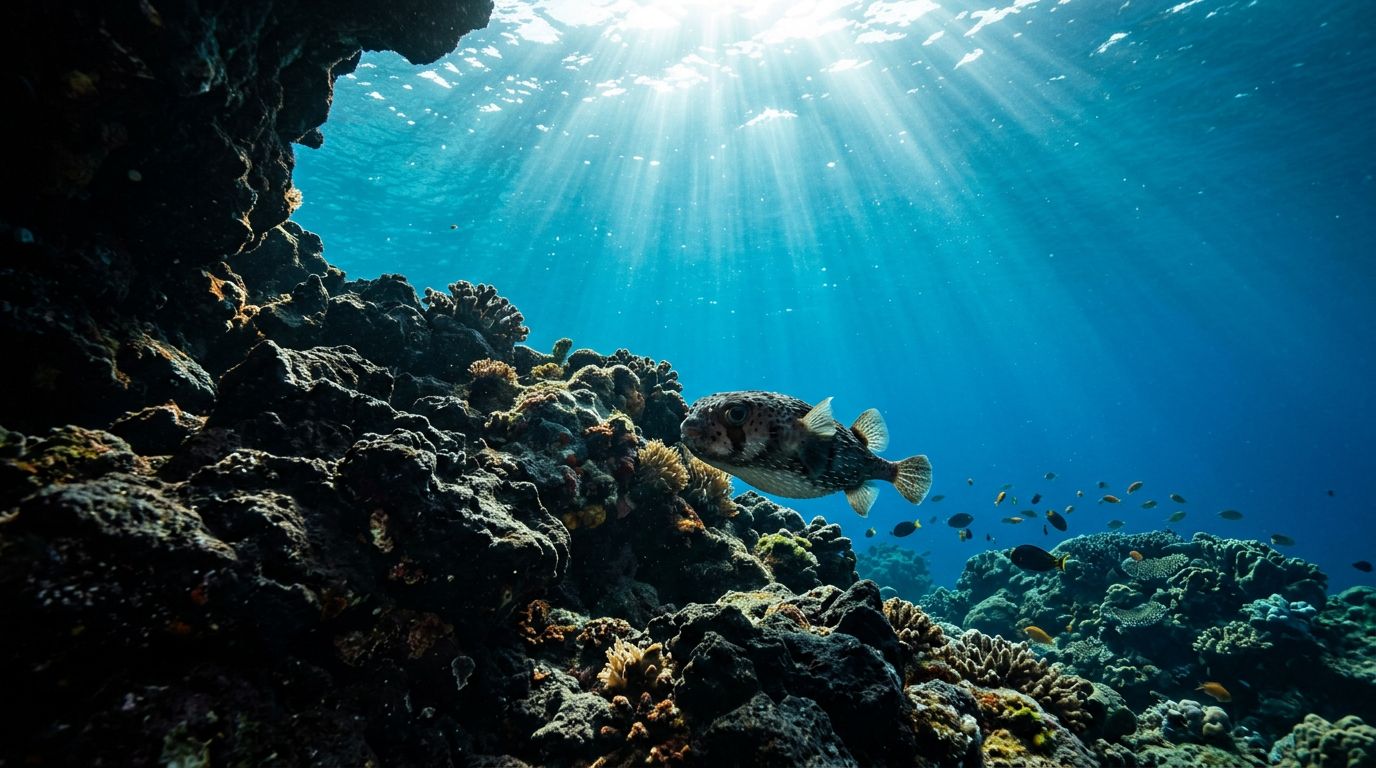
Porcupinefish can look like ordinary reef fish until you notice the spines, large eyes, and rounded body tucked beneath a lava ledge. During Kealakekua Bay snorkeling, you may pass within a few feet of one without seeing it at first.
If you’re planning a snorkeling Big Island Hawaii trip, slow observation will help you find more marine life than constant swimming. The best approach is to learn the fish’s shape, search the right habitat, and give every animal plenty of space.
Why Kealakekua Bay Is a Good Place to Look
Kealakekua Bay has the kind of underwater structure porcupinefish use during daylight hours. Lava shelves, reef edges, cracks, and shaded overhangs create places where these fish can rest while staying close to cover.
The bay is also a protected marine area. That means you can observe fish in a setting where collecting and fishing are restricted, although conditions and posted rules still apply. Clear water can make fish easy to spot, but changing light, surface glare, and small waves can hide animals in dark recesses.
A morning of snorkeling Big Island reefs can reward you with more than colorful fish in open water. Look closely at the spaces between coral heads and along the edges of volcanic rock. Porcupinefish often hold still, so they may blend into a gray, brown, or mottled background.
You might see one near the Captain Cook Monument, along the bay’s rocky margins, or in a quieter section of reef. Exact sightings change with visibility, water movement, and animal behavior. No guide can promise a particular fish on a particular trip, but a guide who knows the bay can help you search without damaging the habitat.
For a guided visit, you can explore Kona Snorkel Trips’ Kealakekua Bay tour. You can also compare the route and trip style offered by Captain Cook Snorkeling Tours, another company focused on Captain Cook and Kealakekua Bay outings.
Learn the Porcupinefish Shape Before You Enter
The easiest way to spot a porcupinefish is to learn its overall outline rather than search for one exact color. These fish have a rounded, thick-bodied shape, a blunt head, large eyes, and a small mouth that can resemble a beak.
Their most recognizable feature is the covering of sharp spines. When the fish is calm, those spines usually lie close to the body and may be difficult to see. When the fish feels threatened, it can take in water and swell. The spines then stand away from the body, making the fish look much larger.
You should never provoke this response. A porcupinefish that inflates is telling you that you are too close or moving in a way that makes it feel unsafe.
Hawaiian waters can contain several porcupinefish species, including long-spine and spotted forms. You don’t need to identify the exact species to recognize the family. Focus on these features:
- Rounded body: The fish looks fuller and heavier than a typical reef fish.
- Large eyes: The eyes are noticeable, especially when the fish rests in shadow.
- Small, strong mouth: Porcupinefish have fused teeth that form a hard beak.
- Visible spines: Look for short spines lying against the skin or longer spines projecting from the body.
- Slow, careful movement: They often use their fins to maneuver around rocks instead of racing across open water.
A smooth pufferfish can cause confusion because it may also have a rounded body and large eyes. Puffers belong to a different family and generally lack the obvious long spines that give porcupinefish their name. Some puffer species have tiny prickles, so use the full body shape rather than relying on one feature.
Color can change with lighting and surroundings. A fish that looks pale in bright sun may appear tan, gray, or brown under a ledge. Dark spots or mottling can also make the outline harder to see.
The most useful clue is often the face. Look for large eyes and a blunt, beak-like mouth inside a rounded silhouette.
Search the Right Places Along the Reef
Porcupinefish are easier to find when you search habitat instead of scanning randomly. During a daytime snorkel, begin with shaded places that offer protection. Check the mouths of small caves, the undersides of ledges, and the narrow gaps between large rocks.
Don’t swim directly into a crevice. Position yourself far enough away to see the opening, then let your eyes adjust. Fish that seem absent often become visible after 20 or 30 seconds of quiet observation.
Reef edges deserve attention too. A porcupinefish may rest where a flat lava shelf drops into deeper water. You could see only the face, a curved back, or a few spines at first. Watch the boundary between bright sand and dark rock because that contrast makes a resting fish easier to notice.
When you snorkel Big Island waters, look at three levels:
- The bottom: Search below you for rounded bodies resting on sand or rock.
- The reef face: Check vertical walls, holes, and areas where coral meets lava.
- The shadow line: Scan the border between sunlight and shade beneath an overhang.
Water clarity affects your search. If suspended sand or plankton reduces visibility, stay closer to the reef while keeping your fins away from the bottom. On a bright day, use your hand or mask angle to reduce glare. Polarized sunglasses help during a surface scan, but they don’t replace a clear mask once you enter the water.
A guide can point out small changes in texture that you might overlook. A rounded fish may look like a rock until it moves an eye or fans a fin.
Watch What the Fish Does
Porcupinefish often rely on stillness for protection. If you rush toward one, it may disappear under a shelf before you get a clear look. Instead, slow your breathing, stop your kick, and let the fish resume its normal posture.
You may notice gentle fin movements rather than strong tail beats. Porcupinefish can use their pectoral, dorsal, and anal fins to make precise adjustments around rocks. This movement helps them hold position in tight spaces.
During daylight, a resting fish may face outward from a crevice. That position lets it monitor open water while keeping most of its body near cover. If you see a large eye watching you from a shadow, pause before moving closer.
An inflated fish requires a different response. Back away without chasing it, and give it time to return to its normal shape. Inflation uses energy and can leave the animal less able to swim. Your curiosity should never turn into a test of how close you can get.
Porcupinefish are often more active at night, when they search for food around reef structures. Daytime snorkelers usually find them resting or moving slowly. That pattern explains why a quiet morning search can work better than fast swimming across the bay.
Your goal is observation, not contact. You don’t need to touch a spine, see an inflation response, or make a fish move to confirm the sighting.
Use a Slow Spotting Routine
A simple routine can help you cover the reef without missing animals hiding in plain sight. Start in open water, then work gradually toward the structure while keeping your body level and your movements controlled.
1. Scan before you swim closer
From the surface, look over the reef and note dark openings, ledges, and large rock shapes. Avoid kicking toward every possible hiding place. Choose one area and watch it for a short time.
2. Let your eyes adjust
Bright sunlight can make shaded spaces appear empty. Keep your mask level and give your vision time to pick up details. Look for an eye, a fin, or a curved outline before searching for spines.
3. Check the edges
Move your gaze along the border of a ledge rather than staring into its darkest center. Porcupinefish often position themselves where they can watch open water while remaining close to shelter.
4. Move on without disturbing the animal
If you find a fish, hold your position at a respectful distance. Let your buddy look without crowding the same space. Then continue along the reef instead of circling the animal repeatedly.
This method also helps you spot other animals. Slow observation can reveal moray eels inside cracks, shrimp near coral, and small fish using the reef for shelter. You may see more when you stop treating the snorkel as a race.
For children, turn the search into an observation game without encouraging touching. Ask them to find a rounded shape, a large eye, or a fish resting in shade. Keep the challenge focused on patience and identification.
If you need to dive below the surface, stay within your comfort level. A short duck dive should never force you to hold your breath, descend into a narrow space, or ignore a guide’s instructions.
Keep Your Encounter Safe and Reef-Friendly
Porcupinefish deserve distance because their bodies and defensive behavior can cause problems for both you and the animal. Never grab, poke, feed, or corner a fish. Don’t use a camera stick to push it out of a hiding place.
You should also avoid standing on coral or resting your hands on living reef. Even a light fin touch can break delicate organisms or stir sediment into the water. Keep your legs up, use a relaxed kick, and maintain enough space to turn without striking the bottom.
Kealakekua Bay can have boat traffic, changing currents, and conditions that differ between the shoreline and open water. Stay with your buddy and follow the route set by your guide. If you feel tired, cold, anxious, or short of breath, signal and return to the boat or shore.
Before entering the water, apply reef-safe sunscreen according to the tour operator’s instructions. A rash guard, hat, and shade can reduce how much sunscreen you need. Follow all posted rules for the marine life conservation district, and don’t collect shells, rocks, coral, or living animals.
Porcupinefish also deserve protection from repeated disturbance. One brief look can be harmless, but several swimmers chasing the same fish can push it from shelter and increase stress. If another snorkeler is already watching, wait nearby or continue along the reef.
A good sighting ends with the fish in the same place and the reef in the same condition as before you arrived.
Choose a Tour That Supports Careful Observation
A boat tour can make Kealakekua Bay snorkeling easier when you want local knowledge, equipment, and guidance in one outing. The right crew won’t promise a porcupinefish sighting. Instead, you’ll get help reading the reef and watching marine life without chasing it.
Kona Snorkel Trips follows a “Reef to Rays” approach that combines small-group service, lifeguard-certified guides, quality snorkeling gear, and reef-safe practices. When you book with the company, you can ask your guide to help you search for porcupinefish, moray eels, and other animals around the bay’s lava structure.
The crew also focuses on safety before you enter the water. Listen to the briefing, ask about current conditions, and tell the guide if you need help with your mask, fins, or flotation equipment. A smaller group can make it easier to hear instructions and receive individual guidance.
You can check availability for Kona Snorkel Trips’ current snorkeling options.
You can also read current guest feedback before choosing your outing.
For a Captain Cook or Kealakekua Bay trip, review the meeting details, time on the water, age guidance, and included equipment before booking. A guided trip works best when the schedule gives you enough time to slow down and observe the reef.
The Kealakekua Bay route is especially useful if you want to focus on the bay rather than combine several destinations. You can check avaialbility for the Captain Cook snorkeling tour.
Conclusion
Spotting a porcupinefish in Kealakekua Bay depends more on patience than luck. Search shaded ledges, reef edges, and lava crevices. Look for the rounded body, large eyes, small beak-like mouth, and folded spines.
When you find one, stay still and keep your distance. The best memory from snorkeling Big Island Hawaii waters is a fish behaving naturally, with the reef protected for the next person who swims by.