
Manta Ray Kona: How Courtship Works at Night
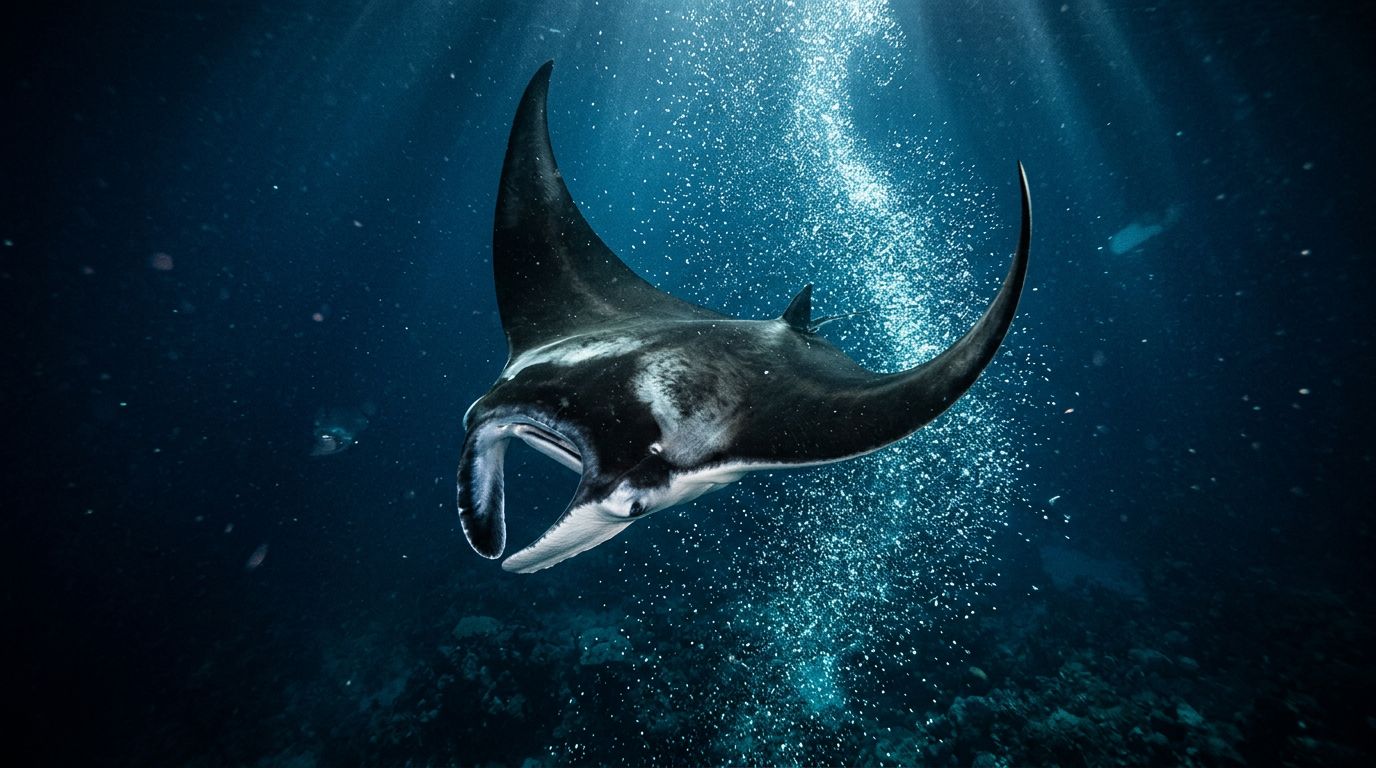
Kona Snorkel Trips gives you a close view of one of Hawaii’s most unusual wildlife shows, manta rays gliding through illuminated seawater after sunset. If you’re searching for Manta Ray Kona experiences, the goal isn’t to touch or chase these animals. You’re there to watch their feeding behavior and, with luck, a courtship sequence.
The related Manta Ray Night Snorkel Hawaii experience focuses on this nighttime setting, when plankton gathers around underwater lights. Understanding what you see makes the encounter more meaningful, so start with the difference between feeding and courtship.
Manta Ray Kona: What You Are Likely Watching
A manta ray moving below you can appear almost weightless. Its broad pectoral fins rise and fall slowly while its cephalic fins guide plankton-rich water toward its mouth.
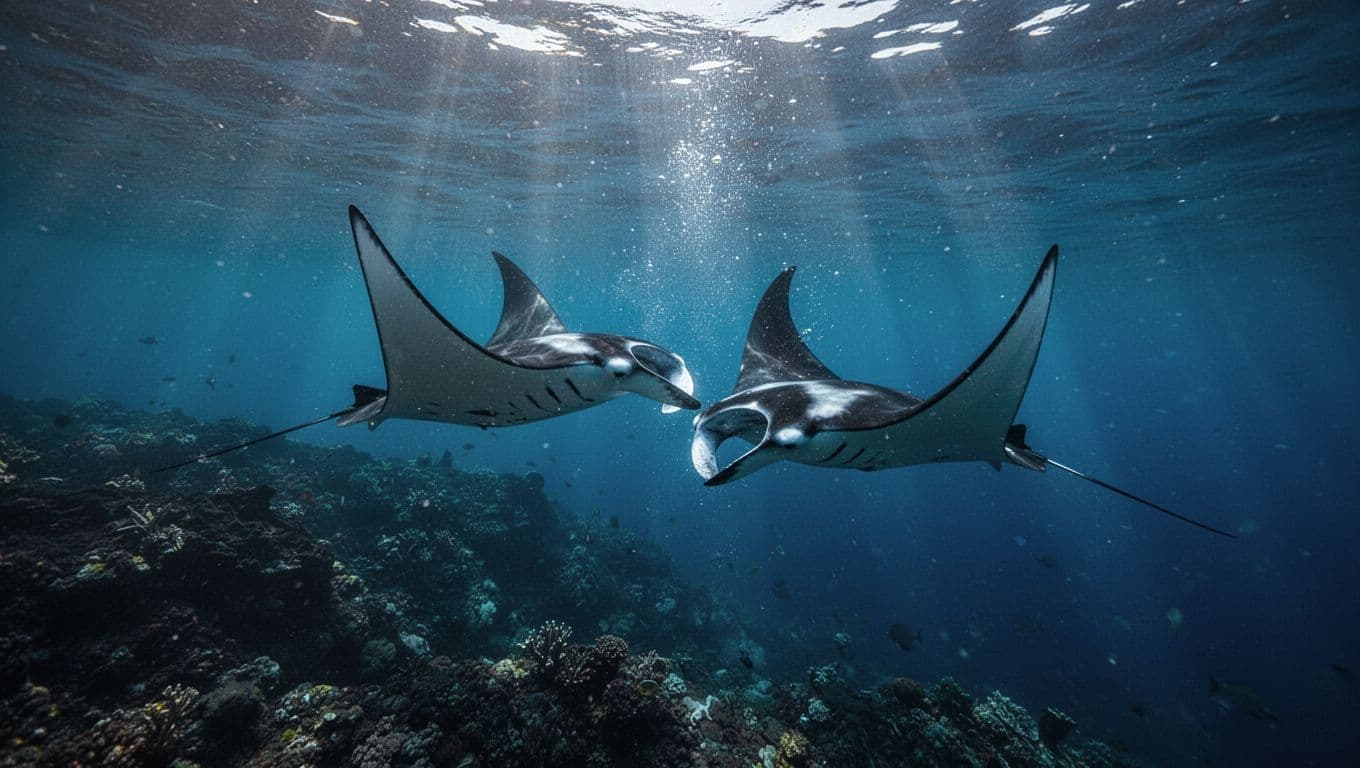
At Kona’s night viewing sites, the behavior you see most often is feeding, not mating. Mantas circle, bank, and make repeated passes through the illuminated water. A long line of rays may look like a parade, but the animals could simply be following the densest patch of plankton.
Feeding drives most nighttime activity
Manta rays are filter feeders. They don’t hunt fish or bite swimmers. Instead, they move water across specialized filtering structures in their mouths and capture tiny organisms such as zooplankton.
Artificial lights attract plankton toward the surface. The mantas then follow the food source, often swimming close to a lighted board or boat. You may see one ray return again and again along the same path.
The NOAA Fisheries profile of the giant manta ray explains that the species can reach a wingspan of up to 26 feet and consumes large quantities of zooplankton. Kona’s reef mantas are often smaller, but their feeding movements can still fill your entire field of view.
Reef mantas have individual personalities
Many Kona encounters involve reef manta rays, Mobula alfredi. Each animal has a distinct ventral pattern on its underside, much like a fingerprint.
Some mantas make broad, relaxed loops. Others move quickly through the light, change direction often, or stay lower in the water. Their behavior can change with visibility, current, plankton density, and the number of animals nearby.
That variation matters when you watch courtship. A single unusual movement doesn’t prove that mating behavior is happening. You need to look for a sustained pattern.
How Manta Ray Courtship Works
Manta courtship follows a recognizable sequence, although the entire process can happen quickly. Researchers have documented the behavior in reef mantas and giant oceanic mantas in different parts of the world.
The strongest detailed observations come from a long-term Maldives study, not from Kona. Still, the basic behavior helps you understand what a courtship train may look like in Hawaii.
The male begins a close pursuit
Courtship often starts when one male follows a female from behind. The male may match her speed and copy each turn. Other males can join the pursuit, creating a single-file line.
This line differs from a feeding group. During feeding, several rays may cross the same area because food is concentrated there. In courtship, the follower stays focused on one particular ray and maintains a much closer position.
The published courtship and mating study documented this pursuit behavior in both reef and oceanic mantas.
The gap becomes smaller
As the pursuit continues, the male moves closer to the female’s trailing wing edge. He may follow her through sharp turns, changes in depth, and sudden accelerations.
Researchers have observed males using their mouths near the female’s rear wing margin. This contact helps the male stay in position, but it can look aggressive to a person watching from the surface.
The female remains in control of the route. She may speed up, roll, dive, or turn sharply. These movements can end the pursuit if she doesn’t accept the male’s approach.
Mating is brief compared with the chase
When the female allows the male to close the distance, he rotates beneath her and positions his body against hers. Manta rays reproduce through internal fertilization. The male uses one of his claspers to transfer sperm into the female’s cloaca.
The actual mating event is much shorter than the pursuit that leads to it. Afterward, the rays separate and swim away. A courtship train may dissolve within moments, or other males may continue following the female.
You shouldn’t expect to witness this final stage during a tour. Even when courtship occurs nearby, darkness, depth, distance, and limited visibility can hide the key movements.
How to Tell Courtship From Feeding
A line of manta rays doesn’t automatically mean courtship. The same animals may form orderly lines whenever they pass through a concentrated food source.
A repeated line beneath a light is usually a feeding clue. Courtship becomes more likely when one ray tracks another through turns and changes in speed.
Feeding behavior looks repetitive
Feeding mantas often make repeated passes through the light. They may circle, glide in broad arcs, or swim in slow figure-eight patterns.
Their mouths may open wide as they filter water. The cephalic fins beside the mouth can unfurl, helping direct plankton into the feeding current.
Several mantas may follow almost identical paths because each animal is using the same food-rich area. They can pass close to one another without showing interest in a particular partner.
Courtship looks more deliberate
Possible courtship signs include a tight single-file pursuit, persistent following, abrupt turns, and changes in depth. One ray appears to respond to the movements of another instead of following a general feeding route.
A male may stay directly behind a female for an extended period. If the female accelerates and he keeps the same position, courtship becomes a reasonable possibility.
Wing contact or biting near the trailing edge can also occur. However, you shouldn’t assume that every close encounter is mating behavior. Mantas sometimes bump or pass close together while feeding.
Surface viewing has limits
A snorkeler sees only part of the behavior. Water movement can distort distance, and the light source may create shadows that hide a manta’s body position.
The 2026 review of manta and devil ray courtship also points to differences between species and locations. In other words, scientists can identify broad patterns, but one observation doesn’t reveal the full story.
Watch patiently, keep your body still, and let the animals determine the distance. A guide can help interpret the behavior without making claims that the evidence doesn’t support.
What Courtship Reveals About Manta Life
Manta rays grow slowly and produce few young. That makes each successful reproductive event important for the population.
Courtship is only one part of the reproductive cycle. Food availability, habitat quality, maturity, migration, and the health of adult animals also affect reproduction.
Manta reproduction is a slow process
Female manta rays usually carry one pup at a time. The pup develops inside the mother and receives nourishment through a specialized uterine structure before birth.
Exact reproductive timing varies by species and region. A 2026 scientific review found that reproductive cycles can differ between locations, with adult females often reproducing less frequently than many people expect.
This slow pace means manta populations can’t quickly replace animals lost through fishing pressure, entanglement, vessel strikes, or habitat disturbance. Respectful wildlife viewing matters because it reduces unnecessary stress around important feeding areas.
Long-term observation fills knowledge gaps
Scientists still have unanswered questions about manta movements, nursery areas, age at maturity, and reproductive success. The NOAA research record on juvenile manta habitat describes major gaps in knowledge about manta biology and life history.
Photographs and sightings can help researchers identify individual rays and track where they return. Tour operators that teach guests to notice belly patterns, scars, and fin shapes can turn a memorable outing into a useful observation.
You don’t need to collect data during your swim. Simply observing without touching or redirecting the animals supports a better encounter and leaves the rays’ behavior undisturbed.
Why Kona Is a Good Place to Observe Mantas
Kona’s west coast has a strong reputation for nighttime manta viewing because mantas regularly visit areas where plankton gathers near the surface. Underwater lights make that food source easier to observe after sunset.
Conditions still vary. Wind, swell, current, visibility, water temperature, and animal activity can change from one evening to the next.
Light creates a natural feeding opportunity
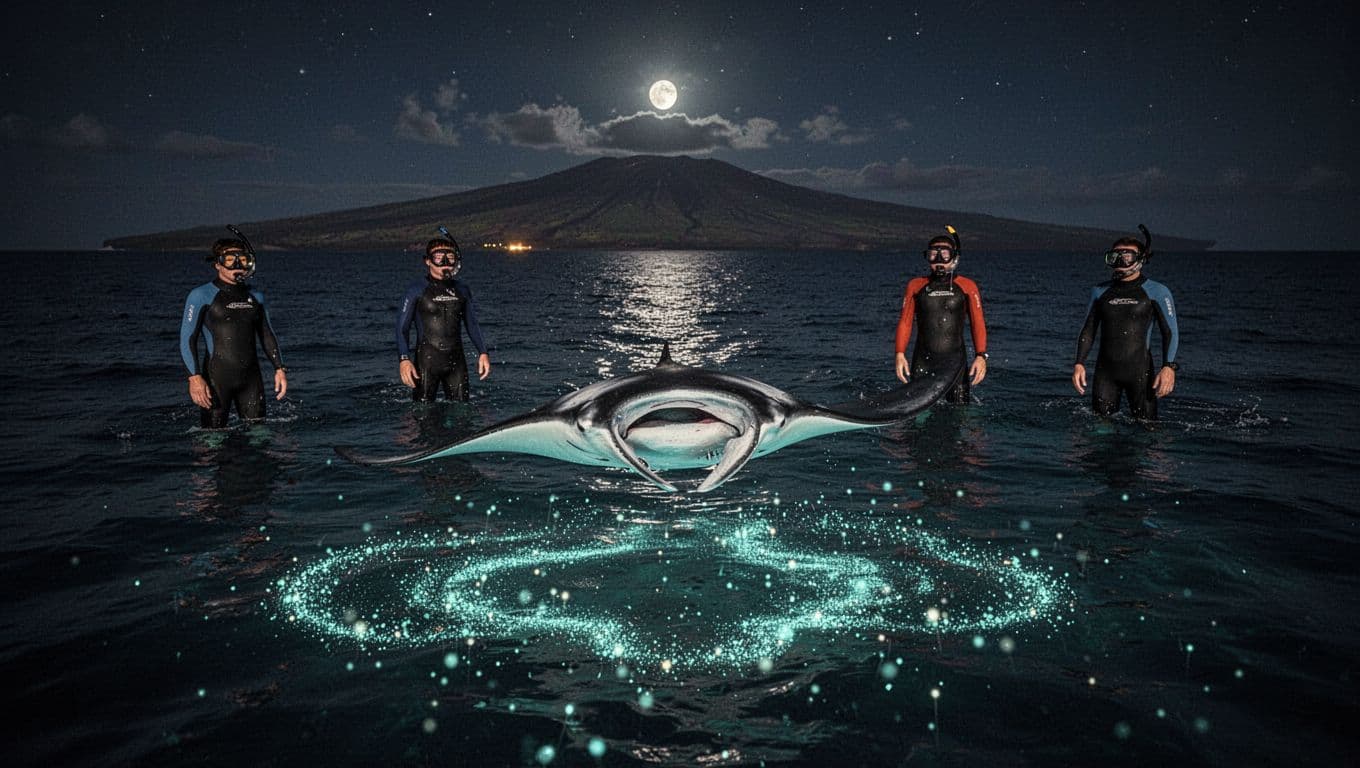
The lights used at viewing sites don’t train mantas to perform. They help concentrate plankton in an area where rays already feed.
A manta may swim directly above your head, turn onto its side, or pass beneath a floating board. The movement can feel close because the animal is using the plankton-rich water, not because it is seeking contact with people.
Your best view often comes when you float calmly at the surface and let the light do its work. Splashing, diving toward a manta, or swimming across its path can interrupt the feeding pattern.
Calm conditions improve the experience
Kona’s ocean can look peaceful while still producing real challenges. Darkness makes it harder to judge distance, and even moderate current can separate you from your group.
A good guide watches the sea state before entering the water. If conditions change, the guide may adjust the route, shorten the water time, or keep guests on the boat.
For a closer look at the experience, see the Kona manta ray night snorkel. You can learn about the timing, equipment, and different tour options before choosing an evening.
Choosing a Responsible Manta Ray Tour
The operator you choose affects both your comfort and the quality of the wildlife encounter. Look for clear safety instructions, trained guides, appropriate flotation, and a plan that keeps guests from crowding the animals.
Kona Snorkel Trips follows a “Reef to Rays” philosophy. Its small-group ocean adventures focus on personalized service, high-quality snorkeling equipment, custom-built lighted boards, and education about reef ecosystems.
Lifeguard Certified guides lead the trips and explain how to enter the water, hold your position, and respond to changing conditions. The company also emphasizes reef-safe practices and respect for marine life.
The Kona Snorkel Trips tour collection includes manta ray snorkeling alongside daytime reef trips, private charters, and seasonal wildlife outings.
Ask how the guide manages safety
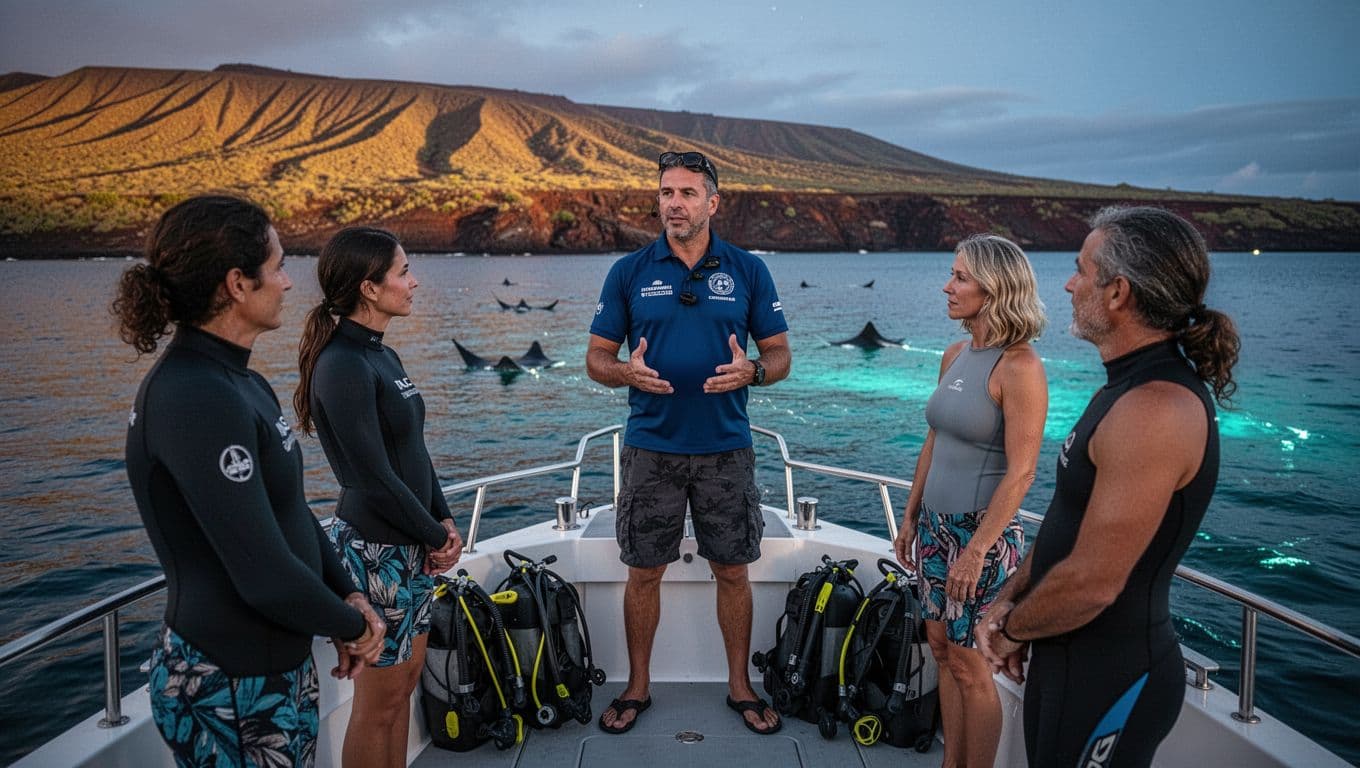
Before you book, check whether the trip includes a briefing about currents, flotation, entry procedures, and wildlife etiquette. You should know where to stay and what to do if you become tired or separated from the group.
A guide should also explain the limits of the encounter. Mantas may arrive late, remain below the surface, or stay away from the light. No ethical operator can promise a specific animal behavior.
Kona Snorkel Trips’ small-group approach gives guides more room to monitor individual guests. That matters if you have limited swimming experience or feel uneasy in open water.
Choose wildlife rules over close-up photos
Never touch, grab, ride, or block a manta. Keep your hands relaxed and your body still. If a manta approaches, let it pass without reaching toward its wings or cephalic fins.
The Hawaii DLNR public information archive discusses the growth of commercial manta ray night snorkeling at popular viewing areas. More visitors make careful behavior even more important.
Follow the guide’s instructions if the group needs to move, spread out, or leave the water. A clear view isn’t worth forcing an animal to change direction.
How to Prepare for a Manta Ray Snorkel
A little preparation helps you focus on the animals instead of your equipment. Night snorkeling feels different from daytime swimming because your depth perception changes after sunset.
Practice floating before dark
If you haven’t snorkeled recently, spend time in shallow water before your manta trip. Practice breathing through your snorkel, clearing water from your mask, and floating without kicking constantly.
Strong swimmers still benefit from conserving energy. You may spend much of the encounter holding a stable position while watching the water below.
Eat a light meal before departure and bring a warm layer for the boat ride home. Even in Hawaii, wind after sunset can feel cool when you’re wet.
Use the equipment correctly
A well-fitting mask should seal around your eyes without requiring excessive strap pressure. Fins should feel secure but shouldn’t pinch your feet.
Listen during the equipment briefing. Guides can help adjust your mask, explain the lighted board, and show you how to hold flotation without gripping tightly.
If you wear contact lenses, ask your guide about the available options. Prescription masks may also help if you need clear vision to follow the group.
Set realistic expectations
Mantas can appear within minutes, or you may wait longer. Some evenings bring several animals, while other trips produce only a few brief passes.
That uncertainty is part of wildlife watching. You may see feeding, cleaning, resting, or possible courtship, but you can’t direct the animals into a particular position.
When your plan is ready, you can check availability for a Kona manta night snorkel.
Build a Big Island Ocean Day Around It
A night manta trip fits well after a daytime ocean adventure. Many travelers interested in snorkeling on the Big Island of Hawaii schedule their reef outing earlier, then leave the evening open for the manta encounter.
Daytime conditions offer a different view of the coast. You can see coral structures, tropical fish, sea caves, and volcanic rock that disappear into the darkness after sunset.
Add a daytime reef trip
Kealakekua Bay is a popular daytime choice because the clear water and protected coastline offer a strong contrast to nighttime manta viewing. The Kealakekua Bay Captain Cook snorkel tour combines marine life viewing with the history and scenery of the Captain Cook Monument area.
If you want to snorkel Big Island waters during the day, allow enough time between trips to eat, dry off, and rest. A packed schedule can leave you tired before the nighttime outing begins.
For a Captain Cook or Kealakekua Bay trip, you can check availability.
Consider a private schedule
Families, couples, and groups with different swimming abilities may prefer a private charter. A private trip can give you more control over the pace, rest breaks, and combination of activities.
Kona Snorkel Trips offers private Kona boat tours that can be tailored around snorkeling, wildlife viewing, remote beaches, or a special occasion.
During humpback whale season, some visitors combine a whale watch with a manta snorkel. The animals are active at different times of day, so the schedule depends on the season and available tour timing. See the Kona whale watching tours for more information about that seasonal option.
What to Remember During the Encounter
Manta ray courtship is a natural behavior that unfolds on the animals’ terms. You might see a single male following a female, or you might watch several rays feeding in smooth circles beneath the light.
The most responsible approach is also the simplest. Stay with your group, listen to your guide, keep your distance, and allow every manta to choose its own path.
A Manta Ray Kona trip becomes more rewarding when you know what you are seeing. Feeding patterns, courtship trains, and individual markings turn a beautiful swim into a closer look at how these animals live.
Conclusion
Manta ray courtship usually begins with a close pursuit, continues through sharp turns and careful positioning, and ends with a brief mating event. At Kona’s nighttime sites, feeding remains far more common, so observe patiently before interpreting a behavior.
Your best encounter comes from choosing a responsible guide, preparing for dark-water conditions, and allowing the rays to control the distance. The Manta Ray Kona experience is memorable because the animals remain wild, unpredictable, and free to move through the light on their own terms.