
Manta Ray Gill Slits Explained for Night Snorkelers
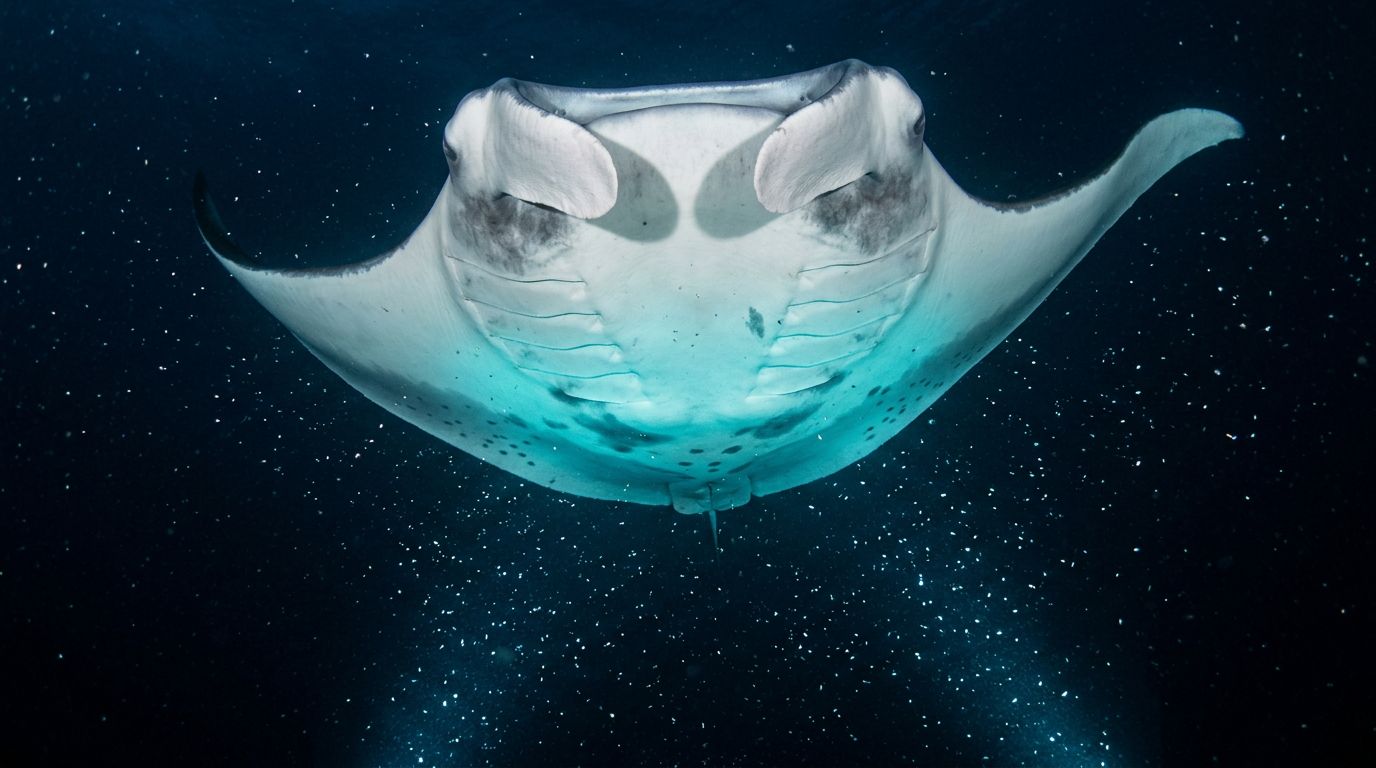
Kona Snorkel Trips puts the focus where it belongs during a night manta encounter: on the animal, the water, and your safety. When you notice the five openings beneath a manta’s head, you may wonder whether those manta ray gill slits are wounds, mouths, or something else.
They are the exits for water that has passed over the manta’s gills. The filtering happens inside the gill chamber, where specialized structures separate plankton from seawater. If you’re planning snorkeling Big Island Hawaii adventures, learning this simple detail can make your time in the water more fascinating and less confusing.
What are manta ray gill slits?
Manta rays are cartilaginous fish, related to sharks and other rays. Instead of lungs, they use gills to take oxygen from seawater. You can see the gill openings on the underside of the body, behind the mouth and cephalic fins.
Most manta rays have five pairs of gill slits. Each opening looks like a curved line or narrow fold. In the glow of a night snorkel light, those openings can look surprisingly large. Their shape may also make them seem like cuts in the animal’s skin.
They aren’t injuries. The slits are normal parts of the manta’s respiratory system.
Water enters through the manta’s mouth as it swims. It then passes over the gill surfaces, where oxygen moves into the bloodstream and carbon dioxide moves out. After that exchange, the water leaves through the five pairs of openings.
The gills sit inside the body. The slits are only the visible openings that connect the internal gill chambers with the surrounding ocean.
The slits are the exit points for water, while the filtering happens inside the gill chamber.
You may also notice small openings behind the eyes. These are spiracles, which help move water into the mouth and gill area, especially when the manta rests near the seafloor. They are different from the gill slits and sit in a different location.
During a night encounter, focus on the area behind the manta’s mouth. The five paired openings there are the structures you are looking at.
How manta ray gill slits work underwater
A manta ray needs a steady flow of water across its gills. Unlike some fish that can stay still and pump water actively through their mouths, mantas depend heavily on swimming to move water through the respiratory system.
As the manta glides forward, its broad mouth collects seawater. The cephalic fins on either side of the mouth help direct water toward the opening. The water then travels through the mouth and across the gill chambers.
Oxygen passes across thin gill tissue and enters the blood. At the same time, the blood releases carbon dioxide into the water. The water leaves through the visible gill slits, and the manta continues forward.
The process supports both breathing and feeding. Mantas are filter feeders, so they swim through areas where plankton gathers. The NOAA giant manta ray profile describes giant manta rays as filter feeders that consume large quantities of zooplankton. It also notes that the giant manta can reach a wingspan of up to 26 feet.
The gill slits themselves don’t act as strainers. Inside the mouth and gill chamber, specialized structures capture food particles while allowing much of the water to pass through. These structures are often called gill rakers or filtering plates.
Research described in a study of manta ray filter feeding found that manta rays use a highly specialized feeding system. The design helps them collect plankton without clogging the respiratory surfaces that they need for breathing.
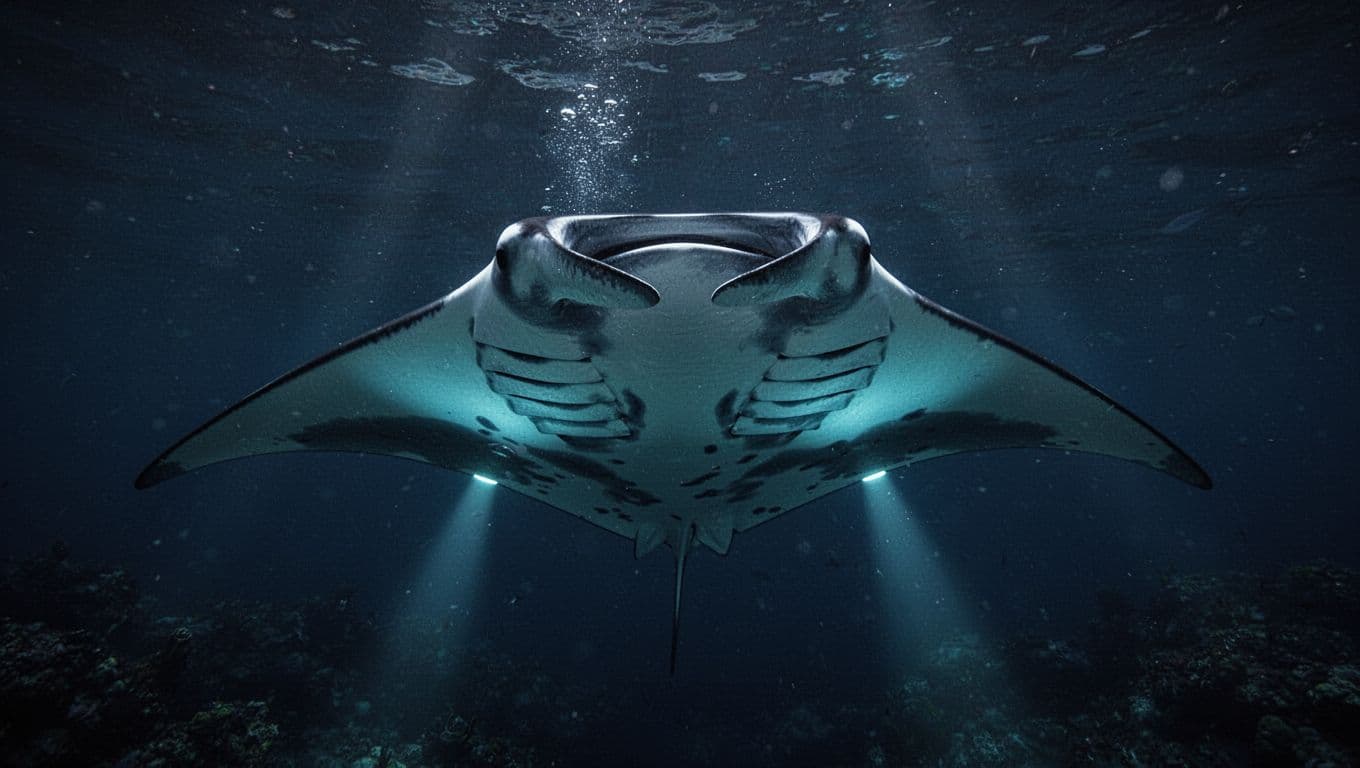
The feeding and breathing systems work together, but they aren’t the same thing. The manta takes in food with the water, filters the useful particles, and sends the remaining water out through the gill openings.
Why night snorkelers see the slits so clearly
A daytime reef snorkel usually gives you a view from above. You see a manta’s dark back as it passes below, or you watch its wings sweep through clear water. A night snorkel changes your angle.
Manta rays often approach the surface from below, where underwater lights gather plankton. As the animals circle through the illuminated water, you may look up at their pale underside. Their mouth, cephalic fins, belly, and gill slits become much easier to see.
The contrast is striking. Dark water surrounds the animal, while the light reveals the lighter underside. When a manta turns, the gill openings may appear and disappear in seconds.
You might see the animal glide directly above you with its mouth open. In that position, the five pairs of slits sit behind the mouth in a neat pattern. The openings may expand slightly as water moves through the gill chambers, although you shouldn’t expect dramatic pulsing like a fish pumping its gills.
The manta’s smooth movement can also make the respiratory process hard to notice. There is no obvious struggle or effort. It simply maintains a slow, controlled path through the plankton-rich water.
That calm motion is a useful reminder to stay calm yourself. You don’t need to chase the manta or swim toward its head to see the anatomy. The animal often passes close enough for you to observe from a stationary position.
What to watch for during a manta encounter
Your guide will usually explain where to position yourself before you enter the water. Follow those instructions closely. A stable position gives you a better view and keeps the manta in control of the interaction.
When a manta approaches, notice these details:
- The cephalic fins can curl, flatten, or roll slightly as the manta changes direction.
- The broad mouth may open wide as the animal collects plankton-filled water.
- The five paired gill slits sit behind the mouth on the underside.
- The pectoral fins create slow, powerful wingbeats that keep the manta moving.
- The tail trails behind the body and may be difficult to see in dark water.
You may see the manta make a barrel roll. This happens when the animal loops through the same food-rich area and turns back toward the lights. During the turn, the slits can appear at a different angle, so you may notice their position more easily.
Watch the entire animal instead of staring only at one feature. A manta’s body language gives you information about its comfort. Smooth passes, wide turns, and relaxed fin movements indicate normal feeding behavior. Sudden evasive turns may mean the animal needs more space.
Keep your hands relaxed and close to your body. Don’t reach toward the gill openings, mouth, fins, or cephalic fins. Even a gentle touch can interfere with the manta’s movement and feeding pattern.
Your mask may fog, or bubbles may distract you at the moment the manta passes overhead. Stay patient. Another pass often follows, and the next view may be even better.
Are the openings wounds, mouths, or breathing holes?
The gill slits are breathing openings, but they aren’t mouths. A manta’s mouth is the large opening at the front of its head. It uses that mouth to collect water and plankton.
The slits sit farther back, behind the mouth. They lead away from the gill chambers after the manta has extracted oxygen from the water.
A healthy manta may have natural scars or marks from previous encounters with other animals. Those marks can appear near the gills, fins, or back. However, the repeated paired openings on the underside are normal anatomy.
You may also hear people call them “gill vents.” That description is understandable, although “gill slits” is the more common term for the openings you see.
The number and appearance of the slits can seem different depending on the manta’s angle. When the animal banks to one side, one row may be more visible than the other. Shadows can also make some openings look deeper or wider.
Night lights add another layer of confusion. A strong beam can create bright highlights around the mouth and pale underside, while the gill chambers remain dark. What you see is a combination of real anatomy, angle, and contrast.
How the manta’s breathing relates to feeding
Mantas don’t chew plankton. They collect tiny organisms in seawater, then use internal filtering structures to separate food from the water.
As the manta moves through a plankton patch, it opens its mouth and directs water inward. The water carries organisms such as zooplankton into the mouth. Filtering structures inside the gill area keep food particles moving toward the digestive system.
The filtered water continues toward the gills. Oxygen enters the blood, and the water leaves through the gill slits.
This design lets the manta feed while swimming. It doesn’t need to stop, grab individual prey, or rise to the surface for air. The same forward motion supports its breathing and feeding.
Because of this connection, touching or blocking the mouth can affect more than feeding. It can disrupt the water flow that the manta needs for respiration. That is one reason responsible guides ask you to keep your body, fins, and equipment out of the animal’s path.
You should also avoid diving beneath a manta or swimming directly in front of its mouth. A manta may change direction to avoid you, and repeated interruptions can cause it to leave the feeding area.
A good observation position lets you see the underside without forcing the animal to react. Stay still, keep your distance, and let the manta choose the path.
Safe and respectful night snorkeling rules
Night snorkeling feels different from a daytime reef trip. Darkness reduces visibility, and the light source can make you focus on one small part of the scene. Preparation matters.
Before entering the water, listen to the safety briefing. Your guide will explain where to hold onto the lighted board, how to keep your mask clear, and how to signal if you need help.
During the encounter:
- Keep your hands off the manta, even if it passes within reach.
- Avoid grabbing the board, rope, or another swimmer when a manta approaches.
- Keep fins from striking the animal or another guest.
- Don’t shine a personal light directly into the manta’s eyes.
- Follow instructions if your guide asks the group to move or adjust position.
- Tell the crew if you feel cold, anxious, seasick, or tired.
You don’t need advanced freediving skills to observe the gill openings. Most of the encounter happens at the surface or near a floating light board. However, you should feel comfortable wearing a mask and breathing through a snorkel.
Families can ask about age requirements, flotation equipment, and conditions before booking. A child who feels uncertain in dark water may enjoy a daytime reef trip more. Couples and confident swimmers may prefer to stay in the water longer, but comfort should guide the decision.
Reef-safe habits matter at night as much as they do during the day. Keep sunscreen, fins, and equipment away from coral and other marine life. Use only the gear your guide recommends, and don’t place objects on the seafloor.
Choosing a Kona night manta operator
A responsible operator should treat the manta encounter as a wildlife experience, not a performance. Look for clear safety instructions, trained guides, well-maintained gear, and a group size that allows the crew to monitor everyone.
Kona Snorkel Trips follows a “Reef to Rays” philosophy. The company focuses on small-group service, guest safety, quality snorkeling equipment, and education about Hawaii’s marine environment. Lifeguard-certified guides lead the trips, and custom-built lighted boards help create the plankton-rich viewing area.
The approach also gives you more room to pay attention to the animals. Instead of crowding the water with unnecessary movement, the crew can explain what you’re seeing and help you stay in a comfortable position.
You can review the manta ray snorkel Kona tour before choosing a date. The page includes night manta options and seasonal combinations for travelers who want to pair ocean activities during their Big Island visit.
For a direct reservation with Kona Snorkel Trips, you can check availability for available ocean adventures.
You can also compare the company’s approach with Manta Ray Night Snorkel Hawaii, another dedicated option for travelers interested in seeing manta rays after dark. Read the safety details, trip length, meeting instructions, and equipment information before you book.
Guest reviews can help you judge how well an operator communicates before departure and supports guests in the water.
When you decide on a manta ray snorkel trip, you can check availability for Kona Snorkel Trips’ night excursion.
Planning your manta ray night snorkel
Book the encounter for a night when you can arrive rested. You may spend time on a boat before entering the water, and the ocean can feel cooler after sunset.
Bring a swimsuit, towel, dry clothes, and any personal medication you need. Your operator will explain which snorkeling equipment is included. A small waterproof phone case can protect your phone before and after the trip, but keep devices out of the water unless your guide permits them.
If you get seasick, ask about prevention before departure. Eat a light meal and avoid arriving dehydrated. Let the crew know about motion sickness before the boat leaves, since early support is easier than trying to manage symptoms later.
Weather and ocean conditions can affect the experience. A responsible operator may change the timing, location, or plan when conditions make the trip unsafe. That decision protects guests and gives the crew a better chance of providing a calm wildlife encounter.
Daytime snorkeling can complement your night trip. A day spent snorkeling Big Island waters lets you see reef fish, coral structures, and coastal features in natural sunlight. You can snorkel Big Island reefs at a slower pace, then focus on manta anatomy after dark.
Kona Snorkel Trips also offers Big Island snorkeling tours for travelers who want to add a daytime ocean adventure. Kealakekua Bay is another popular daytime option, with clear water, reef habitat, and the historic Captain Cook monument.
Quick answers about manta ray gill slits
How many gill slits does a manta ray have?
Manta rays generally have five pairs of gill slits, for ten openings in total. You may not see every opening during a pass because the animal’s angle, lighting, and movement can hide part of the underside.
Can manta rays breathe while they stop swimming?
Mantas depend on water moving across their gills, so steady swimming is important. They can use spiracles to move water in certain situations, but you shouldn’t expect them to hover motionless for long periods like some reef fish.
Do the slits help manta rays eat?
The slits are part of the breathing system, not the main filtering surface. Mantas filter plankton inside the mouth and gill area, then send the remaining water out through the gill openings.
Can you touch the gills?
You shouldn’t touch any part of a manta ray. Contact can damage its protective skin, disturb its feeding, and cause it to change direction. Watching without contact gives you the clearest view and keeps the animal in control.
Why does a manta open its mouth so wide?
The open mouth helps the manta collect water containing plankton. Its specialized internal filtering system separates food from the water before the water moves across the gills.
Conclusion
The five paired openings beneath a manta’s head are normal gill slits, not wounds or extra mouths. Water passes over the gills, oxygen enters the bloodstream, and the used water leaves through those visible openings.
During a night snorkel, your best view comes from staying calm, holding your position, and letting the manta swim its natural path. With a knowledgeable guide and respectful distance, you can watch the animal feed, breathe, and glide through the light without interfering with its routine.