
Manta Ray Feeding Depths in Kona Explained
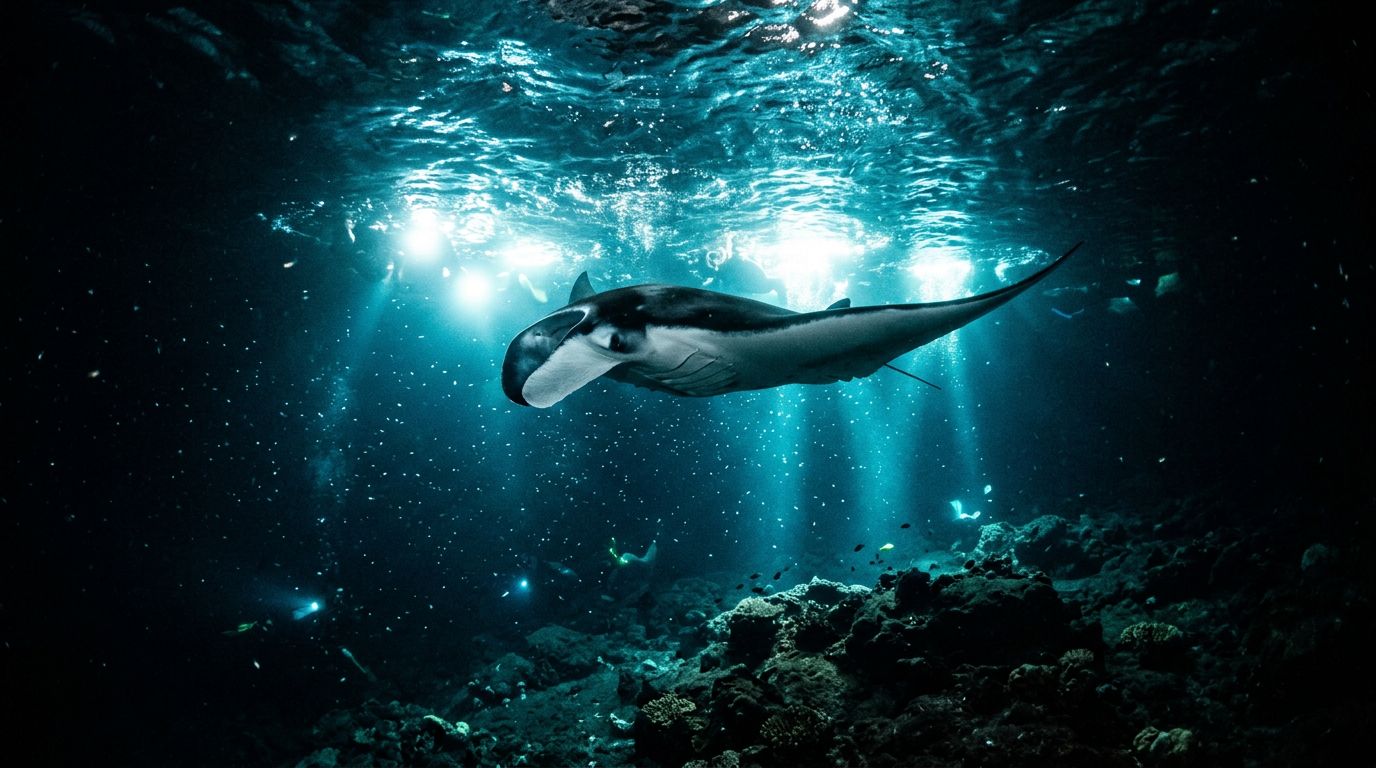
At Kona’s famous night snorkels, manta rays may look deep, but you usually watch them from the surface. Understanding manta ray feeding depths helps you choose the right trip, set realistic expectations, and stay comfortable in the water.
If you’re planning snorkeling Big Island Hawaii, you’ll want to know the difference between the depth of the seafloor and the depth where a manta is feeding. Kona Snorkel Trips builds its Reef to Rays experiences around that surface viewing setup, where light, plankton, and natural behavior meet.
Manta ray feeding depths in Kona: the short answer
The managed manta viewing areas near Kona are generally shallow compared with offshore dive sites. The encounter area is commonly described as roughly 25 to 50 feet deep, although the exact depth changes by location, tide, swell, and operating conditions.
You don’t need to dive to reach the feeding zone. Snorkelers stay at the surface and look down while manta rays circle through the illuminated water below.
The typical viewing depth for snorkelers
A light board floats on the surface and shines into the water. That light concentrates plankton near the viewing area, which encourages manta rays to swim upward and feed.
The seafloor may sit several dozen feet below you, but the rays can move through different levels of the water column. One manta may glide directly beneath a board, then turn lower before rising again. Another may make wide passes through the light from the side.
For that reason, the advertised site depth doesn’t describe the ray’s exact position. It describes the water beneath the viewing area. The animals choose the depth that offers the best access to plankton.
Why the number changes
Manta rays follow food, not a fixed route. If plankton gathers close to the surface, they may feed high in the water column. If the food shifts lower, the rays may follow it.
Local currents also change the feeding pattern. Surface chop, wind, cloud cover, and the placement of lights can affect how the animals move. You may see rays directly under the boards on one night and farther below or to the side on another.
The difference between water depth and feeding depth
Many visitors ask, “How deep do manta rays feed in Kona?” The clearest answer depends on what you mean by depth.
The water depth is the distance from the surface to the bottom. The feeding depth is the level where a manta ray finds enough plankton to make each pass worthwhile. Those measurements aren’t always the same.
The bottom is a reference point
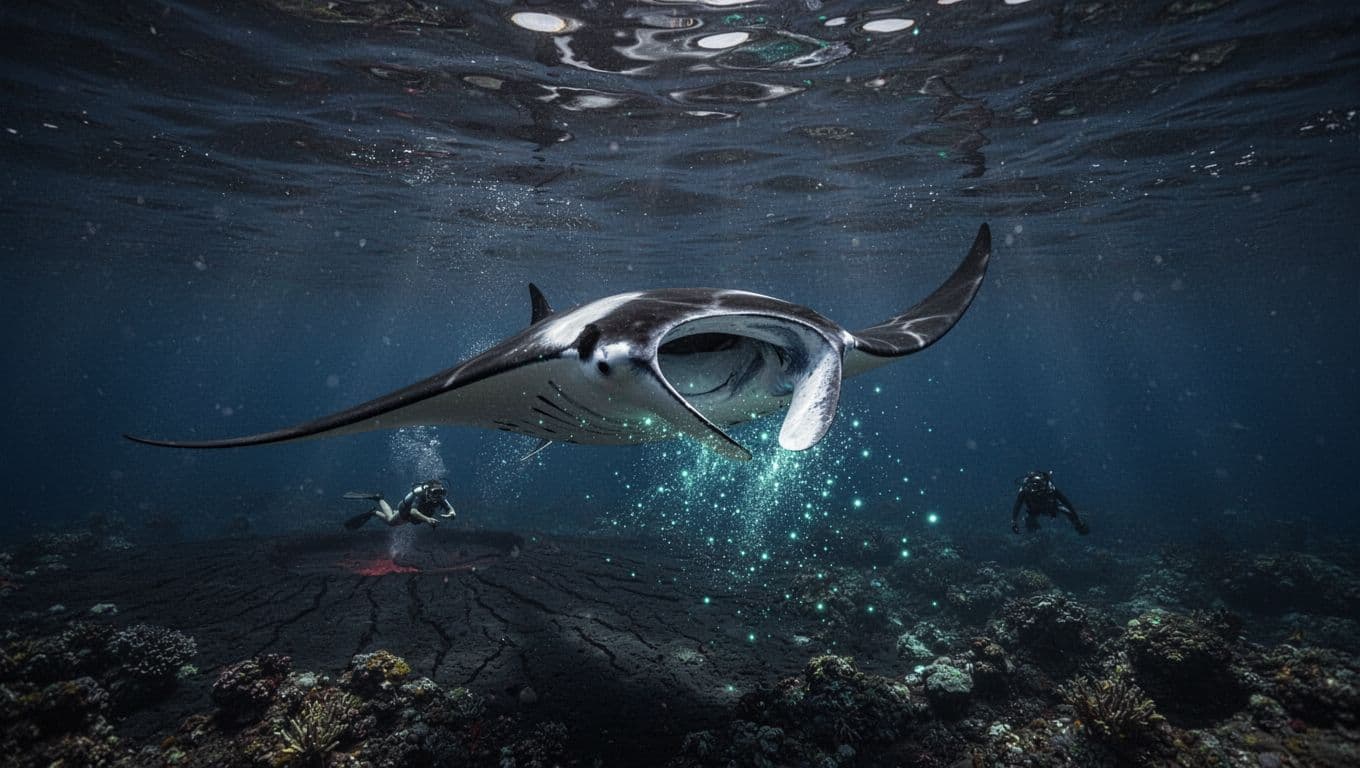
A viewing site with a sandy or rocky bottom around 30 to 40 feet deep gives divers a place to settle below the feeding activity. Snorkelers remain above and watch the same water column from a different angle.
The bottom also helps guides organize the encounter. Divers can stay low while snorkelers use the surface. This leaves the central water column open for the manta rays to turn and glide.
Still, you shouldn’t assume every ray will feed near the bottom. The animal may descend briefly, but many of the most memorable passes happen higher in the water.
The feeding layer can move
Plankton is carried by currents and can form thin, shifting patches. A manta ray responds by changing direction, speed, and depth.
That movement explains why the encounter can feel three-dimensional. You may watch a ray approach from below, roll slightly as it turns, and rise toward the light before disappearing into darker water.
How manta rays feed at night
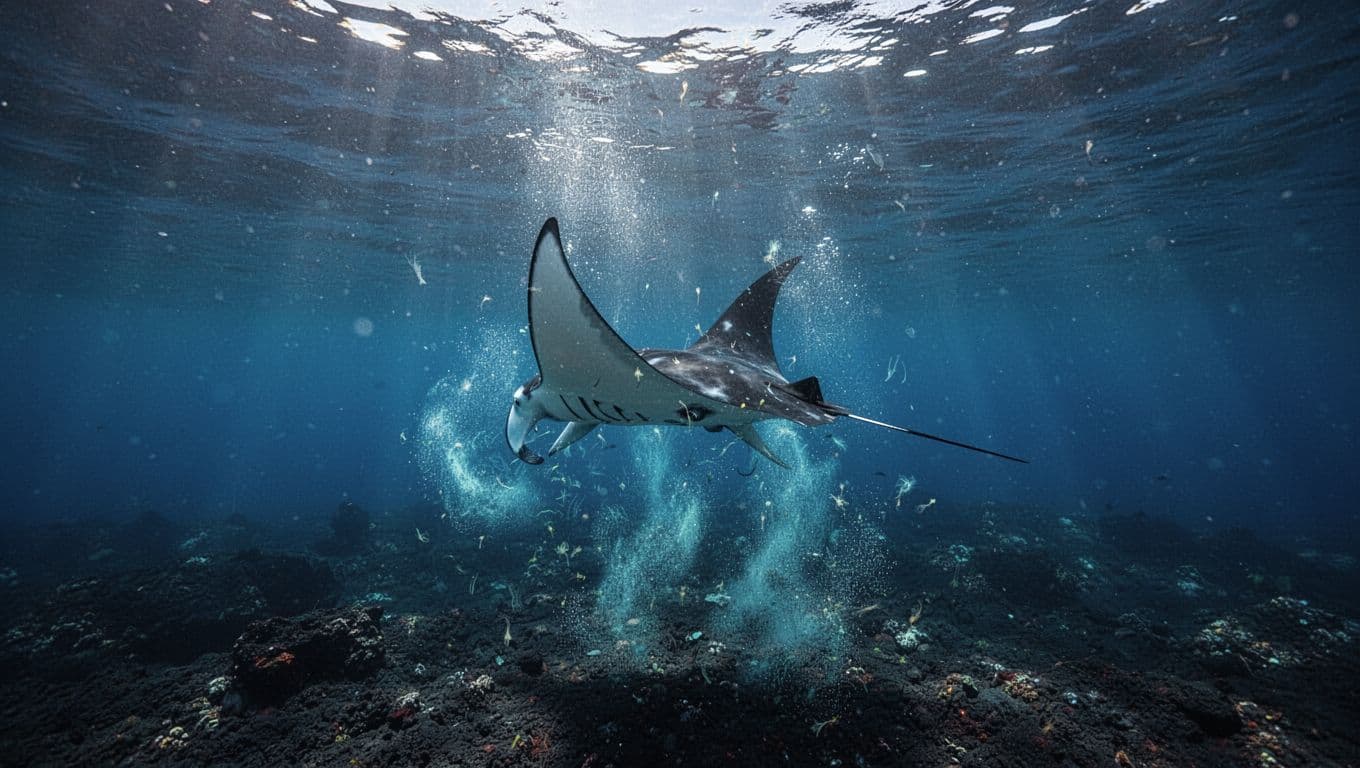
Manta rays are filter feeders. They don’t bite large prey or chase fish through the reef. Instead, they swim with their mouths open and strain tiny organisms from the water.
This feeding method makes the Kona night experience possible. Artificial lights gather plankton into a concentrated area, and the rays arrive because food has gathered there.
Their mouths collect tiny prey
A manta ray’s mouth is broad and toothless. Flexible cephalic fins near the mouth help direct water inward as the animal swims.
Inside the mouth, specialized filter structures separate food from water. The ray then swallows the concentrated plankton while releasing filtered water through its gill openings.
NOAA’s giant manta ray overview describes manta rays as filter feeders and notes that giant mantas may aggregate in shallow water while feeding. That information is useful for understanding manta behavior, although Kona’s regular viewing animals are generally identified as Hawaiian reef manta rays.
The lights concentrate food, not the animals
The light boards don’t feed the mantas. They create conditions that make plankton easier for the rays to find.
Small organisms gather around a light source, especially in the calm water near the surface. Mantas detect the food-rich area and make repeated passes through it. When the plankton becomes less concentrated, their movement may become wider or less predictable.
A study on reef manta rays found that prey density and tidal conditions influence where the animals feed. You can read the peer-reviewed reef manta feeding study for a closer look at how food availability affects manta movement.
The result is a natural feeding event shaped by the ocean. Your presence should never add food, touch the animals, or block their path.
Kona reef mantas are not all manta species
Species names can create confusion when you research manta ray feeding depths online. Different studies may discuss different manta species, and their habitats aren’t identical.
Kona encounters focus on reef manta rays
Kona’s regular night encounters are associated with Hawaiian reef manta rays, commonly identified as Mobula alfredi. These rays are long-term residents along the Kona Coast, so you can often find them in the area throughout the year.
Their predictable presence is one reason Kona has become known for nighttime manta viewing. The rays return when conditions provide a dependable source of plankton.
Even so, every night is different. A resident population doesn’t mean every viewing produces the same number of animals or the same feeding pattern.
Mantas can dive far deeper elsewhere
The shallow Kona setup shouldn’t be mistaken for the full depth range of a manta ray. Outside the viewing area, manta rays can make deeper dives while searching for prey or moving through different water layers.
Research on giant manta feeding ecology has challenged the idea that these animals depend only on surface zooplankton. The giant manta feeding ecology thesis examines evidence that mantas use broader feeding habitats.
That distinction matters when you compare a guided night snorkel with a scientific depth record. A Kona snorkel shows a shallow, food-rich feeding situation. It doesn’t show the deepest water a manta can reach.
What you see from the surface
You don’t need to be a freediver or experienced scuba diver to appreciate the encounter. The surface position gives you a clear view while allowing the rays to control their distance and direction.
Snorkelers stay above the feeding zone
Your guide will explain where to hold onto the board and how to position your body. In general, you float at the surface, keep your face in the water, and point your light downward.
This position lets you observe the manta’s underside as it passes. You may see its cephalic fins unfold, its mouth open, and its white belly markings appear in the beam.
The best view often comes when you remain still. Mantas can turn quickly, and sudden kicking or diving can interrupt their path.
Snorkeling and diving use different positions
Snorkelers and scuba divers may share the same general viewing area, but they occupy different levels.
| Participant | Usual position | Light direction | Main view |
|---|---|---|---|
| Snorkeler | On the surface | Downward | Manta belly and upward passes |
| Diver | Low near the bottom | Upward | Mantas crossing the water column |
Divers usually settle near the sand, rubble, or rock bottom. Snorkelers should never dive down into the space where the rays are feeding.
The water may be 40 feet deep, but you can still enjoy the encounter without swimming below the surface.
Conditions that affect feeding depth
Manta rays respond to the conditions around them. That means water depth can change during the same outing, even if the boat remains in one location.
Plankton density matters most
Food availability is the main factor. Dense plankton patches give manta rays a reason to make repeated passes through one area.
When the food spreads out, the rays may travel farther between passes. They may also spend more time turning, repositioning, or moving beyond the strongest part of the light.
The moon, current, and surface conditions can change how plankton gathers. However, you shouldn’t expect a simple rule such as “more moonlight means deeper rays.” Ocean conditions interact in ways that vary by night.
Weather can change the experience
Wind and swell affect your comfort at the surface. A calm evening may make it easier to hold a steady position and watch the feeding activity below. Choppier water can make the same depth feel more demanding.
Cloud cover and local currents can also affect visibility. Guides may adjust the exact position of the boat or light boards to match conditions.
Kona manta rays are present throughout the year, but sightings and behavior still vary. A year-round population improves your chances of an encounter without guaranteeing a particular number of animals or a specific feeding depth.
Hawaii DLNR materials define manta viewing hours as 4:00 p.m. to 4:00 a.m. the following day. Those rules also address vessel movement, viewing zones, and safe commercial operations.
How to choose a Kona manta tour
Depth is only one part of a good manta experience. You should also check the group’s size, guide-to-guest support, equipment, water entry, and plan for changing conditions.
Kona Snorkel Trips
Kona Snorkel Trips follows a “Reef to Rays” philosophy, connecting reef education with responsible wildlife viewing. The company focuses on small-group ocean adventures, lifeguard-certified guides, high-quality snorkeling equipment, and custom-built lighted boards for nighttime manta encounters.
That setup works well if you want clear instructions before entering the water and support while you float at the surface. Guides can explain why the mantas are moving at a certain level instead of promising that every animal will appear at one fixed depth.
The company also emphasizes reef-safe practices and respect for volcanic marine ecosystems. If you want to compare available Big Island snorkeling tours, check the trip format and meeting details before booking.
A second company to consider is Manta Ray Night Snorkel Hawaii. Compare both options by looking at departure times, group size, in-water support, equipment, and the operator’s wildlife guidelines.
When you’re ready to plan a Kona Snorkel Trips outing, you can check availability for current dates and spaces.
How to prepare for a night manta snorkel
The water may be shallow enough for surface viewing, but you still need to feel comfortable in open water. Good preparation helps you focus on the animals instead of your equipment or position.
Check your swimming comfort
Tell your guide if you’re nervous, tired, or unfamiliar with nighttime swimming. You may be able to use flotation support while you watch from the surface.
Families should check age requirements, water conditions, and the operator’s policy for children before booking. Couples and solo travelers should also consider how comfortable they are entering the water after sunset.
If you get motion sickness, ask about the boat ride and available options. A calm stomach makes it easier to keep your face in the water and watch the rays.
Follow the wildlife rules
Keep your hands to yourself. Never touch, chase, grab, ride, or block a manta ray.
Touching can remove the animal’s protective mucus layer. It can also change the ray’s behavior and force it to avoid a feeding area.
Point your light where your guide instructs you. Keep your body at the surface, avoid diving into the feeding column, and leave room for the manta to turn.
The Manta Trust behavioral ecology guide offers more background on manta feeding and movement. Understanding those behaviors makes it easier to observe without interfering.
Your best contribution to the encounter is calm observation. The manta should decide where to swim.
For a Kona manta trip, you can also check availability before finalizing your travel plans.
Planning your Big Island ocean adventure
A manta night snorkel fits well into a Kona itinerary because it offers a different view of Hawaii’s marine life than a daytime reef trip.
Pair nighttime viewing with a daytime reef
During the day, you can snorkel Big Island waters in bright natural light. Daytime trips let you look for reef fish, coral formations, sea turtles, and clear volcanic coastlines.
Nighttime manta viewing has a narrower focus. You spend less time exploring the reef and more time watching one of the ocean’s largest filter feeders work through a plankton patch.
If you want both experiences, schedule the manta outing on a separate evening from your daytime snorkel. That gives you time to rest between boat trips and keeps each experience distinct.
Kona Snorkel Trips also offers custom Hawaii snorkeling adventures for travelers who want to discuss reef sites, wildlife viewing, or a private boat format.
Leave room for changing conditions
Avoid packing your schedule so tightly that one weather delay affects every activity. Ocean tours depend on wind, swell, visibility, and safe operating conditions.
A flexible plan also helps if you want to repeat the experience. One night may bring close surface passes, while another may show rays working lower in the water column.
Snorkeling Big Island coastlines rewards patience. The most memorable encounter may not match the depth you imagined before entering the water.
What manta ray feeding depths tell you
Manta rays don’t feed at one permanent level in Kona. They follow plankton through the water column, and their position changes with food density, currents, light placement, and surface conditions.
For most night snorkelers, the important detail is simple: the viewing area is commonly around 25 to 50 feet deep, while you remain on the surface. The rays come upward toward a plankton-rich light zone, so you can watch them without diving.
That shallow viewing setup offers an accessible way to experience wild manta behavior. When you snorkel Big Island waters, respect the animal’s space, listen to your guide, and let the manta control the encounter.
Conclusion
Manta ray feeding depths in Kona are usually shallow enough for a surface snorkel, but the rays may move higher or lower as plankton shifts. The seafloor depth gives you context, while the feeding depth changes with the ocean.
You don’t need to chase a manta or dive toward it to see the behavior clearly. Stay calm, keep your light directed properly, and let the animal move through the water on its own terms. That approach gives you the safest view of Kona’s nighttime giants and protects the encounter for the next person.