
Unforgettable Manta Ray Dives Kona Adventures
By the time most visitors finish dinner in Kona, the main event is only getting started. The boats are loading, the sky is losing its last color, and people who spent the day debating snorkel versus scuba are suddenly asking the same question: what’s this going to feel like once the lights hit the water and the mantas arrive?
That question matters, because manta ray dives Kona visitors talk about for years are rarely about bravado. They’re about choosing the right version of the experience for your comfort level, following good guidance, and understanding why Kona works so consistently when so many wildlife encounters don’t.
An Unforgettable Night Awaits on the Kona Coast
The shoreline changes fast after sunset on the Kona Coast. The lava rock darkens, the wind usually softens, and the ocean starts to look less like a beach backdrop and more like a stage.

A lot of first-timers arrive with mixed feelings. They’re excited, but they’re also wondering whether night water will feel intimidating, whether they need diving experience, and whether the mantas really show up as often as people claim. In Kona, the answer is unusually reassuring. Kona’s manta encounters have an 85 to 90 percent sighting success rate on a given night, and the experience draws about 80,000 participants annually, with many tours seeing around 12 individual mantas per trip, according to Kona Honu Divers’ manta ray overview.
That reliability changes the mood before the trip even begins. People stop thinking of it as a gamble and start treating it like a real wildlife plan.
What the evening actually feels like
The boat ride out is usually the transition point. Onboard conversation tends to move from logistics to anticipation. Certified divers start checking lights and exposure protection. Snorkelers ask how long they’ll be in the water and whether they need to kick much. Families often just want to know if the kids can relax once they’re on the float.
Then the briefing starts, and the experience becomes simpler than most expect. You’re not chasing mantas through open ocean. You’re entering a managed viewing setup built around light, plankton, and passive observation. That’s why both diving and snorkeling can work so well here.
The people who enjoy this most aren’t always the most adventurous. They’re usually the ones who settle in, listen carefully, and stop trying to force the moment.
Why this encounter sticks with people
Manta rays don’t move like reef fish, and they don’t behave like sharks. They glide. They bank. They roll through the light with a kind of slow precision that looks almost unreal at night. For many guests, the first close pass resets the whole experience. The dark stops feeling unknown and starts feeling focused.
A good Kona manta trip leaves you with three impressions:
- The setting feels controlled: You’re in a specific viewing zone, not drifting aimlessly in darkness.
- The animals do the work: When conditions line up, the mantas come to feed in the lights.
- The encounter feels calm: Even when multiple mantas are feeding, the best tours feel organized rather than chaotic.
That combination is why manta ray dives Kona operators run remain one of the most talked-about marine experiences on the island.
Why Kona is the Manta Ray Capital of the World
Kona didn’t become famous for manta encounters by accident. The local setup works because geology, current flow, and animal behavior all line up in the same place.

The Big Island’s volcanic coastline creates underwater slopes and contours that help funnel nutrient-rich water. That supports predictable plankton movement, and plankton is what brings reef manta rays in to feed. At night, operators add light to the equation. Light attracts plankton, and plankton attracts mantas. It’s simple in principle, but very site-specific in practice.
The resident manta population matters
Kona also benefits from having a large, well-documented resident group. The local population is estimated at over 450 individually identified mantas, and guides and researchers identify them by the spot patterns on their bellies, which are unique to each animal, as described in this Kona manta population article.
That matters for two reasons. First, a resident population is more predictable than a passing one. Second, years of identification work have helped operators understand where feeding activity is most consistent and how to run encounters in a way that supports both viewing and conservation.
If you want a deeper look at the feeding behavior behind it, this explanation of why manta rays gather near Kona after dark is a useful companion.
Why reliability in Kona feels different
Many wildlife tours promise possibility. Kona’s manta scene offers repeatable conditions. That’s a major difference.
Here’s what makes the area stand out in practical terms:
- Volcanic underwater structure: It helps create the nutrient pathways that support plankton concentration.
- Night lighting techniques: Operators use lights to attract the food source, not the mantas directly.
- Known aggregation sites: Crews don’t guess from scratch each evening. They work established locations with long observation history.
- Long-term monitoring: Identifying individual mantas gives the local community a better read on patterns over time.
Field insight: The best manta nights aren’t random. They come from a coastline and an operating style that make feeding behavior easier to predict.
That’s the reason Kona holds its reputation. It isn’t just scenic. It’s functional.
Choosing Your Adventure Manta Ray Dive vs Night Snorkel
You arrive at the harbor after sunset, sign the waiver, and then hit the question that shapes the whole night. Do you want to watch mantas from the surface with a snorkel, or settle underwater on scuba and see them pass overhead from below?
Both trips can be excellent. The better choice depends on how comfortable you are in the ocean, whether you are certified, how much gear management you want after dark, and what kind of view you came for.
Scuba gives you the classic upward perspective. You descend with the group, get into position on the bottom, and watch the light column above you fill with plankton and movement. Snorkeling gives you the full show from the surface. You hold onto a float board, keep your face in the water, and watch the rays rise toward the lights below. Same encounter area. Different workload, different body position, different feel.
The quick comparison
| Feature | Scuba Diving | Night Snorkeling |
|---|---|---|
| Skill required | Open Water certification and recent comfort in the water | Accessible to beginners who are comfortable in the ocean |
| Viewpoint | Upward view from below the mantas | Top-down view from the surface |
| Physical feel | More equipment, controlled descent, stationary on the bottom | Floating at the surface, less gear, easier entry for many guests |
| Best fit | Certified divers who want the underwater perspective | Families, first-timers, and mixed-skill groups |
| Main trade-off | More immersive underwater, but requires certification and night-dive comfort | Easier to join, but you will not get the seafloor perspective |
For many visitors, snorkeling is the more practical entry point. The success of the trip does not depend on scuba training, and a good crew can make a first night snorkel feel organized instead of overwhelming. If you are comparing formats in more detail, this guide on how to choose the right Kona manta ray snorkel tour lays out the differences clearly.
When scuba is the better choice
Choose scuba if being underwater is part of why you booked the trip in the first place. Divers who enjoy controlled descents, quiet bottom time, and the sensation of animals moving through the water column above them usually prefer this format.
It also suits guests who dislike long face-down surface floating. That is more common than people admit. On scuba, your position is set, your job is simple once you are down, and many divers find that more calming than staying at the surface in the dark.
The trade-offs are real:
- You must be certified: This is for licensed divers, not a shortcut into scuba.
- Night comfort matters: Even shallow dives feel different after sunset.
- Task loading is higher: You need to manage buoyancy, breathing, mask comfort, and light discipline without getting distracted by the mantas.
When snorkeling is the smarter move
Snorkeling is often the better fit for first-timers, families, and groups where not everyone dives. The learning curve is shorter, the equipment is simpler, and many guests find it easier to stay calm when they know they can lift their head at any time.
That is also why the surface experience works well for travelers who want a strong manta encounter without adding the cost and logistics of scuba. A well-run snorkel trip keeps the group together, gives you flotation support, and lets you focus on breathing and watching.
If you are comparing operators, the Manta Ray Night Snorkel Hawaii option is one to look at. Kona Snorkel Trips also runs small-group manta snorkel tours with lifeguard-certified guides, which matters if you want more direct attention in the water and less crowding around the float.
The feel of the evening
The biggest difference is not just where you are in the water. It is how the night feels in your body.
On scuba, the first few minutes ask more of you. You gear up, descend, equalize, settle in, and get stable. Once that work is done, the experience often becomes very calm.
On snorkel, entry is simpler, but some guests need a minute to adjust to floating in the dark with their face in the water. That is normal. If the mask fits well and breathing settles down, the surface view can be spectacular.
What works well for nervous first-timers
Guests who have the smoothest snorkel experience usually do a few simple things right:
- Tell the crew early if you are nervous: Good guides can adjust positioning and coaching before you get in.
- Settle your breathing first: The mantas are not in a hurry. You should not be either.
- Use the flotation properly: Let the board support you instead of trying to swim around.
- Choose comfort over pride: The right tour format is the one that lets you stay relaxed enough to enjoy the animals.
That last point matters. People rarely regret choosing the option that matches their comfort level. They do regret forcing themselves into the version that looked better on paper.
The Ultimate Manta Ray Scuba Dive Experience
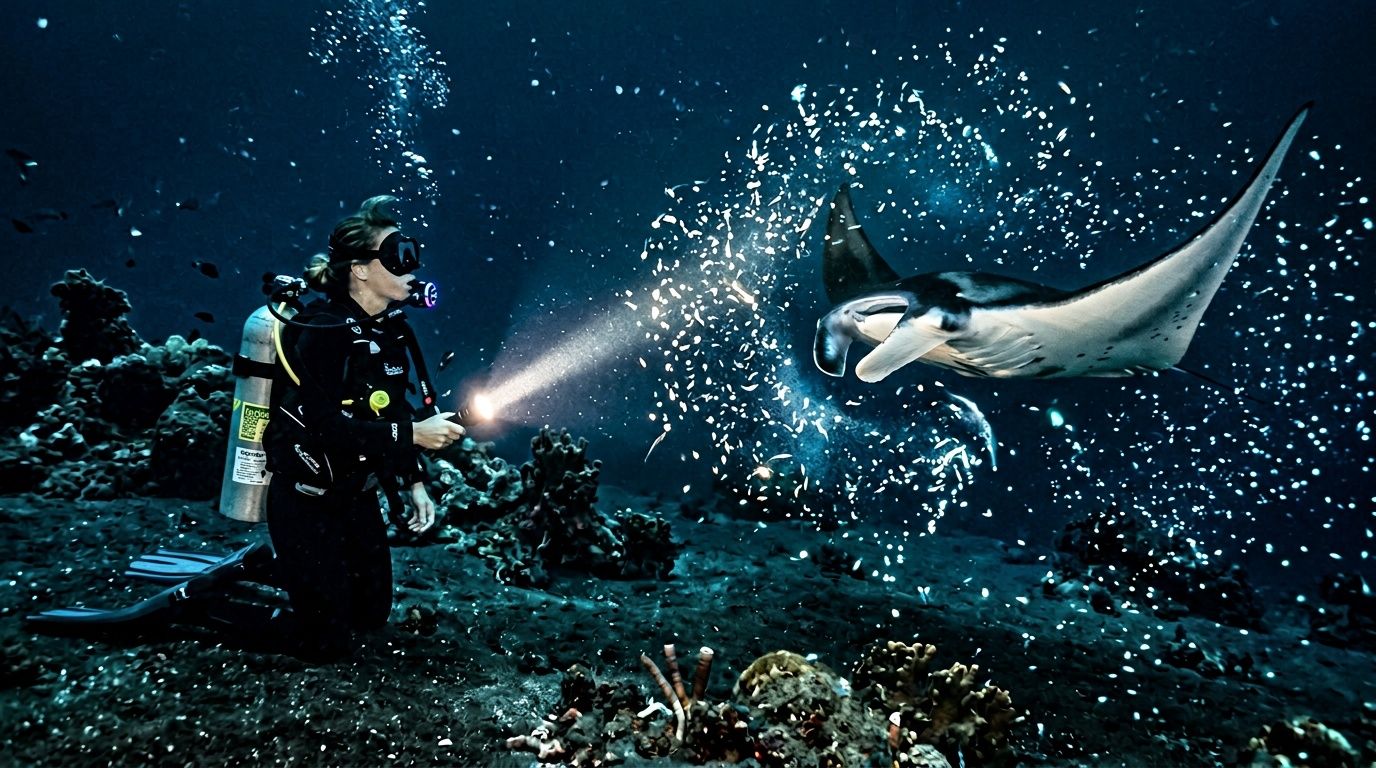
For certified divers, this is one of the signature night dives in Hawaii. It isn’t a hunt. It’s a controlled sit-down in shallow water, with the mantas arriving on their own terms.

The dive itself is typically run in a shallow-water environment at 25 to 45 feet, which makes it accessible to Open Water certified divers and allows 45 to 60 minutes of bottom time for the encounter, as outlined in this explanation of Kona manta dive depth and structure.
How the dive usually unfolds
The process is straightforward when the operator runs it well.
Boat briefing
You’ll get site instructions, entry procedures, light use, and the mandatory manta etiquette rules.Controlled descent
Groups descend with the guide and settle into a designated viewing area rather than swimming around the site.Stationary observation
Divers kneel or stay low on the sand while lights point upward and plankton gathers.Manta activity builds
Once feeding starts, the rays make repeated passes through the lit water column, often close enough that everyone forgets to check anything except their own breathing.
What experienced divers appreciate most
This dive rewards discipline more than athleticism. Good buoyancy, still hands, and calm movement matter more than advanced certification. Divers who rush, fin aggressively, or try to reposition constantly usually get less out of it.
The best manta ray dives Kona scuba guests have are often the least dramatic in terms of diver behavior. You settle. You watch. The scene comes to you.
A few practical truths:
- This is not a navigation dive: You’re not covering ground.
- It’s easier than many divers expect: Shallow depth and stationary viewing reduce the workload.
- Night comfort still matters: If you haven’t dived in a while, refresh your basics before booking.
Stay low, keep your light where the guide wants it, and resist the urge to chase the action. The mantas create the show when divers stop trying to direct it.
Operator choice makes a visible difference
This is one of those experiences where guide quality changes everything. A well-run manta dive feels calm from the briefing onward. Entries are organized. Descents are clean. Diver spacing makes sense. The group knows where to look and what not to do.
For scuba-focused travelers, Kona Honu Divers’ 2-Tank Manta Dive is a relevant option to look at. Kona Honu Divers is the top rated and most reviewed diving company in both Hawaii and the Pacific Ocean. If you’re still comparing the overall scuba side of the experience, this article on the Hawaii manta dive adds useful context.
Planning Your Manta Encounter Best Times and Locations
One of Kona’s biggest advantages is that you don’t have to build your entire trip around a narrow migration window. These encounters are available year-round because the local manta activity is tied to resident feeding behavior rather than a short seasonal pass-through.
That said, “year-round” doesn’t mean “every night feels the same.” Conditions still matter. Wind, surface chop, current, and your own comfort level all affect how enjoyable the outing feels, especially if you’re snorkeling.
The site choice usually comes down to conditions
Most visitors hear the same two site names first: Manta Village and Manta Heaven. Both are well known, and both can deliver excellent encounters. The practical difference for guests isn’t bragging rights. It’s how the night’s conditions line up with the operator’s plan.
Good crews don’t choose a site based on marketing language. They choose based on recent activity, current ocean conditions, and what will allow the group to settle in safely.
If you’re curious about one variable people ask about often, this guide to the Big Island manta ray night snorkel moon phase is worth reading.
Booking advice that saves frustration
The most useful planning advice is simple:
- Book early if your dates are fixed: Manta tours are one of the most in-demand night activities in Kona.
- Leave schedule flexibility if you can: If weather shifts, having another possible night helps.
- Choose based on fit, not just price: The cheapest seat isn’t always the easiest experience.
- Ask how the operator handles nervous guests: This matters more than flashy boat photos.
What seasoned travelers do differently
People who’ve done this before usually treat the manta tour as a priority night, not an afterthought after a packed day. They don’t arrive exhausted, dehydrated, or chilled from another ocean activity. They eat sensibly, bring a warm layer for after the trip, and give themselves time to listen to the briefing without feeling rushed.
That approach sounds minor, but it changes the tone of the whole evening. A calm guest almost always gets more out of a manta encounter than a stressed one.
Safety and Manta Etiquette A Responsible Encounter
The most important rule is also the simplest. Don’t touch the manta rays. Not for a better photo, not because one passes close, not because the moment feels irresistible.

Touching can damage the protective mucus layer on a manta’s skin. That’s why responsible operators repeat the rule before you get in the water and reinforce positioning throughout the trip. If you want a clear explanation of the issue, this article on whether you can touch manta rays on a Kona manta ray snorkel lays it out plainly.
Good etiquette also improves the experience
A lot of guests think etiquette is only about conservation. It’s also about getting better sightings.
Mantas feed best when people stay predictable. Divers should remain low and avoid rising into the water column. Snorkelers should hold the board or float as instructed rather than kicking around and changing position constantly. When the group stays organized, the mantas keep using the same feeding lanes.
The rules that matter most in the water
- Stay in your assigned position: Don’t drift off to get a private angle.
- Keep your hands to yourself: If a manta comes close, let it pass.
- Listen on entry and exit: Most preventable problems happen during transitions.
- Don’t turn it into a chase: The moment you pursue, the encounter gets worse for everyone.
Calm guests see more. Mantas tolerate structure far better than commotion.
Safety starts before the mantas appear
The safest tours are not the ones that act fearless. They’re the ones that normalize caution. Good guides talk clearly, check understanding, and give nervous people permission to slow down.
That culture matters. It protects the animals, and it also protects the quality of the experience for every guest in the group.
Your Complete Kona Manta Trip Checklist
You don’t need a lot of gear to enjoy this well, but you do need to prepare like it’s a night ocean activity and not just a quick swim stop. Small details decide whether you spend the ride back smiling or shivering.
What to ask before you book
- Ask about group size: Smaller groups usually feel more manageable, especially for first-timers.
- Ask who the trip is best for: Some tours are smoother for nervous snorkelers. Others are built more around experienced divers.
- Ask what’s provided: Wetsuits, masks, snorkels, flotation, and lights can change what you need to bring.
- Ask about the operator’s manta rules: A responsible answer should sound specific, not vague.
What to bring with you
- A towel and dry clothes: The ride back can feel cool after night water.
- A warm layer: Even people who are comfortable in the water often want something warmer after the tour.
- Any personal seasickness remedies: If boat motion bothers you, handle that before departure.
- An underwater camera only if you can use it with ease: If fiddling with settings stresses you out, leave it behind.
What to expect physically
Even in warm Hawaiian water, people often get chilled when they’re relatively still at night. Wetsuits help, but comfort after the tour matters too. You’ll also enjoy the experience more if you go in rested, hydrated, and not overly full from dinner.
The practical goal isn’t to pack more. It’s to remove distractions.
Frequently Asked Questions About Kona Manta Ray Tours
A lot of hesitation shows up in the last day or two before a tour. I hear the same questions at check-in all the time, from first-time snorkelers, certified divers, and parents trying to choose the right trip for their group. Clear answers help you book the version of the manta experience that fits your comfort level instead of the one that only looks good in photos.
Is it scary to be in the ocean at night
It can feel intimidating for the first few minutes, especially if you have never been in the water after dark. Kona manta tours are structured experiences, though, not free-swimming night sessions.
Snorkelers usually hold onto a lighted float or board while guides keep the group together on the surface. Divers descend with a guide, settle into a set viewing area, and stay there while the mantas come through the lights. Once guests realize they are not drifting around in the dark, the stress level usually drops fast.
What if I’m not a strong swimmer
Snorkeling is often the better choice for guests with limited swim confidence. You are floating, not covering distance, and reputable crews build their setup around support gear and close supervision.
Still, not every tour feels the same. Some boats are better for nervous beginners. Some are better for independent, water-comfortable guests who need less help. Ask how long you are in the water, what flotation is provided, and how guides assist someone who gets uneasy once they are in.
Are sightings guaranteed
No operator can promise wild animals on command. Kona does have one of the more reliable manta encounters you will find, as noted earlier, but the right mindset is still wildlife viewing, not a show.
A good question to ask is what happens if mantas do not appear. Some companies offer a return trip or discounted second chance. That policy matters more than a sales promise.
Is snorkeling or scuba better for photos
They produce different kinds of images. Snorkelers often get the wider overhead view, with multiple mantas circling below the lights. Divers can get dramatic shots looking up as a manta glides overhead through the beam.
The trade-off is task loading. Night diving already asks for more awareness than a daytime reef dive, and even snorkeling can feel busy if you are managing a camera, mask, breathing, and excitement all at once. If getting the perfect shot will pull you out of the experience, keep the camera setup simple.
Can kids do the manta experience
Often, yes. Snorkel tours are usually the more realistic fit for families, but age minimums and participation rules vary by operator.
The bigger issue is temperament. A child who is calm in the water, listens well, and handles boat rides and darkness without getting rattled may do great. A child who already dislikes masks, gets motion sick, or struggles in unfamiliar conditions may have a long night, even if they are excited at the dock.
What should I do if I feel anxious right before getting in
Tell the crew right away. That gives the guide a chance to slow the pace, check your gear fit, walk you through the entry, and give you one job at a time.
Anxiety usually gets worse when people rush. Focus on breathing, then the entry, then getting settled. You do not need to perform. You just need to get comfortable enough to watch.
Should I choose a small-group tour
If you want more guide attention and a calmer pace, small-group tours are usually the better value, even if the ticket price is a little higher. That matters for first-timers, cautious snorkelers, families, and divers who prefer a more controlled briefing and water entry.
Larger boats can still run good trips, but they ask more from the guest. You may need to be quicker with gear, more patient during entries, and more comfortable sharing space at the float or underwater viewing area. Eco-conscious operators with smaller groups also tend to do a better job reinforcing manta etiquette instead of treating the encounter like a race.
If you are ready to stop comparing tabs and get on the water, use these questions to choose the right format for you. Pick snorkeling if you want the easier learning curve and lower cost. Pick diving if you are certified and want the underwater view. Either way, choose a crew that keeps groups manageable, respects the mantas, and explains the plan clearly before anyone gets wet.