
Manta Ray Diving Hawaii: The Ultimate 2026 Guide
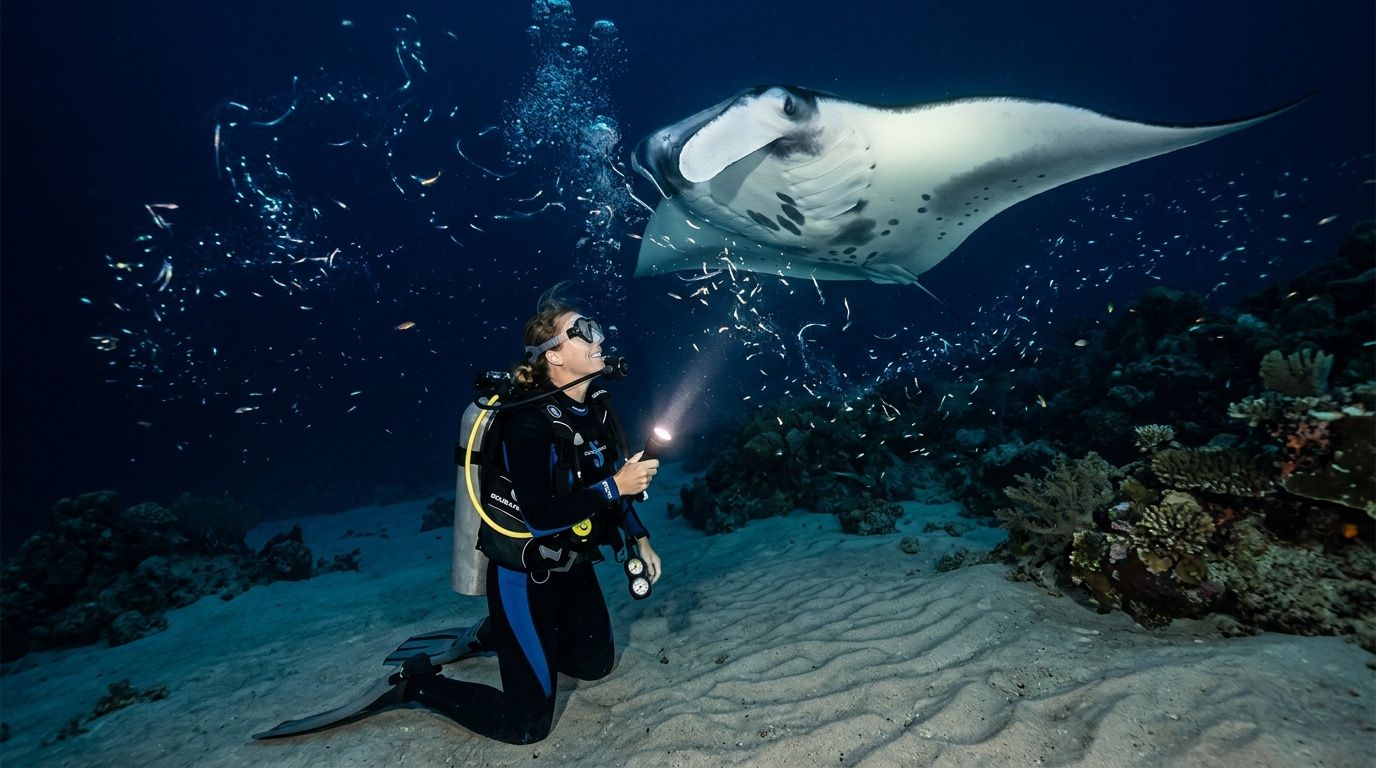
The first time you see a manta at night off Kona, the scale of it is what gets you. One moment you’re staring into dark water lit by a few beams, and the next a giant shape rolls through the light so smoothly it barely seems real.
That mix of calm, surprise, and awe is why people come looking for manta ray diving hawaii experiences in the first place. Done well, it’s one of the most memorable wildlife encounters in the ocean. Done poorly, it can feel crowded, rushed, and less respectful to both people and animals.
An Otherworldly Encounter Awaits You in Hawaii
A lot of ocean tours promise something unforgettable. Kona’s manta encounters usually deliver.

What it feels like in the water
At night, the ocean gets quiet in a way that surprises first-timers. Boat noise fades. People stop talking. Then the lights start drawing plankton, and the whole scene shifts from black water to a glowing feeding station.
From below, divers watch mantas sweep overhead. From the surface, snorkelers see broad wings and white bellies circling through the light. Nobody forgets that first close pass.
Practical rule: The best guests are the calmest guests. Stay still, keep your hands in, and let the mantas control the distance.
Why Kona stands apart
Kona isn’t just another place where mantas sometimes appear. The coast hosts one of the world’s most reliable manta ray populations, with an estimated 450+ identified individuals, and that supports an 80 to 90 percent year-round sighting success rate, meaning 8 to 9 out of 10 participants see mantas on a trip, according to Kona Honu Divers’ manta overview.
That reliability changes the whole experience. Visitors don’t book hoping for a lucky wildlife sighting. They book expecting a well-run encounter with wild animals that return to these feeding areas consistently.
A good guide knows the encounter starts before anyone gets in the water. It starts with setting expectations. These are wild rays. Conditions change. Some nights are slow, some nights are chaotic in the best way, and some nights a single manta gives a more meaningful show than a big group.
What matters most
If you’re planning manta ray diving hawaii activities, the key choice isn’t just snorkel or scuba. It’s also whether you choose an operator that keeps the experience orderly, safe, and low impact.
That’s where travelers often get tripped up. They focus on marketing photos and forget to ask practical questions about group size, briefings, water support, and how the crew handles busy sites. Those details shape the night more than almost anything else.
Why Kona is the Manta Ray Capital of the World
Kona works because the ocean sets the table every night.

The water is shallow and the food is concentrated
The famous manta encounters happen in surprisingly shallow water, typically 25 to 40 feet, where guides use lights to create a campfire effect that pulls in dense plankton and brings mantas in close for barrel rolls and feeding passes, as described in this explanation of Kona manta depth and behavior.
That shallow setup matters. It makes the encounter accessible, easier to manage, and visually dramatic. You don’t need deep water for a great manta show in Kona. In fact, the shallower setting is part of why it works so well.
How the campfire effect actually works
Mantas aren’t there for people. They’re there for food.
Operators place lights in a controlled area. Those lights attract plankton. The plankton thickens in the beam. The mantas move into that concentration and start looping through it again and again. That’s why you’ll hear guides compare it to a campfire. Everyone gathers around the same glow.
If you want a deeper breakdown of the local pattern, this guide on why manta rays gather near Kona after dark gives useful background.
The main sites people talk about
Two names come up constantly on the Kona coast:
- Manta Village for its long reputation and sheltered feel
- Manta Heaven for its well-known feeding activity and open-water character
Both are established night sites. Which one is better on a given evening depends on conditions, boat traffic, and how the mantas are behaving that night.
A flashy website won’t improve a slow night, and a modest boat won’t ruin a good one. Site choice, crew discipline, and guest behavior matter more.
What works and what doesn’t
Some things consistently help create a smooth encounter:
- Passive positioning: Snorkelers stay organized at the surface, divers stay settled below.
- Light discipline: Beams should support the feeding setup, not scatter it.
- Simple water movement: The less random kicking and chasing, the better the viewing.
What doesn’t work is treating the experience like a petting zoo. Chasing rays, shining lights all over the place, and drifting out of position usually makes the encounter worse for everyone.
Kona became the manta capital because the setting is unusually dependable. It stays that way only when operators and guests respect the pattern instead of fighting it.
Choosing Your Adventure Night Snorkel vs Scuba Dive
Night snorkeling and night diving are different experiences, even though the mantas are the same animals and the same basic feeding behavior is in front of you. The view changes everything.
The simplest way to decide
Choose snorkeling if you want the easiest entry, the broadest view, and a surface experience that feels approachable even if you don’t scuba dive.
Choose scuba if you’re certified, comfortable underwater at night, and want the dramatic bottom-up perspective with mantas passing overhead.
For a side-by-side breakdown, this comparison of the Kona manta ray night snorkel vs night dive is a useful companion.
Manta Ray Snorkel vs. Scuba Dive at a Glance
| Factor | Night Snorkel | Night Scuba Dive |
|---|---|---|
| View | Top-down view of the whole feeding pattern | Bottom-up view with mantas overhead |
| Skill level | Good for many first-time ocean guests if they’re comfortable in the water | Requires scuba training and comfort diving at night |
| Body position | Floating at the surface while holding the light board | Stationary on or near the bottom in the guide’s formation |
| Effort level | Usually lower once you’re in place | More task loading because you’re diving, managing gear, and staying controlled |
| Best for | Families, mixed-ability groups, people who want simpler logistics | Certified divers who want immersion and a diver’s perspective |
| Big trade-off | Less immersive underwater feeling | More gear, more commitment, and not ideal for every traveler |
Why snorkel works so well
For many visitors, snorkeling is the cleaner experience. You gear up, enter the water, hold onto the float, and let the show come to you. You can watch multiple rays move through the light field at once, which gives you a panoramic sense of the feeding pattern.
It’s also a strong option for travelers who want the manta experience without taking on the demands of a night dive.
Why divers love the scuba version
The scuba side feels more immersive. You’re lower, looking up through the beams, and when a manta sweeps overhead the scale is hard to describe. If you already dive often, this can become the highlight of your Kona trip.
If that’s your lane, Kona Honu Divers’ manta ray diving tour is worth a look. Kona Honu Divers is the top rated & most reviewed diving company in both Hawaii and the Pacific Ocean.
Trade-offs people underestimate
A few practical realities matter more than people expect:
- Night comfort: Some guests are fine in daylight and tense at night. Snorkeling often feels simpler in that case.
- Seasickness: The boat ride matters. If you’re prone to motion sickness, prepare for that before focusing on in-water details.
- Task load: Divers have more going on. That’s fine for experienced divers, but it’s not the same as floating on a board.
- Photography: Snorkelers often get wider surface perspectives. Divers get dramatic close overhead passes.
Neither format is automatically better. The better option is the one that matches your experience, comfort, and the kind of memory you want to bring home.
A Step-by-Step Guide to Your Manta Ray Tour
The best manta nights start before anyone gets in the water. Guests who know the flow usually stay calmer, follow directions better, and get more out of the encounter. That matters in Kona, where some sites can feel crowded and the difference between a polished operation and a sloppy one shows up fast after dark.

Step 1. Check in and listen closely
The briefing sets the tone for the whole trip. You should leave it knowing where you’re going, how you’ll enter and exit, where to put your light, and how the group will stay together once it’s dark.
If you want a practical preview before tour day, this guide to manta snorkel check-in at Honokohau Harbor shows what the process looks like on the ground.
A good crew also explains practical issues, not just the fun part. Expect clear direction about crowding, spacing, seasickness, and what happens if someone gets uncomfortable and needs help early.
Step 2. Ride out and get settled
The boat ride is your chance to get ahead of small problems. Adjust your mask before arrival. Ask for extra help if you’re uneasy in the dark. If you get motion sick, speak up before you feel bad, not after.
Some nights are flat and easy. Some are bumpy, with more wind and more nerves on board. Good operators adapt to conditions instead of pretending every trip feels the same.
That honesty matters.
Step 3. Enter the water and hold position
For snorkelers, the routine is simple but structured. You slide in, swim to the light board, hold on, keep your body flat on the surface, and watch below. The goal is to stay predictable so the mantas can feed without people kicking through the lane.
Divers usually descend with a guide, settle on the bottom, and remain still while the lights draw plankton overhead. It can be spectacular, but it also asks more of you. Buoyancy, awareness, and discipline matter much more at night than some visitors expect.
One factual example for readers comparing snorkel tours is Kona Snorkel Trips’ Manta Ray Night Snorkel tour, which uses illuminated boards and lifeguard-certified guides.
Step 4. Watch the feeding pattern develop
The first few minutes can feel quiet. Then the plankton gathers in the light and the energy changes fast. A manta may sweep in low, bank upward, and return again and again as long as the feeding stays productive.
This is the part people remember for years. It is also the part that gets messy if guests start kicking, grabbing for cameras, or breaking position because they want a closer pass.
The best viewing usually comes from doing less. Stay steady. Breathe slowly. Let your eyes adjust and watch for the details, including the cephalic fins unfurling, the white belly patterns, and the last-second turns that look impossibly precise.
Step 5. Exit cleanly and warm up
A strong finish matters too. Exits at night can feel clumsy if people are cold, excited, or tired, so organized crews bring guests out in a controlled order and keep the deck clear.
The ride back is usually louder than the ride out. People start comparing belly patterns, counting passes, and realizing how close the mantas came without ever touching anyone. That mix of wonder and restraint is exactly what a good Kona manta tour should leave you with.
Safety First Manta Etiquette for a Positive Encounter
The fastest way to ruin a manta encounter is to act like you’re part of the show. You’re not. You’re a spectator in a feeding area.

The no-touch rule isn’t optional
Manta rays have large brains and high intelligence, which helps them learn that human lights can signal feeding opportunities. But the interaction only stays healthy when people follow strict boundaries. No-touch rules protect the sensitive cephalic fins used for feeding and help reduce stress, with monitoring noting a 70 percent drop in manta cortisol levels in compliant tour groups, according to Sea Quest Hawaii’s manta facts page.
That matters in practical terms. A guest who reaches out for a manta isn’t creating a magical moment. They’re interfering with an animal’s feeding behavior and raising the chance of a worse encounter for the whole group.
If you want the short answer to the question visitors ask most often, this article on touching manta rays during a Kona manta snorkel covers it plainly.
What passive observation looks like
Good manta etiquette is simple:
- Hands in: Don’t reach, grab, or try to redirect a ray.
- Body still: Minimize kicking and unnecessary movement.
- Eyes down or up: Watch the animal, not your neighbor.
- Let the manta choose: If it comes close, that’s on its terms.
The most respectful encounter is usually the closest one, because the manta approached on its own.
Light placement changes the whole experience
Lights should support the feeding setup, not become a free-for-all. Snorkelers usually aim into the water from the board setup. Divers and guides position beams to create a clean column of attraction.
When guests wave lights around, they break that pattern. The feeding zone gets messy, plankton disperses, and the viewing usually gets worse.
Safety and animal welfare are the same conversation
A crew that talks only about wildlife and says little about human safety is missing half the job. Likewise, a crew that talks only about guests and ignores manta handling isn’t doing enough either.
Look for these signs in the briefing:
- Clear entry and exit instructions
- Defined in-water positions
- Specific light guidance
- Direct explanation of no-touch expectations
- Support for nervous swimmers
Lifeguard-certified water support helps, but certification alone doesn’t fix sloppy operations. Good guides stay attentive, keep the group compact, and intervene early when someone drifts out of position or starts panicking.
How to Choose a Responsible and Safe Manta Tour Operator
One of the biggest mistakes I see visitors make is booking from photos alone. Calm water, smiling guests, and a polished website can all be real. None of that tells you how a crew handles a crowded manta site at night.
The better question is simple. How does this operator run the trip when conditions are busy, guests are nervous, and the mantas are active?
Overcrowding changes the quality of the tour
Kona’s manta experience can still feel magical, but crowding is the pressure point that separates disciplined operators from sloppy ones. Manta Ray Advocates’ review of tourism pressure and safety concerns lays out why that matters.
On a busy night, every small decision counts. Boat spacing affects entries. Group size affects supervision. A loose briefing turns into scattered swimmers, wandering lights, and a harder night for both guests and mantas.
If you want a practical way to compare companies, read this guide to choosing the right Kona manta ray snorkel tour before you book.
What to ask before you pay
Ask direct questions. Good operators answer them without getting defensive.
- How many guests do you take per trip? Smaller groups are easier to manage in the water and usually get more guide attention.
- How many in-water guides are with the group? You want active support, not a captain on the boat and everyone else left to sort it out.
- What does the safety briefing cover? Look for specifics on entry, exit, where guests stay in the water, and what happens if conditions change.
- How do you teach manta etiquette? “Eco-friendly” is not enough. They should clearly explain passive viewing and no-touch rules.
- What do you do if a guest panics or wants to get out early? Experienced crews have a calm, practiced system.
- How do you handle crowded conditions at the site? A serious operator has an actual procedure, not a vague promise.
What responsible operators usually do better
They set expectations. They do not promise that every guest will get a private-feeling encounter on a packed night, and they do not treat wildlife like a prop for social media.
They also run a tighter operation. Briefings are clearer. Staff stay engaged once guests are in the water. The group remains organized instead of spreading out and creating confusion. That often leads to a better manta show anyway, because the feeding area stays more stable.
Pay attention to tone. If a company makes touching, chasing, or “getting the perfect close-up” sound like part of the fun, keep looking. A good crew understands that safety and conservation are tied together. Guests stay calmer, mantas get cleaner interactions, and the whole experience feels more memorable for the right reasons.
Good operators reduce confusion before the boat leaves the harbor. That is a big part of what you are paying for.
Your Manta Ray Questions Answered
Is there a best time of year?
Kona runs as a year-round manta destination. Conditions change from night to night, but this isn’t a seasonal one-hit activity. Your bigger decision is usually operator quality and your own comfort with either snorkeling or diving.
Do I need to be an expert swimmer?
No expert background is required for the snorkel version, but you do need to be honest about your comfort in open water at night. The float system helps a lot, and strong crews keep the setup controlled.
If you’re uneasy, say so before boarding. That gives the crew the best chance to support you well.
How worried should I be about regulation and crowding?
This is a fair question. As of 2024, there are no formal state regulations governing manta tour operations, so operator standards matter a lot. Responsible companies voluntarily keep groups smaller, enforce no-touch rules, and brief guests on passive viewing to reduce stress on mantas documented across 28,500+ sightings since 1991, as noted in this discussion of manta tourism practices in Kona.
That doesn’t mean the tours are unsafe by default. It means you should choose carefully instead of booking the cheapest seat and hoping for the best.
What should I bring?
Bring the basics and keep it simple:
- A towel and warm layer: The ride back can feel cool after you’ve been in the water.
- Any seasickness prevention you trust: Take it before departure if you know you need it.
- Minimal valuables: Night boats and saltwater aren’t a great mix for unnecessary gear.
- Your questions: A good crew would rather answer them early.
Are manta rays dangerous?
Mantas are gentle filter feeders. The bigger risks on these tours usually come from poor organization, guest anxiety, sloppy entries, or crowded conditions, not aggression from the animals.
That’s also why it helps to understand basic federal boat safety requirements before any marine excursion. You don’t need to become a boating expert, but it’s useful to know the baseline safety framework that responsible captains operate within.
What if I’m nervous about night water?
That’s common. The dark feels bigger in your head before you get in. Once the light board is in place and you can see the water column clearly, the initial unease quickly dissipates.
The best move is to choose a crew that gives a real briefing, keeps the group close, and treats nervous guests like normal guests, not problems.
If you want a straightforward place to start, Kona Snorkel Trips offers small-group ocean tours on the Big Island with lifeguard-certified guides and a strong focus on safety, passive wildlife viewing, and clear pre-tour instruction. For travelers comparing manta ray night options, that makes it a practical choice to review alongside other reputable operators before you book.