
Do Manta Rays in Hawaii Have Bones or Cartilage?
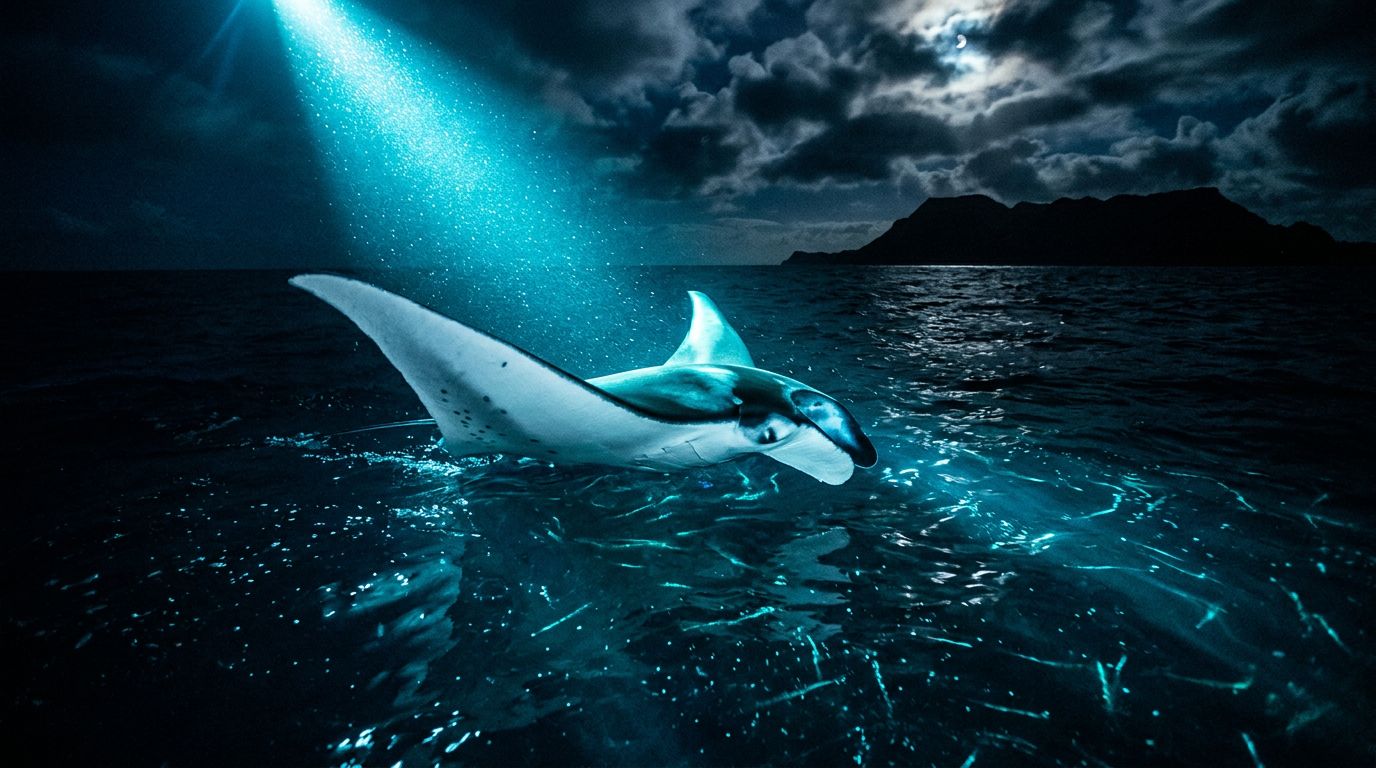
Kona Snorkel Trips hears this question all the time, and the answer is simple: manta rays in Hawaii do not have bones. They have a skeleton made of cartilage, which gives them a light, flexible frame built for gliding through open water.
If you’re planning snorkeling Big Island Hawaii, that detail matters more than it sounds. It explains why manta rays look so huge and still move like ribbons in the sea. It also changes the way you see them the first time one slides under a boat light. For a dedicated night outing, Manta Ray Night Snorkel Hawaii centers the whole trip on that encounter.
That simple biology answer leads to a better question. How can an animal that big stay so smooth, so quiet, and so graceful in the water? The answer sits inside the frame you can’t see.
The short answer: manta rays are built on cartilage
Manta rays are cartilaginous fish, which means their internal support comes from cartilage, not bone. Cartilage is firm, but it bends more than bone. You have the same basic type of tissue in your nose and ears, although a manta ray’s version is built for a much larger body.
That structure is one reason manta rays feel so different from other ocean animals. They don’t carry a heavy skeleton that has to be lifted against gravity. Instead, they carry a lighter frame that works with the water. When you snorkel Big Island waters and watch a manta pass below you, that design is what you’re seeing in motion.
If you still mix up rays, sharks, fish, and mammals, you are not alone. This quick guide on whether manta rays are fish or mammals clears up the most common confusion. The manta ray entry on Wikipedia also notes that their skeletons are cartilaginous, which is why fossil evidence is much rarer than it is for bony fish.
Manta rays are not boneless in the casual sense. They have a real internal frame, just one built from cartilage instead of bone.
That difference matters. It shapes how they move, how they grow, and why they look almost unreal in the water.
Why cartilage works so well in the ocean
Cartilage gives manta rays the support they need without the extra weight of bone. In water, that tradeoff makes sense. A heavy frame is useful when you have to stand, walk, or support yourself on land. A wide ocean body has different needs.
Bone and cartilage side by side
A simple comparison makes the difference easier to see.
| Feature | Bone | Manta ray cartilage |
|---|---|---|
| Weight | Heavier and dense | Lighter and flexible |
| Shape | Hard and rigid | Bends with the body |
| Movement | Best for land support | Best for smooth gliding |
| Fossil record | Preserves well | Rarely preserves well |
| Water performance | More bulk to carry | Less bulk, more flow |
The main takeaway is easy to miss if you only think about strength as hardness. Manta ray cartilage gives the animal a frame that is strong enough for daily swimming, yet flexible enough for smooth turns. It keeps the body large without making it stiff.
That is why a manta can look almost weightless under the surface. Its frame does not fight the water. It moves with it. That is also why the animal can keep such a broad, wing-like shape and still turn cleanly.
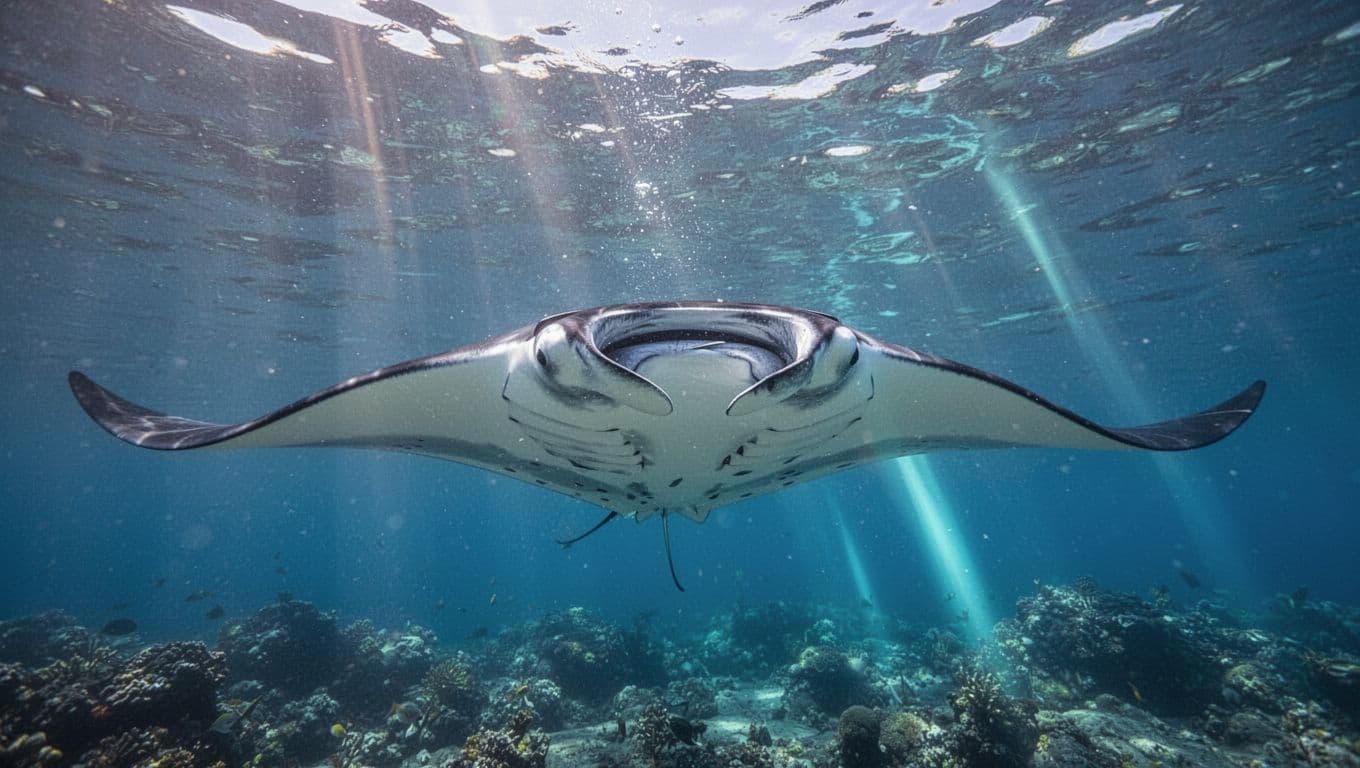
The next time you see one in Hawaii, you’re not just looking at size. You’re looking at a body built for glide.
How manta rays move without a bony frame
Once you understand the skeleton, the movement starts to make sense. A manta ray’s broad fins are its main engine. Those fins are not stiff paddles. They flex along the edges, and that gives the animal a slow, controlled, almost floating motion.
When you snorkel Big Island waters, you may expect more effort in the movement. Instead, manta rays look calm. They rise, bank, and dip with very little splash. Their motion is efficient because their body is shaped for the sea, not for land.
The head also plays a role. Manta rays have cephalic fins near the mouth that help guide food into the mouth when they feed on plankton. At night, those fins often curl and open as the ray circles through lit water. That is one reason night snorkelers remember the sight so clearly. You can see the body changing shape as the animal feeds.
A wide body, flexible fins, and cartilage all work together. The ray can turn without a jerky motion. It can stay stable while feeding. It can cover distance without wasting energy. When you watch one glide under a light, the movement looks almost planned.
If you want a quick visual explanation, the video Do Manta Rays Have Bones? walks through the cartilage idea in plain language. The basic point stays the same, though. Manta rays are built for a smooth life in the water.
What a manta ray snorkel feels like in Kona
If you’re planning snorkeling Big Island Hawaii for the first time, the Kona coast is one of the best places to see this biology in action. The famous night snorkel works because lights attract plankton, plankton attract manta rays, and the rays come in to feed in a calm, repeatable pattern.
Kona Snorkel Trips keeps that experience small and personal, with a strong focus on safety, high-quality gear, and clear guidance in the water. If you want to compare the wider set of options, you can browse guided snorkeling excursions in Kona and see what fits your trip style. If you are ready to lock in a date, you can check availability.
The setting matters almost as much as the animal. You are floating at the surface. The boat is close. The lights are steady. Then a manta comes through the glow with that wide, effortless shape that cartilage makes possible.
For a trip focused entirely on that experience, guided manta ray night snorkel experience is the page to look at. Manta Ray Night Snorkel Hawaii also centers its whole outing on the same kind of encounter. If you want to book that specific trip, you can check availability.
A good tour keeps the water calm and the instructions clear. That matters when you want to spend less time worrying and more time watching the manta move. It also helps families, couples, and first-time snorkelers feel settled before they enter the water.
When you read guest feedback, you usually see the same themes come up again and again. People notice the small group feel. They notice the gear. They notice how much easier the water feels when the crew has done the same routine hundreds of times.
Common myths that keep people guessing
One of the biggest myths is that cartilage means flimsy. It doesn’t. Cartilage is a firm support tissue, and manta ray cartilage holds a huge body in shape. The material is different from bone, but it is still built to work.
Another myth is that a manta ray must feel soft because it has no bones. That is not how it works in the water. The outline stays clean and strong. The body just has more give than a bony fish, which is part of what makes the motion look so smooth.
The third mix-up is the fish-versus-mammal question. Manta rays breathe through gills, not lungs, so they are not mammals. They belong with sharks and rays in the cartilaginous fish group. If you want a clear explanation of that point, this Hawaii answer keeps it simple without the jargon.
People also assume that a larger animal needs a heavier frame. In the ocean, that logic does not always hold. A lighter body can move more easily and waste less energy. For a manta ray, that is exactly the point.
Once you see it this way, the animal looks less mysterious and more elegant. The mystery does not disappear. It just becomes a little easier to understand.
How to snorkel around manta rays with care
The best way to enjoy manta rays is to give them space. Don’t reach out. Don’t chase. Don’t try to touch the animal as it passes. The closer you stay to calm, still floating, the better the encounter usually feels.
If you are planning to snorkel Big Island waters with a guided group, listen closely to the briefing. Good guides tell you where to hold, how to kick less, and how to keep your hands from drifting into the path of the manta. Those small details matter. They keep you safer and they keep the animals comfortable.
Reef-safe sunscreen helps too. So does a slow entry and a quiet exit. In the water, the less you fight the ocean, the more you notice. That applies to manta rays as well. When you stop moving around, the whole scene becomes easier to watch.
If you want more room or a more private pace, book a private Kona boat charter. A private trip can be a smart pick for families, special occasions, or anyone who wants the night to feel more relaxed. It also gives you a bit more control over timing and group size.
The simple rule is this, stay calm and let the manta choose the distance. When you do that, the experience feels quieter, safer, and more memorable.
Conclusion
So, do manta rays in Hawaii have bones or cartilage? The answer is cartilage, and that one fact explains almost everything you notice when you see them in the water. Their frame is light, flexible, and built for glide.
The next time a manta sweeps through a Kona light beam, you will know what you’re watching. You are seeing a body designed for the sea, not for land, and that is part of what makes the sight so striking.