
Are Manta Rays Fish or Mammals? The Hawaii Answer
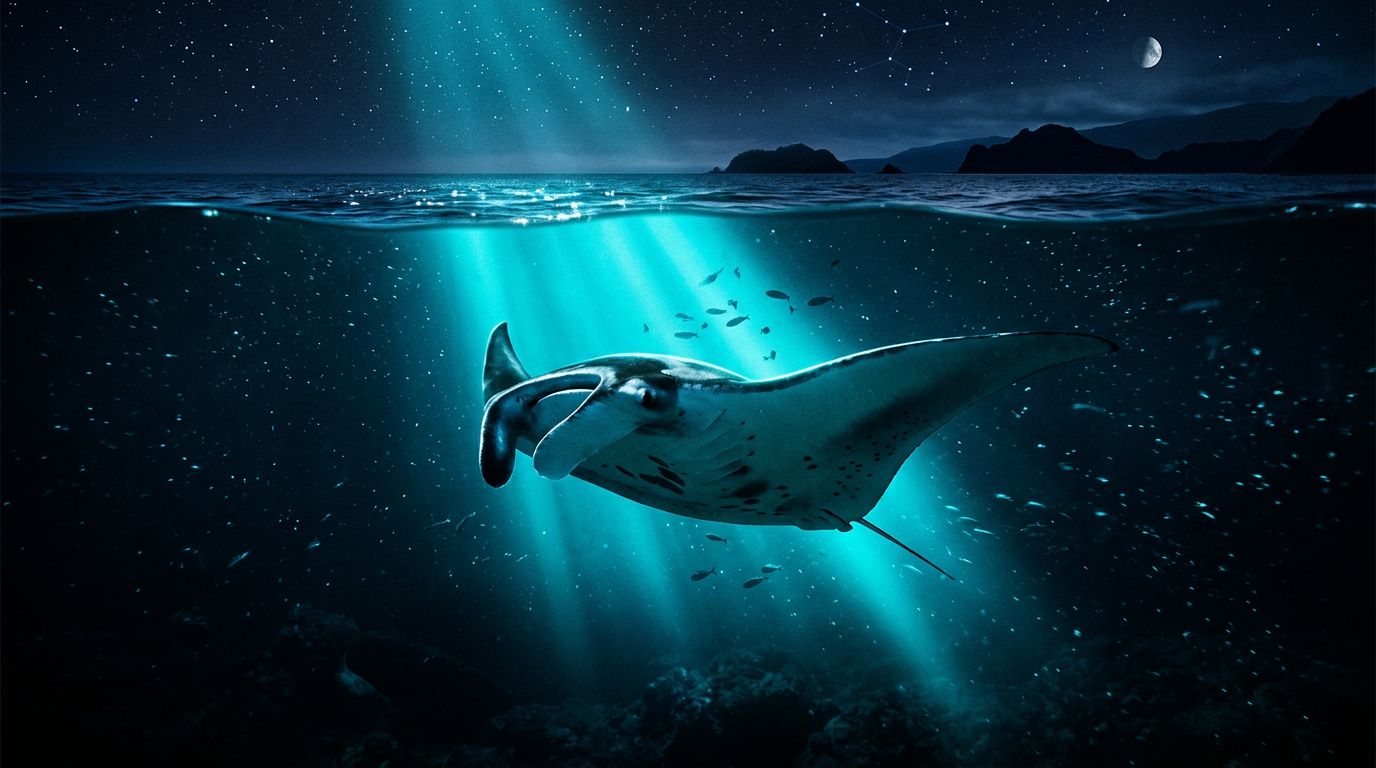
Yes, manta rays are fish, not mammals. They can look so smooth and graceful that people often guess wrong, especially after seeing one glide through a Kona night snorkel.
That confusion is common in Hawaii. You might hear someone compare a manta to a whale, a bird, or even a sea angel. Once you know the body clues, though, the answer gets simple fast. Kona Snorkel Trips is one local way to see them up close, and Manta Ray Night Snorkel Hawaii is another.
The short answer you can trust
Manta rays belong to the group of cartilaginous fish, which also includes sharks and other rays. They do not have bones like mammals do. Instead, their skeleton is built from cartilage, the same flexible material in your nose and ears.
They also breathe through gills, not lungs. That alone puts them firmly in the fish camp. Mammals breathe air, nurse their young with milk, and have hair or fur at some stage of life. Manta rays do none of those things.
The part that throws people off is that manta rays give birth to live young. That can sound mammal-like at first, but live birth does not make an animal a mammal. Plenty of fish do it too.
For a species-level overview, the NOAA Fisheries giant manta ray profile is a solid place to start.
The easiest clue is also the biggest one, manta rays breathe through gills, so they are fish.
What makes manta rays fish
Here is the clearest way to tell the difference.
| Trait | Manta rays | Mammals |
|---|---|---|
| Skeleton | Cartilage | Bone |
| Breathing | Gills | Lungs |
| Young | Live pups | Live young, fed with milk |
| Body covering | Smooth skin | Hair or fur |
| Group | Cartilaginous fish | Mammals |
That table tells the story fast. A manta ray’s body is built for life in water, not for air breathing on the surface.
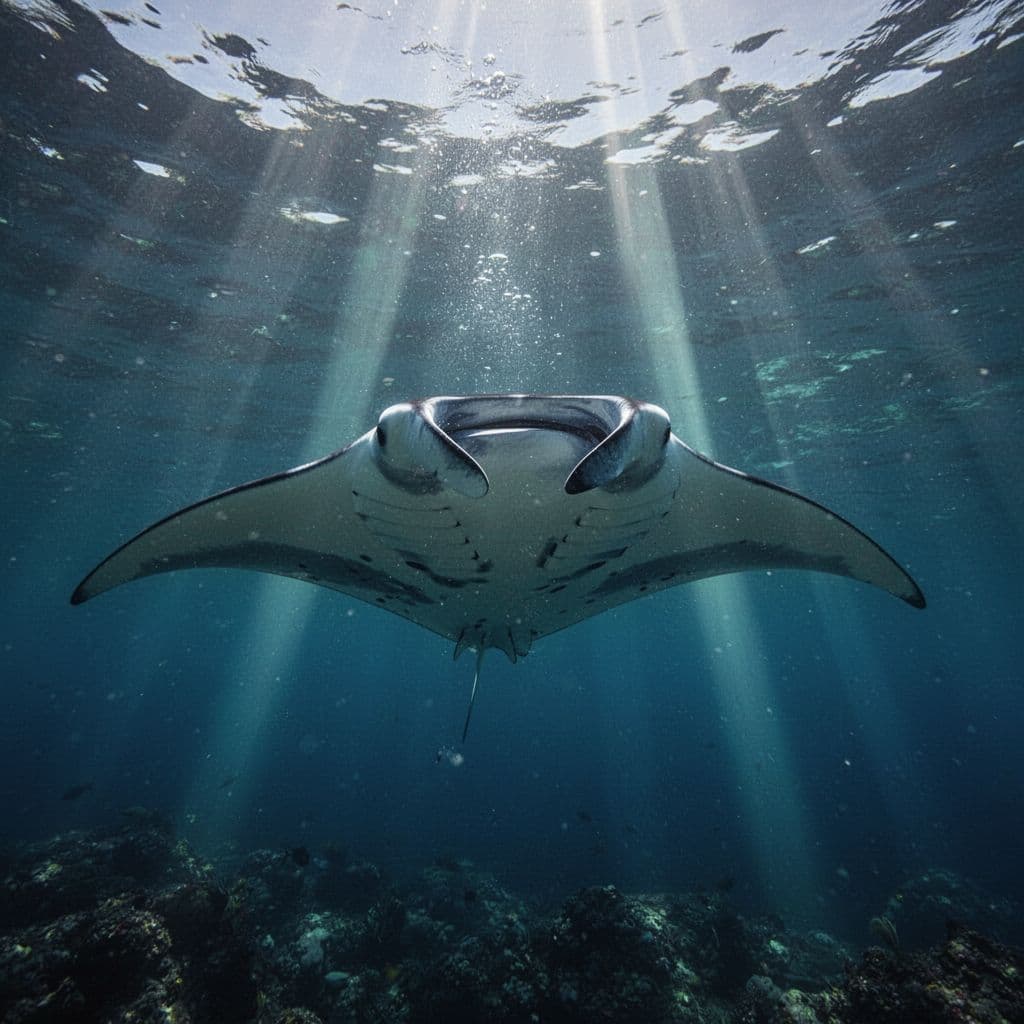
The wings you notice are not wings in the bird sense. They are huge pectoral fins. Those fins move in slow, steady sweeps, which makes the animal look almost unreal when it passes below you.
Manta rays also feed like fish. They open wide and filter plankton from the water. Their mouths sit on the underside of the body, which is another fish trait. Their gill slits are also a dead giveaway.
If you want a broader look at the animal’s family tree, the manta ray classification page shows how it fits within the ray group.
The main point is simple. Manta rays are not a mystery animal halfway between fish and mammal. They are fish, just highly specialized ones.
Why manta rays look mammal-like
So why do people keep asking the question?
Size is one reason. A large manta ray can feel more like a sea creature from a documentary than a fish from a reef. When one passes below you, the shape is broad and smooth. It does not dart around like a triggerfish or a parrotfish.
Motion is another reason. Manta rays glide with calm, sweeping strokes. That rhythm reminds people of a whale’s movement more than the twitchy motion of many fish.
Their behavior adds to the confusion too. Mantas sometimes breach the surface. They can leap clear of the water, and that makes them feel bigger and stranger than a typical reef animal.
They also have a kind of quiet presence. A manta ray does not rush you. It moves with purpose, almost like it owns the water around it. That graceful style is part of why people fall in love with them so fast.
Still, none of that changes the biology. They do not breathe air. They do not produce milk. They do not have hair. They are fish with a very unusual shape and a very calm way of moving.
Why Hawaii brings up the question so often
Hawaii is one of the best places to ask this question because you can often see manta rays so clearly. On the Kona coast, night snorkeling puts you close enough to notice the details that matter.
That matters if you’re planning snorkeling Big Island Hawaii style experiences. Once the lights go on and plankton gathers in the water, manta rays may circle beneath you in slow loops. The sight can look almost choreographed.
The setup is part of what makes the question stick in your mind. You are floating at the surface. A huge animal rises from below. It moves with a calm that feels more like a bird than a fish. So your brain reaches for the wrong category.
If you come to snorkel Big Island, especially at night, you will notice something else too. Manta rays often feed near the lights because plankton gathers there. They are not chasing you. They are feeding on the tiny life in the water.
That is one reason the experience feels so special. You are not watching a show built for people. You are watching a fish respond to its own food source, on its own terms.
For a dedicated night outing, book a manta ray night snorkel in Kona and you can see why so many visitors talk about it long after they leave the island.
How to see manta rays on the Big Island
If you want the most direct answer to the fish-or-mammal question, seeing a manta ray in the water will give it to you fast. A close encounter is more convincing than any textbook.
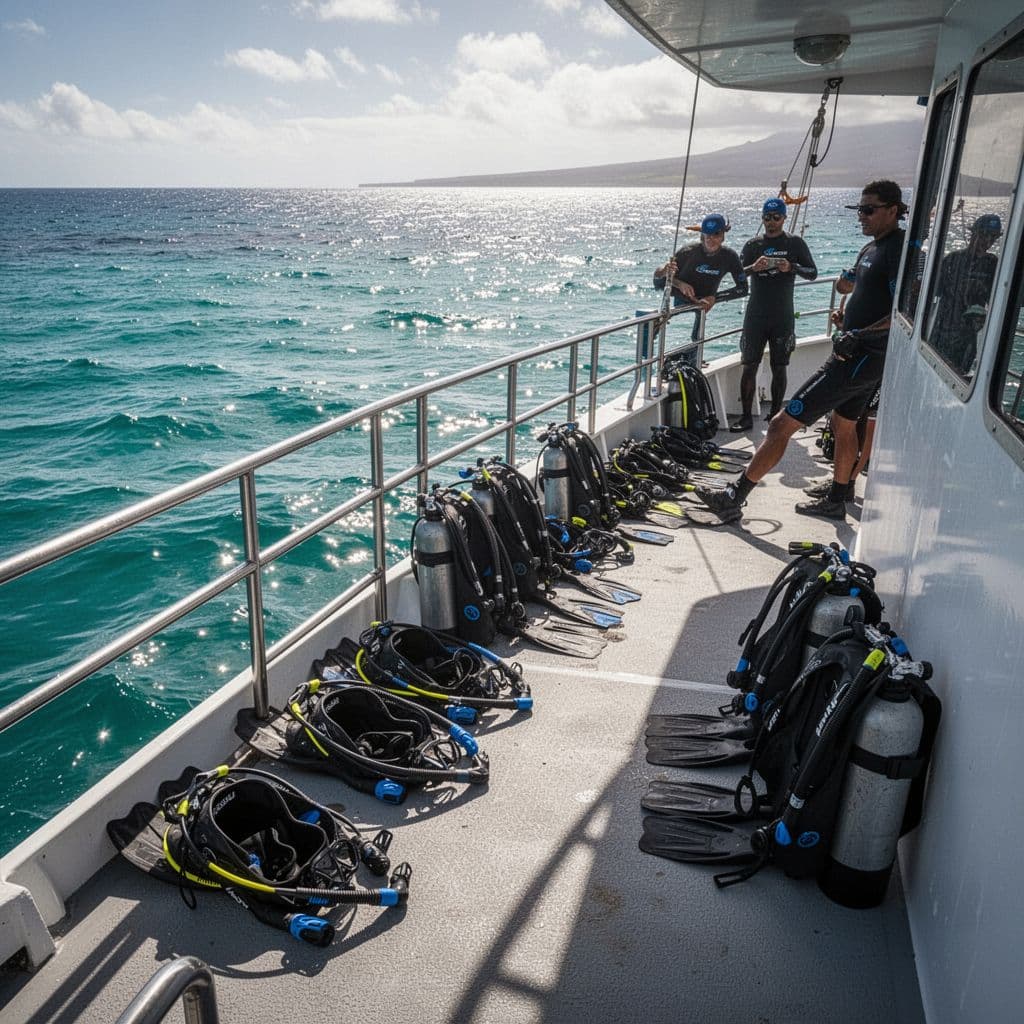
Kona Snorkel Trips focuses on small-group ocean trips with lifeguard-certified guides, and that makes the experience feel calm and personal. You get room to breathe, better attention from the crew, and a trip that feels less crowded than the big tour-boat version.
If you want another local operator focused on manta encounters, Manta Ray Night Snorkel Hawaii is another option worth looking at.
For travelers who want more than one kind of water day, the island gives you choices. Guided snorkeling excursions in Kona are great when you want a daytime reef outing too. If you’re with family or a small group, private Kona snorkel tours give you more control over the pace and the route.
Manta trips are a strong fit for couples, adventurous singles, and families with older kids who like ocean time. The key is to keep the focus on the animal, not on chasing a dramatic photo. That is how you get the best experience and the most natural behavior from the rays.
What to notice in the water
If you want to tell a manta ray from a mammal in real time, look for a few easy clues.
- Gills under the body mean you are looking at a fish.
- A wide, flat shape tells you it is a ray, not a whale or dolphin.
- Slow filter-feeding motions mean it is eating plankton, not hunting like a mammal.
- Cartilage-based movement gives the ray a light, flexible feel in the water.
When you put those clues together, the answer gets obvious. The animal may look huge, smooth, and strangely elegant, but it is still a fish.
That is also why the experience is so memorable if you come for snorkeling Big Island adventures. You are not just seeing an animal. You are learning how to read the water a little better.
The next time someone in your group asks, “Are manta rays fish or mammals?” you can give the answer in one line. They are fish, and one of the most remarkable fish you can meet in Hawaii.
What you should remember before your next snorkel
Manta rays are fish, not mammals, because they breathe with gills, have cartilage instead of bone, and belong in the ray family. Their size and smooth movement make them feel mammal-like at first, but the biology does not change.
That is part of what makes a Kona encounter so memorable. Once you know what you are seeing, a night snorkel in Hawaii feels even richer, because you understand the animal instead of just admiring it.
The next time a manta glides under your board, you will know the truth right away. You are watching one of the ocean’s most elegant fish do exactly what it was built to do.