
Kona Snorkeling: A Local’s Guide to the Best Spots & Tours
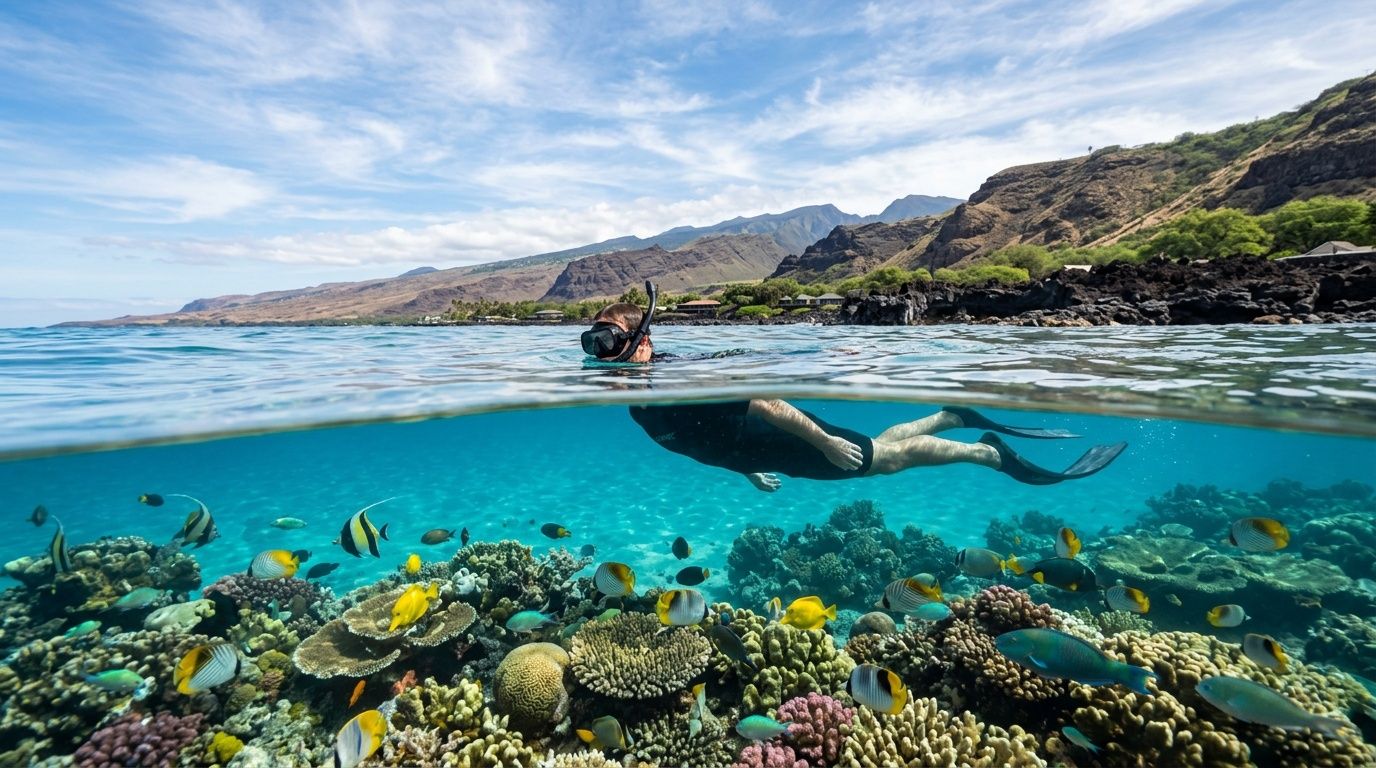
You're probably here because you want the Kona version of snorkeling everyone talks about. Clear water. Easy entries. Reef fish everywhere. Maybe turtles. Maybe manta rays later in the trip. And you also want to avoid the rookie mistakes that turn a great ocean day into a stressful one.
That's the right approach. Kona snorkeling is special, but the best experience comes from matching the right spot to your ability, picking the right time of day, and treating the reef like the living habitat it is. The upside is that Kona makes this easier than most places. Conditions are often calm, the water is warm, and you can choose between easy shore sessions and guided boat trips that remove most of the hassle.
Welcome to Your Kona Underwater Adventure
The first good surprise in Kona is how quickly the island can turn someone from “I'm not sure I'm a snorkeler” into “Can we go again tomorrow?” You slide into warm salt water, put your face down, and the whole scene opens up at once. Yellow fish over coral heads. Lava shelves dropping into blue water. Turtles cruising through like they own the place, which they do.
That's why people build whole vacation days around kona snorkeling instead of treating it like a side activity. The water often cooperates, the reefs are close, and you don't need to be an expert to have a memorable day. You do need to be realistic about entry conditions, current, and how comfortable you are in open water.
Near the top of that decision is whether to go on your own or join a guided trip. For beginners, families, and anyone who wants less guesswork, a guided experience usually means easier access, better local judgment, and less wasted time.
Local mindset: The best snorkel day isn't the one with the boldest plan. It's the one where conditions, access, and skill level all line up.
Many visitors arrive assuming the "best" location is always the one with the greatest reputation. Occasionally that is accurate. Often the best spot is the one where you can enter calmly, relax, and stay present enough to enjoy what is around you.
Why Kona Offers World-Class Snorkeling
Kona earns its reputation because the west side of the island is naturally protected. Mauna Loa and Hualālai help block the trade winds and swell that rough up other coastlines, so snorkelers often get calmer, clearer water here than they expect on a volcanic island.

That protection shows up in ways you feel right away. Entries are less chaotic on a good morning. New snorkelers settle down faster when they are not swallowing chop between breaths. Experienced swimmers get to spend more attention on the reef itself, watching how fish move along lava fingers and coral pockets instead of constantly correcting for surface push.
Visibility is a big part of the draw too. Clear water changes the whole session. You can scan farther ahead, spot movement at the edge of the reef, and stay oriented without working so hard. Warm water helps as well, especially for visitors who want a longer snorkel without needing heavy gear.
What the leeward coast does for snorkelers
The Kona coast tends to stay cleaner and calmer because less surge means less sand and sediment getting stirred into the water. That does not guarantee perfect conditions every day. South swell, wind shifts, and poor entries still matter. But compared with many beautiful snorkel destinations, Kona gives you more mornings where the ocean is actually friendly to use.
That reliability is a major reason guided trips work so well here. A good crew can match the site to the day, read subtle condition changes, and keep guests focused on the fun part instead of second-guessing access, current, or where marine life is most active.
A few practical advantages stand out:
- Clearer sightlines underwater help you notice fish behavior, reef structure, and approaching turtles sooner.
- Milder surface texture makes floating easier for kids, cautious swimmers, and adults who have not snorkeled in years.
- More usable days means you have a better chance of getting a rewarding session during a short vacation.
Why that translates into a better trip
Great snorkeling is more than just finding fish and coral. It is about how easily regular visitors can enter the water safely, stay relaxed, and fully enjoy what they came to see. Kona does that well.
The reef here rewards patience. Slow down over a coral head and you start seeing the smaller story. Cleaner wrasse setting up stations. Butterflyfish working a ledge. A turtle rising for air, then dropping back to the same feeding area. If you want to recognize more of what you are seeing, spend a few minutes with this Hawaiian reef fish identification guide before you go.
Clear water rewards slow snorkeling. If you rush from one coral head to the next, you miss half the reef.
Kona's Best Shore Snorkeling Spots
Shore snorkeling gives you flexibility. You can go early, stay as long as you want, and pick your own pace. The trade-off is that you're responsible for entries, exits, parking, gear, ocean judgment, and knowing when to call it.
For most visitors, two shore spots stand out for very different reasons. Kahalu'u Beach Park works well for beginners and families who want calmer, shallower water. Two Step at Honaunau Bay suits snorkelers who are comfortable with lava rock entry and want stronger reef structure right away.
Kona Shore Snorkeling Comparison
| Location | Skill Level | Ease of Entry | Common Marine Life |
|---|---|---|---|
| Kahalu'u Beach Park | Beginner | Easier, with a more forgiving shoreline | Reef fish, turtles |
| Two Step at Honaunau Bay | Intermediate | Lava entry requires care | Surgeonfish, reef fish, possible eagle rays |
| Kealakekua Bay by shore access | Strong, prepared visitors | Challenging because access is strenuous | Dense reef life, varied fish |
Kahalu'u Beach Park
Kahalu'u is the place I'd point nervous first-timers toward before I'd ever send them to a trickier lava entry. The reason is simple. It offers a more approachable start. You can practice breathing, mask clearing, and finning without feeling committed to deeper water right away.
It's also a good spot for families because you can keep the session short and still see plenty. If someone gets tired, cold, or overwhelmed, getting out is straightforward compared with more exposed or rocky locations.
What doesn't work at Kahalu'u is showing up late and expecting a peaceful, uncrowded experience. It's popular for a reason. Early morning is usually the move.
Two Step at Honaunau Bay
Two Step is one of the signature shore snorkel spots on the Kona coast, but it rewards people who respect the entry. The site gets its name from the natural lava steps, and once you're in, the underwater layout is excellent. The dual-step lava entry gives immediate access to a 10-foot deep reef plateau, while the north side slopes gently to over 100 feet, creating a natural progression from shallow reef viewing to deeper blue-water edge exploration, according to this breakdown of Two Step.
That bathymetry is why stronger snorkelers love it. You don't have to swim far to reach interesting structure. You can start shallow, settle in, and then decide how adventurous you want to be.
What works well at Two Step:
- Entering carefully and deliberately instead of rushing because other people are waiting.
- Putting fins on in the water if the rocks feel awkward underfoot.
- Snorkeling early before more people arrive and before surface texture builds.
What does not work:
- Treating the entry like a beach walk-in. It isn't.
- Backing out carelessly through surge. Exit with as much attention as you used getting in.
- Pushing into deeper water too soon. The reef is good close in. You don't need to prove anything.
If Kealakekua Bay is on your list too, this practical Kealakekua Bay snorkel guide helps compare the feel of that experience against shore-access options.
At shore spots, the entry decides the whole day. If the entry feels wrong, choose another site.
Signature Guided Snorkel Experiences
You spend the day floating over bright reef fish, head in for dinner, and a few hours later you are back on the water watching giant manta rays glide through lights under the surface. That range is part of what makes guided snorkeling in Kona so memorable. The flagship trips here are the manta ray night snorkel and the Captain Cook snorkel in Kealakekua Bay. They deliver very different kinds of water time, and both are better with a crew that knows the site, the conditions, and how to keep the experience respectful for wildlife.
Guided trips matter most at places where access, timing, and local judgment shape the day. In Kona, that is often the difference between a relaxing snorkel and a tiring one.

Manta ray night snorkel
The manta night snorkel is a surface-based wildlife experience. You are usually holding onto a float board or light platform while the mantas feed below in the illuminated water. That setup makes it approachable for plenty of first-time snorkelers, but it still works best with good briefing, close supervision, and realistic expectations about darkness, open water, and boat conditions.
A good operator sets the tone early. Guides should explain how to stay flat, keep hands out of the mantas' path, and avoid splashing or kicking down toward them. Those details matter. The goal is not just to see mantas up close. The goal is to do it in a way that stays calm for the group and low-impact for the animals.
For a practical pre-trip overview, read this Kona manta ray night snorkel article.
If you are comparing operators, the manta ray night snorkel tour is one direct option to review. Manta Ray Night Snorkel Hawaii is another strong alternative for travelers looking at dedicated manta trips.
Captain Cook snorkeling in Kealakekua Bay
Kealakekua Bay is the guided trip I recommend when visitors want Kona's classic reef experience without the hassle of managing access on their own. The bay has excellent water clarity on good mornings, dense reef life, and a protected feel once you are in the right part of it. It also asks for some planning.
The trade-off is straightforward. Reaching the prime snorkeling area without a boat takes more effort and more judgment than many visitors expect. A guided boat trip keeps the day focused on the water instead of the approach, which is why it tends to work better for families, newer snorkelers, and anyone who wants to save energy for the actual snorkeling.
That convenience is only part of the value. Kealakekua Bay carries real ecological and historical importance, so a good crew should treat it that way. Strong guides do more than hand out gear. They choose the mooring and entry carefully, brief guests on reef spacing, keep people off coral, and explain why respectful behavior matters in a place that gets a lot of attention.
If you are comparing tour operators for this bay, Captain Cook Snorkeling Tours is an exceptional alternative when looking for a Captain Cook snorkel tour.
Kona Snorkel Trips offers small-group Captain Cook and manta-focused snorkel trips, which is a practical option for visitors who want guided access, gear, and in-water support without organizing the day themselves.
A Seasonal Guide to Snorkeling in Kona
You wake up to glassy water, trade winds still quiet, and a reef that looks calm from shore. That is a good Kona snorkel day. The nice part is that you can get days like that in every season here. The smart part is knowing how the season changes your site choice, your start time, and whether shore snorkeling still makes sense for your group.

Late spring through fall
Late spring through early fall is the easiest window for many visitors. The ocean often feels warmer, entries are more comfortable, and first-time snorkelers usually stay relaxed longer in the water. If I am helping a family pick dates and they want the simplest planning, this is usually the range I point to first.
That does not mean every day is perfect. Kona still rewards early starts. Morning trips usually get cleaner surface conditions and better visibility before the wind builds. If you are prone to getting cold, late summer and early fall tend to feel especially comfortable.
This is also the season when small habits matter. Sun exposure adds up fast in Hawaii, so using reef-safe sunscreen for Big Island snorkeling is part of good trip planning, not an afterthought.
Winter and shoulder season
Winter can be excellent on the Kona coast, but it asks for more judgment. Some days are calm and clear. Some days call for a protected cove, a shorter session, or a full change of plan. Visitors who lock themselves into one exact shore spot sometimes miss that trade-off.
Guided trips really pull ahead in these situations. A good crew can choose the better side of the coast for the day, adjust entry plans, and help less experienced snorkelers avoid rougher conditions that look manageable from the parking lot but feel different in the water.
Winter also brings a different feel offshore. The ride itself can be memorable, and that adds a lot to the day even before anyone puts a mask on.
Best timing advice that actually works
The best month matters less than the right daily plan.
Ask these questions before you book or drive out:
- How much flexibility do I have? Shore snorkeling works best when you can shift days or locations.
- Who is in my group? Kids, newer swimmers, and nervous snorkelers usually do better with calmer mornings and guided support.
- Am I choosing comfort or convenience? A nearby beach is not always the easiest or safest snorkel.
- Can I start early? In Kona, an early launch solves a lot of problems before they begin.
Mornings usually give you the smoothest surface, the easiest entries, and the most relaxed experience. Across every season, that is the local rule that holds up best.
Snorkeling Safety and Reef Etiquette
A lot of Kona snorkel days are decided before you even put your face in the water. I have seen strong swimmers have a rough time because they picked the wrong entry, rushed the exit, or treated shallow reef like a pool. I have also seen first-timers do great because they stayed within their comfort zone and listened to the briefing.

Good safety and good reef manners go together. Calm, controlled snorkelers avoid injuries, see more marine life, and leave less impact behind.
The safety habits that matter most
The biggest mistakes in Kona usually happen at the shoreline. Lava rock can be slick, surge can shove you off balance, and an easy-looking exit can feel different after thirty or forty minutes in the water. Guided trips help a lot here because the crew can read conditions, choose the cleaner entry, and call the turnaround before people get tired.
A few habits matter on almost every snorkel:
- Stay with a buddy: Keep each other in sight, especially near entries, exits, and any rocky point.
- Pick the right site for your actual skill level: Famous does not always mean friendly for beginners.
- Head in early if anything feels off: Anxiety, fatigue, cramping, and cold are all good reasons to wrap it up.
- Watch the entry before you commit: Spend a minute studying the surge and timing your move instead of charging straight in.
- Save energy for the exit: The swim back and the last ten feet over rock deserve your full attention.
That last point matters more than visitors expect.
Reef etiquette that protects the bay
Kona's reefs stay special because people treat them with care. In protected places like Kealakekua Bay, the goal is simple. Enjoy the wildlife without touching the habitat that supports it.
That means:
- Do not stand on coral or lava ledges with growth on them: What looks like bare rock often has living organisms attached.
- Keep your fins and knees off the reef: Short, controlled kicks help you stay clear in shallow water.
- Give turtles, fish, and spinner dolphins plenty of space: Let the animal choose the encounter.
- Float still when you can: You will usually get better fish viewing with less movement and less noise.
- Use sun protection that is better for the ocean: Start with these reef-safe sunscreen tips for snorkeling the Big Island.
One local rule is easy to remember. If you have to reach out, chase, corner, grab, or stand on something, do not do it.
A guided snorkel is often the better choice for visitors because reef etiquette is easier to follow when someone shows you exactly how to enter, where to float, what to avoid, and how to watch wildlife without stressing it. That kind of coaching protects both you and the reef.
Planning Your Trip What to Pack and Expect
Packing for a snorkel day should be simple. The trick is bringing the items that improve comfort without overloading yourself with stuff you won't use.
What to bring yourself
A short list handles most days well:
- Reusable water bottle: You'll feel dehydration faster than you expect in sun and salt.
- Towel and dry clothes: Especially useful after boat rides or early morning starts.
- Reef-safe sunscreen: Apply it before arrival so you're not scrambling in the parking lot.
- Any personal comfort item: Hat, light cover-up, motion remedy if you use one.
If you're heading to Captain Cook, this what to pack for a Captain Cook snorkel tour guide is a useful practical reference.
What to expect on a guided trip
A solid guided snorkel day usually feels easier than visitors expect. Gear is typically handled for you, flotation is available if needed, and a good crew helps beginners get settled before they ever put their face in the water.
That support matters for families and first-time snorkelers. Small-group formats are especially useful because people can ask questions, get help with mask fit, and move at a pace that doesn't feel rushed.
If you're worried you need to “already know how to snorkel,” you don't. You need to be honest about your comfort level and willing to follow instructions.
Kona Snorkeling Frequently Asked Questions
Do I need to be a strong swimmer
No. Plenty of people enjoy kona snorkeling with modest swimming ability, especially in calmer spots or on guided tours with flotation support. What matters more is staying relaxed, listening to instructions, and choosing conditions that match your comfort level.
What time of day is best
Morning is usually the safest bet. Entries are often easier, the water is commonly calmer, and the whole experience feels less hectic than a late-day rush.
Is shore snorkeling enough, or should I book a tour
That depends on your goal. If you want flexibility and already feel comfortable reading ocean conditions, shore snorkeling can be excellent. If you want simpler access, less stress, or a signature experience like Kealakekua Bay by boat or the manta ray night snorkel, a guided trip is usually the better call.
Are there sharks in Kona
Sharks are part of Hawaii's marine ecosystem. Most snorkelers won't have an issue, and normal guided snorkeling activities focus on established sites with crews who understand local conditions and marine behavior. The smarter focus is not fear. It's situational awareness and following local guidance.
What if I'm traveling with kids
Pick calmer, easier-access options and keep your first session short. Success comes from ending while everyone is still having fun, not pushing for the longest possible swim.
Kona rewards people who plan well and keep the day simple. If you want an easier path to the island's signature snorkel experiences, take a look at Kona Snorkel Trips for guided options that center on safe access, local knowledge, and time in the water that's spent snorkeling instead of sorting out logistics.