
Kona Snorkel Tours: Your Ultimate 2026 Guide to the Best
You're likely looking at several open tabs right now, trying to determine which kona snorkel tours are worth your vacation time. One looks adventurous, another looks family-friendly, and a third promises the kind of water you only see in postcards. The hard part isn't finding a snorkel tour in Kona. It's choosing the one that fits the kind of day you want.
That choice matters more here than in most places. Kona isn't a one-note snorkel destination. One trip puts you in dark water under the stars while manta rays sweep past like silent aircraft. Another carries you into a historic bay where the cliffs hold the morning light and schools of reef fish move over coral in clear blue water. Then there are seasonal whale watches and private charters for travelers who want something more personalized.
Welcome to Kona Your Gateway to Underwater Paradise
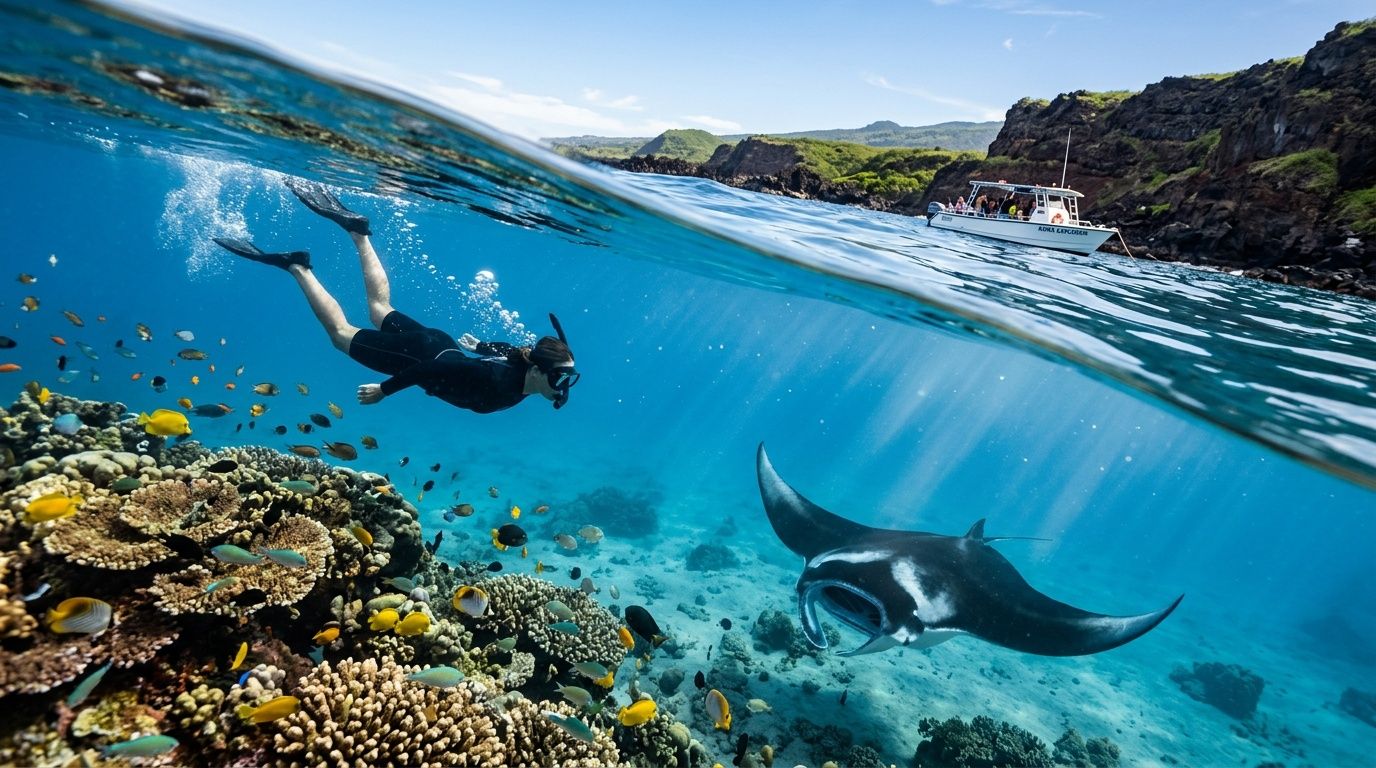
You step onto the boat just after sunrise, coffee still on your breath, and the Kona coast is already putting on a show. Black lava cliffs catch the early light. The water shifts from deep cobalt to clear turquoise as the captain lines up the first stop. Once your mask goes on and your face hits the surface, the noise from shore disappears and Kona starts to reveal itself where it matters most, underwater.

Kona rewards a certain style of snorkeler. The coast has lava shelves, protected pockets, and clear water that often settles down beautifully in the morning. Reef fish usually show up once the splashing stops and breathing slows. Guests who have the best time are often the ones who relax, float, and let the reef come alive around them.
That matters because Kona is not one snorkel experience sold under different boat names. It is a menu of very different days on the water. Families with mixed swimming ability usually want calm entries, patient crew, and a reef that delivers fast without feeling hectic. Travelers chasing a signature Hawaii story often gravitate toward mantas after dark. History-minded visitors tend to connect with bays where the shoreline tells as much of the story as the fish below it.
Kona Snorkel Trips is one of the companies many travelers will come across while researching tours, with a strong review presence and a range of trip styles.
What makes Kona different
The water temperature helps, but the primary advantage is the coast itself. Conditions can change from site to site, and that gives captains options. On a good day, visibility opens up, the lava bottom drops away beneath you, and yellow tang, butterflyfish, and triggerfish flicker through the rock like confetti. On a great day, a turtle glides past so calmly that everyone in the water goes quiet at once.
A practical rule works better than scrolling photos for an hour. Choose by your group, your comfort in the water, and the pace you want. A couple celebrating something special may want a smaller, quieter outing. A family with younger kids usually does better on a morning reef trip than a more ambitious itinerary. Strong swimmers are not automatically the ones who enjoy Kona most. The right match matters more than bravado.
If you want to round out your itinerary beyond snorkeling, this guide to top things to do in Kona Hawaii helps place ocean tours alongside beaches, food stops, and other Big Island plans.
Choosing Your Perfect Kona Snorkel Adventure
Most booking mistakes happen because travelers compare tours by price first. That's backwards. Start with the experience.
A manta ray night snorkel works for people who want a signature story from Kona. Kealakekua Bay works for travelers who want reef life, scenery, and a more relaxed daytime rhythm. Whale watching fits winter visitors who'd rather stay dry or combine sightseeing with light ocean time. Private charters suit groups that don't want to bend their day around strangers.
Match the tour to the traveler
Families usually do best on a calm daytime trip with room to ease into the water. That makes Captain Cook and Kealakekua Bay style outings a strong fit, especially when you've got mixed confidence levels in the group.
Thrill-seekers tend to gravitate to the manta ray snorkel. It sounds intense because it happens after dark, but the actual in-water experience is more controlled than many first-timers expect. You hold onto a lighted float and watch the show below.
History buffs and travelers who like a sense of place often come back talking about Kealakekua Bay. The snorkeling is only part of it. The shoreline, monument, and protected setting give the whole trip more depth than a simple swim stop.
Couples, photographers, and multigenerational groups often get the most value from a private charter. The key advantage isn't luxury for its own sake. It's control. You can move slower, avoid the feeling of being rushed, and shape the outing around your people.
Kona Snorkel Tour At-a-Glance
| Tour Type | Best For | Vibe | Key Feature |
|---|---|---|---|
| Manta Ray Night Snorkel | Thrill-seekers, wildlife lovers, returning Hawaii visitors | Otherworldly, focused, memorable | Night encounter with feeding manta rays |
| Captain Cook and Kealakekua Bay | Families, beginners, history buffs | Scenic, relaxed, reef-rich | Protected bay snorkeling with historic shoreline |
| Seasonal Whale Watching | Winter visitors, non-snorkelers, families | Easygoing, scenic, exciting | Surface wildlife viewing during humpback season |
| Private Charter | Couples, photographers, reunions, custom groups | Flexible, personal, exclusive | Route and pace tailored to your group |
The right tour feels easier once you stop asking “Which one is best?” and start asking “Which one fits us?”
If you're still narrowing it down, this article on how to compare Kona boat tours before you book is useful because it frames the decision around route, pace, and group style instead of marketing language.
The Magical Manta Ray Night Snorkel
You step off the boat ladder after sunset, settle your hands on the light board, and let your breathing slow down. Below you, the water shifts from black to electric blue. Then the first manta glides in, wide as a coffee table, turning through the beam with its white belly flashing just under your mask.
That first pass is why this tour stays with people. The encounter feels close, quiet, and strangely calm. Instead of kicking after wildlife, you float at the surface while the crew creates a lit feeding zone that attracts plankton. The mantas come to feed on their own terms, circling, banking, and rising from the dark with a grace that catches even experienced snorkelers off guard.

Why this tour works so well
Kona is one of the few places where this experience is reliably structured for snorkelers. Crews use a floating light board to concentrate plankton near the surface, which gives mantas a reason to stay in the viewing area instead of passing through once and disappearing. For guests, that changes the whole feel of the trip. You are not searching blind in open ocean. You are holding position in a supervised setup built around how the animals naturally feed.
The trade-off is simple. You give up the freedom of a daytime reef swim for a more focused wildlife encounter. There is less wandering and more waiting. For the right guest, that is exactly the point.
Who should book this one
This trip fits travelers who want a signature Kona memory, not just another snorkel stop. It is especially strong for wildlife lovers, couples, returning Hawaii visitors who have already done daytime reef tours, and teens or adults who want something with a little adrenaline but not a full scuba commitment.
It also works well for cautious snorkelers if their concern is marine life, not darkness. You stay at the surface, hold onto flotation, and remain close to the group. If your stress point is being in black water at night, be honest about that before you book. Good crews make the experience feel controlled and safe, but they cannot make night snorkeling feel like noon.
A few practical notes help people enjoy it more:
- Eat lightly beforehand if you get motion sick.
- Wear the wetsuit top or full suit offered by the crew. Floating comfortably matters.
- Keep your face in the water and your body still. Fast kicking pushes the mantas farther off line.
- Listen closely to the pre-snorkel briefing. The rules protect both you and the animals.
The guests who get the best manta passes are usually the quietest ones in the water.
For readers who already know this is their trip, the Manta Ray snorkel tour in Kona is one booking option. If you want a clearer sense of timing, conditions, and what the float setup feels like in practice, this guide to the Kona manta ray night snorkel experience lays it out well.
If you are comparing operators, another dedicated manta night snorkel operator in Kona is also worth a look.
Explore History and Reefs at Kealakekua Bay
Sun is up, the coast is glowing, and the ride south already feels different. You leave the busier shoreline behind, pass black lava rock and sea cliffs, and slide into a bay where the water shifts from deep blue to clear cobalt over the reef. Kealakekua has that effect on people. Conversations get quieter. Masks go on faster.
The draw here is not only the snorkeling. It is the setting. The Captain Cook Monument sits across the bay, the pali rises steep behind it, and the whole place carries a sense of history that you can feel before you ever step off the boat. For travelers who want more than fish and coral, this is the Kona snorkel tour that adds context to the water.

Why the snorkeling is stronger here
Kealakekua Bay earns its reputation every week of the year. The reef holds dense schools of tropical fish, the visibility is often excellent, and the protected shape of the bay usually keeps the water friendlier than more exposed spots along the coast. For guests, that means less effort and more payoff. You put your face in the water and the scene is already there. Yellow tang flashing over coral heads, spinner dolphins sometimes passing outside the bay, and lava rock contours dropping into darker blue.
It is also one of the better matches for first-timers who want a high-confidence start. Calm water helps people relax their breathing. Good visibility helps kids and cautious adults stay oriented. Experienced snorkelers still enjoy it because there is enough reef structure to keep a long swim interesting.
Best fit for families, history buffs, and mixed-skill groups
If I am matching tours to traveler type, Kealakekua usually goes to three groups.
Families do well here because the experience starts strong without demanding much. You do not need to be an aggressive swimmer to see a lot. Grandparents, teens, and first-time snorkelers can all have a good morning in the same bay.
History-focused travelers get more from this stop than they do from a reef-only outing. The monument and the story of Captain Cook give the place texture, especially if your crew likes to know where they are, not just what they are looking at underwater.
Mixed-ability groups are often happiest here too. Strong swimmers can range farther along the reef edge. Newer snorkelers can stay close to the boat, float comfortably, and still feel like they got the full experience.
A few trade-offs are worth knowing before you book:
- Choose Kealakekua if your group wants a daytime trip with easy visibility and scenic coastline.
- Choose it for families and cautious snorkelers who want reef quality without a complicated learning curve.
- Choose another tour if your priority is a specialty experience rather than a classic Kona snorkel morning.
- Book the boat option if you want the easiest access. Shore logistics are tougher, and people often arrive tired before the snorkel even starts.
Quiet movement helps here. Slow kicks, steady breathing, and a relaxed float usually lead to the best fish encounters.
If you want a closer look at access, conditions, and what first-timers usually notice, this guide to the Kealakekua Bay snorkel experience covers it well.
For booking, Captain Cook Snorkeling Tours is one option for travelers specifically looking for a Captain Cook snorkel tour.
Seasonal Wonders and Private Voyages
Some travelers land in Kona with a very specific hope. They want to hear a whale exhale close to the boat. Others want the opposite of a standard group trip. They want a quiet deck, their own timeline, and the freedom to linger where the water feels best.
Those are two very different outings, but they share one thing. They work best when you book them for the right reason.

When whale season changes the trip
Winter visitors get access to one of the most memorable surface experiences on the island. A humpback sighting resets the mood on a boat instantly. Everyone goes quiet for a second, then the cameras come up, then someone laughs because no photo ever feels big enough for what just happened.
Whale watching is a strong fit for families with non-snorkelers, travelers who don't want a full in-water activity, or anyone visiting during the winter months who wants a different kind of ocean memory. If your dates line up, this guide to whale season on the Big Island helps with timing.
Why private charters make sense
Private charters aren't only for luxury travelers. They're often the smartest move for people with specific needs.
Here's when a private boat is worth it:
- For special occasions: Anniversaries, reunions, and proposal trips feel more personal without a crowd.
- For serious photographers: You can stay longer where the light, wildlife, or water clarity looks right.
- For mixed-energy groups: Some people want to jump in quickly. Others want to sit, watch the coast, and enter later. A private format handles that better.
The biggest trade-off is obvious. You're paying for flexibility and privacy, not just transportation. If your group will use that flexibility, it's money well spent. If everyone's happy on a standard route and schedule, a shared tour often does the job just fine.
Your Kona Snorkel Trip Planner
You feel the boat ease away from the harbor, coffee still on your breath, salt already in the air, and that first question hits a lot of visitors right then. Did we bring the right stuff? Good Kona snorkel tours run smoothly because the prep happened before anyone stepped aboard. Your part is simple. Pack light, listen well, and book the trip that fits the people traveling with you.
That last part matters more than people expect. Families with younger kids usually do better on calm morning reef runs with easy water entry and flotation ready to go. Strong swimmers and wildlife-focused travelers may be happy trading comfort for a more adventurous format. Mixed groups often need a crew that can handle different energy levels without rushing anyone.
What to pack
Bring the gear that makes your day easier, not heavier.
- Reef-safe sunscreen: Mineral sunscreen, especially zinc-based options, is the safer choice for both your skin and the reef.
- A towel and dry shirt or cover-up: Kona can feel hot at the dock and cool on the ride back once the wind hits wet skin.
- Secure footwear: Wet decks get slippery fast. Wear sandals or water shoes that stay on when the boat rocks.
- Waterproof camera: Bring one if you know you'll use it quickly and without turning every snorkel stop into a gear check.
- Any personal motion sickness remedy: Take it before departure if you're prone to seasickness. Waiting until you feel queasy is usually too late.
If airfare is still part of the planning puzzle, I-REROUTE's cheap Hawaii flights guide can help you time the trip better.
Safety first in the water
Even experienced snorkelers should pay attention to the briefing. Kona can look calm from the deck and feel very different once your face is in the water and you're managing swell, sun glare, and your own breathing.
Good crews cover the details that prevent problems. How to enter cleanly. Where to stay in relation to the boat. What to do if your mask leaks. How to reboard without getting clipped by fins or a ladder. Kona Snorkel Trips notes that its guides are lifeguard-certified, and that kind of training is worth checking for with any operator you book.
If you feel winded in the first minute, stop kicking. Float. Put your face up, reset your breathing, and start again with slower movements.
That one adjustment saves a lot of snorkels.
Best timing and low-impact habits
The best tour time depends on who's coming with you and what kind of day you want. Morning trips are usually the better call for first-timers, families, and anyone who wants the calmest reef conditions possible. Night manta trips suit travelers who are comfortable in open water after dark and want a more unusual wildlife encounter. Private boats make sense for photographers, celebration groups, or anyone who wants more control over pace and stop length.
Once you're in the water, small habits matter.
- Keep your fins clear of coral: Accidental contact is one of the fastest ways visitors damage reef structure.
- Give turtles and other marine life room: If an animal changes direction because of you, you're too close.
- Stay horizontal on the surface: Better body position protects the reef and helps you conserve energy.
- Use flotation without hesitation: A float belt, noodle, or vest can turn a stressful swim into a relaxed one.
The goal is simple. Pick the trip that fits your group, then show up prepared enough to enjoy what Kona does best. Clear water, lava coastline, reef fish flashing under the surface, and a day that feels easy because the right choices were made before the boat left the dock.
Booking Your Tour and Gifting an Adventure
Once you know your traveler type, the choice gets simpler. Book the manta ray night snorkel if you want Kona's most unusual wildlife encounter. Book Kealakekua Bay if your ideal day includes clear water, reef life, and a more relaxed pace. Add whale watching if you're visiting in season, or go private if your group wants control over the whole outing.
Book early when your dates are fixed. The tours people want most are usually the ones other travelers circle first, especially around school breaks, holidays, and popular seasonal windows. Waiting too long can leave you choosing from what's left instead of what fits.
Gift cards are worth considering too. Snorkel trips make strong gifts because they don't feel disposable. A shirt gets folded away. A dinner is over in a few hours. An ocean memory sticks. If you've got friends or family heading to the Big Island, giving them a snorkel or manta experience is a practical way to hand them a highlight instead of another souvenir.
Kona rewards the travelers who choose their water time well. Pick the tour that matches your group, arrive ready to listen, and let the coast do the rest.
If you're ready to turn research into a real ocean day, Kona Snorkel Trips offers gift cards and a range of Kona experiences, from manta ray night snorkeling to daytime reef tours, with a small-group focus that suits first-timers, families, and returning ocean travelers alike.