
Kona Night Manta Ray Dive: Your Ultimate 2026 Guide
You’re probably here because the manta ray night experience sounds equal parts magical and intimidating. That’s a normal place to start. It's a common desire: a close wildlife encounter that feels safe, ethical, and worth planning a whole evening around.
The good news is that the Kona night manta ray dive has earned its reputation for a reason. Kona is one of the world’s most reliable places for manta encounters, with around 80,000 participants annually and year-round sighting success typically between 80% and 90%, according to Kona Honu Divers. But a memorable night isn’t just about showing up. It’s about understanding how the experience works, what your role is in the water, and how to choose an operator that treats the mantas and your safety with real care.
An Unforgettable Night with Kona's Gentle Giants
The first thing most guests notice is how calm the ocean can feel once the sun drops away. You leave the harbor at dusk, the shoreline lights soften, and the mood on the boat shifts from chatter to anticipation.
Then you reach the site, and the water becomes a stage.
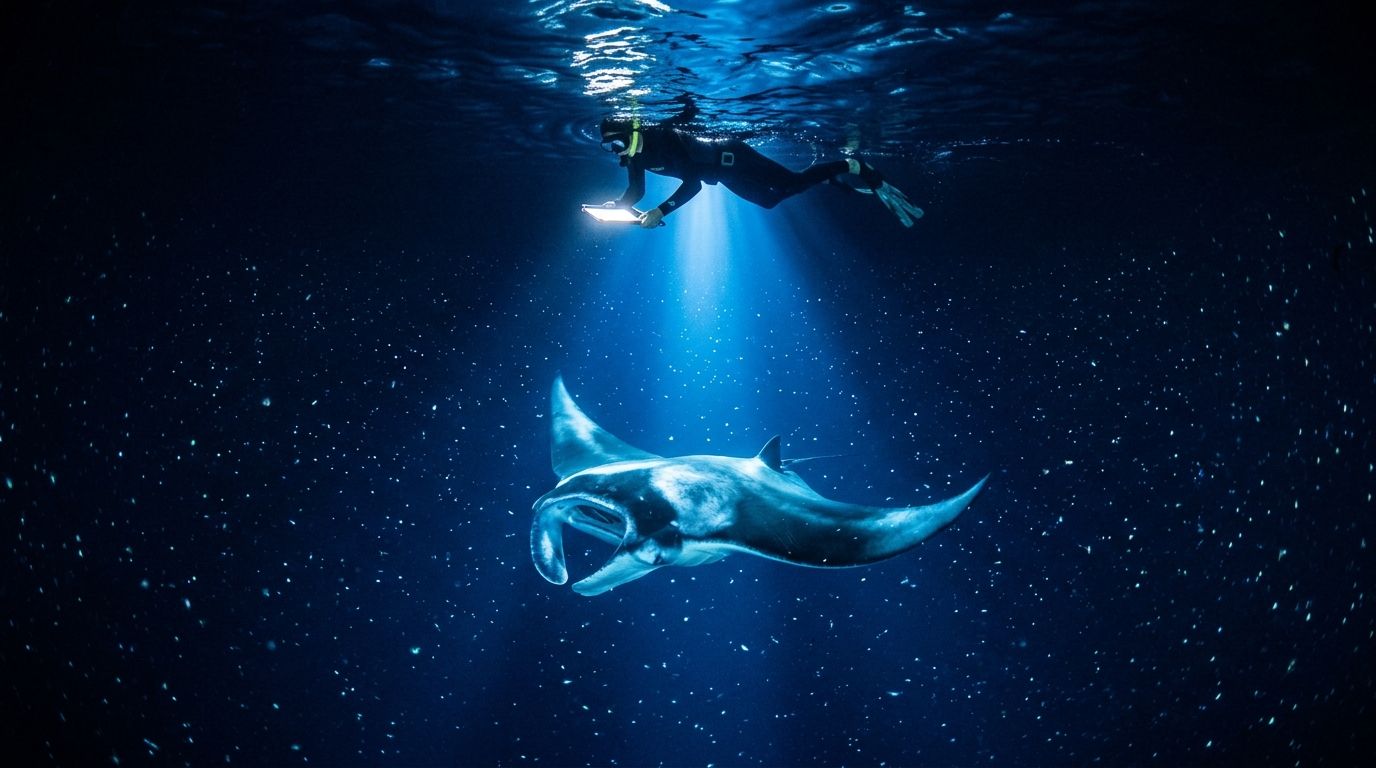
A circle of light shines into the dark Pacific. Snorkelers hold onto a floating light board at the surface. Divers settle below on the sand. For a few moments, all you see is blue-black water and drifting particles in the beam.
Then a manta appears.
It doesn’t charge in or thrash around. It glides. One sweep of the fins, then another, and suddenly this large animal moves with the gentleness of a bird riding air. If you’ve never seen one up close, the first pass can stop your thoughts cold.

What makes the moment so memorable
The encounter feels dramatic, but not chaotic. Mantas feed in smooth loops through the lit water, sometimes rolling as they pass through the plankton cloud. Their size is striking, yet their behavior is peaceful.
The most common reaction I hear after a first sighting is simple: “I had no idea they moved like that.”
That response makes sense. People expect something big and maybe a little intimidating. What they get is graceful, quiet, and oddly calming.
Why this guide matters
A lot of travelers book on excitement alone. That works sometimes. But the better approach is to understand the experience before you commit.
A few things often surprise first-timers:
- It’s a passive encounter. You aren’t chasing wildlife.
- The rules matter. Small mistakes, like splashing or using flash, can disrupt the viewing.
- Tour quality changes everything. A well-run trip feels organized and respectful. A crowded one can feel rushed and messy.
If you know those points going in, you’ll arrive with the right expectations and enjoy the night much more.
The Science Behind the Spectacle Why Mantas Gather Here
The reason manta rays gather at night in Kona is simple once you break it down. Light attracts plankton. Manta rays eat plankton. Operators place lights in the water, and that creates a concentrated feeding area.
That’s the whole chain. But each step matters.

It starts with phototaxis
Tiny zooplankton are drawn to light. That response is called phototaxis. When underwater lights shine into the dark water, the plankton gather in the beam and form a dense food patch.
That patch acts like a dinner bell for manta rays.
If you want a deeper look at that process, this explanation of why manta rays gather near Kona after dark walks through the behavior in plain language.
Then the mantas take over
Manta rays are filter feeders. They don’t hunt fish or bite prey. They move through plankton-rich water with their mouths open, using their cephalic fins to help funnel food inward.
Once they find the light-fed plankton cloud, they often repeat the same feeding passes. That’s why guests can watch multiple loops instead of getting one quick glimpse.
According to Kona Snorkel Trips’ explanation of the light-plankton-manta chain, this setup leads to sighting success rates of 85% to 90%, and at prime sites the success rate can exceed 95%, with an average of 6 manta rays per session. The same source explains that continuous video lights in the 500 to 1,000 lumen range help maintain feeding behavior, while strobes are prohibited because they can disrupt the encounter.
Why operators care so much about lighting rules
Some guests assume the no-flash rule is just about better manners. It’s more than that. The lighting setup is part of the encounter itself.
A well-run tour uses light in a controlled way:
- Lights draw the plankton
- Plankton draws the mantas
- Stable conditions keep the mantas feeding
If guests fire strobes or swing lights around wildly, that chain can break down. The result isn’t only worse photos. It can mean less predictable manta behavior.
Practical rule: In Kona, your job is not to improve the show. Your job is to hold position and let the feeding pattern happen.
Why Kona works so well
Kona’s reliability comes from more than tour lights. The area supports a resident manta population, which is one reason encounters are so consistent.
That consistency is what makes this experience different from many wildlife tours elsewhere. You’re not hoping an animal happens to pass by. You’re watching a repeatable feeding behavior that operators and researchers have observed over time.
For first-time visitors, that often removes the biggest worry. You still need to respect that these are wild animals. But there’s a real biological reason people keep seeing them here.
What to Expect on Your Manta Ray Tour
The boat leaves the harbor at dusk, the Kona coastline fades behind you, and the ocean starts to feel bigger in the dark. For first-time guests, this is often the moment when excitement and nerves show up together. Guides see that all the time during check-in and the safety briefing, especially with travelers who have never been in the ocean after sunset.
A good crew makes the evening feel understandable before it ever feels magical.
Before you get in the water
The briefing is the roadmap for the whole tour. Your guide will explain where to sit on the ride out, how the entry works, what the lights are for, and how to stay in position without disturbing the animals.
That last part matters more than many guests expect.
On a well-run eco-tour, safety rules and conservation rules are often the same rules. Keeping the group calm, close, and predictable helps the crew watch everyone more effectively. It also protects the feeding pattern that brought the mantas in the first place. Small-group operators usually have an advantage here because each guest gets clearer instruction and more attention in the water.
For snorkelers, the floating light board is the center of the setup. It works like a campfire ring for the encounter. Everyone gathers around one stable point, the light attracts plankton, and the mantas move through that food source below you. If you want a clearer picture of that system before your trip, read this guide on how the manta ray light board works on your night snorkel.
What the in-water experience feels like
Once you enter the water, the first sensation is usually not the mantas. It is the contrast. Warm boat lights behind you. Dark water below. Then your eyes adjust, your breathing settles, and the illuminated area starts to fill with tiny drifting life.
Snorkelers hold the board and look down into the glow. Divers descend with a guide to the bottom and watch from a fixed position below the light beam. The viewing angle is different, but the job is the same. Stay still, give the animals room, and let them choose the distance.
That is why guides repeat simple instructions like keeping your hands in, avoiding sudden finning, and not chasing a closer pass. Mantas are large, but they are also precise. If the water around them stays calm, they can feed in smooth loops that bring them surprisingly close without contact.
Then the encounter starts to click.
At first you may notice only a shadow crossing the edge of the light. A few seconds later, the shape becomes clear. Wide wings. White belly. Slow, controlled movement that looks effortless until a barrel roll reveals how actively the manta is feeding.
The pace of the encounter
The in-water portion usually feels longer than people expect in a good way. There is time to settle in, stop thinking about your mask or snorkel, and pay attention to patterns.
Several moments tend to stand out:
- The first close pass. This is when guests understand the manta’s true size.
- The turn into the light. A feeding manta may angle upward and open its cephalic fins to funnel plankton toward its mouth.
- The near approach. A manta can pass close enough to feel personal while still avoiding contact with remarkable control.
If you booked with a smaller, conservation-minded operator, the experience often feels less chaotic here. Fewer people splashing and fewer lights moving around make it easier to focus on the animals instead of the crowd.
Stay relaxed, breathe slowly, and hold position. Calm guests create calmer conditions for both the crew and the mantas.
After the swim
Back on the boat, people usually sound different than they did on the way out. The nervous guest who asked three safety questions may now be replaying a close pass with both hands. Someone else is quiet for a minute because they are still processing what they saw.
That shift is part of why this tour stays with people. You went out into dark water with questions. You come back with a much clearer sense of how carefully this experience is designed, and how much better it feels when wildlife viewing is built around respect instead of crowd pressure.
The ride back often feels shorter. By then, the dark water is no longer an unknown. It is the place where Kona’s mantas came gliding through the light.
Snorkel vs Scuba Dive Choosing Your Manta Encounter
You arrive at the site after dark, hear the crew review the plan, and then face the choice. Do you want to float at the surface and watch mantas rise toward you, or settle below as they glide overhead like silent wings?
Both encounters can be memorable. The better option depends on your comfort in the water, your certification status, and the kind of view you want.
Snorkeling usually suits a wider range of travelers. Scuba often feels more immersive for certified divers who are already comfortable with night diving procedures. Neither is automatically better. They create different experiences with the same animals, much like watching a ballet from the balcony versus from the front row.
What snorkeling feels like
On a manta snorkel, you stay at the surface holding a light board with the group. The lights attract plankton, and the mantas come in to feed below you.
That setup is one reason snorkeling feels accessible. You do not need dive training, and you do not have to manage buoyancy, equalization, or tank gear in the dark. For many guests, that lower task load makes it easier to relax and pay attention to the mantas instead of their equipment.
The view is broad and easy to follow. You can watch a manta approach from below, bank gently, then sweep back through the light. If you want a clearer side by side explanation, this guide to Kona manta ray night snorkel vs night dive and how to pick your adventure walks through the tradeoffs in more detail.
Snorkeling also tends to work well for eco-conscious travelers who want a lower-commitment way to join the experience. In a small, well-run group, surface viewing can feel calm and organized rather than crowded and splashy.
What scuba feels like
Scuba changes the angle completely.
Instead of looking down into the light, you kneel or stay low near the bottom and look up while the illuminated water column draws plankton above you. From that position, the mantas can appear to fly. Their wingspan looks larger, and their turns are easier to appreciate because you see the full underside as they pass overhead.
This option is only for certified divers, and night conditions add complexity. You need to stay aware of your depth, air, buoyancy, and light discipline while remaining still enough not to disturb the scene. For divers who enjoy that kind of control, the reward is a striking bottom-up perspective that feels close and cinematic.
It also asks more of you. If you have limited diving experience, or if night dives make you tense, snorkeling may give you a better encounter because your attention stays on the animals rather than on managing stress.
Side by side comparison
| Feature | Manta Ray Snorkel | Manta Ray Scuba Dive |
|---|---|---|
| Who it suits | Beginners, families, non-divers | Certified divers |
| Your position | Floating at the surface | Stationary on the ocean floor |
| Viewing angle | Looking down as mantas rise into the light | Looking up as mantas glide overhead |
| Physical demand | Lower | Higher |
| Main appeal | Easy access and broad comfort range | Immersive bottom-up view of manta movement |
One point surprises a lot of visitors. Snorkeling is not a lesser version of the experience. It is often the more comfortable and more sustainable choice for guests who do not dive regularly, especially with operators that keep group sizes manageable and brief guests well.
Choose scuba if you are certified, confident at night, and excited by the idea of watching mantas pass just above your mask. Choose snorkeling if you want simpler logistics, a gentler learning curve, and a view that still feels spectacular. In both cases, a smaller, conservation-minded operation usually makes the experience feel more focused on the mantas and less shaped by the crowd.
How to Choose a Responsible and Safe Manta Ray Operator
You can visit the same manta site on two different boats and come home with two very different memories. One feels calm, well paced, and respectful of the animals. The other feels crowded, rushed, and harder to enjoy even if mantas show up.
That difference usually comes from the operator.

A manta encounter works best when the whole setup is controlled. Briefing, entry, guide placement, lights, guest spacing, and exit all shape what happens underwater. If any one part gets sloppy, the experience gets harder for both people and mantas.
Why crowding matters
A common misconception is that more boats at a site increase the chances of seeing mantas. In reality, heavy traffic often lowers the quality of the encounter. More fins can stir up sediment. More guests can block sightlines. More bodies in the water make it harder for guides to notice who is drifting, getting tired, or feeling anxious.
The effect is a lot like trying to watch a quiet natural event from the middle of a noisy crowd. You are still there, but your attention gets pulled away from what you came to see.
Crowding also changes guest behavior. People kick faster, reposition more, and focus on finding space instead of staying still. For filter-feeding animals that are responding to a concentrated patch of plankton and light, a calmer water column usually creates a better viewing situation than a chaotic one.
What to look for before booking
A responsible operator usually shows its standards before you ever step onto the boat. Look for specifics, not vague promises.
A good checklist includes:
- Small group size: Smaller groups usually mean better supervision, cleaner sightlines, and less pressure on the site.
- Qualified in-water staff: Look for guides with relevant water safety and professional training for the trip type.
- A clear safety briefing: You should know how to enter the water, where to hold position, what to do if you feel uncomfortable, and how the crew will help.
- Manta rules explained with reasons: Strong operators tell you not to touch, chase, dive down on, or flash the animals, and they explain why those rules protect the encounter.
- An organized viewing plan: You want to hear exactly where guests will be and how the crew prevents people from spreading out and disrupting the setup.
- Conservation language backed by practice: If a company talks about sustainability, its trip design should show restraint in group size, guest behavior, and wildlife handling.
If you want a useful starting point for comparing formats, group sizes, and operator standards, this guide to choosing the right Kona manta ray snorkel tour helps break down the decision.
Why the safety rules matter
Some rules can sound strict until you understand the logic behind them.
Mantas are not dangerous, but they are large, fast-moving wild animals in dark water. Guests are also excited, sometimes cold, and occasionally nervous. Safety rules create predictability. Predictability lets the crew manage the group, and it gives the mantas a steadier environment to move through.
The same is true for conservation. A no-touch rule is not just polite wildlife etiquette. It helps protect the manta's protective mucus coating. Holding position is not only about neatness. It reduces collisions, sediment, and frantic movement that can disrupt the feeding pattern.
Good operators teach this the way a good naturalist guide would. They do not just tell you the rule. They explain the reason, so guests are more likely to follow it once the excitement starts.
Red flags people often overlook
Some warning signs appear before the boat even leaves the harbor.
Watch for these:
- The boat feels packed
- The briefing is rushed or hard to hear
- Questions from nervous guests get brushed off
- There is little explanation of how to behave around mantas
- The crew talks more about getting everyone in fast than keeping the group organized
- Conservation language appears in marketing but not in the actual trip plan
One simple test helps. Ask yourself whether the operation feels calm and methodical. A well-run manta tour usually feels that way from check-in onward.
That matters even more for first-time snorkelers, families, and travelers who care about low-impact wildlife tourism. The right operator does more than take you to the manta site. It protects the conditions that make the encounter memorable in the first place.
Prepare for Your Adventure Packing Safety and Etiquette
Preparation for a manta tour is simple, but the details matter. A little thought before you leave your room can make the whole night smoother.
What to bring
Most operators provide the core gear. You usually just need the basics for comfort.
Bring these items:
- A towel: You’ll want it right away after the swim.
- Dry clothes: The boat ride back can feel cool after being in the water.
- Reusable water bottle: Easy, practical, and less wasteful.
- Any approved personal medication: If motion sickness is a concern, plan ahead.
If you’re unsure about layers, this article on what to wear for a Kona manta ray night snorkel gives a helpful overview.
What to do with cameras and lights
Guests often get excited about filming the night. That’s understandable. The encounter is photogenic.
But you need to be disciplined.
- Skip flash photography: Flash can disrupt the encounter.
- Keep your movements controlled: Swinging a camera around wildly can interfere with other guests and the mantas’ path.
- Follow the crew’s light rules: Light use is part of the feeding setup, not just a viewing aid.
Safety and etiquette in the water
New guidelines are emerging to protect manta populations from tourism stress, including observer distance requirements and caps on light wattage, according to Kona Honu Divers’ discussion of conservation and tourism pressure. That same source notes that eco-conscious travelers often ask about the long-term effects of the roughly 80,000 annual visitors on natural manta foraging behaviors.
For guests, that translates into a few simple habits:
- Stay still
- Don’t touch the mantas
- Keep hands and gear close to your body
- Listen the first time when your guide gives direction
Those aren’t arbitrary rules. They protect the animals and improve the viewing.
The best manta encounters happen when guests act like respectful observers, not participants trying to direct the action.
Choosing conditions that suit you
Site choice also matters. In general, some areas feel gentler and better suited to beginners, while others can feel more exposed. If you’re traveling with kids, nervous swimmers, or anyone uneasy in dark water, ask operators directly which site and format fit your group best.
That one conversation can save a lot of stress.
Frequently Asked Questions About the Manta Ray Dive
Is the Kona night manta ray dive safe for beginners
It can be, especially in a well-managed snorkel format. The key is choosing an operator with strong safety procedures, clear briefings, and guides who know how to support nervous guests without rushing them.
Do I need to be a strong swimmer
For snorkeling, you don’t need to be an athlete. You do need to stay calm in the ocean at night and follow instructions. Many guests are more comfortable than they expected once they’re holding onto the light board.
Is scuba better than snorkeling
Not better. Different. Snorkeling gives you a surface view looking down into the light. Scuba gives certified divers a bottom-up view with mantas gliding overhead.
What if I’m worried about motion sickness
Plan before the tour rather than after symptoms start. Evening boat rides are short on many trips, but if you’re sensitive, ask your chosen operator what they recommend.
Are manta sightings guaranteed
No wildlife encounter is guaranteed. That said, Kona’s reputation for reliability is strong, which is one reason so many travelers build a trip around it.
Can I touch a manta ray if it comes close
No. Even if a manta passes very near you, keep your hands to yourself and let it move freely. The goal is to observe without interfering.
Is this experience sustainable
It can be when operators follow careful lighting rules, spacing practices, and wildlife etiquette. If sustainability matters to you, ask direct questions about group size, guide training, and how the company manages in-water behavior.
If you’re ready to see this for yourself, Kona Snorkel Trips offers manta ray night snorkel tours designed around small-group support, lifeguard-certified guides, and a respectful approach to Kona’s marine life.