
Ultimate Manta Ray Dive Kona Hawaii Guide 2026
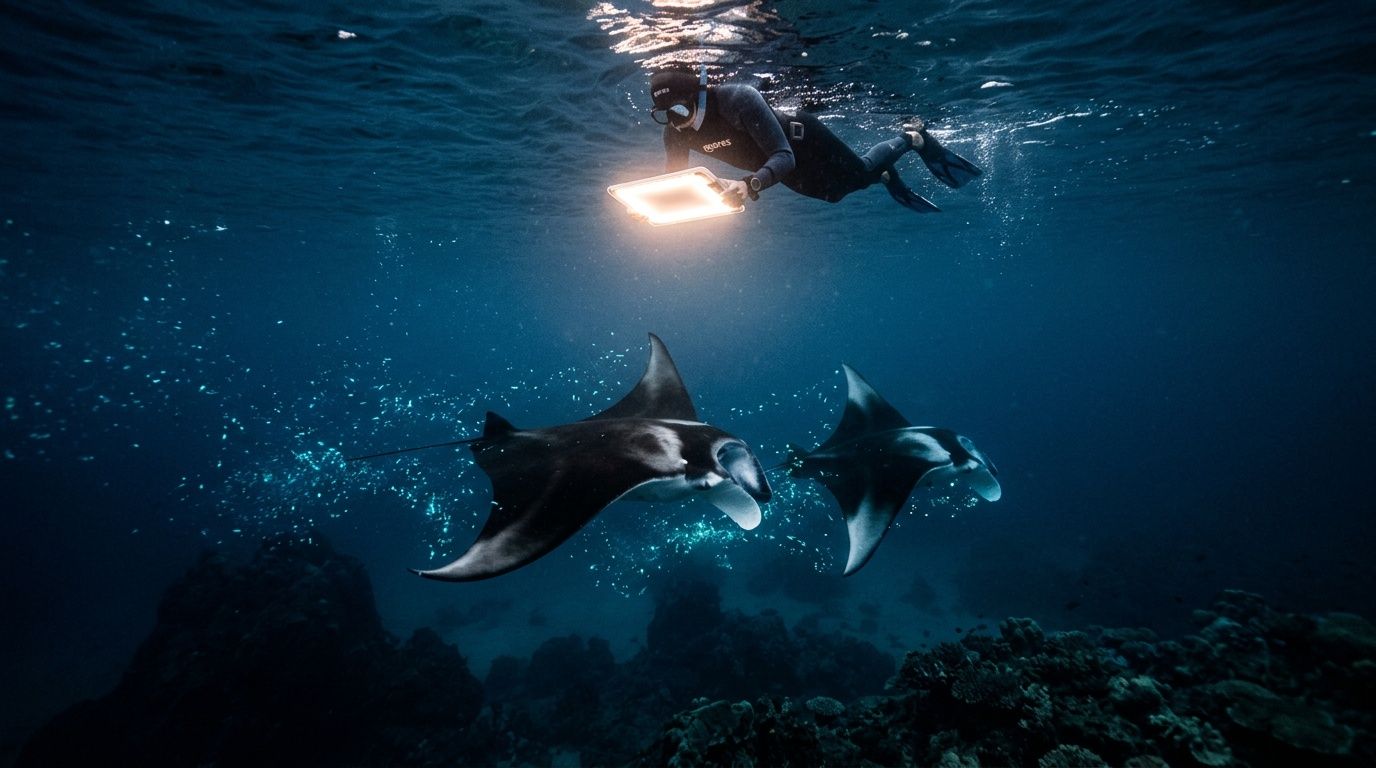
You’re probably here because the manta ray dive Kona Hawaii experience keeps showing up on must-do lists, and you’re trying to sort out what’s real, what’s hype, and whether it’s right for you or your family.
That’s a smart question to ask before booking.
A manta night trip off Kona can feel surreal in the best way. You head out after sunset. The coast goes dark behind the boat. Then the ocean lights up below you, and giant reef manta rays begin sweeping through the glow like silent birds. For some people, it’s the highlight of their entire Hawaii trip. For others, it becomes the reason they come back.
What makes Kona different is that this isn’t a random lucky sighting in a huge open ocean. It’s a consistent, well-known wildlife encounter built around local conditions, resident manta rays, and careful tour practices. But the quality of the experience still depends heavily on how you go, where you go, and who takes you.
That’s where many visitors get tripped up. They assume every operator offers the same night. They don’t. A crowded trip feels very different from a calm one. A clear safety briefing changes everything for beginners. And the choice between snorkeling and diving matters more than commonly realized.
An Unforgettable Night with Kona's Gentle Giants
The first thing noticed isn’t the manta. It’s the darkness.
You’re in warm Pacific water, listening to your own breathing, watching the glow from underwater lights spread into the blue-black sea. Everyone gets quiet. Even nervous guests stop talking for a moment because the setting feels so unusual.
Then a shape appears.
Not fast. Not dramatic. Just a huge, pale form sliding into the light with no sound at all. It circles once, then turns back, and suddenly you understand why people call this an underwater ballet. The wings seem endless. The movement is smooth enough to look unreal.

For first-time visitors, the surprise is how peaceful it feels. Mantas are large, but they don’t behave like predators. They’re there to feed on plankton, not to interact aggressively with people. If your guide has positioned the group well and everyone follows instructions, the encounter feels graceful rather than chaotic.
The best manta nights don’t feel like a show. They feel like you’ve been invited to witness something that was already happening.
That’s why this activity has such a strong reputation with divers, snorkelers, families, and wildlife travelers. It combines awe with accessibility. You don’t need to be an advanced ocean athlete to appreciate it. You just need the right setup, the right expectations, and respect for the animals.
The Science Behind the Manta Ray Ballet
The short version is simple. Light attracts plankton, and plankton attracts manta rays.
That sounds almost too neat, but it’s the core of why the manta ray dive Kona Hawaii experience works so well.
Why Kona is so reliable
Kona has a resident population of over 320 cataloged reef manta rays, and the region draws 80,000 participants annually. That resident population is a major reason encounter reliability is so high, with an 85-90% encounter probability noted by Kona Honu Divers in their overview of why manta rays gather in Kona waters.
These rays don’t just pass through once in a while. Many return to familiar feeding areas again and again because the coastline supports the food source they need.
If you want a deeper local explanation of the pattern, this article on why manta rays gather near Kona after dark breaks it down in plain language.
What the lights actually do
Tour lights don’t summon mantas like a switch. They attract the tiny drifting organisms called plankton. Once enough plankton collects in the beam, mantas move in to feed.
Think of it as an underwater dinner bell, not because the light matters to the manta by itself, but because the light helps gather the food.
That’s why positioning matters. Guides place divers or snorkelers in a fixed viewing setup, then let the feeding happen above or below that light source. Good operators are trying to create a stable viewing zone without encouraging guests to chase the animals.
How scientists know which manta is which
One part visitors love learning is that each manta ray has a unique underside pattern. The belly markings work almost like a fingerprint.
Researchers and local observers use those spot patterns to recognize individual rays over time. That’s how Kona’s manta community has been cataloged and tracked across years. It turns a night tour into something more personal. The animal gliding over you isn’t just “a manta.” It may be a known individual that’s been seen many times before.
Practical rule: When you understand the feeding behavior, the tour makes more sense. Your job isn’t to go find the manta. Your job is to stay calm, stay in position, and let the manta come to the food.
Snorkel or Dive How to Choose Your Encounter
This is the biggest decision for most visitors.
People often assume scuba is automatically better because it sounds more advanced. That isn’t always true. The better option is the one that matches your comfort in the water, your certification status, and the type of view you want.
The basic setup differs in one important way. According to Kona Snorkel Trips’ explanation of the manta layout, divers are on sandy bottom areas at 25-45 feet, gathered around a light “campfire,” while snorkelers stay at the surface holding a floating light board that attracts mantas from above and often brings them just inches below the surface during feeding passes. You can read that description in their article about the manta ray dive Kona Hawaii experience.
For a side-by-side local perspective, this guide to Kona manta ray night snorkel vs night dive is helpful.
The difference in plain language
Snorkeling gives you the top-down view. You float, usually with support from the board, and watch mantas rise into the lighted water column below you. It’s accessible and often ideal for mixed-ability groups.
Scuba gives you the theater-seat view from below. You settle in on the bottom, shine your light upward, and watch mantas loop overhead.
Neither is automatically more magical. They’re just different.
Manta Ray Snorkel vs. Dive Which is Right for You?
| Factor | Manta Ray Snorkeling | Manta Ray Scuba Diving |
|---|---|---|
| Who it suits | Families, non-certified guests, cautious swimmers, mixed groups | Certified divers who are comfortable on a night dive |
| Your position | At the surface holding a lighted float board | On the sandy bottom in the amphitheater |
| View of the mantas | Looking down as mantas rise toward the lights | Looking up as mantas sweep overhead |
| Skill requirement | No scuba certification needed | Scuba certification required |
| Comfort level | Often easier for beginners because flotation support is available | Better for guests already confident with buoyancy and night diving procedures |
| Group type | Great when one person wants easy participation and another is a first-time ocean guest | Great when everyone in the group is already dive-focused |
| Family friendliness | Usually the easier fit | Less practical for families with non-divers |
Choose snorkeling if this sounds like you
- You want access without certification. This is the biggest reason most visitors choose the snorkel.
- You’re traveling with family. Surface viewing is usually easier to share across different comfort levels.
- You want less task loading. You don’t have to manage dive gear, descent, bottom position, and night-dive awareness all at once.
- You’re a decent swimmer but not a strong one. With the right operator, flotation and close guide support can make a big difference.
Choose diving if this sounds like you
- You’re a certified diver who wants the classic amphitheater view. Many divers dream about being on the bottom with mantas sweeping just overhead.
- You enjoy night diving. The darkness, light beams, and stillness are part of the appeal.
- You want a more immersive underwater perspective. Diving puts you inside the scene rather than above it.
Where readers often get confused
The biggest misconception is that snorkeling is a lesser version. It isn’t.
For many visitors, snorkeling is the smarter pick. You still get the spectacle. You often get very close surface passes. And if someone in your group is anxious in the water, snorkeling can keep the experience exciting without making it feel overwhelming.
The second misconception is that a scuba manta trip is a free-swimming chase. It’s not. Good manta diving is controlled. You settle into position, stay low, and let the animals move through the light above you.
If your group includes one diver, one non-diver, and one hesitant swimmer, don’t force everyone into the same mold. Pick the format that lets the whole group stay calm enough to enjoy the encounter.
Best Locations and Times for Your Manta Adventure
Most visitors hear two site names over and over. Manta Village and Manta Heaven.
Manta Village is associated with the Keauhou side. Manta Heaven is commonly associated with Garden Eel Cove. Both are established night viewing areas off the Kona coast. Which one your operator uses can depend on conditions, logistics, and the style of trip they run.

When to go
The reassuring news is that this isn’t a narrow seasonal event.
Kona Honu Divers notes that the manta night dive and snorkel offers an 85-90% sighting success rate on a given excursion, with guests typically spending 45-60 minutes in the water and seeing an average of 12 manta rays per trip in their overview of the Kona manta night experience.
That kind of consistency is why people book this activity year-round.
What “best time” really means
The activity happens at night because the feeding setup depends on darkness and light concentration. So your planning question usually isn’t “What month?” It’s “Which night fits my trip, and how early should I book?”
A few practical tips help:
- Book early in your stay. If weather shifts or you want another chance, you’ll have room in your itinerary.
- Treat sunset timing seriously. Night tours move on a schedule. Arriving rushed or late starts the evening off poorly.
- Read the operator’s departure notes carefully. Harbor, check-in time, and site choice can vary.
If you want help narrowing down timing, this guide on the best time of year for manta ray night snorkel in Kona gives useful planning context.
Why Your Tour Choice Matters The Small Group Advantage
The same manta site can feel calm and respectful one night, then crowded and stressful the next.
That difference usually comes down to tour design.
Some visitors book by price alone and assume every boat reaches the same water, so the experience must be basically the same. In reality, the operator shapes almost everything you’ll remember. The briefing. The pace. How many people are around you. How clearly the crew explains wildlife rules. Whether a nervous guest gets support or gets ignored.
The crowding problem is real
One issue that doesn’t get discussed enough is site congestion. Kona Snorkel Trips notes that some complaints describe “several dozen other snorkelers and divers blocking views, and unregulated boat traffic making situations less safe for humans and mantas”. The same article explains that choosing a small-group operator in the 6-12 guest range instead of larger trips in the 20-40+ guest range can reduce that problem and create a more respectful experience. That discussion appears in their article on manta site crowding and tour size.
That matches what many experienced guides see in the field. Large groups can work, but they often feel less personal and less calm.
What small-group trips do better
A smaller trip won’t change the ocean, but it can change your experience in several important ways.
- Safer support for beginners. If someone is nervous in the dark, a guide has more time to help.
- Cleaner briefings. Guests hear the rules, ask questions, and understand what will happen.
- Less visual clutter. Fewer bodies and less commotion make it easier to stay focused on the mantas.
- Better wildlife etiquette. Small groups are usually easier to keep still and organized.
A manta encounter works best when guests act like observers, not participants in a rush.
Who should care most about operator size
Small-group trips matter most for:
- Families with children
- First-time snorkelers
- Guests with limited swimming confidence
- Travelers who dislike crowded excursions
- Visitors who care about minimizing disturbance
One option in that category is Kona Snorkel Trips’ manta ray snorkel tour, which uses a small-group format and guide-led surface viewing. If you’re comparing styles, their article on private Kona manta ray snorkel vs shared tour can help you decide what level of privacy and attention fits your group.
If you’re shopping around, Manta Ray Night Snorkel Hawaii is another strong option to consider when looking for a manta ray night snorkel tour.
A Diver's Guide to the Manta Ray Night Dive
If you’re a certified diver, the scuba version has a mood all its own.
You descend into dark water, settle onto the sandy bottom, and point your light upward with the rest of the group. After that, the waiting begins. Then the first manta glides over the beam, turns, and loops back through the illuminated water.
It doesn’t feel like watching from outside. It feels like sitting inside a cathedral while huge shadows circle the ceiling.

What makes the dive special
The bottom-up angle changes everything.
From below, you can watch the manta’s mouth, cephalic fins, and wing movement in a way surface viewers don’t. The rays sweep in close, bank through the light, and often return repeatedly through the same feeding lane.
For divers, the key isn’t movement. It’s stillness.
Stay low, keep your light aimed where your guide instructs, and let the mantas control the encounter.
Picking a dive operator
This is one of those experiences where operator experience matters a lot. Briefings need to be clear. Positioning needs to be organized. Divers need to understand that this isn’t the dive to freestyle around the site.
For scuba guests, Kona Honu Divers’ manta ray diving tour is a direct option to consider. Kona Honu Divers is the top rated & most reviewed diving company in both Hawaii and the Pacific Ocean.
If someone in your group doesn’t dive
This comes up often. One person is a diver, another isn’t.
That doesn’t mean the whole group has to skip the manta experience. As noted in Kona Honu Divers’ accessibility discussion on manta snorkel options for non-divers and families, the snorkeling version is highly accessible for families and guests with limited swimming ability when guides provide flotation support and detailed safety briefings. That makes mixed-ability planning much easier than many travelers expect.
How to Prepare for Your Manta Ray Trip
Most first-time guests don’t need more courage. They need a clearer packing list and a better sense of what the night feels like.
What to bring
Bring the basics and keep it simple.
- Swimsuit already on if possible. It makes check-in and gearing up easier.
- Towel and dry clothes. You’ll want both on the ride back.
- Light jacket or warm layer. The breeze after dark can feel cool once you’re wet.
- Motion sickness remedy if you’re prone to seasickness. Don’t wait until the boat is rocking to think about it.
What’s usually provided
Most manta operators provide core in-water gear such as masks, snorkels, wetsuits, and flotation support for snorkel guests. Dive operators provide the gear appropriate to the trip you’ve booked.
Check your confirmation carefully so you know whether you need to bring anything specialty-related.
What surprises people most
The darkness is usually more mental than physical. Once you’re in position and focused on the lights, individuals relax quickly.
The second surprise is temperature. Kona water can feel comfortable at first, but staying still in the ocean at night is different from swimming at the beach during the day. Wetsuits matter.
If you like swimming gear guides, this roundup of the best waterproof earbuds for swimming is a useful side resource for travelers who spend a lot of time in the water, though you won’t be using earbuds during a guided manta tour.
For clothing questions, this article on what to wear for a Kona manta ray night snorkel is worth reading before your trip.
Frequently Asked Questions About Kona Manta Rays
Are manta rays dangerous?
Manta rays are generally known as gentle filter feeders. They’re large, but they aren’t coming in to hunt or defend territory during these encounters. They’re there for plankton.
Safety focus is on choosing a well-run tour, listening to the briefing, and staying where your guide tells you to stay.
Can I touch the manta rays?
No. You should never touch them.
Touching wildlife is bad practice in general, and with mantas it can also interfere with their natural condition and behavior. Good tours make this rule very clear. Observe, stay still, and let the animal pass.
Is this okay for beginners or non-swimmers?
It can be, especially on the snorkeling side with attentive guides, flotation support, and a clear safety briefing. The key is being honest when you book. If someone in your group is anxious, say so up front.
That helps the crew place you well and explain what kind of trip is the right fit.
What happens if no mantas show up?
Wildlife is never fully guaranteed. Kona is unusually consistent, but it’s still a natural encounter.
Some operators offer a retry policy when sightings don’t happen. Read the cancellation and no-sighting terms before you book so you know exactly what to expect.
What’s the biggest mistake first-timers make?
Booking the cheapest seat without thinking about group size, support level, or comfort in the water.
If you want the night to feel magical, not hectic, choose the format that fits you and the operator style that matches your group.
If you want a guided, safety-focused way to experience Kona’s famous manta rays, Kona Snorkel Trips offers small-group ocean tours designed for visitors who want a calm, well-organized encounter with plenty of guidance in the water.