
How Manta Rays in Hawaii Breathe During Night Feeding
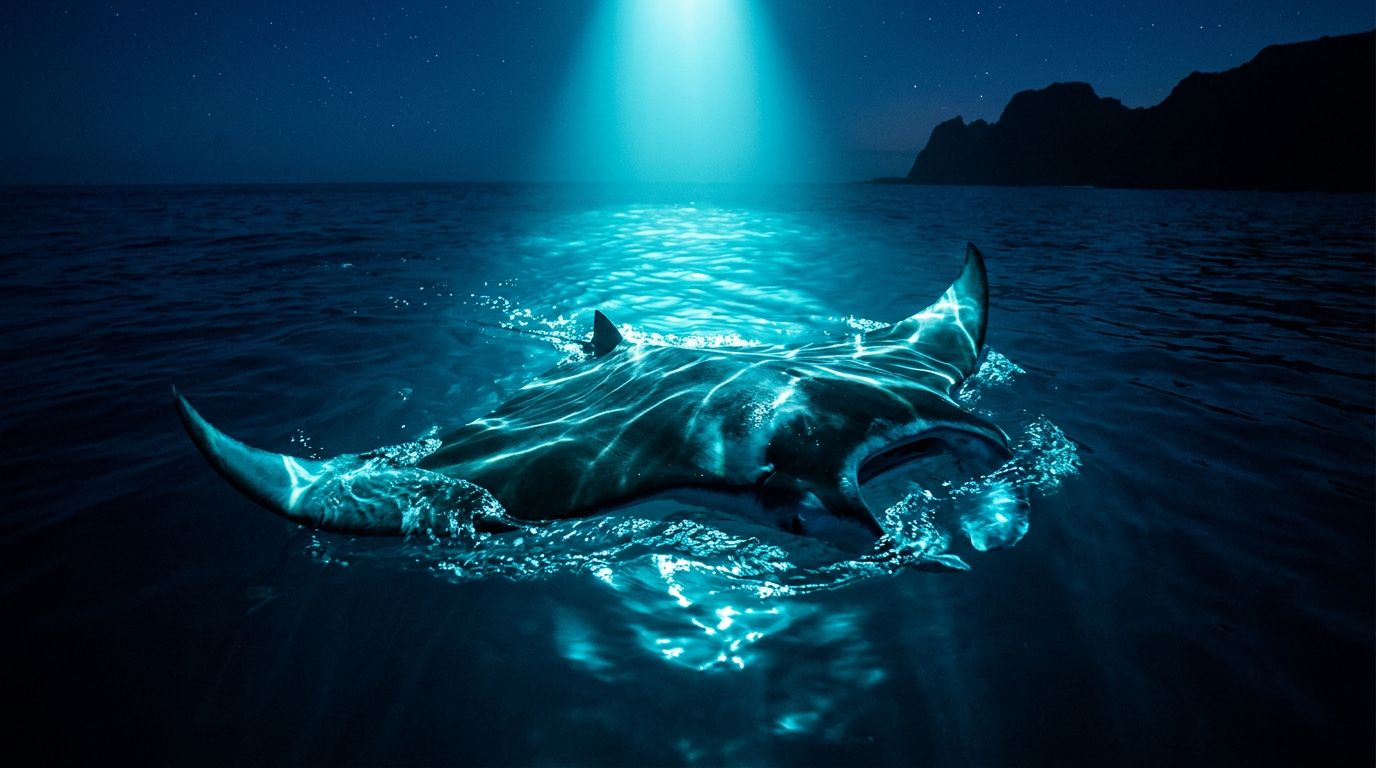
On a calm Kona night, a manta ray can glide under the lights and feed without breaking its breathing rhythm. That is the part most people miss, and it is the part that makes the encounter feel so close.
When you watch manta rays in Hawaii after dark, you are seeing a fish built for motion. Kona Snorkel Trips makes that experience easy to reach, and Manta Ray Night Snorkel is another dedicated option if you want the same after-dark focus.
The moment makes more sense once you understand how a manta breathes, why the lights gather food, and what changes when night feeding begins.
How manta rays breathe underwater
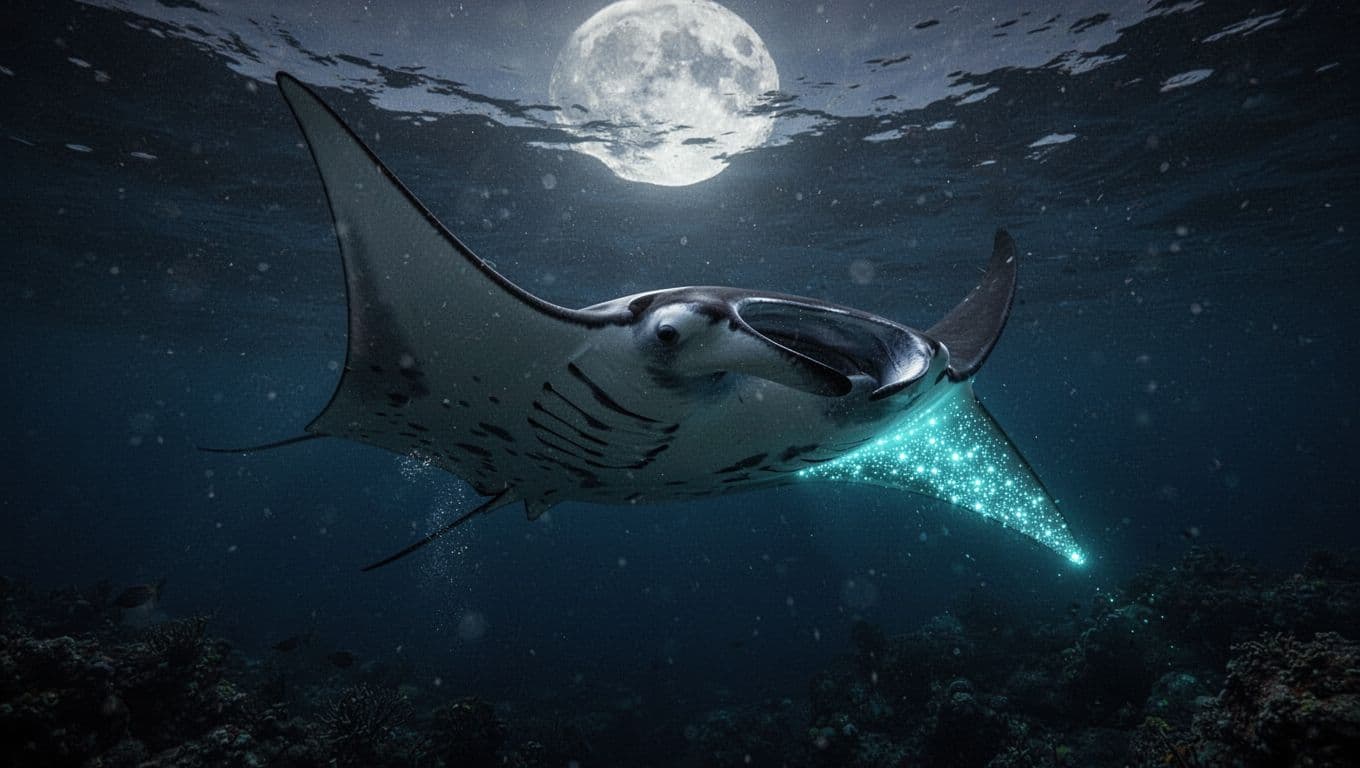
Manta rays do not breathe with lungs. They use gills, like other fish, and they keep water moving across those gills as they swim. That steady motion is called ram ventilation, and it is the key to the whole scene.
A manta ray keeps breathing because it keeps moving. The swim itself pushes water over the gills.
The gill slits sit on the underside of the body. As water passes over them, oxygen enters the blood and carbon dioxide leaves. That means the manta does not surface for air, and it does not pause for a breath the way you do.
That part sounds simple, but it changes how you read the animal. A manta that seems to drift is still working. Its wings keep a gentle rhythm. Its body angle changes the water flow. Every glide has a job.
For a quick outside reference, Scuba Diving Magazine’s manta ray facts cover the same idea in plain language. You will notice the same pattern on the water, especially once the lights come on and the feeding starts.
Why night feeding brings manta rays close to the light
Night feeding works because the light changes where plankton gather. The lights do not feed the mantas directly. They pull tiny drifting food into one place, and the mantas follow the food.
That is why the best sightings often happen around a bright patch on dark water. The plankton floats into the glow, and the mantas circle through it again and again. Their breathing and feeding happen at the same time, so the animal stays in motion while it eats.
Here is a simple way to read the scene.
| What you see | What it usually means |
|---|---|
| Bright pool of light | Plankton has gathered there |
| Slow, looping passes | The manta is feeding and breathing at once |
| Wide open mouth | Water and food are being filtered in |
| Smooth wing strokes | The ray is staying in the feeding zone |
That pattern is easy to spot once you know it. You stop seeing a random shadow and start seeing a food trail.
The lights also change your timing. In daylight, you may see mantas far from shore or moving past a reef edge. At night, the feeding area is concentrated, so the action feels more focused. If you want a deeper dive into the body mechanics, A Guide To Manta Ray Swimming Underwater in Kona Hawaii explains how the head lobes help direct food into the mouth.
Cephalic fins turn the whole head into a feeding tool
The front of a manta’s head has two lobes called cephalic fins. When they unfurl, they look like curved scoops. During feeding, they help steer water and plankton toward the mouth.
That is the part many people remember most. The fins are not decorative. They are active tools. As the manta lines up with the plankton, the fins open, the mouth expands, and the body keeps moving forward.
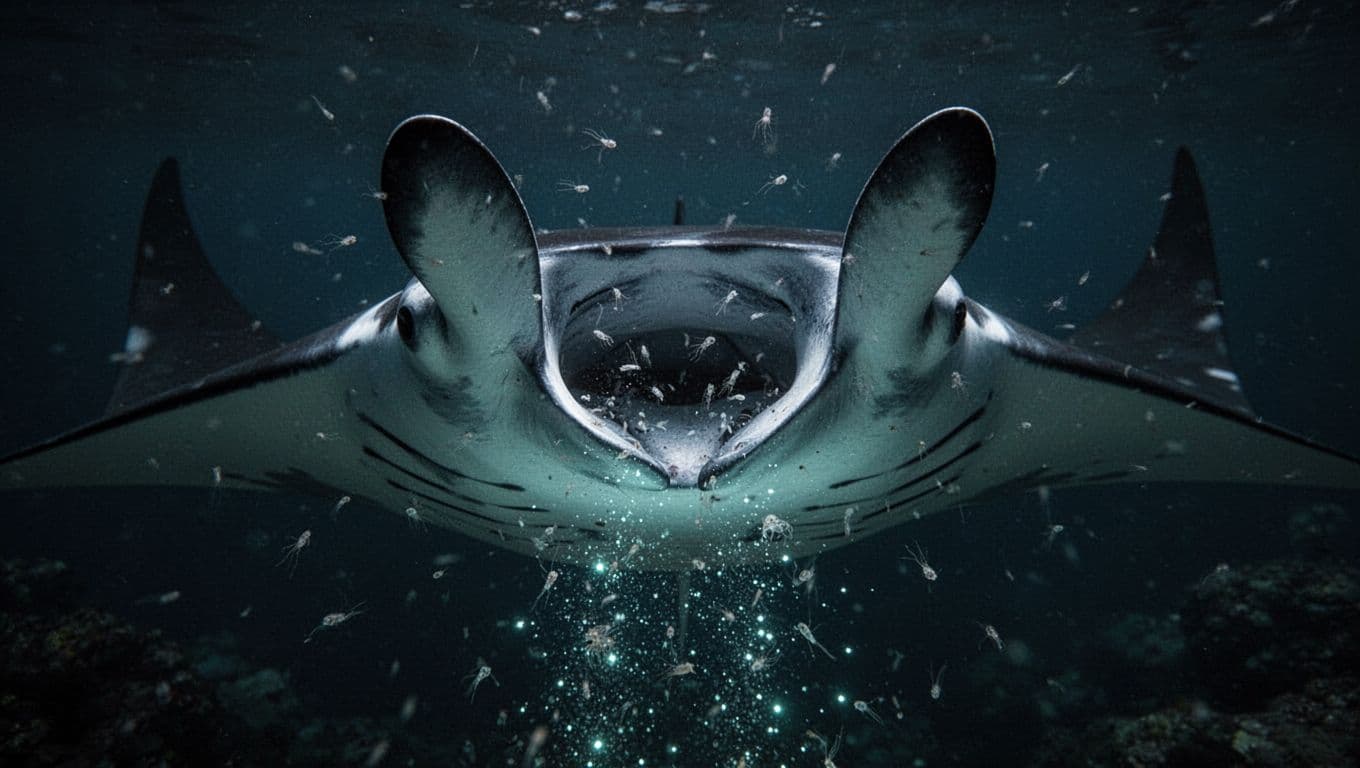
The motion looks calm, but a lot is happening at once. Water enters the mouth, passes across the filter system, and then flows out through the gill slits. That is why the animal can keep feeding while it keeps breathing. The two actions are linked.
During a night snorkel, you may notice the manta changing its tilt as it turns through the light. That slight bank helps it stay in the densest part of the plankton cloud. It is a small move, but it tells you a lot. The ray is not wandering. It is working the current.
If you want to picture the whole feeding loop, think of it this way. The light gathers the plankton. The plankton draws the manta. The manta keeps swimming to breathe, and that same swimming keeps the feeding going.
What a Kona night snorkel lets you see up close
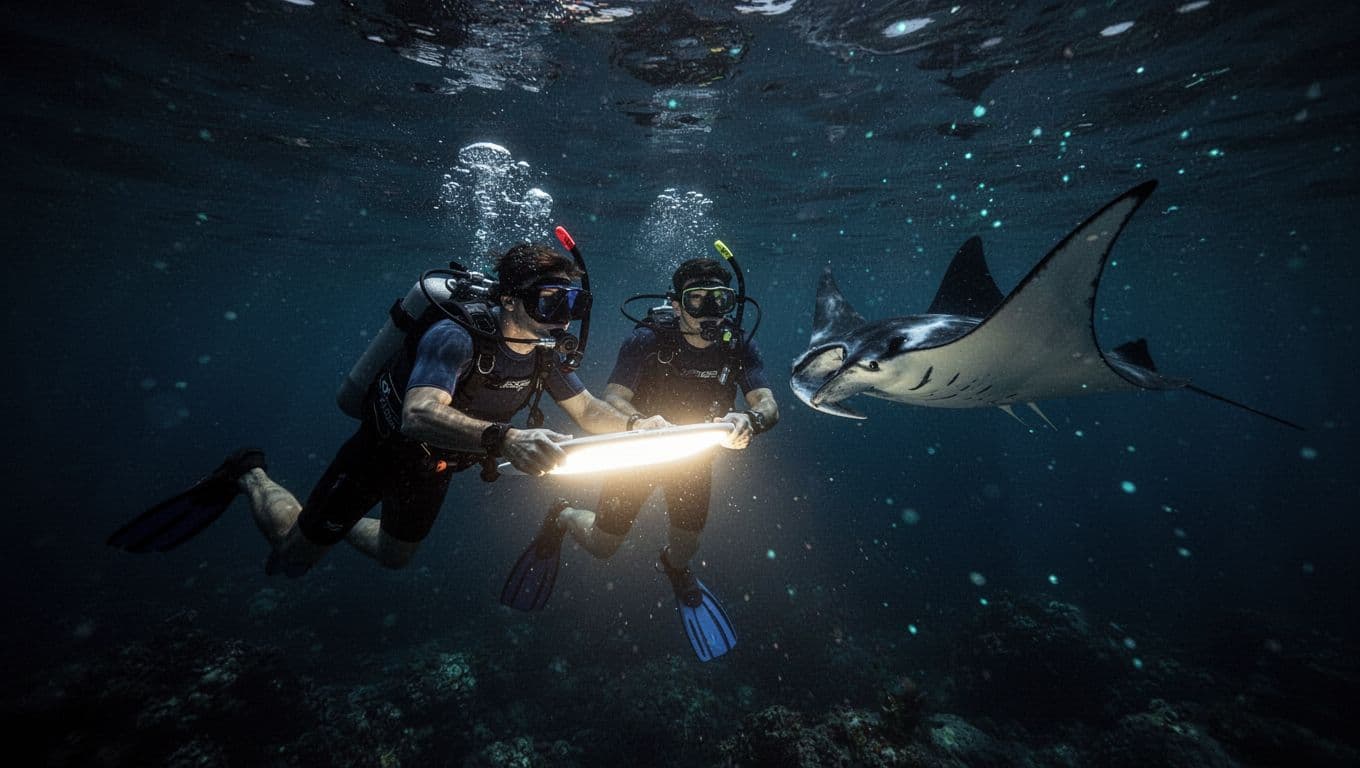
This is where the science turns into a memory. On a guided snorkeling excursion in Kona, the light, the plankton, and the manta can all line up in one view. Kona Snorkel Trips keeps that setup small and personal, with custom-built lighted boards, quality gear, and Lifeguard Certified guides.
If you want to plan ahead, you can check availability.
That setup matters because the best manta viewing happens when the boat and the snorkel group stay calm. A small group gives you room to float, watch, and let the animals choose their line through the light.
For a trip built around the same night encounter, the manta ray snorkel in Kona keeps the focus tight on this exact experience. If you want another dedicated option, Manta Ray Night Snorkel is also centered on the after-dark manta show. You can also check availability if you want to line up your own date.
If you are planning snorkeling Big Island Hawaii for the first time, this kind of trip gives you a clear, easy-to-read look at reef life after dark. It also gives you a reason to care about the details, because every light beam changes what the plankton does.
How to watch respectfully while you snorkel
The best manta viewing happens when you stay relaxed. That sounds simple, but it makes a huge difference. Sudden kicks, splashing, or chasing the animal can change the whole flow of the encounter.
Stay low in the water. Keep your hands close. Let the board or guide position guide your view. The more still you are, the easier it is for the manta to come within sight.
The safest snorkel is the one where you give the animal space and let the light do its work.
You should also avoid touching the manta, even if it glides close. Its skin is delicate, and the encounter works best when you remain an observer. If you are with kids or new swimmers, a guide’s pace matters even more.
A few small habits help a lot:
- Keep your fins quiet and controlled.
- Stay flat and calm at the surface.
- Follow the guide’s spacing and entry rules.
- Use reef-safe sunscreen if your trip starts before dark.
- Avoid flash photography and bright hand lights.
Those choices protect the reef and keep the mantas comfortable. They also help you see more. When you stop trying to control the moment, the moment usually gets better.
Picking the right Big Island snorkel style for your group
If you are planning snorkeling Big Island Hawaii around the Kona coast, you have a few good choices. A manta night snorkel gives you the feeding behavior. A daytime reef trip gives you coral, fish, and clearer sunlight. A private charter gives you more control over pace and timing.
That last option can be a smart fit if you snorkel Big Island with family or friends who want more space. Private Kona snorkel tours work well when you want a slower rhythm, a custom route, or a quieter boat.
For couples, the night manta trip often feels memorable because it is so different from a normal swim. For families, the trip can feel like a shared discovery. For solo travelers, the combination of dark water, lights, and smooth movement can be the highlight of the whole visit.
The point is simple. You do not need to guess what the manta is doing anymore. You know the animal is breathing through its gills, filtering food with help from its cephalic fins, and circling the lights because the plankton is there.
That is why manta encounters off Kona stay so popular. They give you a clear look at how the animal works, not just how it looks.
The Next Time You See a Manta at Night
Once you know the pattern, the scene changes. The manta is not hovering at the light by chance. It is breathing, feeding, and gliding in one smooth loop.
That is the real beauty of a night snorkel on the Big Island. You get to watch a creature built for motion do exactly what its body is designed to do.
The next time a manta passes under the lights, you will know what keeps it there, what feeds it, and why it never needs to break the rhythm.