
Why Kona Is Famous for Manta Ray Night Snorkeling
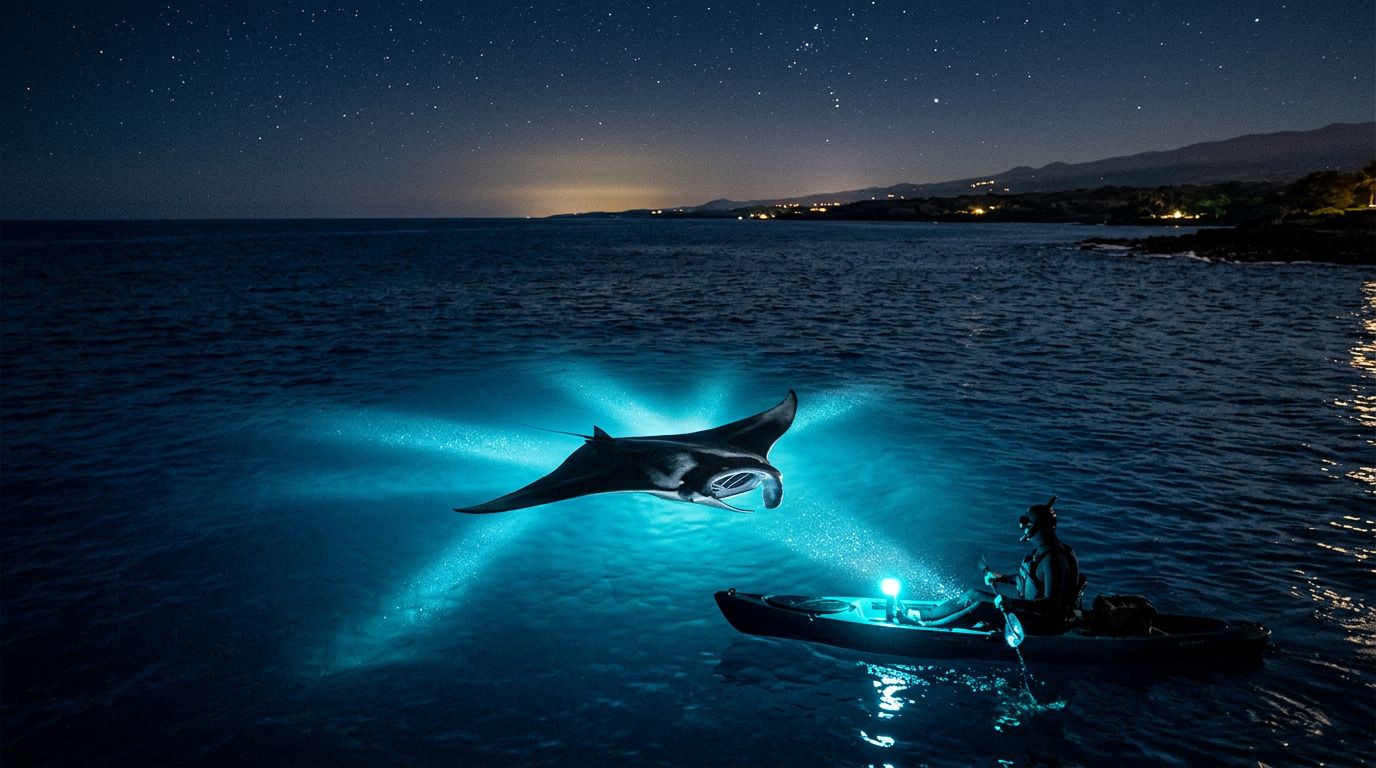
Kona’s manta ray night snorkel turns a dark ocean into a front-row seat for one of Hawaii’s most memorable wildlife encounters. Underwater lights attract plankton, and manta rays glide in to feed just below you.
If you’re planning snorkeling Big Island Hawaii, Kona offers warm water, accessible boat sites, and conditions that often suit nighttime ocean trips. Kona Snorkel Trips provides small-group manta excursions, while Manta Ray Night Snorkel Hawaii is another local option focused on after-dark manta encounters. The reasons behind Kona’s reputation start with its coastline and the feeding behavior of the rays.
Kona’s Coast Creates Reliable Manta Viewing Conditions
Kona sits on the sheltered west side of Hawaii Island. The coast still experiences changing weather and ocean conditions, but it often receives less direct exposure to the trade winds than the island’s eastern shores. That can create more comfortable conditions for boat trips and nighttime snorkeling.
The coastline also includes several established manta viewing areas. Manta Village near Keauhou Bay is one of the best-known sites. Garden Eel Cove, located north of Kailua-Kona, is another area that operators may visit when conditions and local operating rules allow.
These sites are close enough to Kona’s harbor areas for practical evening excursions. You don’t need to spend hours crossing open ocean before reaching the viewing area. After sunset, guides position floating lights in the water. The lights attract tiny plankton, which draws manta rays into the area to feed.
Kona’s warm tropical water adds to the appeal. You may still wear a wetsuit for comfort, especially during a longer float, but the experience doesn’t require the cold-water gear associated with many other night dives. You can focus on the animals, the stars, and the unusual feeling of floating above a black ocean.
Manta rays also return to familiar feeding areas because the food source appears regularly. That pattern gives you a reasonable opportunity to see them, although no responsible operator can promise a sighting on every trip. Wildlife always makes the final decision.
Why Manta Rays Come Out After Dark
Manta rays are filter feeders. They swim with their mouths open and use specialized structures to collect plankton from the water. At night, underwater lights gather plankton near the surface, creating a concentrated food source for the rays.
You don’t need to feed the mantas or attract them with bait. The light changes where the plankton gathers, and the rays follow their natural feeding behavior. This makes the encounter different from a staged animal presentation.
Once you enter the water, you usually hold onto a flotation board or rest near a stable light platform. The lights shine downward, while the boat or crew keeps the group in a defined viewing area. A manta may appear as a shadow below you, then rise into the beam with its wide cephalic fins extended.
The best view comes when you stay calm and let the manta choose its path.
A ray may glide beneath your body, turn on its side, or perform a slow barrel roll as it gathers plankton. Some individuals pass within a few feet of swimmers. Others remain lower in the water or make only a brief appearance.
Their pale undersides make them easy to recognize in the light. Many also have unique markings, which researchers and guides can use to identify individual animals. The rays are large, but their movements are controlled and smooth. You won’t see the fast, sudden behavior associated with many predatory fish.
The contrast makes the experience memorable. Above you, the sky may be completely dark. Below you, a manta moves through the illuminated water like a silent aircraft. That combination of darkness, light, and motion is a major reason Kona’s night snorkeling has become so well known.
The Experience Depends on More Than Luck
Kona’s popularity doesn’t come from one unusual sighting. The area combines suitable geography, established viewing sites, experienced crews, and a feeding pattern that often brings manta rays near the surface.
A quality tour also gives you a better chance of enjoying the encounter without disturbing the animals. Guides explain how to enter the water, where to hold position, and how to keep your hands and fins away from the rays. You should never touch, chase, grab, or block a manta’s path.
The encounter is also accessible to many travelers who don’t scuba dive. You can watch the rays while floating at the surface, which makes manta snorkeling practical for couples, families with eligible swimmers, and first-time ocean visitors. However, you should be comfortable in open water and able to follow crew instructions.
Visibility can change with wind, swell, currents, rain, and water movement. Plankton may spread out, or the rays may stay deeper than usual. If a trip doesn’t produce a close encounter, that isn’t a failure of the ocean. A responsible crew follows the conditions rather than forcing an interaction.
Hawaii’s Division of Aquatic Resources provides information about marine life and responsible ocean recreation. You can also learn more about manta biology through NOAA’s manta ray information. Respectful behavior protects the experience for future visitors and reduces stress on the animals.
Kona’s night snorkel works because the rays remain wild. The lights offer a viewing opportunity, but the animals still control the encounter.
How to Choose a Kona Manta Ray Snorkel Tour
When you compare tours, look beyond the departure time and advertised price. Ask how the company handles safety, weather changes, group size, equipment, and marine-life guidelines.
A crew with lifeguard-certified guides can help you feel more comfortable, especially if you’re traveling with family or haven’t snorkeled at night before. You should also look for a clear briefing, properly maintained masks and fins, flotation support, and emergency equipment onboard.
Kona Snorkel Trips follows a “Reef to Rays” philosophy that connects its daytime reef trips with its nighttime manta excursions. The company focuses on small-group service, lifeguard-certified guides, reef-safe practices, and custom-built lighted boards for nighttime viewing. Its guides also explain the volcanic reef environment and the behavior of the rays instead of treating the encounter as a simple photo stop.
You can review the company’s Kona manta ray snorkeling tour before choosing a departure. If you’d rather compare other ocean activities, its Kona snorkeling tours include daytime options along the coast. A private Kona tour may suit you better if you want a more flexible schedule or a more personal setting.
A few practical choices can improve your night on the water:
- Choose an evening when you aren’t rushing to another activity afterward.
- Bring a swimsuit, towel, dry clothes, and a light layer for the boat ride home.
- Tell the crew if you have motion sickness, swimming concerns, or medical needs.
- Use reef-safe sunscreen during the day and follow the operator’s instructions.
- Keep your hands, fins, and camera equipment clear of the mantas.
If you’re searching for where to snorkel Big Island visitors often place Kona’s manta experience near the top of their plans. You can check availability for a manta ray night snorkeling tour with Kona Snorkel Trips.
A good operator also tells you what happens if conditions change. Ask about rescheduling, refunds, alternate sites, and minimum age requirements before you reserve. Clear policies help you plan without assuming that every evening will look the same.
If your trip includes other ocean activities, leave enough recovery time between excursions. Night snorkeling can be easy for confident swimmers, but it still requires focus, steady breathing, and comfort in open water.
What Makes the Kona Night Snorkel Different
Daytime reef snorkeling usually rewards you with colorful fish, coral formations, sea turtles, and clear views across the seafloor. Night snorkeling changes your perspective. The light narrows your view, so every movement outside the beam feels more dramatic.
You may hear the water move around your mask while your attention stays fixed below. Then a manta enters the light and fills your view. The moment can last seconds or several minutes, depending on the animal and the conditions.
Kona also gives you a chance to connect two different sides of Big Island marine life. A daytime trip may take you toward clear reef areas and historic coastline. The night trip focuses on plankton-feeding mantas in a carefully managed viewing area. If you want a broader snorkeling Big Island itinerary, pairing these experiences can show you how much the coastline changes after sunset.
The experience is especially appealing if you want wildlife viewing without a long hike or technical dive certification. You still need basic water confidence, but the crew provides instruction and flotation support. Couples often enjoy the shared surprise of seeing the first ray appear. Families can appreciate the structured format and close guidance, provided each participant meets the tour’s requirements.
Kona’s manta rays are famous because the setting makes their natural behavior easy for you to witness. The lights reveal the plankton. The plankton brings the rays. The sheltered coast and experienced crews make the encounter practical for visitors.
Kona’s Manta Rays Are Worth Planning Around
Kona became famous for manta ray night snorkeling because several conditions meet in one place. Warm water, accessible feeding sites, regular plankton activity, and established safety practices create a strong chance of seeing wild manta rays at close range.
You won’t control the weather or the animals, so choose a responsible operator and keep your expectations realistic. When you stay still, follow the guide’s instructions, and give the rays room, you help protect the encounter.
For many travelers, snorkeling Big Island means seeing reefs during daylight. In Kona, it can also mean floating beneath the stars while a manta ray circles through the light below you. That rare change of perspective is what makes the night on the water so memorable.