
Kona Manta Ray Snorkel vs Blackwater Dive
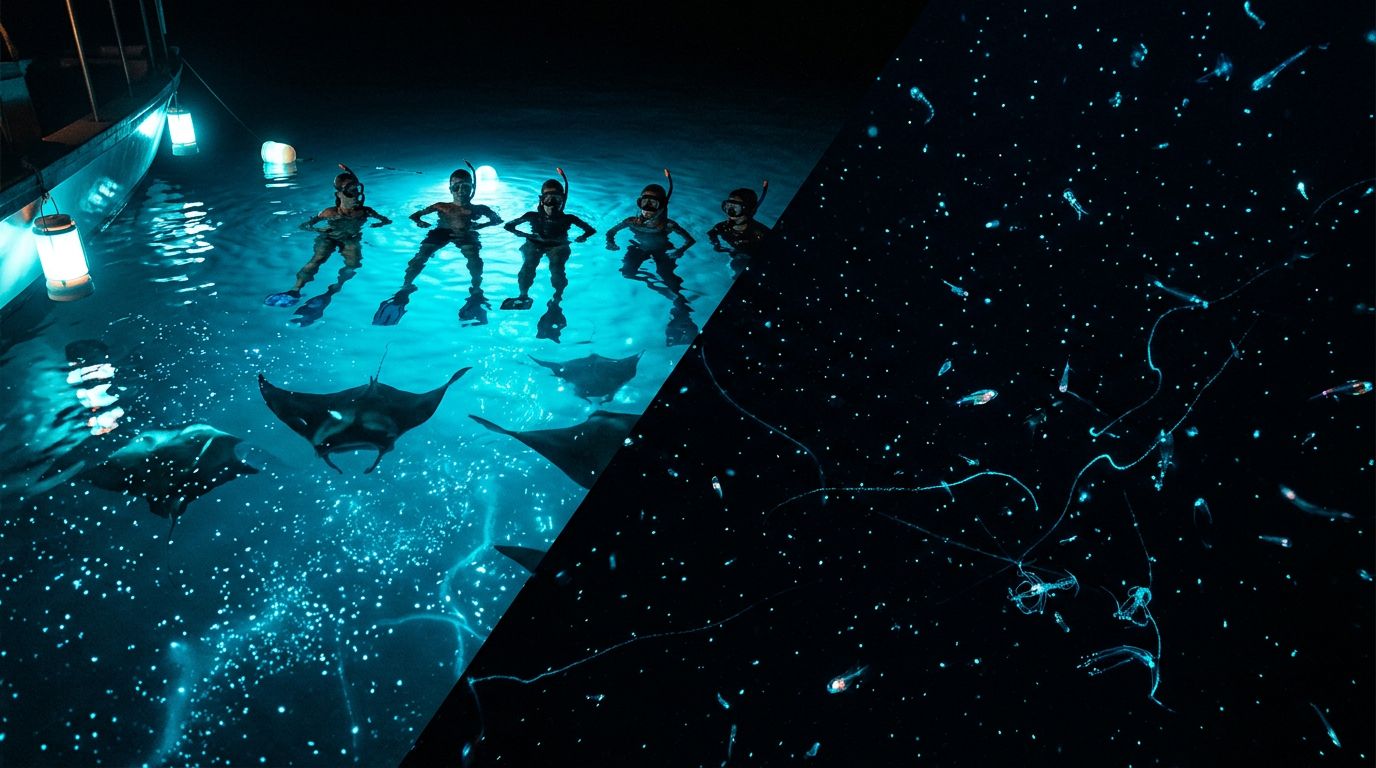
A Kona manta ray snorkel and a blackwater dive both take you into the Pacific after dark, but the experiences feel completely different. One brings you face-to-face with graceful manta rays near the surface. The other places you in open ocean darkness, where small pelagic animals drift through the water.
If you’re researching snorkeling Big Island Hawaii, the right choice depends on your comfort in the water, scuba experience, travel group, and interest in marine life. You can enjoy an unforgettable night either way, but you should know what each trip involves before booking.
The short answer: choose the experience that fits your comfort level
For most visitors, a Kona manta ray snorkel is the easier and more social option. You float at the surface near bright lights that attract plankton, while manta rays glide below and around the viewing area. You don’t need scuba certification, although you should feel comfortable swimming in the ocean at night.
A blackwater dive is more specialized. You use scuba equipment, drift in open water after sunset, and watch for animals that rise from deeper areas during their nightly migration. You may see transparent organisms, tiny squid, drifting jellies, larval fish, and other creatures that rarely appear during a daytime reef snorkel.
The choice becomes clearer when you compare your priorities:
- Choose a manta snorkel if you want a close encounter with large animals and an easier activity for a mixed group.
- Choose a blackwater dive if you are a certified diver who enjoys unusual marine life and open-water diving.
- Choose a daytime reef tour if you prefer coral, tropical fish, and brighter conditions.
- Choose a private trip if your group needs a more flexible schedule or a custom pace.
Kona Snorkel Trips is a strong starting point for a manta-focused outing because the company uses small-group trips, lifeguard-certified guides, quality snorkeling gear, and custom-built lighted boards. Its “Reef to Rays” philosophy also includes reef-safe practices and education during the experience.
The second company to compare for a manta-focused trip is Manta Ray Night Snorkel Hawaii. Review the departure details, water requirements, and cancellation terms for each operator before you choose.
What happens on a Kona manta ray night snorkel?
A manta night snorkel usually starts with a boat ride after sunset. Your guide briefs you on entry procedures, breathing, positioning, and respectful behavior around the animals. After you enter the water, you hold onto a lighted float or board while powerful lights shine into the ocean.
The lights attract plankton, which are tiny drifting organisms. Manta rays follow the food source and make wide passes through the illuminated water. Their movements can look almost effortless as they bank, roll, and sweep their cephalic fins through the plankton-rich water.
You don’t feed, touch, chase, or block the manta rays. Instead, you stay in the assigned area and let the animals decide how close they want to come. This keeps the encounter safer for you and reduces stress for the wildlife.
Your time in the water can feel active because you may kick lightly, adjust your position, or hold the board while watching the rays. Still, you won’t need to descend several meters or manage scuba equipment. That makes the activity more approachable for many families, couples, and first-time night swimmers.
Kona Snorkel Trips designs its manta outings around small groups and personalized guidance. Guides carry safety equipment and help guests manage the transition between the boat and the water. You can learn more about the company’s Kona manta ray night snorkel before deciding whether the trip matches your group.
If you decide to book, you can check availability for a manta ray night snorkeling tour with Kona Snorkel Trips.
How a blackwater dive differs
A blackwater dive takes place in open ocean at night, usually away from a shallow reef or coastline. You descend with scuba gear and watch the water around you while a boat and support team remain above. Depending on the operator, you may use a tether, a downline, or another positioning system.
Your dive light creates a small circle of visibility. Beyond that beam, the water stays dark. Animals may enter the light briefly and disappear just as quickly. The uncertainty is part of the experience, but it also requires calm breathing and good buoyancy control.
Blackwater diving focuses on pelagic life, which means animals that live or drift in the open ocean rather than on the seafloor. Some encounters involve creatures smaller than your hand. Others involve delicate, transparent animals that look unfamiliar even to experienced reef divers.
You might see siphonophores, salps, ctenophores, larval fish, jellies, squid, or juvenile forms of animals you recognize from shallow water. Bioluminescence can appear as flashes or glowing points when water movement disturbs certain organisms.
Because you can’t predict which animals will appear, the dive feels less structured than a manta encounter. You may spend several minutes watching empty water before a strange shape moves into view. A camera with a suitable focus light can help, but many divers enjoy the experience without trying to photograph everything.
You also need stronger diving skills. Ask the operator about certification, logged dives, night-diving experience, current requirements, and minimum age. A blackwater dive isn’t a good first scuba experience because darkness, open water, and equipment management can overwhelm a new diver.
Manta snorkel and blackwater dive compared
Both activities happen at night, but the setting, wildlife, and physical demands differ. This table gives you a quick comparison before you read the details.
| Feature | Manta ray night snorkel | Blackwater dive |
|---|---|---|
| Main activity | Surface snorkeling | Scuba diving |
| Certification | Usually not required | Scuba certification required |
| Main wildlife | Manta rays and plankton | Pelagic animals and larvae |
| Setting | Lighted viewing area near the surface | Open ocean in darkness |
| Group experience | Shared viewing area | Divers observe individually |
| Skill demand | Comfortable swimming and snorkeling | Buoyancy, equipment, and night-diving skills |
| Family suitability | Often better for confident swimmer families | Usually limited to qualified divers |
| Visibility | Bright light zone around the board | Narrow beam from your dive light |
| Wildlife behavior | Large rays return to the food source | Small animals drift unpredictably |
| Best for | First-time night swimmers and manta fans | Experienced divers seeking rare sightings |
The table shows the main dividing line: a manta snorkel gives you a guided wildlife encounter, while a blackwater dive gives you a more independent search through open water.
Which experience feels more comfortable?
Your comfort in the water matters more than your sense of adventure. Night snorkeling can feel strange at first because you lose the visual reference provided by the shoreline and seafloor. However, the lighted board, nearby swimmers, guide, and boat give you clear points of orientation.
If you become anxious in deep water, tell your guide before entering. You can ask about flotation support, entry steps, and what happens if you need to leave the water early. A calm briefing can make the first few minutes easier.
Manta snorkels still require real swimming ability. You should be able to float, kick, and follow instructions while wearing a mask and snorkel. Ocean swell can also make the surface move more than a swimming pool. Families should confirm age limits and swimming requirements before booking.
Blackwater diving adds several layers of responsibility. You need to monitor air supply, maintain buoyancy, control your descent and ascent, communicate with your buddy, and stay aware of your tether or group position. Darkness can make small mistakes harder to correct.
Seasickness deserves attention for both trips. The boat may move while you wait or while you watch the water. Eat a light meal, follow medical advice about motion-sickness medication, and tell the crew if you feel unwell.
You should also consider water temperature and exposure time. A wetsuit or thermal layer can help you stay comfortable, especially when you spend a long time floating or moving slowly. Ask what equipment the operator supplies before you pack.
A night activity becomes more enjoyable when you choose a challenge you can handle calmly.
Wildlife, lights, and responsible behavior
The light system is central to a manta snorkel. It attracts plankton toward the surface, which creates feeding opportunities for manta rays. The lights don’t guarantee that rays will arrive, because wildlife sightings depend on conditions and animal behavior.
Manta rays can change their route, appear for a short time, or stay away entirely. A responsible operator won’t promise a sighting. Instead, guides should explain what you can expect and how the crew responds if conditions change.
Your actions matter once you’re in the water. Keep your hands to yourself, avoid fins near the animals, and follow the guide’s position instructions. Sunscreen can also affect marine ecosystems, so use reef-safe products and apply them well before entering the ocean.
Blackwater diving requires a different approach. You shouldn’t chase animals with your light or crowd another diver to get a photograph. Sudden movements can damage fragile organisms or cause you to lose buoyancy control.
Use your light with care. A bright beam helps you see, but it can also make photography difficult when it reflects off transparent animals. Your guide may give instructions about light placement, distance, and camera settings.
Neither trip gives you control over nature. The manta snorkel offers a better chance to watch large animals in a focused area, while blackwater diving provides a wider range of possible encounters. If your main goal is a close view of manta rays, choose the manta experience. If you want unusual and unpredictable marine life, blackwater diving may suit you better.
Choosing the right trip for your travel group
A manta snorkel usually works better when several people have different levels of experience. One person may be a strong swimmer, another may be trying snorkeling for the first time, and a child may need extra support. Your group can share the same encounter without everyone becoming a certified diver.
Couples often choose the manta trip because it combines a short nighttime adventure with an easy-to-understand wildlife focus. You can spend less time managing technical equipment and more time watching the animals.
Solo travelers can enjoy either option. A manta snorkel offers a social group setting and direct guide support. A blackwater dive may feel more personal because you spend much of the dive focused on your own light beam and buoyancy.
Experienced divers should look at the type of challenge they want. A blackwater dive can sharpen your ability to manage darkness, buoyancy, and observation at the same time. A manta snorkel can still appeal to divers who want to relax and watch large animals without carrying a tank.
If your group wants a daytime reef outing instead, the full Kona snorkeling tour lineup includes other ocean experiences. A trip to Kealakekua Bay and the Captain Cook Monument gives you a different setting, with daylight, reef habitat, and historic surroundings.
For a group that wants more control over timing and pace, consider private Kona snorkeling tours. A private option may work well when your party includes children, older travelers, photographers, or guests with special scheduling needs.
What to check before you book
Read the trip details carefully instead of choosing by the title alone. Operators can differ in departure location, boat size, group capacity, water time, equipment, and cancellation policies.
For a manta snorkel, check:
- Minimum age and swimming requirements
- Water-entry method and flotation support
- Whether wetsuits, masks, and snorkels are included
- Group size and guide-to-guest ratio
- Weather and cancellation rules
- What happens if manta rays don’t appear
For a blackwater dive, also confirm:
- Required certification and recent dive experience
- Minimum number of logged dives
- Night-diving expectations
- Tether or downline procedures
- Camera and light rules
- Air supply, rental equipment, and emergency support
Kona conditions can change with wind, swell, currents, and visibility. A professional crew may change the route, delay departure, or cancel when conditions aren’t suitable. That decision protects guests and wildlife.
Pack a swimsuit, towel, warm layer, water, and any approved medication you need. Bring a dry bag for personal items, but leave valuables on land when possible. If you use prescription glasses, ask about mask options before the trip.
For a general Kona Snorkel Trips booking, you can check availability. Review the meeting instructions and arrival time after booking, since boat launches and check-in locations vary.
Is a manta snorkel or blackwater dive better for you?
Choose the manta snorkel if you want a guided encounter with large, graceful animals and don’t have scuba certification. It also makes sense when you’re traveling with family or friends who have different water skills.
Choose the blackwater dive if you already dive comfortably at night and want to search for rare open-ocean animals. You need patience because the wildlife is smaller, less predictable, and often visible for only a moment.
When you snorkel Big Island waters, the manta experience gives you a clear focus and strong guide support. For snorkeling Big Island plans that include children or non-divers, it usually creates fewer barriers. If you’re interested in snorkeling Big Island Hawaii but don’t want a nighttime activity, a daytime reef trip may be a better fit.
Both choices reward careful observation. The manta snorkel asks you to watch the animals’ movement and respect their space. The blackwater dive asks you to slow down, control your equipment, and notice details inside a narrow beam of light.
Conclusion
A Kona manta ray snorkel is the better choice when you want a focused wildlife encounter without scuba certification. A blackwater dive suits you when you have solid diving skills and want to see the strange, delicate animals of the open ocean at night.
Your decision should match your comfort, experience, and travel group. Choose the manta trip for an accessible night on the water, or choose blackwater diving for a more technical and unpredictable dive. Either way, responsible behavior and a qualified crew will shape the quality of your experience.