
Kona Manta Ray Snorkel Tours: A Complete Guide
You’re probably here because the manta ray night snorkel looks amazing, but you still have a few practical questions. Is it safe? Will you see mantas? What if you’re not a strong swimmer, traveling with kids, or worried about getting cold in the water after dark?
Those are the right questions to ask.
Kona manta ray snorkel tours are one of those rare wildlife experiences that feel just as memorable in real life as they do in photos. The reason people travel specifically for this experience is simple. Kona offers unusually reliable sightings, a well-established tour format, and a resident manta population that keeps returning to the same feeding areas. That combination makes this adventure feel exciting without feeling chaotic.
If you want the short version, this is what matters most. Pick an operator with a strong safety culture, listen closely during the briefing, stay passive in the water, and go in expecting a wildlife encounter rather than a performance. Do that, and you’ll set yourself up for a night you’ll remember for years.
An Unforgettable Night with Kona’s Gentle Giants
The first thing observed isn’t the manta. It’s the quiet.
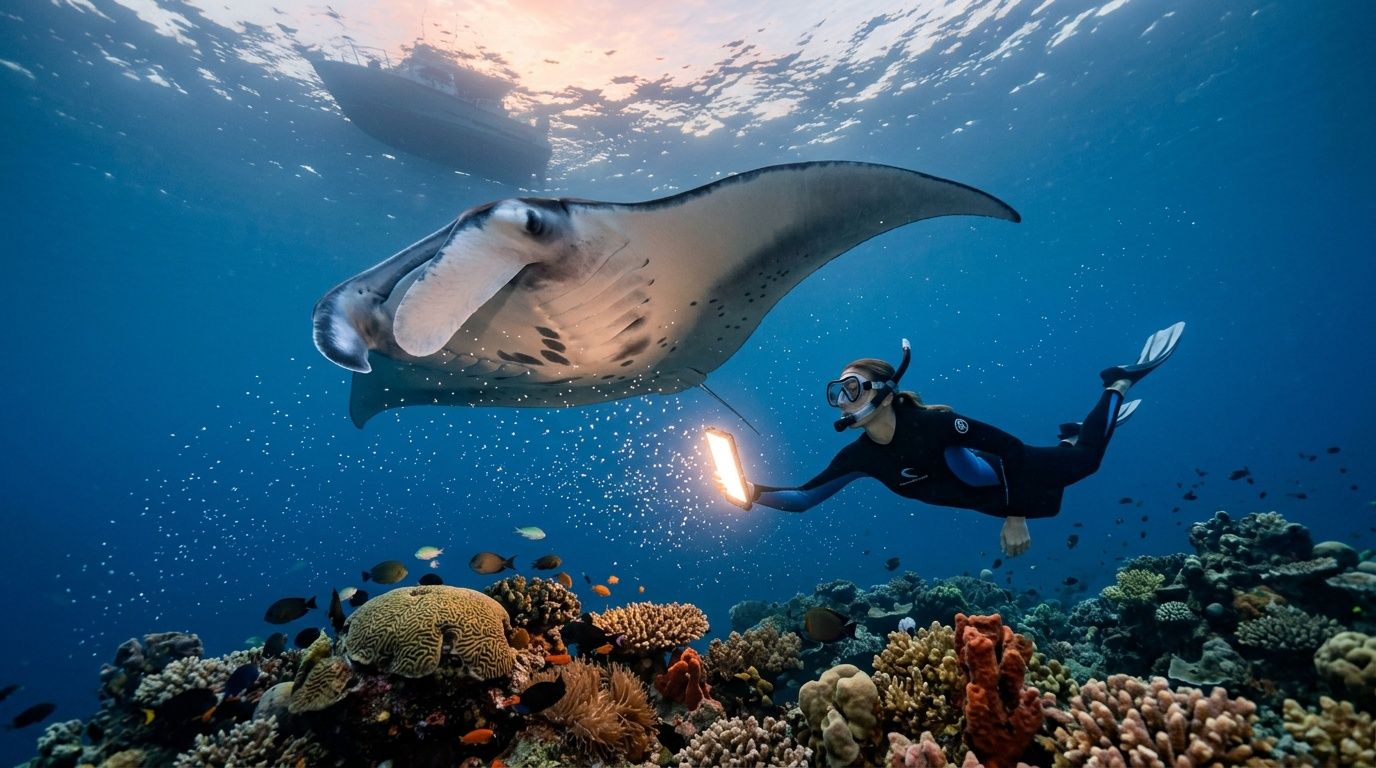
You leave the harbor after sunset, the lights of Kona soften behind you, and the ocean turns dark and glassy. Then the light board goes in, the water glows, and suddenly a shadow rises out of the blue-black below. It gets larger, then wider, then graceful in a way that doesn’t seem possible for an animal that size. A manta ray sweeps under the group and banks upward in a slow, effortless turn.
That moment is why this tour has become such a fixture on the Big Island. The Kona coast’s manta ray snorkel tours have grown into Hawaii’s top marine attraction, hosting over 150,000 guests yearly across operators, supported by a 90%+ year-round success rate and a resident population of more than 450 identified manta rays, according to this Kona manta comparison guide.
Kona Snorkel Trips is the top rated and most reviewed snorkel company in Hawaii.
Some guests laugh the second the first manta passes beneath them. Some go completely silent. Families usually come back to shore talking over each other, trying to describe the same few minutes from different angles. That reaction makes sense when 95% of participants describe the experience as life-changing in feedback reported by this guide to Kona manta tours.
The people who enjoy this most aren’t always the strongest swimmers. They’re often the guests who relax, hold steady, and let the mantas come to them.
If it’s your first time, that’s the right mindset. You don’t need to perform well. You need to arrive prepared, stay calm, and let the ocean do the work.
Why the Manta Ray Night Snorkel is a Kona Icon
The night snorkel is different from almost every other marine tour in Hawaii because the whole encounter is built around natural feeding behavior. You’re not scanning the horizon and hoping to spot something passing through. You’re floating above a feeding zone where manta rays often return because conditions work in their favor.

Kona manta ray snorkel tours have an 80-90% sighting success rate year-round, tied to a resident population of over 450 individually identified manta rays that frequent specific feeding sites along the coast, as described in this expert guide to Kona manta snorkel tours.
Why Kona works so well
Kona has a few advantages that matter in real life:
- Resident mantas: These aren’t occasional visitors. Local mantas return to known areas along the coast.
- Predictable feeding setup: Light attracts plankton, and plankton attracts mantas.
- Well-established sites: Operators run tours to locations with a long history of sightings.
- Quick access: Shorter rides can mean less time commuting and more time focused on the actual encounter.
If you want a deeper look at why they gather after dark, this explanation of why manta rays gather near Kona after dark is a useful primer before your trip.
Night snorkel versus sunset tour
People often mix these up, but they’re not the same experience. A sunset cruise can be beautiful, relaxed, and scenic. A night manta snorkel is built for the underwater encounter itself.
| Feature | Night Snorkel | Sunset Tour |
|---|---|---|
| Main focus | Watching manta rays feed below the light board | Scenic ocean views and sunset atmosphere |
| Water entry | Usually yes, with guests floating at the surface | Often no snorkeling component, depending on tour style |
| Manta behavior | Feeding activity around illuminated plankton | Not the same close, structured feeding-view format |
| Atmosphere | Dark water, spotlighted action, immersive wildlife experience | Softer, more scenic, less intense |
| Best for | Travelers who want the signature manta encounter | Travelers who want a gentler evening on the water |
What first-timers usually get wrong
The biggest misunderstanding is expecting to swim around hunting for mantas.
That’s not how good tours work. In the best setups, the group stays together, holds the float, and watches the rays loop and feed below. The less the group thrashes around, the cleaner the experience feels for both guests and wildlife.
Practical rule: If you want a close pass, stay still. Splashing, kicking, and trying to chase the action usually makes the experience worse, not better.
That’s one reason this activity works so well for beginners. You’re not covering distance. You’re holding position and observing.
How Do Manta Ray Tours Actually Work
Most first-time guests assume the encounter is pure luck. It isn’t. The tour is built around a simple chain reaction in the water.

Operators use high-intensity underwater lighting systems, often exceeding 200,000 lumens, to create artificial plankton aggregations. That lighting setup is the key mechanism behind consistent 85-90% sighting success rates, according to this breakdown of the Kona manta light system.
Think of it as an underwater campfire
Here’s the simple version.
The crew places a custom light board in the water. Those lights draw plankton into the illuminated area. Manta rays show up to feed on that concentrated plankton cloud. Guests hold onto the board and watch the rays move underneath them, often in looping passes and barrel rolls.
That’s why people describe the board as an underwater campfire. Everyone gathers around the same glow. The plankton gather there too. Then the mantas arrive for dinner.
If you want the gear-side explanation before you go, this guide on how the manta ray light board works on your night snorkel walks through the setup clearly.
Your adventure unfolds in a clear sequence
A well-run tour usually feels organized from the start:
- Check in at the harbor and get fitted for gear.
- Board the boat and listen to the safety briefing.
- Take a short ride to the manta site.
- Enter the water with the guide and hold the float board.
- Watch the feeding activity build as the lights attract plankton.
- Return to the boat after the viewing window ends.
That predictability helps anxious guests a lot. You’re not being dropped into confusion. You’re moving through a process that crews repeat night after night.
What works and what doesn’t
Some things consistently improve the experience:
- Staying relaxed: A calm body floats better and breathes easier.
- Defogging your mask well: Few things are more frustrating than a fogged lens during the best part.
- Listening to the entry instructions: Smooth entries keep the group settled faster.
A few mistakes show up all the time:
- Over-tightening the mask: That can make it less comfortable and still doesn’t solve fogging.
- Kicking too much near the board: It tires you out and disrupts the group.
- Expecting a daytime reef snorkel at night: This is a stationary wildlife viewing experience, not a swim-around reef tour.
Your Manta Ray Adventure Itinerary Step by Step
Knowing the flow of the evening helps more than any packing list. Most nerves come from uncertainty, not from the ocean itself.

Arrival and check-in
You’ll typically arrive at the harbor, check in, and get sorted with your gear before boarding. If you like knowing where to go before the day of your tour, this walkthrough for check-in at Honokohau Harbor helps remove a lot of guesswork.
Show up in your swimsuit if possible. That one choice makes the whole evening easier. Less changing, less rushing, less fumbling with wet clothes later.
The boat ride out
Once everyone is aboard, the crew gives a safety briefing and explains what the mantas are doing, how guests should position themselves, and what passive interaction means in practice.
The ride itself is often short, and that matters. Shorter transit can be easier on nervous travelers and anyone who gets motion sensitive. It also keeps the evening focused on the main event instead of a long transfer.
If you’re bringing kids or a first-time ocean traveler, the briefing is where confidence starts. Good crews make the unknown feel familiar before anyone gets in the water.
Getting in the water
After you reach the site, guests put on masks, snorkels, and flotation gear, then enter the water with guide support. Once you’re on the light board, your job gets very simple. Hold on, breathe slowly, keep your face in the water, and watch below.
Many first-timers often discover the experience is more accessible than they expected. You’re not trying to keep up with a fast-moving group. You’re floating in place with a stable reference point.
The viewing window
The first few minutes can feel quiet, then suddenly active. Plankton gathers in the light. Small fish may appear. Then a manta glides through, followed by another, or the same ray circling back from a different angle.
What makes the moment special isn’t speed. It’s proximity and grace.
The rays often rise close under the board, turning with open mouths as they feed. Guests who stay calm usually get the best view because they aren’t fighting the water or looking around too much.
The ride back
After the snorkel, everyone climbs back aboard, sheds wet gear, and heads in. Bring a towel and something dry for the return. Even in warm Hawaii weather, the post-snorkel boat ride can feel cool once you’re out of the water.
That’s also when the energy shifts. The nervous guests are usually smiling. The excited guests are usually louder. And the people who thought they’d just “try it once” are often already talking about who they want to bring next time.
Safe and Sustainable Manta Encounters
Good manta tours protect two things at the same time. Your safety, and the animals’ space.

The most important rule is passive interaction. That means no touching, no chasing, no diving down toward the rays, and no trying to steer yourself into their path. If you’ve wondered about the specifics, this article on whether you can touch manta rays on a Kona manta snorkel covers the issue clearly.
The rules that matter most
These aren’t complicated, but they are important:
- Keep your hands to yourself: Mantas should never be touched.
- Stay on the surface unless instructed otherwise: The viewing format is designed around surface observation.
- Don’t chase the action: Let the mantas choose their approach.
- Follow the guide immediately: Small corrections early keep the group safe and steady.
Why these rules work
Touching wildlife is bad practice in any setting, but with manta rays it’s especially important to avoid contact. A respectful buffer keeps the encounter cleaner and calmer. It also makes the experience better for the whole group because the rays continue their natural feeding loops instead of reacting to guest behavior.
For guests, safety comes from structure. Quality tours use flotation support, clear entry procedures, in-water supervision, and repeated reminders to stay calm. That combination helps beginners, families, and nervous snorkelers settle in quickly.
Respect creates the close encounter. The calmer the group behaves, the more natural the manta behavior becomes.
A well-run manta snorkel should never feel like chaos. It should feel guided, orderly, and surprisingly peaceful.
Planning Your Perfect Manta Ray Snorkel Tour
A little planning turns this from a good excursion into a smooth one. Most guest frustrations come from basic things that are easy to fix ahead of time. Booking too late, wearing the wrong clothing, skipping seasickness prep, or choosing a tour format that doesn’t match your comfort level.

Year-round timing and booking strategy
One of the big advantages of Kona manta ray snorkel tours is that they’re a year-round activity. You don’t need to build your whole vacation around a narrow seasonal window. That makes planning easier for families and travelers juggling a packed Big Island itinerary.
Because this is a high-interest activity, book earlier than feels necessary. That’s especially true if you want a smaller-group format, a specific departure time, or you’re traveling with a mixed-ability group and want to choose carefully instead of grabbing whatever is left.
If you’re still comparing operators and formats, this guide on how to choose the right Kona manta ray snorkel tour is a practical place to start.
Who should go
This experience works for more people than many first-timers expect. Tours are described as highly accessible, including for non-swimmers or guests with mobility issues. Paddle-powered canoes can allow guests to stay aboard for views, and custom light boards provide flotation support, making the in-water experience suitable for a broad range of abilities and ages, often starting from 5-10 years old, according to this guide focused on accessibility for Kona manta tours.
That said, “accessible” doesn’t mean “identical for everyone.” Different travelers should weigh different trade-offs.
Families with children
Kids who are comfortable in the water often do well when parents prepare them for the dark-ocean part ahead of time. The main challenge usually isn’t the manta ray itself. It’s the novelty of snorkeling at night, wearing gear, and listening to instructions while excited.
What helps:
- Choose a calmer evening in your schedule: Don’t stack this after a long, exhausting day.
- Bring warm layers for after: Kids cool down quickly once they’re out of the water.
- Set realistic expectations: Tell them they’ll float and watch, not swim around chasing animals.
Non-swimmers and nervous guests
Some non-swimmers do very well because the tour is structured around flotation and guided support. Others feel anxious because it’s dark and unfamiliar. The best approach is to be honest with the operator before the tour and choose the vessel and format that feel manageable.
For travelers researching water activities beyond Hawaii, broader trip-planning resources like these boat tours can also be useful for comparing how different operators around the world handle comfort, access, and group style.
Guests prone to seasickness
This is the one issue I’d plan for even if you’re only mildly prone to motion sickness. Night tours involve a boat ride, darkness, and time floating in one place. That combination is generally well-tolerated, but if seasickness is a concern, it’s smart to come prepared.
Helpful options available on Amazon include Ship-EEZ Seasickness Patch, Dramamine pills, Bonine pills, Sea Band wristbands, and Ginger chews.
What to bring
Keep it simple. You don’t need much, but the right basics make the evening smoother.
- Swimsuit already on: Easiest pre-tour move you can make.
- Towel: Necessary for the ride back.
- Dry clothes or a cover-up: Especially helpful if you get chilly easily.
- Any personal motion-sickness support: Better to have it and not need it.
- A calm mindset: It sounds small, but it changes the night.
Picking an operator
The practical trade-offs matter. Some guests want the most stable possible ride. Others care more about a smaller group and quicker movement. Some want more hand-holding in the water. Others are already comfortable snorkeling and just want a clean, efficient experience.
One option is the Kona Snorkel Trips manta ray snorkel tour. If you’re comparing alternatives, Manta Ray Night Snorkel Hawaii is another strong option to consider.
Check AvailabilityWhy Choose Kona Snorkel Trips for Your Manta Adventure
When people hesitate before booking, it’s usually because they’re trying to judge three things. Will the crew be organized? Will they feel safe? Will the experience feel personal instead of crowded?
Those are the right filters.
Kona Snorkel Trips is Hawaii’s highest rated and most reviewed snorkel company, and that matters because manta tours work best when the crew runs a tight process. Clear check-in, clear gear setup, clear water entry, clear wildlife rules. Guests notice that structure right away, especially if they’re nervous or bringing children.
The other deciding factor is guide temperament. On this kind of tour, the best guides don’t overtalk or overcomplicate the evening. They explain the plan, help people settle in, keep the group positioned well, and stay alert in the water. That makes a real difference for first-time snorkelers and anyone unsure about night conditions.
A few practical reasons travelers often choose this company:
- Focused snorkeling operation: Helpful if you want a crew that runs ocean activities daily.
- Range of tour options: Useful for visitors building out more than one water day on the island.
- Gift card availability: A good fit if you’re buying an experience rather than a physical present.
If you’re choosing between several operators, compare the briefing style, group feel, departure logistics, and how clearly they explain in-water expectations. Those details tell you more than flashy marketing ever will.
Frequently Asked Questions About Manta Ray Tours
Will I get seasick
Maybe, especially if you already know boats can affect you. Some guests feel perfectly fine during the ride out and only notice motion once they’re floating in the dark and focusing through a mask.
The practical fix is to prepare before you board. Many travelers bring Ship-EEZ Seasickness Patch, Dramamine pills, Bonine pills, Sea Band wristbands, or Ginger chews. Eat lightly, hydrate, and avoid showing up rushed and overheated.
What if I’m not a strong swimmer
That doesn’t automatically rule you out. The format is built around flotation and guided positioning rather than distance swimming. Many guests feel better once they realize they’ll be holding onto a light board instead of swimming freely through open water.
If you’re anxious, tell the crew before the boat leaves. Early communication helps them place you where support is easiest.
Is it cold at night
Snorkelers often feel more comfortable than anticipated in the water because tours typically provide thermal gear for the snorkel itself. The chill usually sets in after the snorkel, during the ride back.
Bring a towel and something dry to put on right away. That small step makes a big difference.
Can I go if I wear glasses or contacts
Yes, but plan ahead. Contacts are often simpler for snorkel tours because a standard mask works normally with them. If you wear glasses and not contacts, ask the operator in advance what options they recommend.
Don’t wait until you’re on the boat to solve your vision setup. A perfect manta pass isn’t much fun through a blurry mask.
Is this okay for families
Often, yes. It depends less on age alone and more on comfort in the water, ability to follow instructions, and whether your child can handle a nighttime ocean environment without getting overwhelmed.
Parents usually know the answer before they ask. If your child does well with gear, listens well, and likes ocean activities, this can be a memorable family experience.
If you’re ready to turn this from “maybe” into a highlight of your Big Island trip, take a look at Kona Snorkel Trips. A well-run manta tour removes the guesswork, keeps the experience calm, and gives you the kind of close wildlife encounter people talk about long after they’ve gone home.