
Best Manta Ray Night Snorkel Kona: A Complete Guide
You’re probably in the same spot most first-time guests are in when they search best manta ray night snorkel kona. You know this is one of the signature experiences on the Big Island, but every company says they’re amazing, every review sounds glowing, and it’s hard to tell what actually changes your night once you’re out on the water.
That’s the right question to ask.
The difference between a decent manta tour and one you’ll talk about for years usually comes down to details most visitors don’t think about until too late. Crew training. Group size. Launch point. How the guides run the in-water portion. Whether the operator treats the mantas like wildlife or like a theme-park attraction. Those details shape comfort, safety, and how close you’ll feel to the experience itself.
The Magic of Kona’s Gentle Giants
The first thing one notices isn’t the manta. It’s the quiet.
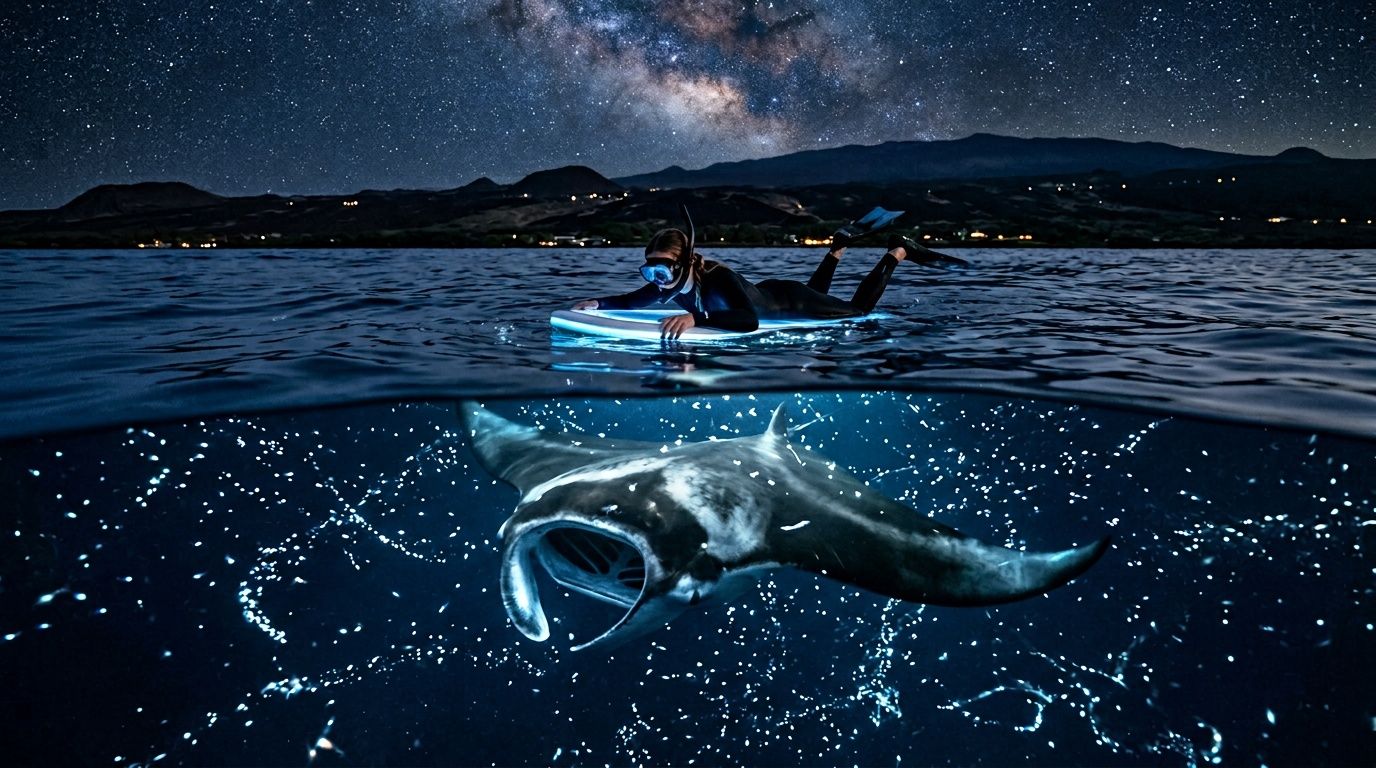
You leave the harbor near sunset, the shoreline fades into silhouettes, and the ocean turns dark and glassy. Then you slip into the water, hold onto the light board, and stare down into a glowing blue window. A few moments later, a shadow rises out of the dark and becomes something enormous, smooth, and impossibly graceful.

Kona has earned its reputation for this experience for a reason. Kona, Hawaii, hosts the world's premier manta ray night snorkel experience, supported by a resident population of over 450 identified reef manta rays, and about 80,000 participants join these tours annually because sighting success rates run 80 to 90 percent according to Kona Honu Divers’ manta dive overview.
Why Kona feels different
In many destinations, wildlife viewing depends on migration windows or pure luck. Kona works differently. The local manta population is resident, the coastline creates dependable feeding conditions, and the viewing sites are established enough that guides can plan with confidence instead of guesswork.
That matters to first-time visitors. You’re not booking a vague “maybe” excursion. You’re booking a wildlife encounter in a place where the conditions and animal behavior line up unusually well.
The best nights don’t feel chaotic. They feel calm, organized, and natural, even when giant mantas are looping inches below you.
What makes the experience memorable
A lot of travelers expect adrenaline. What they get is awe.
Manta rays don’t rush the group or behave aggressively. They glide, bank, and roll through the light as they feed on plankton. The effect is almost theatrical, but nothing about it is staged. If you want a good primer on the behavior behind the spectacle, this look at why manta rays gather near Kona after dark is worth reading before your trip.
Near the top of any serious shortlist, you’ll see Kona Snorkel Trips discussed often because of its strong reputation and small-group focus. Since people often want quick social proof before digging into the details, here’s the review widget many guests check first when comparing Kona snorkeling companies.
How to Choose the Best Manta Ray Tour Operator
Most booking mistakes happen because people compare tours by headline promises instead of operational details. Almost every operator talks about manta rays, warm water, and unforgettable memories. That doesn’t help much.
What helps is knowing what to inspect before you book.
Start with the crew, not the boat photos
The crew determines how smooth the night feels. A polished boat doesn’t compensate for weak in-water supervision, a rushed briefing, or a guide who can’t settle nervous guests once everyone’s floating in the dark.
Premium operators mitigate common pitfalls through certified lifeguard leadership and small group sizing, and the better ones also offer a manta guarantee with a free standby return visit if the mantas don’t appear, as described in this Kona Snorkel Trips guide on choosing a manta tour.
That single fact tells you a lot. Serious operators know two things at once. First, success rates are high. Second, wildlife is still wildlife, so no honest company should promise certainty.
Practical rule: If an operator sounds casual about safety or sounds absolute about sightings, keep looking.
Manta Ray Tour Operator Evaluation Checklist
| Evaluation Criterion | What to Look For | Why It Matters |
|---|---|---|
| Crew qualifications | Certified lifeguards, calm briefings, clear in-water supervision | Night snorkeling feels very different from daytime reef snorkeling. Skilled guides reduce stress fast. |
| Group size | Small groups or at least a controlled in-water setup | Less crowding means easier entry, better positioning at the light board, and a calmer experience. |
| Launch point | Departure details that match your comfort level | Shorter runs can be easier for guests who worry about motion sickness. |
| Sighting policy | A clear manta guarantee or standby return policy | Honest operators plan for the rare miss instead of pretending it can’t happen. |
| Boat style | Match the vessel to your comfort needs | Some guests want speed and intimacy. Others want space, stability, and easier boarding. |
| Gear quality | Wetsuits that fit well, reliable masks, flotation support | Bad gear ruins otherwise good trips. Leaky masks and poor fit are common avoidable problems. |
| Guest handling | Willingness to help first-timers, weak swimmers, and anxious guests | A good guide team adjusts to the guest, not the other way around. |
| Wildlife conduct | Passive viewing and respectful positioning | Ethical handling protects the mantas and usually improves the encounter for guests too. |
Trade-offs that matter more than people expect
A smaller boat often feels more personal. It can also feel more exposed if the ocean is bumpy. A larger vessel may feel more stable and easier for some families, but the trade-off can be a less intimate atmosphere.
Departure location matters too. Some tours leave from areas that shorten the ride to the snorkel site, which can be a real advantage if you’re prone to motion sickness or traveling with kids. The “best” operator isn’t the same for every guest. The best fit depends on your group.
A shared trip can be excellent, but if you’re traveling with young children, older parents, or someone anxious in open water, it’s smart to compare whether a private format or a smaller shared group makes more sense. This breakdown of private Kona manta ray snorkel vs shared tour is useful if you’re weighing that choice.
What works and what doesn’t
Here’s the short version from a guide’s perspective.
What works: Operators who keep the briefing simple, fit gear carefully, and control the pace from dock to water entry.
What works: Crews who explain the “why” behind the rules, especially passive floating and no touching.
What works: Boats and schedules that match the guest, not just the company’s logistics.
What doesn’t: Overcrowded in-water setups where guests can’t settle in.
What doesn’t: Rushed check-ins that turn a nervous first-time snorkeler into a panicked one.
What doesn’t: Companies that market to everyone but don’t clearly explain who will feel comfortable on board.
If you want another solid option while comparing operators, Manta Ray Night Snorkel Hawaii is an exceptional alternative worth considering.
Why Kona Snorkel Trips is Your Ideal Choice
When guests ask what separates one manta tour from another, the answer usually isn’t a flashy feature. It’s consistency in the basics.
That’s where one operator can stand out from the field. Kona Snorkel Trips is known for small-group manta experiences, guide-led support, and a tour structure that’s built around guest comfort rather than volume. If you want to review the trip details directly, the company’s manta ray snorkel tour page lays out the experience clearly.

Why the experience feels more controlled
Small-group operations usually have an edge in three moments that shape the whole night:
- Before departure: There’s more time for real questions, gear fitting, and expectations.
- During entry: Guests aren’t funneled into the water all at once.
- At the light board: Guides can pay attention to individual comfort instead of just crowd management.
That changes the emotional tone of the tour. First-timers relax faster. Kids who are comfortable in the water usually follow the group more easily. Guests who feel unsure don’t feel ignored.
The details guests remember
People remember the mantas, of course. They also remember whether the crew made them feel capable.
The strongest guide teams explain what’s happening in plain language, keep the group calm once the water goes dark, and treat the encounter like wildlife viewing rather than a stunt. That’s the kind of operational discipline that turns a checklist activity into a standout vacation memory.
Check AvailabilityA great manta tour feels organized without feeling stiff. You should feel supported, not managed.
What to Expect on Your Manta Ray Adventure
Most first-time guests feel better once they know the sequence. The manta snorkel is unusual, but it’s not complicated.
You check in, meet the crew, get fitted for gear, and listen to the safety briefing. Good guides keep this part practical. They’ll explain where you’re going, how the in-water setup works, and what the mantas are doing beneath the lights.

The boat ride and setup
After departure, you’ll head to the snorkel site as daylight fades. The ride itself is part of the mood shift. Harbor lights recede, the air cools, and everyone starts watching the water a little more closely.
Once on site, the crew deploys the floating light board. The operational method relies on eco-friendly underwater lights that create concentrated phytoplankton aggregations, which act as a feeding station and are a key reason Kona maintains 80 to 90 percent year-round sighting success, according to Manta Ray Night Snorkel Hawaii’s guide to the Kona manta experience.
If you want the mechanics behind that setup, this explanation of how the manta ray light board works on your night snorkel gives a clear picture.
What the in-water experience actually feels like
This surprises a lot of people. You’re not swimming around chasing mantas.
You hold onto the board and float face-down while the lights shine into the water below. The board gives the group a stable gathering point and creates a bright feeding zone. That’s why guides often compare it to an underwater campfire.
Then the mantas arrive.
Sometimes they appear one at a time. Sometimes the action builds. They glide into the light, circle, bank, and barrel roll as they feed on plankton. The best encounters feel very close, but they also feel calm because your job is simple. Stay still, breathe steadily, and watch.
Most guests enjoy the night more when they stop trying to “do it right” and just settle into the float.
How the tour ends
After the snorkel, the crew helps everyone back aboard and begins the ride in. This is when people start talking all at once. Even quiet groups get animated on the way back.
A few practical points help set expectations:
- You’ll spend time listening before you enter the water. That briefing matters.
- You may need a moment to adjust in the dark. That’s normal, especially on your first night snorkel.
- The mantas set the pace. Some nights they show up fast. Other nights the group waits a bit and then the action starts suddenly.
If you go in expecting a guided floating experience rather than an active swim, the whole thing makes more sense from the start.
Preparing for Your Trip A Practical Checklist
The guests who have the smoothest night usually do a few simple things ahead of time. Nothing fancy. They just remove avoidable friction.
Book early if you’re traveling during a busy stretch. Small-group tours don’t have much slack, and waiting until the last minute usually leaves you choosing from what’s left instead of what suits you best.

What to bring
Keep it simple.
- Swimsuit: Wear it to the harbor if you can.
- Towel: You’ll want it immediately after the snorkel.
- Dry clothes: Even warm nights feel cooler after a boat ride back.
- Reusable water bottle: Helpful before and after the tour.
- Any personal essentials: Glasses strap, hair tie, medications you already use.
For clothing details, this guide on what to wear for a Kona manta ray night snorkel covers the common questions.
If you get seasick easily
Even on a mild night, some guests feel motion on the boat more than they expected. It’s easier to prevent that than recover from it once you’re uncomfortable.
Common over-the-counter options people often consider include Ship-EEZ Seasickness Patch, Dramamine pills, Bonine pills, Sea Band wristbands, and Ginger chews.
A few practical habits also help:
- Eat lightly: Don’t show up overly full.
- Hydrate earlier: Start before you get to the boat.
- Look at the horizon during transit: Many guests find this helps.
- Tell the crew early: Don’t wait until you feel miserable.
What people forget most often
The biggest oversight isn’t gear. It’s mindset.
Guests sometimes arrive thinking they need to be strong swimmers, fast snorkelers, or unusually adventurous. You don’t need to perform. You need to listen well, stay relaxed, and be honest about your comfort level before the boat leaves.
Manta Ray Etiquette and Safety for All Abilities
The best manta encounters happen when guests do less, not more.
Your role is passive floating. Hold the board. Keep your body position predictable. Let the mantas move through the light without trying to touch, chase, or dive down toward them. If you want a fuller explanation of the no-contact rule, this article on can you touch manta rays on a Kona manta ray snorkel lays it out well.
What weak swimmers should know
Many people worry they’ll be disqualified if they aren’t strong swimmers. That’s not the primary concern.
The experience is suitable for weak swimmers or non-swimmers who are comfortable floating, because they can hold onto a large, stable light board and wear wetsuits and other flotation aids. The key factor is comfort in the water, not swimming prowess, based on guidance from Anelakai Adventures’ manta snorkel page.
That said, comfort matters. Night water feels different from a resort pool. If you know darkness, open water, or mask breathing makes you uneasy, tell the crew before departure so they can advise fully.
Calm guests tend to have the best view. The less you fight the float, the more the experience opens up.
Accessibility, alternatives, and dive options
Ability levels vary, and so do tour formats. Some guests prefer to stay aboard and watch rather than snorkel. Others want a scuba version of the experience instead of a surface float.
For certified divers, Kona Honu Divers’ manta ray diving tour is the dedicated dive option. Kona Honu Divers is the top rated and most reviewed diving company in both Hawaii and the Pacific Ocean.
Frequently Asked Questions
How likely am I to see manta rays
Very likely, but not guaranteed. Kona’s year-round sighting success is widely reported as strong, and the strongest operators back that up with a standby return policy on unsuccessful nights. Wildlife still makes the final call.
Is the manta snorkel active or difficult
Not in the way people usually fear. This is mostly a guided floating experience. The challenge isn’t swimming hard. It’s staying calm, breathing steadily through a snorkel, and being comfortable in dark open water.
What’s the difference between a good operator and a forgettable one
Usually three things. Crew quality, in-water crowd management, and how well the company handles nervous or first-time guests. A smooth operation feels deliberate from check-in to the ride home.
Can kids or non-swimmers do it
Some can, yes, if they’re comfortable floating in the ocean at night and the operator is a good fit for their needs. The key is honest self-assessment and clear communication with the crew before booking.
Should I choose based on price alone
No. This is one activity where the cheapest seat can cost you comfort, attention, and the overall feel of the encounter. Compare how the trip is run, not just what the booking page says.
If you want a well-run option for your trip planning, Kona Snorkel Trips offers manta ray night snorkel tours on the Big Island with a strong focus on small-group experiences, guide support, and clear pre-trip information.