
Kona Manta Ray Snorkel: How Close the Rays Get
Kona Snorkel Trips gives you one of the most surprising ocean moments on the Big Island. On a Kona manta ray snorkel, the real question is not whether you will see the rays, it is how close they will pass. If you have spent time snorkeling Big Island Hawaii reefs, this feels different right away. The mantas can sweep in below you like huge kites in the dark, and that closeness is what makes the trip stay with you.
That first close pass can feel unreal, especially if you expect a distant wildlife sighting. The good news is that the experience is calm when you know what to expect. The distance depends on the lights, the water, and how still you stay.
How close manta rays usually get on a Kona snorkel
When the timing lines up, manta rays often pass within feet of your mask, and sometimes much closer. Their size makes the moment feel even tighter, because a wide wing span fills your whole view. They are not brushing past you by accident. They glide under the light board, roll through the plankton, and slide away in a smooth arc.
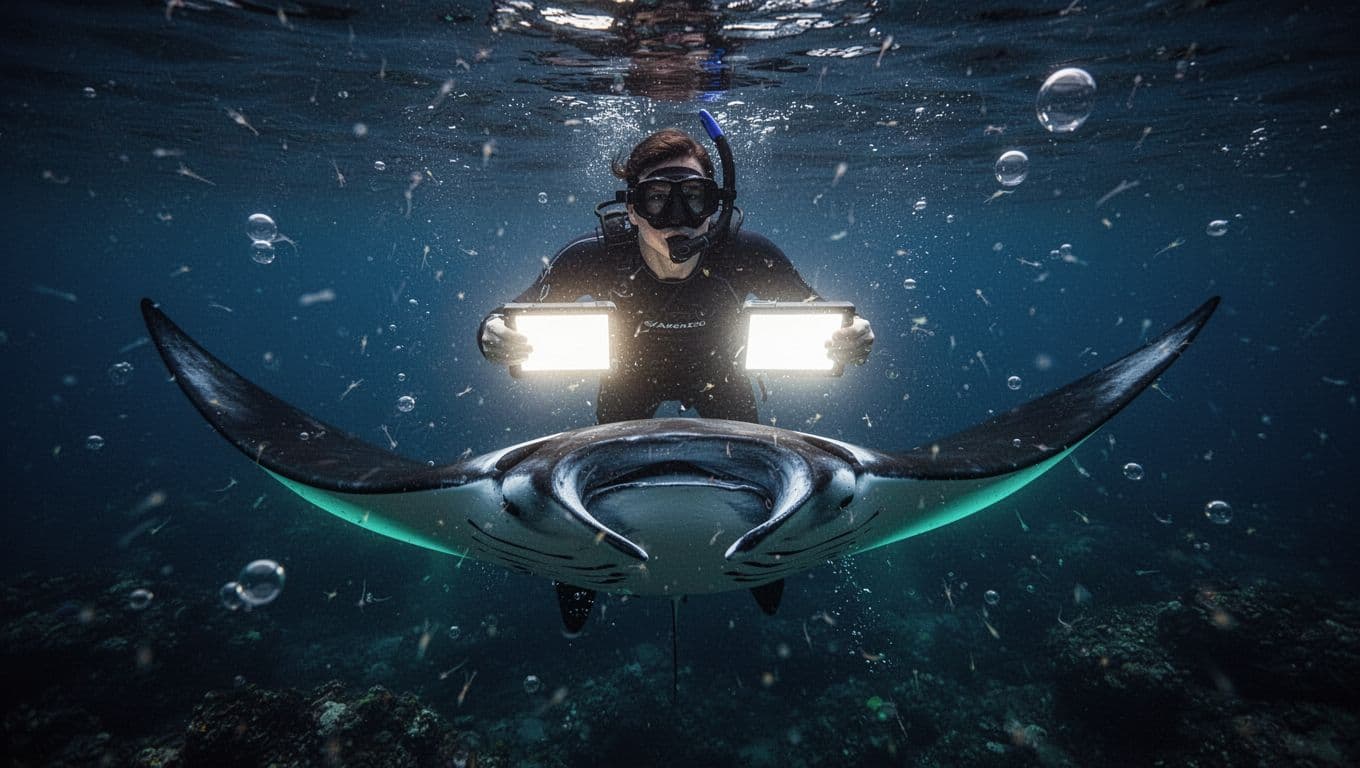
Many people who snorkel Big Island expect to watch from a distance, so the first close pass feels almost impossible. If you have done a snorkel Big Island reef trip before, this is a different kind of view. A first-timer manta snorkel guide describes multiple passes in one session, which matches what many visitors see in Kona.
The best close pass feels calm, not crowded.
That closeness surprises families and first-time snorkelers most. Your eyes expect a distant silhouette, then the ray turns and fills the water beneath you like a giant bird under glass. Because the movement is slow, the moment feels safe even when it looks impossible.
Why they come so near
Plankton is the whole trick. Bright lights pull tiny food into the water, the plankton gather there, and the mantas follow. Once they find the light, they can circle the same patch again and again. That is why a Kona manta ray snorkel can feel almost choreographed, even though nothing is staged.
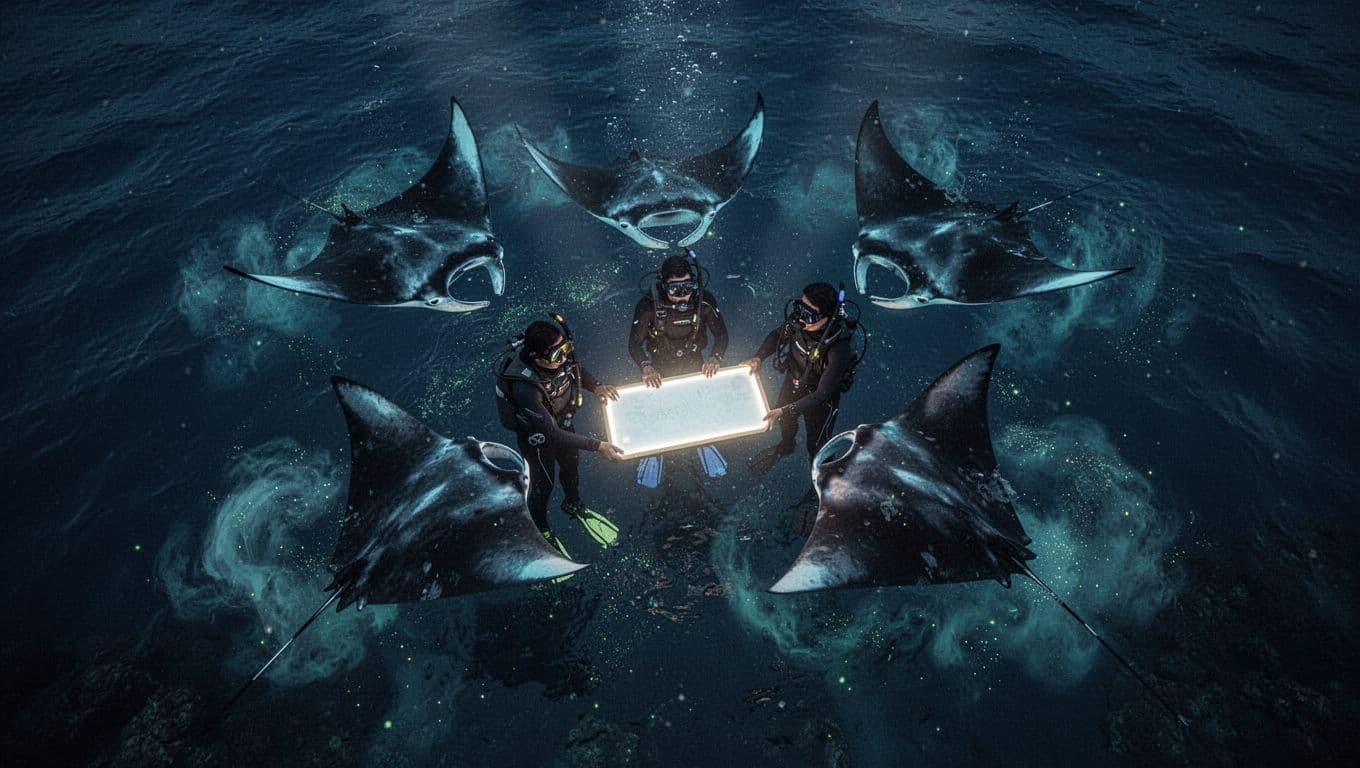
If you have done snorkeling Big Island during the day, you know fish usually scatter when a shadow passes. Mantas act differently. They are filter feeders, so they come in with their mouths open, then roll and bank just below the surface. When you stay still, you become part of the scene instead of part of the problem.
Current matters too. On calm nights, the board stays steady and the plankton cloud stays tight, so the rays keep circling the same spot. That is one reason the same Kona cove can produce several close passes in a single session. The encounter feels wild, but the setup is simple.
Choosing a tour that gives you space and a better view
That experience gets better when your tour keeps things simple. Kona Snorkel Trips runs small-group trips, uses lifeguard-certified guides, and follows a Reef to Rays approach that puts safety and reef care first. If you want the trip details, the Kona manta ray snorkel page is a good place to start, and you can check availability when your dates are set.
That small-group setup matters for couples, parents, and anyone who gets uneasy in rough water. More space means less splashing, a steadier view, and a better chance to notice when a ray banks hard under the board. If you want another manta-focused option, Manta Ray Night Snorkel Hawaii is another dedicated operator. For a quieter setup on the same coast, private Kona boat charters can also give you more room.
How to stay relaxed when the manta glides under you
You do not need to swim toward the action. The better move is to keep your body flat, your legs quiet, and your eyes on the light. That simple posture makes the water feel less busy, and it helps the mantas move freely.
- Keep your fins still and let the guide set the pace.
- Hold the board or float with a light grip.
- Breathe slowly and let the manta come and go.
That rhythm keeps the water clear around your mask and gives the animal room to move. It also helps if you are nervous, because the scene feels calmer when you stop trying to control it. If you are traveling with kids, have them watch the board lights and count the slow passes. It gives them a simple focus point, and the whole snorkel feels less intimidating.
Conclusion
The answer most people want is simple. On a Kona night snorkel, manta rays can come within inches, and that closeness is what makes the trip unforgettable. The real secret is even simpler, though, you see more when you stay still and let the ocean work.
Once you understand that, the close pass stops feeling random and starts feeling graceful. That is the kind of moment you remember long after you dry off.