
How a Kona Manta Ray Snorkel Light Board Works
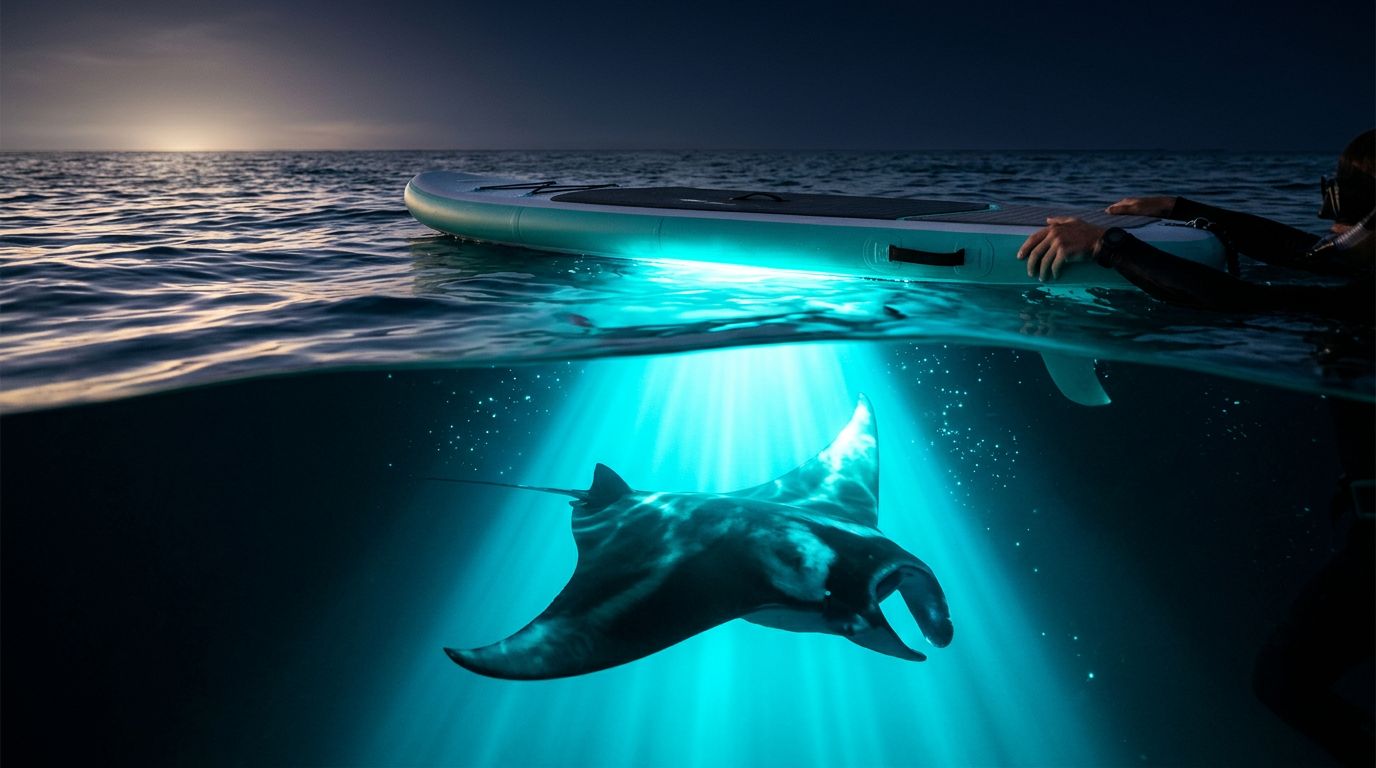
The lights on a Kona manta ray snorkel don’t attract manta rays directly. They gather tiny ocean organisms near the surface, and the mantas follow their food.
That simple process creates one of Hawaii’s most unusual wildlife encounters. You float at the surface while large reef manta rays glide below, turning through the illuminated water with their mouths open. The light board gives you flotation, a clear viewing position, and a stable place to watch the action.
Understanding how the board works helps you know what to expect before you join a nighttime snorkeling trip along the Kona coast.
The light board is a floating feeding station
A light board is a large floating platform fitted with underwater lights. The lights shine into the ocean below the board, creating a bright area in otherwise dark water. You hold the board’s handles while your mask and snorkel stay in the water.
The board doesn’t feed the manta rays. Tour crews don’t add food, bait, or chemicals to the ocean. Instead, the lights change the conditions near the surface for a short time.
Many small organisms in the ocean respond to light. Tiny planktonic animals and other microscopic life may gather in the illuminated water. Those organisms attract larger plankton feeders, including manta rays. When enough food collects in one area, the mantas begin making repeated passes through the light.
Manta rays are filter feeders. They don’t bite prey like a shark or chase fish like a tuna. Instead, they swim forward with their mouths open and direct plankton-rich water across specialized structures near their gills. The water passes through while the food remains available for digestion.
The board therefore creates a feeding area, not a performance. You aren’t watching trained animals respond to commands. You’re observing wild manta rays that choose to visit because food has gathered nearby.
The design also keeps you at the surface. You don’t need scuba equipment or strong underwater swimming skills to see the rays. With a properly fitted mask, you can look down through clear water while the board supports your arms and upper body.
A nighttime trip may use one board or several, depending on the operator, weather, current, and number of guests. Guides position the boards so the light spreads across the water without creating unnecessary crowding.
Why manta rays gather under the lights
Manta rays can find plankton in many parts of the ocean, so the light alone isn’t the entire reason they visit. The food concentration, water movement, and location all affect whether the animals appear.
When plankton gathers near an illuminated surface, the area becomes easier for the mantas to work. A ray may swim in a wide circle, make a tight turn, or rise directly beneath the board. It adjusts its path according to the food and current.
You may notice the same manta making several passes. That behavior doesn’t mean the animal is trapped or performing a routine. It has found a useful feeding zone and keeps returning while the food remains concentrated.
The rays often approach with their white bellies facing you. Their wide cephalic fins, located beside the mouth, help direct water toward the feeding area. As the manta turns, you may see the dark back, pale underside, and distinctive markings near the gills.
Every encounter looks different. One night may bring slow, graceful passes close to the surface. Another may produce faster loops or rays feeding deeper below the board. Water clarity, current, moonlight, plankton levels, and the number of visitors all influence the scene.
The lights don’t guarantee a manta sighting. Wildlife never follows a fixed schedule. A responsible operator should describe the trip as a chance to observe wild animals, not as a guaranteed show.
The light board brings food into view. The manta rays decide whether to arrive and how long to stay.
For that reason, good guides watch the water instead of forcing the animals into a particular position. They may move or adjust a board when conditions change, but they don’t chase manta rays around the bay.
How the board changes your viewing position
Without a light board, you would need to tread water while looking down into the dark sea. That can tire your legs, disturb your breathing, and make it harder to keep your body still.
The board solves those problems. You hold the handles and let your body float behind you. Your face stays at the surface, while your eyes look into the illuminated water below.
This position gives you several practical advantages:
- You conserve energy during the encounter.
- You can keep your breathing slow and steady.
- You have a stable reference point in dark water.
- You can move your head without swimming after the rays.
- You can share the viewing area with other guests more safely.
The board also creates a clear boundary between swimmers and the feeding zone. You remain at the surface while the manta rays move below. That separation matters because manta rays need room to turn, rise, and change direction.
You may see guides ask swimmers to keep their hands on the board and their bodies behind the edge. Follow that instruction even when a manta passes close. Reaching toward a ray can change its path and may cause it to leave.
The most memorable views often happen when you stay still. A manta may pass below your mask, turn on one wingtip, and glide away. If you swim after it, you lose the stable viewing position and may disturb the animal.
The board also helps your guide manage the group. Guides can see where guests are positioned, give signals, and maintain spacing between swimmers. That control is harder when everyone floats freely in the open water.
What happens during a Kona manta ray snorkel
A typical trip begins before sunset, when you receive instructions, equipment, and a safety briefing. Your guide may review mask fitting, breathing through the snorkel, hand signals, entry procedures, and rules for interacting with wildlife.
After the boat reaches the viewing area, the crew places the light board in the water. Underwater lights begin illuminating the space below the surface. The plankton gathering process takes time, so the manta activity may build gradually.
You enter the water when the guide gives you permission. The first few minutes may feel quiet. Your eyes adjust, your breathing settles, and you learn how the board moves with the water.
Then a small shape may appear below the lights. A manta can seem distant at first, especially when the water is dark around the illuminated area. As it rises, its wingspan becomes easier to judge.
You don’t need to dive toward the animal. Keep your face in the water, hold the board, and let the manta choose its path. If the ray passes beneath you, keep your arms and legs calm.
A guide may identify individual manta rays by their belly markings. These patterns are different from one animal to another, much like fingerprints. The guide may also explain the ray’s behavior, feeding method, and body position during the encounter.
Kona Snorkel Trips follows a “Reef to Rays” philosophy, with lifeguard-certified guides, small-group service, and custom-built lighted boards for nighttime encounters. The company’s approach combines wildlife viewing with safety instructions and reef-safe practices. You can see the available Big Island manta ray night snorkel details before choosing a trip.
Manta Ray Night Snorkel Hawaii is another company associated with nighttime manta encounters on the Kona coast. You can review its manta ray night snorkeling information if you’re comparing tour options.
The trip usually ends when the guide signals swimmers to return to the boat. Crew members help you exit, collect the board, and remove the underwater lights. The feeding area disappears once the setup leaves.
How guides control the lights and the board
The light board needs more attention than switching on a lamp. Guides monitor the water, weather, current, boat traffic, swimmer positions, and manta behavior throughout the encounter.
Underwater lights must sit low enough to illuminate the water beneath the board. Their position affects the size and brightness of the viewing area. If the board moves too much, the light pattern can shift and make it harder for you to see.
Wind and current can push the board away from the boat or rotate it. The crew may use a line, adjust the boat’s position, or reposition the board. The right method depends on the vessel, conditions, and local operating procedures.
A guide also watches for crowding. Several swimmers may want the same view, but the board has limited space. Holding the handles, keeping your body behind the board, and following rotation instructions give everyone a better chance to see.
Good guides also pay attention to the manta rays themselves. If a ray changes direction repeatedly, leaves the area, or shows signs of avoiding the group, the crew should give it more room. The animal’s behavior matters more than getting a closer photograph.
The lights may appear bright from the boat, but the water below remains dark outside the beam. That contrast is why a manta can seem to appear from nowhere. Your eyes focus on the illuminated area, while the surrounding ocean stays almost black.
Camera users need to manage the same contrast. A phone or action camera may record a smaller area than your eyes can see. Hold the camera steady, avoid chasing the ray, and keep your attention on the animal rather than the screen.
If your camera has a light, ask the crew before using it. A bright flash or added beam can affect other swimmers and may change the viewing experience. Follow the operator’s rules for photography.
How to prepare for the nighttime water
You don’t need to be an expert swimmer, but you should feel comfortable floating in open water with a mask and snorkel. Tell the crew about concerns before entering the ocean. They can explain flotation options and help you choose a safe position.
A well-fitting mask is one of the most important pieces of equipment. Water leaking into your mask can make you anxious and distract you from the manta rays. Ask for help adjusting the strap before you enter.
Keep your breathing slow. The dark water can feel unfamiliar during your first few minutes, especially if you’ve only snorkeled during the day. Breathe through the snorkel and focus on the board beneath your hands.
You should bring a swimsuit, towel, dry clothing, and any approved personal medication. A light jacket can make the boat ride back more comfortable after sunset. Leave loose jewelry and unnecessary items on shore.
Reef-safe sunscreen matters even on a nighttime trip. You may spend time in the sun before entering the water, and the product can wash into the ocean. Apply sunscreen well before departure and follow the operator’s instructions.
During the encounter, remember these basic habits:
- Hold the board instead of swimming toward manta rays.
- Keep your fins and hands away from the animals.
- Avoid touching, riding, or blocking a manta’s path.
- Listen for guide signals and stay within the assigned area.
- Tell the crew if you feel cold, tired, seasick, or uncomfortable.
Families should check age and swimming requirements before booking. Children may enjoy the experience, but each child needs to follow instructions and remain calm in the water. Private trips can help families who need a slower pace or extra support.
If you are comparing activities for snorkeling Big Island Hawaii visitors, consider your comfort with nighttime swimming rather than choosing only by trip length. A shorter trip with a calm, attentive crew may suit you better than a longer outing that leaves you tired.
What makes a quality light board setup
The board itself should provide dependable flotation and enough space for guests to hold on without climbing over one another. Handles need to be easy to grip, especially when the surface moves.
Underwater lights should be secured properly and protected from contact with swimmers. Battery systems, cables, and connections need regular inspection because saltwater is hard on equipment.
The board’s size also affects stability. A larger platform may support more guests, but it can become harder to move in wind or current. A smaller board may offer better control but less viewing space. Operators choose equipment based on their boat, group size, and local conditions.
You should also look at the crew’s safety qualifications and operating style. Ask whether guides provide a full briefing, carry emergency equipment, and monitor guests throughout the swim. Kona Snorkel Trips describes lifeguard-certified guides, quality snorkeling gear, and small-group trips as part of its service.
A strong tour operator also treats the reef and manta rays as more important than the schedule. That includes avoiding contact with coral, keeping swimmers from touching wildlife, and following local boating and marine-life rules.
The board should support observation, not create a crowded wall of swimmers. When the setup works well, you can watch the rays without needing to compete for space or follow them around the water.
You can check availability for Kona Snorkel Trips’ current snorkeling tours before planning your evening.
Why the light board matters during snorkeling Big Island trips
Daytime snorkeling gives you coral, tropical fish, sea turtles, and bright reef colors. A nighttime manta tour creates a different kind of experience because the light narrows your attention to one area.
The board gives you a place to rest while you watch. That matters when the encounter lasts long enough for several manta passes. You can keep your face in the water without constantly kicking or correcting your position.
It also makes the feeding behavior easier to understand. Without the lights, you might see only a dark shape moving through the water. With the illuminated area, you can observe how a manta rises, turns, opens its mouth, and changes direction.
The setup is especially useful if you’re new to snorkeling. You can focus on mask comfort and breathing while the board provides support. Still, open-water conditions vary, so you should tell your guide about any concern before the swim starts.
When you snorkel Big Island waters, you may choose a daytime reef trip, a private charter, or a nighttime manta encounter. Each option suits a different goal. The light board is designed for a focused wildlife encounter, while a daytime trip covers more reef habitat.
Weather can affect the experience. Wind may create chop at the surface, and current can change the board’s position. Crews may alter the route, wait for better conditions, or cancel when the water isn’t safe. Those decisions protect guests and wildlife.
If you want a more personal experience, a private option may give your group extra flexibility around pace and support. Kona Snorkel Trips also offers private Kona snorkeling tours for groups seeking a custom outing.
Booking a Kona manta ray snorkel
Before booking, check the meeting location, trip duration, age rules, swimming requirements, equipment list, and cancellation policy. Those details can affect whether the tour fits your schedule.
Ask whether the trip uses a light board, a stationary platform, or another viewing setup. Different operators use different equipment, and the name of the activity doesn’t always describe the exact experience.
You should also check the expected group size. A small group may give you more room around the board and more time to speak with the guide. Larger groups can still offer a good encounter, but the viewing area may feel busier.
Look for clear language about wildlife conduct. A responsible operator should prohibit touching, chasing, riding, and blocking manta rays. The crew should explain what happens if weather or ocean conditions make the trip unsafe.
Don’t judge the experience only by the brightest lights or the biggest boat. Equipment matters, but guide attention, water conditions, group management, and respect for marine life matter just as much.
Kona offers many ways to enjoy snorkeling Big Island Hawaii, yet a manta ray night snorkel has a narrow purpose. You go out after dark, hold a lighted board, and watch wild filter feeders use the illuminated water. That focus is what makes the trip different from a general reef tour.
For a manta-specific reservation, you can check availability with Kona Snorkel Trips.
How to enjoy the encounter responsibly
Your choices affect the manta rays, the other swimmers, and the quality of the experience. Staying calm is one of the most helpful things you can do.
Keep your body near the surface and allow the animals to pass below. If a manta swims close, resist the urge to touch its wing or reach toward its belly. Contact can remove the protective coating on its skin and may disrupt natural behavior.
Avoid standing on coral if the tour includes a reef area. Coral colonies grow slowly, and a single careless step can break living structure. Use flotation support rather than placing your feet on the seafloor.
Listen when your guide asks you to move, pause, or return to the boat. Guides may respond to changing current, another vessel, a tired swimmer, or a manta moving toward the group. Quick cooperation keeps the situation controlled.
Photography should come second to observation. A manta can disappear from the camera frame in a moment, but the memory of watching it pass beneath you doesn’t require a perfect image.
The light board is useful because it lets you observe wild animals without feeding or handling them. When you remain still, you give the manta rays space to continue their natural feeding pattern.
Conclusion
A Kona manta ray snorkel light board works by illuminating the water and concentrating tiny food organisms near the surface. Manta rays follow that food, while you hold the floating platform and watch from above.
The board provides flotation, improves group safety, and gives you a steady viewing position in dark water. Your best role is simple: breathe calmly, stay still, follow your guide, and let the manta rays control the encounter.
When you understand the equipment and respect the animals, snorkeling Big Island becomes more than a swim. The light board gives you a window into a natural feeding event that happens on the manta rays’ terms.