
Why Propeller Guards Matter on Big Island Snorkel Tours
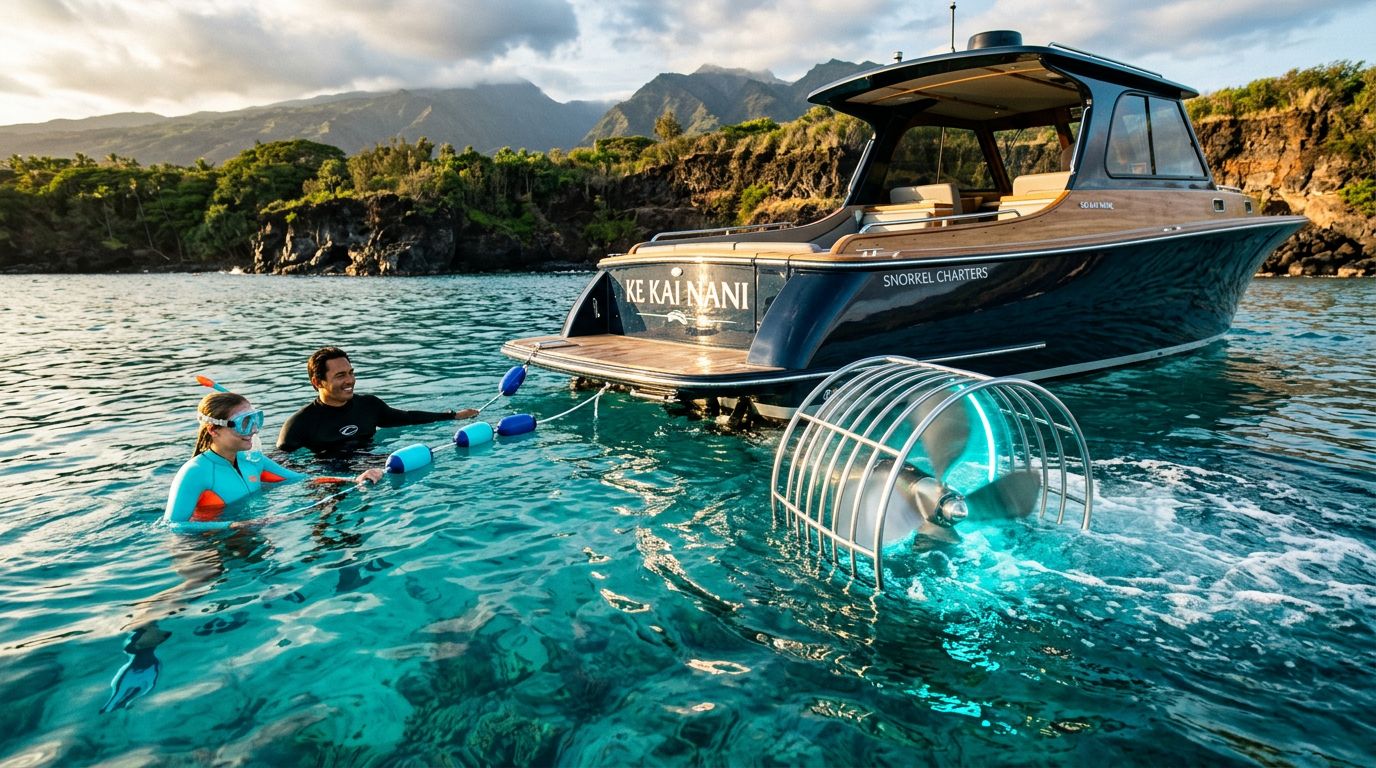
A rotating propeller can turn a calm swim area into a serious hazard within seconds. That risk matters whenever you leave a boat to snorkel, especially when swimmers, guides, ladders, lines, and marine life share the same space.
When you’re researching snorkeling Big Island Hawaii trips, look beyond reef locations and departure times. Ask how the boat manages propeller risk, what procedures guides follow, and whether the vessel has a properly fitted guard. The right equipment supports safer decisions, but it works best alongside careful crew communication.
What Boat Propeller Guards Actually Do
A propeller guard is a protective structure fitted around, ahead of, or near a boat’s propeller. Depending on the design, it may look like a cage, ring, shroud, or reinforced frame around the spinning blades. The goal is to reduce the chance of direct contact between the propeller and a person, animal, rope, or floating object.
On many snorkeling boats, the propeller sits below the stern near the lower unit of an outboard motor. That location can be close to the boarding ladder and the area where swimmers enter or return to the boat. A guard creates an additional barrier between the blades and anything moving near the motor.
The design doesn’t make the propeller harmless. A swimmer can still be injured by the guard itself, the lower unit, the boat’s hull, or the force of moving water. A guard also can’t protect someone who swims directly beneath the stern while the engine is engaged.
You should view boat propeller guards as one part of a complete safety system. They add physical protection, while guides, engine procedures, passenger briefings, and clear swimming boundaries reduce the chance of contact in the first place.
Several guard styles exist, and each one fits a particular motor and hull configuration. A rigid cage can offer broad coverage around the blades. A ring-style design may guide water around the propeller while limiting direct access. Some systems are built into the propulsion unit rather than added as a separate accessory.
The best choice depends on the boat’s engine, draft, speed, steering system, and tour use. A guard designed for a slow utility vessel may not suit a fast offshore boat. Proper installation matters as much as the guard’s shape.
A propeller guard adds protection, but it never replaces an engine-off rule when swimmers are near the stern.
Why Snorkeling Boats Need Extra Propeller Protection
A sightseeing boat usually keeps passengers onboard. A snorkeling boat moves people in and out of the water throughout the trip. That difference changes the safety picture.
When you snorkel Big Island waters, you may enter from a stern platform, climb a ladder, or step down beside the boat. You may also drift away from the vessel while watching fish, then return when a guide calls you back. Each movement takes place near equipment that can create hazards if the crew loses track of the group.
Propeller risk can increase during several ordinary moments:
- The boat repositions after swimmers enter the water.
- A current pushes snorkelers closer to the stern.
- A guest returns to the ladder while another person boards.
- A guide needs to respond to a tired swimmer or changing conditions.
- A line, fin, or floating item moves near the motor.
A guard gives the crew another layer of protection during these situations. It can reduce direct access to the blades if someone drifts too close. However, the crew still needs to keep the engine off while people are in the water near the boat.
Good procedures remain simple. The captain controls the motor, the guide tracks swimmers, and guests follow instructions before entering or leaving the water. Everyone should know where to wait, which side to approach, and when the boat is safe to board.
You should never assume that a guard means you can swim behind the boat. You also shouldn’t jump from the stern until the guide confirms that the engine is off and the area is clear.
For families, this point deserves extra attention. Children may focus on colorful fish and forget where the boat is positioned. A clear briefing helps you set expectations before anyone enters the water.
Couples and solo travelers need the same awareness. Strong swimmers can move faster than a guide expects, while tired swimmers may struggle to control their direction. Staying within the marked area protects you and makes it easier for the crew to respond.
Big Island Conditions Make Boat Setup Important
The Kona coast offers popular snorkeling areas with different depths, shorelines, currents, and approaches. A boat may operate near a protected bay in the morning, then travel over deeper water or exposed coastline later in the day. The crew must adjust its speed and positioning to the conditions.
During snorkeling Big Island trips, wind and swell can move you toward or away from the vessel. Even a small shift in position can place a swimmer closer to the stern than expected. A guide may ask you to regroup, but the current can affect how quickly you respond.
Volcanic shorelines also create shallow areas, ledges, and underwater terrain. A boat should keep clear of coral and the seafloor while maneuvering. Propeller guards don’t give a captain permission to operate carelessly in shallow water or near reef structures.
The guard’s condition matters, too. Saltwater exposes metal components to corrosion, while floating debris can strike the structure. A damaged guard may interfere with steering, water flow, or propeller performance. Regular inspection helps the operator identify loose fittings, cracks, bent sections, or corrosion before the boat carries passengers.
Boat speed also affects risk. A guard can reduce the chance of direct blade contact, but higher speed increases the force of any collision and may affect how the vessel handles. Tour operators must match their operation to the boat’s design and the day’s conditions.
You can learn a lot by watching how the crew prepares before departure. Do guides explain the swimming area? Do they point out the boarding location? Does the captain wait until everyone is clear before starting the engine? Those details show whether equipment and procedures work together.
When the ocean changes, the safest plan may involve moving to another location, shortening a swim, or keeping guests onboard. A responsible crew treats those choices as normal parts of operating a boat.
Propeller Guards Can Reduce Risks to Marine Life
People aren’t the only ones near a boat’s propeller. Sea turtles, dolphins, fish, and other marine animals may pass near the stern or follow a vessel for a short distance. A propeller guard can reduce the chance of direct blade contact if an animal enters that area.
It can’t prevent every wildlife injury. Animals may still collide with the boat, become trapped near equipment, or react unpredictably to engine noise and movement. A guard also doesn’t make it acceptable to chase, crowd, feed, or touch wildlife.
Your operator’s behavior matters as much as the equipment. A careful crew gives animals space, avoids sudden approaches, and follows applicable wildlife protection rules. Guides should also tell you not to reach toward animals or swim after them.
Reef protection requires a different set of practices. A propeller guard can protect the propeller from some impacts, but it doesn’t protect coral from a boat’s hull, anchor, or careless maneuvering. The captain should choose a suitable anchoring or mooring practice and avoid contact with the bottom.
You can support the same standard in the water. Use reef-safe sunscreen when required, keep your fins away from coral, and don’t stand on rocks or living reef. Good buoyancy control protects the habitat beneath you.
During a night snorkel, visibility changes for both guests and crew. Lights help guides monitor the group, but you should still stay within the designated area and follow every instruction. Never swim behind the boat to get a better view or return without the guide’s signal.
A responsible snorkeling experience respects two boundaries at once: the distance between you and the propeller, and the distance between you and wildlife. Both protect the quality of the encounter.
Questions to Ask Before You Book a Snorkeling Tour
You don’t need to inspect a motor like a marine technician. Still, you can ask direct questions before choosing a boat. Clear answers help you understand how the operator handles swimmers around the stern.
Ask whether the boat has a propeller guard and where that guard covers the propulsion system. Some designs protect the sides of the propeller more than the front or rear. You should also ask whether the guard is permanent, removable, or installed for particular trips.
Next, ask what happens to the engine while guests are in the water. The answer should describe a clear process, not a vague promise that the crew “keeps an eye on things.” Find out how the captain communicates with the guide and how the group knows when it is safe to board.
Useful questions include:
- Where do you enter and exit the water?
- How does the crew mark the swimming boundary?
- What happens if someone drifts toward the stern?
- Who watches swimmers while the captain operates the boat?
- What safety equipment is onboard?
- How does the crew handle a tired or anxious swimmer?
- How often does the operator inspect the guard and motor?
You can also ask about group size. A smaller group may make it easier for guides to track individual swimmers, although group size alone doesn’t prove that a tour is safer. The crew’s training, communication, and operating procedures matter as well.
Ask whether guides hold current lifeguard or water-safety certifications. Then listen to how they describe the briefing. A useful briefing should cover engine status, entry points, exit procedures, boundaries, signals, and what you should do if you need help.
If you’re traveling with children, ask about age guidance, flotation equipment, and the distance between the boat and the snorkel area. Those details help you choose a trip that matches your family’s comfort and swimming ability.
The best answers are specific. You should leave the conversation knowing what will happen before, during, and after your time in the water.
Choosing a Kona Tour Operator With Safety in Mind
Kona Snorkel Trips follows a “Reef to Rays” philosophy, with a focus on small-group service, ocean safety, and respect for Hawaii’s marine environment. When you book with the company, you can expect guides who are Lifeguard Certified, onboard safety equipment, quality snorkeling gear, and instruction before entering the water.
The company also emphasizes reef-safe practices and marine education. Its excursions include custom-built lighted boards for nighttime encounters, along with carefully selected equipment for different types of ocean experiences. Those features can improve comfort, but you should still ask about the boat’s specific propeller setup before your trip.
A strong tour operator should be willing to answer that question. You can ask whether the boat uses boat propeller guards, how the guard is maintained, and what procedures apply when snorkelers are near the vessel. The answer should fit the boat and trip rather than rely on a general safety statement.
You can check availability for a Kona Snorkel Trips excursion before contacting the crew with your questions.
You should also consider how the operator handles the environment. Guides who explain reef etiquette give you the tools to avoid damaging coral. Captains who respect wildlife boundaries help prevent stressful encounters. Those habits show that safety includes passengers, crew, and the ocean itself.
The company’s small-group approach may also help you stay connected to your guide. You can hear instructions more easily and ask questions before entering the water. However, your own behavior still matters. Keep your mask and fins secure, stay with the group, and tell the guide if you’re uncomfortable.
How You Should Behave Around a Boat Propeller
Even the strongest safety equipment depends on your choices. You can reduce your own risk by treating the stern and propeller area as a restricted zone throughout the trip.
Before you enter the water, listen for the captain’s or guide’s signal. Don’t jump in while the boat is moving, and don’t enter from a location the crew hasn’t approved. Once you’re swimming, keep enough distance to prevent the current from carrying you into the stern.
When you return, approach the designated ladder or platform. Avoid swimming beneath the boat, reaching toward the motor, or grabbing a line near the propeller. If you lose a fin or another item, tell the guide instead of trying to retrieve it near the stern.
Follow these steps whenever you need help:
- Raise your hand or use the signal explained during the briefing.
- Stay where the guide can see you.
- Move away from the stern if the current carries you toward it.
- Wait for the crew to give you an entry or boarding direction.
- Use the ladder carefully and keep your fins clear of other swimmers.
Never assume an idling engine is safe. Ask the crew whether the engine is fully off before approaching the boat. Propellers can remain dangerous whenever the motor is engaged, even if the vessel appears stationary.
You should also tell the guide about fatigue, panic, cramps, or breathing problems early. A swimmer who needs assistance may move unpredictably, so early communication gives the crew more time to respond safely.
Parents can reinforce the same rules before the boat leaves the harbor. Tell children to stay with the guide, wait for permission before boarding, and avoid the back of the boat. A short conversation can prevent confusion later.
Benefits and Limits of Propeller Guards
A guard can improve safety, but it also changes how water moves around the propeller. Depending on the design, it may create additional drag, affect acceleration, alter steering response, or collect floating debris. Those effects don’t make guards a poor choice. They show why the equipment must match the boat.
A poorly fitted guard can create its own problems. It may loosen, corrode, interfere with the propeller, or become difficult to inspect. The operator needs to follow the manufacturer’s installation and maintenance requirements for that particular system.
Guards may also provide less protection than passengers assume. Some designs limit access around the blades but leave openings. Others may protect against certain angles of contact while offering less coverage elsewhere. You should ask about the actual equipment rather than picturing a completely enclosed propeller.
The boat’s operating rules still carry most of the responsibility. The captain should shut down the engine before swimmers approach, maintain a safe position, and avoid unnecessary maneuvering near the group. Guides should keep track of guests and communicate quickly when conditions change.
You can think of the guard as a seat belt for the propulsion system. A seat belt helps during a crash, but it doesn’t make speeding safe. In the same way, a propeller guard adds protection without changing the basic rule that people must stay clear of an active motor.
When you compare tours, look for the full combination of equipment, training, communication, and environmental care. That combination gives you a clearer picture than a single feature listed on a booking page.
Conclusion
Boat propeller guards matter because snorkeling puts people close to a working vessel in ways that ordinary sightseeing doesn’t. A properly fitted guard can reduce direct contact risk, but it works alongside engine-off procedures, clear boundaries, trained guides, and careful boat handling.
As you plan your snorkeling Big Island trip, ask practical questions before booking. Know where you’ll enter and exit, how the crew monitors swimmers, and how the operator protects both guests and marine life. The safest ocean adventure begins with equipment you can trust and instructions you understand.