
Kona Manta Ray Night Snorkel for First-Time Boat Riders

If your only experience with snorkeling Big Island Hawaii has been a daylight beach entry, a night boat trip can sound bigger than it is. A Kona manta ray snorkel is often easier for first-time boat riders than you expect, especially when the crew keeps the steps simple.
Kona Snorkel Trips is the kind of operator that helps beginners settle in fast, because the setup is clear and the group stays small. You do not need years of boating experience to enjoy it. You need a calm plan, a good crew, and a clear picture of what happens before you step on board.
Why the night manta snorkel feels easier than you think
The boat ride is usually the part people picture worst. In reality, the ride is often short, the crew gives you a briefing before you move, and the water part is mostly floating, breathing, and watching.
That matters for first-timers. You are not steering the boat, you are not chasing fish, and you are not trying to swim hard in open water. Instead, the crew does the setup and keeps the pace steady.
If you want to snorkel Big Island without the noise of a crowded beach launch, a night manta trip can feel surprisingly calm. The darkness sounds intimidating, but the lights and the board give the scene structure.
The dark feels smaller once the crew turns on the lights and gives you one job, float and watch.
A lot of new riders feel better once they realize the trip has a rhythm. You board, get settled, listen, float, and then watch the ocean do its thing. That routine feels simple once you see it once.
What the boat ride is like when you’re new to it
Most Kona departures leave from a marina, so you start with a clear check-in instead of a scramble. On a well-run trip, your gear is handed out early, questions get answered before the boat moves, and you know where to sit.
The boat ride itself can feel like a short shuttle to the show. You watch the coastline fade, feel the cool air on your face, and settle into the rhythm before you ever get near the lighted board.
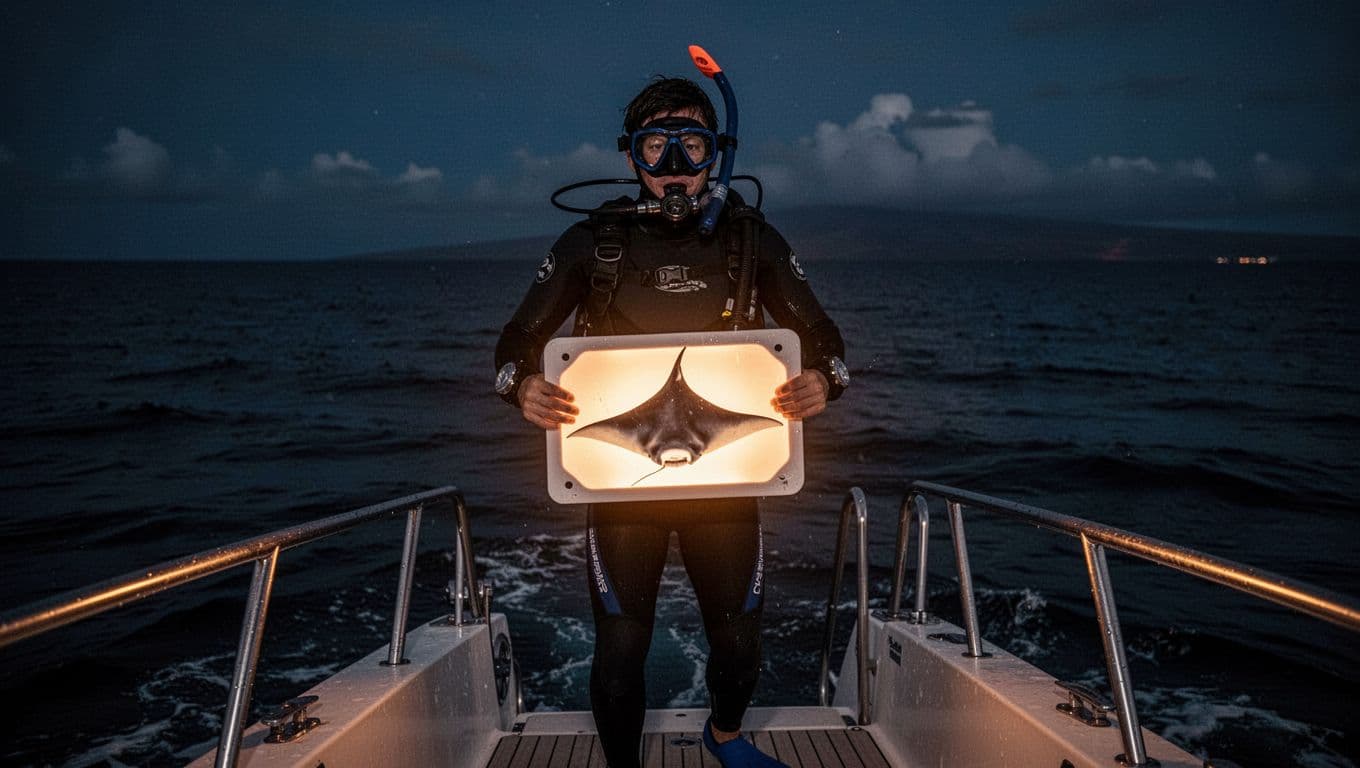
Once you reach the snorkel site, the crew helps you get positioned around the board. That is a big deal for first-time boat riders, because you do not have to figure out your orientation in the dark. You have a fixed place, a light source, and clear instructions.
If your first thought is “What if I do it wrong?”, that usually fades quickly. The task is simple, and the crew keeps the space organized so you can focus on the water.
For many people, this is the easiest version of snorkeling Big Island, because the entry is controlled and the lights do the hard work. You spend less time wondering what to do next.
The ride back feels easier too. By then, you already know the deck, the rail, the crew, and the boat’s motion. That familiarity matters more than people expect.
How to keep nerves and motion sickness in check
Nerves are common, and motion sickness is even more common than people admit. A little planning goes a long way, especially if you usually feel off on boats.
Tell the crew early if you feel uneasy. A small adjustment at the start is easier than fixing a bad stomach later.
A few habits help a lot:
- Eat a light meal a few hours before departure.
- Skip heavy alcohol before the trip.
- Bring motion-sickness medicine if you already use it, and take it as directed.
- Keep your eyes on the horizon when you are not in the water.
- Say something early if the motion starts to build.
You do not need to push through discomfort alone. Crews that work with first-timers all the time know how to slow the pace, point you to a steadier spot, or help you focus on the basics.
The dark water can also play tricks on your head. Once the lights are on and the crew explains the setup, most people settle down faster than expected. The point is to enjoy the night, not to prove anything.
If you plan to snorkel Big Island again later in the trip, note what helped and what didn’t. That makes the next outing feel easier from the start.
What to pack for a comfortable night on the water
Packing light keeps the night simple. You only need a few things, but the right ones matter more than you’d think, especially after sunset when the air feels cooler.
| Item | Why it helps | Beginner tip |
|---|---|---|
| Light layer | The ride home can feel cool after dark | Bring a dry hoodie or windbreaker |
| Towel and dry clothes | You will want them after you snorkel | Keep them in a bag you can reach fast |
| Motion-sickness medicine | Helps if you know boats bother you | Follow the label before departure |
| Water bottle | Helps you stay steady and comfortable | Sip before you board |
| Small dry bag | Keeps phone and keys together | Use one that closes well |
| Reef-safe sunscreen | Useful if you spend time outside before the trip | Put it on earlier in the day |
A warm layer is the one item many first-timers forget. The ocean might feel mild, but the boat ride home can feel brisk once you are wet and the wind picks up.
A simple bag also keeps the evening calm. If you are not digging for gear, you can focus on the trip itself instead of your stuff.
If you want to snorkel Big Island on more than one day, keep the same bag packed. The less you hunt for things, the less rushed the night feels.
Choosing a first-time-friendly tour in Kona
The operator matters more than almost anything else. For first-timers, the best trip is the one that explains the ride, keeps the group small, and gives you room to ask questions without pressure.
What a beginner-friendly operator gives you
You can browse Big Island snorkeling tours to see how Kona Snorkel Trips organizes its outings. The company leans into a Reef to Rays approach, which fits a new rider well because the experience stays personal instead of crowded.
Kona Snorkel Trips uses Lifeguard Certified guides, state-of-the-art snorkeling gear, and custom-built lighted boards that make the night feel organized. That matters when you are new to boats, because the details you don’t have to think about are the details that keep you calm.
For a small-group departure, you can check availability.
That kind of setup is helpful when you want to snorkel Big Island without wondering what comes next. A clear briefing, good gear, and a small group take a lot of the edge off.
A second manta-focused option to compare
If you want another dedicated night-trip brand, Manta Ray Night Snorkel Hawaii focuses on the same manta encounter in Kona. Comparing a few manta-focused operators helps you see differences in pace, group size, and support.
For Kona Snorkel Trips’ manta night, you can also check availability.
That second look is useful if you care about small details like boarding style, guide attention, or how much hand-holding you want on the boat. Those little differences matter when the ocean feels new.
Why the manta encounter stays with you
The memory usually comes from the scale of it. A manta ray can glide inches from the board, then disappear into the dark and return with slow, almost weightless grace.
Because you are floating near the surface, the experience feels more like watching a living ceiling of water and wings than chasing wildlife. That calm pace matters for new boat riders, because you get the wow factor without a hard swim.
The rays come to the lights because plankton gathers there. That means your job stays simple, hold position, breathe steadily, and watch the show unfold.
The setting also helps. Kona’s night water feels dark at first, but the lights create a bright window beneath you. Once you settle in, the contrast between the black ocean and the glowing circle below feels almost unreal.
If you want another plain-language overview of the setup, Love Big Island’s manta guide gives a useful outside view. It helps set expectations about how the lights, plankton, and manta behavior fit together.
The best part is that the trip does not ask you to be an expert. It asks you to listen, float, and stay present long enough for the ocean to do the memorable part.
Conclusion
A first-night boat trip can feel like a big step until you see how simple the routine is. The crew sets the pace, the lighted board gives you structure, and you spend most of your time floating and watching.
That is why a Kona manta ray snorkel works so well for first-time boat riders. Once you know what to wear, how to handle motion, and what kind of operator to choose, the whole evening gets easier to picture.
If you want your first trip to feel calm instead of rushed, choose the guide, gear, and group size before you choose the date.