
How to Spot Cleaner Wrasse During Kealakekua Bay Snorkeling
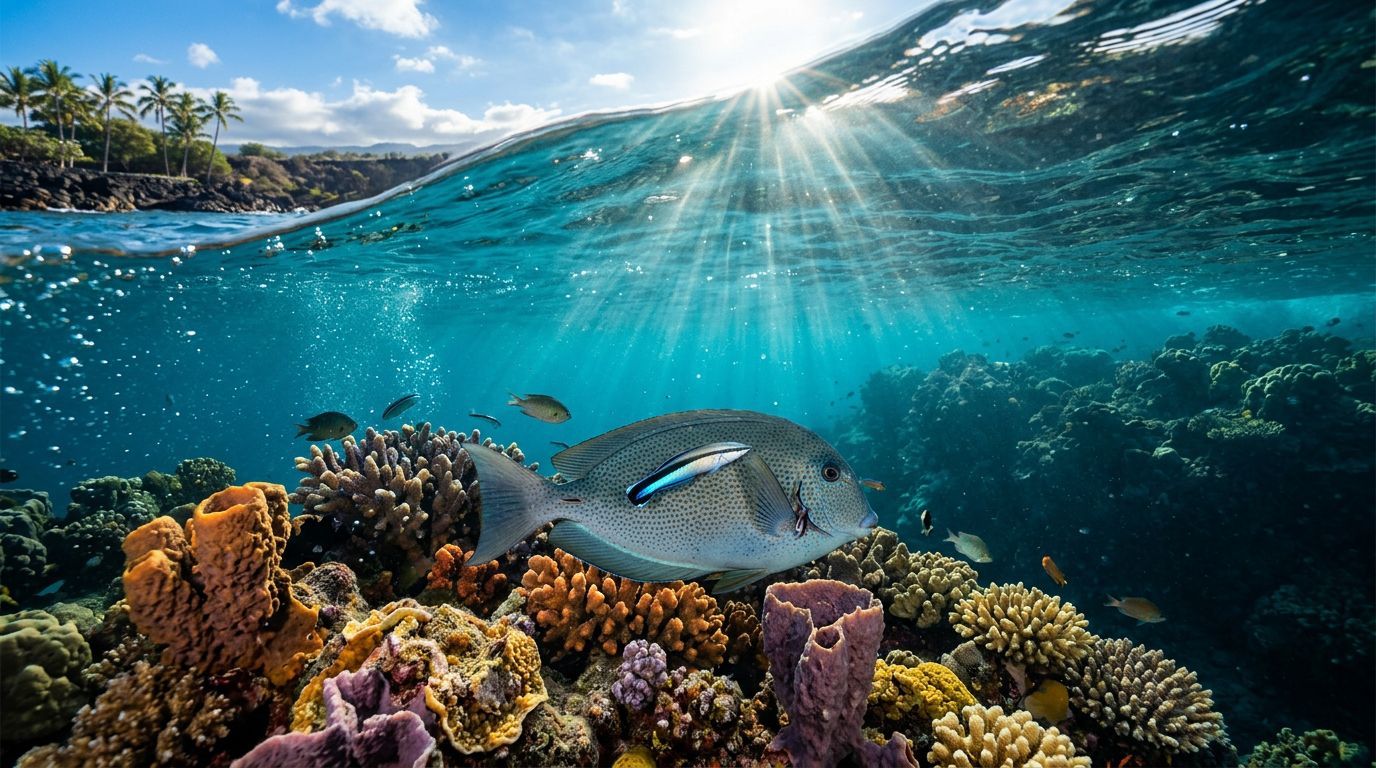
If you want a reef full of tiny details instead of just pretty water, Kealakekua Bay snorkeling gives you that chance. Kona Snorkel Trips offers Big Island snorkeling tours that put you close enough to notice the small stuff, including cleaner wrasse.
These fish are easy to miss at first. They don’t flash across the reef like a show-off, and they don’t stay in open water for long. Once you know what to watch for, though, you’ll start seeing their pattern almost everywhere the reef is busy.
What cleaner wrasse do on the reef
Cleaner wrasse work like tiny reef attendants. Bigger fish stop by, open their mouths, and hold still while the wrasse pick off parasites, dead skin, and debris.
That behavior is the real clue. If you keep seeing the same little fish return to the same coral ledge, you’re probably looking at a cleaning station. For a field note on the species and its habits, this account of Hawaiian cleaner wrasse behavior gives you a useful close look.
The biggest clue is repetition. If fish keep returning to one spot, stay there a little longer.
Cleaner wrasse are also quick and precise. They hover, dart, pause, then dart again. That stop-start rhythm helps you separate them from the fish that simply graze along the reef. On a busy bay, they’re the fish with a job.
Where to look in Kealakekua Bay
Kealakekua Bay gives you the kind of reef structure cleaner wrasse like. Look for coral heads, shallow ledges, and calm edges where fish traffic stays steady. Those spots act like little service hubs.
If you’re on snorkeling in Kealakekua Bay, keep your eyes on places where other fish pause. Tangs, butterflyfish, and surgeonfish often gather near the same ledge or patch of reef. Cleaner wrasse usually show up nearby, because that’s where their “customers” come through.
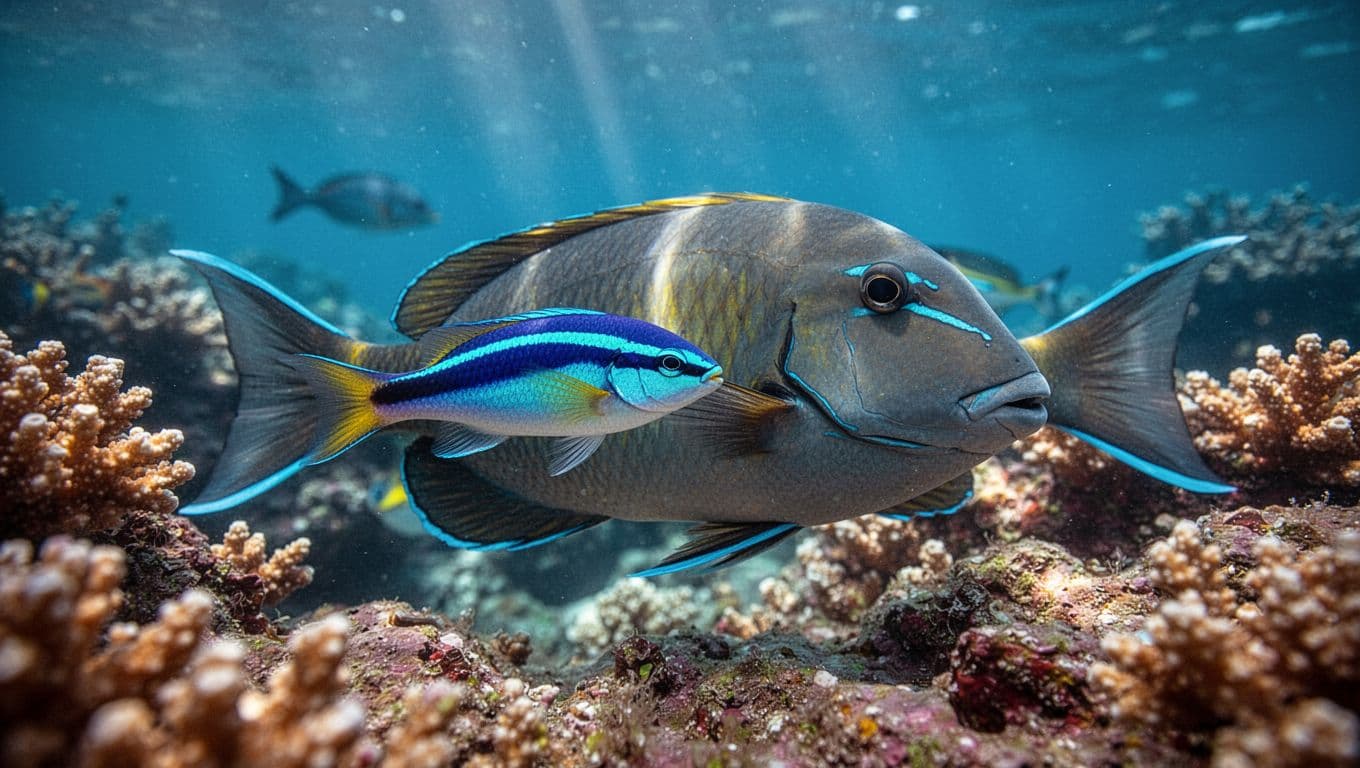
That image is close to what you want to look for in the water. The wrasse is tiny, but the scene around it usually feels active.
You’ll miss them faster if you stare into open sand. Instead, scan the reef edge and watch for repeated movement in one small area. In a place like Kealakekua Bay, the fish traffic tells you where to stop.
What a cleaner wrasse looks like at a glance
Cleaner wrasse are small, slim, and built for speed. Their body shape is narrow, almost pencil-like, and they move with sharp little bursts instead of smooth glides.
Color helps, but behavior helps more. Depending on the light, they can look bright, dark, or even harder to pin down than you expect. If you’re trying to identify one fast, watch for a fish that keeps returning to a station while larger fish wait nearby.
That movement often looks like a tiny loop. The wrasse goes in, checks a fish, comes back out, then repeats the same path. It’s almost like a reef version of a doorbell.
A simple comparison can help when you’re scanning the water.
| Fish type | What you notice | How to tell the difference |
|---|---|---|
| Cleaner wrasse | Thin body, quick stop-start motion, visits larger fish | It circles one spot and works like a cleaner |
| Juvenile tang | Rounder body, steady grazing | It feeds on algae and keeps moving along the reef |
| Damselfish | Small, sharp turns, one patch of coral | It defends a territory instead of serving other fish |
| Butterflyfish | Slower glide, flatter profile | It moves through the reef, not back and forth at one station |
The easiest clue is still behavior. If one tiny fish keeps returning to the same place, you’re probably close.
Best conditions for spotting them
Morning is your friend here. The water is often calmer, the light is softer, and visibility usually feels clearer before the wind picks up. If you’re planning snorkeling Big Island Hawaii, that early window often gives you the cleanest look at the reef.
A calm sea matters too. Cleaner wrasse are easiest to see when you can stay steady in the water and avoid kicking up sand. Once the bottom gets cloudy, the whole cleaning station turns into a blur.
You’ll also do better when the sun sits high enough to light the reef without blowing out the view. Side glare can hide a tiny fish fast. So can choppy water and rushed breathing.
If the day feels busy on land, keep your pace slow in the water. The reef rewards patience. It also rewards a simple habit, which is to pause before you move on.
How to snorkel in a way that helps you see more
When you snorkel Big Island reefs, slow movement gives you better results than strong kicks. Keep your body level, use small fin strokes, and stop often. That steadiness makes it easier to notice fish behavior instead of just shapes.
Cleaner wrasse are easier to spot when you watch the bigger fish first. The “customers” reveal the cleaning station before the wrasse does. If a tang, goatfish, or butterflyfish hangs around one coral head longer than the rest, stay there and look closely.
If you kick up sand, you hide the very fish you came to see.
You should also keep your hands off the reef. Besides being bad for the coral, it sends up debris and scares fish away. The less disturbance you create, the more natural the cleaning station looks.
That calm approach matters on any snorkeling Big Island trip, but it helps most in places like Kealakekua Bay where the reef is active and the fish are used to a steady rhythm. Let the water settle, then watch the pattern.
A guided trip makes the search easier
Kona Snorkel Trips keeps the focus on small groups, good gear, and guides who know how to read the reef. That kind of setup gives you more time to watch the fish instead of fighting for space in the water. If you want a day built around comfort and good conditions, check availability.
A guided trip also helps because the crew can point you toward the right ledges and fish traffic. That matters when you’re trying to spot a fish as small as a cleaner wrasse.
If you want a route that centers on the bay itself, Captain Cook monument snorkel tours are a strong fit. The bay’s structure gives you a better chance to find active cleaning stations, and the coral edges often hold steady fish movement.
For travelers who want more time in one area, private Kona snorkel tours can make the search feel more relaxed. That slower pace helps when you want to linger over one reef patch instead of swimming past it.
Kona Snorkel Trips also makes it easy to compare dates before you go. If you’re ready to plan, check availability and lock in a bay day that fits your schedule.
If you want a dedicated Kealakekua Bay operator outside the Kona Snorkel Trips site, Captain Cook Snorkeling Tours focuses on this stretch of reef and the monument area. That makes it a natural choice when your main goal is to spend more time watching the bay’s fish activity.
To book that bay-focused trip, check avaialbility.
Fish you might confuse with cleaner wrasse
Cleaner wrasse can be confused with other reef fish because they’re small and quick. The difference is usually in what they do, not just how they look.
| Fish you might see | What stands out | Why it’s not a cleaner wrasse |
|---|---|---|
| Juvenile tang | Rounder body, steady grazing | It spends its time feeding on algae |
| Damselfish | Bold attitude, territorial darting | It guards one patch of reef instead of cleaning other fish |
| Butterflyfish | Smooth glide, flatter body | It cruises the reef more than it works one station |
| Small wrasse species | Quick movement, narrow shape | Some wrasse hunt or graze instead of cleaning |
If you want a fast rule, use this one: cleaner wrasse stay tied to fish behavior. They are rarely just drifting for no reason. They keep returning to the same place because the reef keeps sending them customers.
That pattern is what makes them so fun to find. You’re not spotting a fish at random, you’re catching a job in progress.
Conclusion
Cleaner wrasse are one of the easiest fish to miss and one of the most rewarding to find. Once you know how to read the reef, the pattern becomes obvious, especially during Kealakekua Bay snorkeling.
Watch the coral edges, slow your pace, and follow the larger fish. If the same tiny fish keeps returning to the same spot, you’ve probably found a cleaning station.
The next time you plan a bay trip, let the reef set the pace. The smaller the fish, the more attention they ask from you, and the more they show you about the life around them.