
Why Kona Manta Ray Snorkel Check-In Times Change
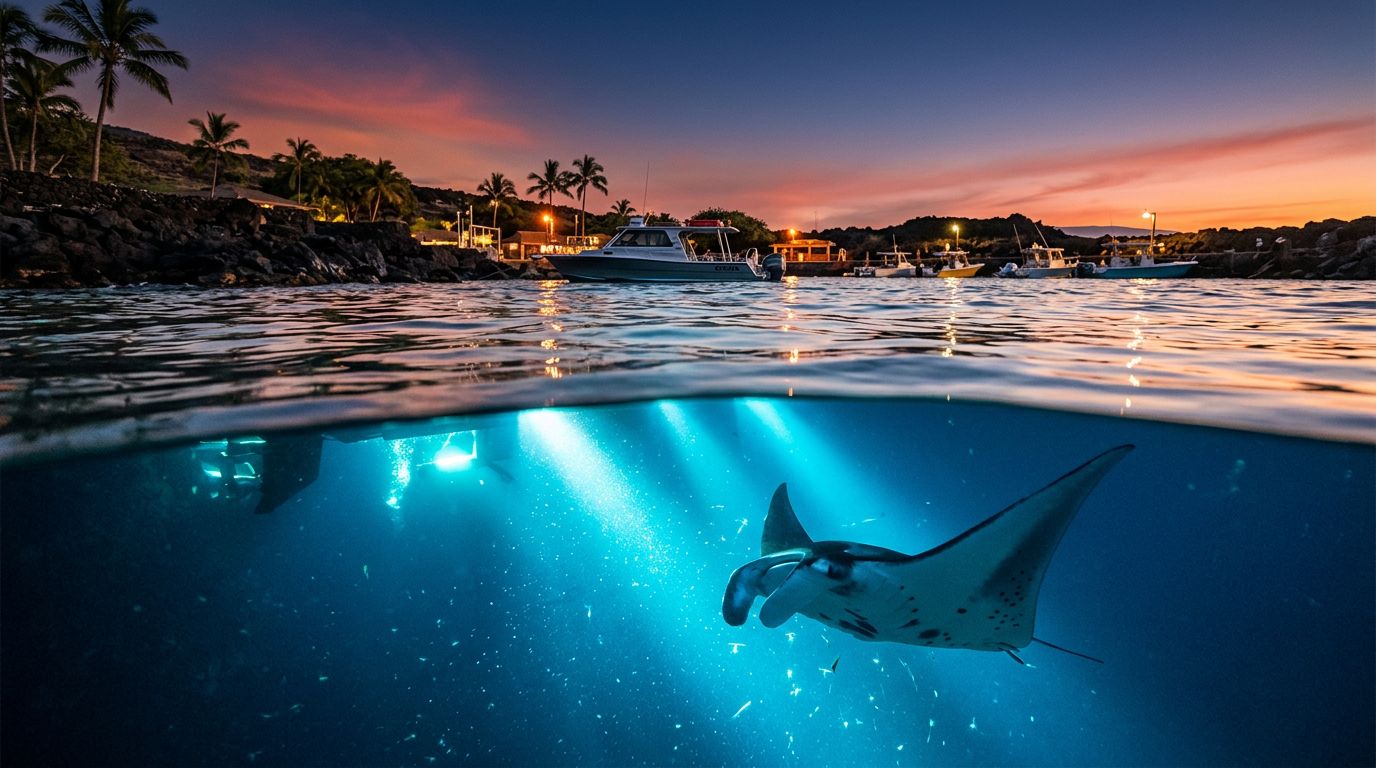
Your Kona manta ray snorkel may show a 5:30 PM check-in in one month and a 6:30 PM check-in in another. That shift is normal because nighttime tours follow sunset, darkness, harbor preparation, and ocean conditions instead of one fixed daily hour.
When you book a Kona manta ray snorkel, the listed check-in time is when you arrive, complete the safety steps, and prepare to board. It isn’t the moment you enter the water. Understanding that difference helps you plan dinner, transportation, children’s bedtimes, and other Big Island activities.
Why Kona manta ray snorkel times follow the sunset
At Kona’s manta viewing sites, the tour needs to reach the water after daylight fades. That timing lets the crew use underwater lights while plankton gathers near the surface, creating the feeding conditions that attract manta rays.
Darkness is part of the wildlife encounter
Manta rays are seen along the Kona coast year-round, so this schedule isn’t based on a migration season. Instead, the clock changes because sunset arrives at different times throughout the year.
During winter, darkness arrives earlier, so evening departures often begin earlier. In summer, the sun stays up longer, and tours usually shift later. The exact time depends on the date, the harbor, the boat route, and the operator’s planned water time.
The goal is to place you in the water during a useful feeding period. Leaving too early can mean arriving before the conditions are ready. Leaving too late can shorten the time available for the encounter.
Check-in starts the tour
Your check-in time gives the crew room to complete several tasks before departure. You may need to sign waivers, confirm your reservation, receive a mask and snorkel, choose a wetsuit, and listen to the water safety briefing.
Guides also need to check the boat, lighting equipment, flotation devices, and passenger count. A small delay at the dock can affect the entire schedule, especially when several boats use the same harbor area.
Kona Snorkel Trips publishes date-specific manta departure times because its seasonal Kona manta snorkel schedule follows the setting sun.
How check-in changes through the year
The calendar below shows the usual planning pattern. Your confirmation email remains the final source for the exact time.
| Time of year | Common timing pattern | What you should expect |
|---|---|---|
| December to February | Earlier evening departures | Sunset comes sooner, and winter ocean conditions can vary |
| March to April | Gradual shift later | Departure times may move noticeably across these weeks |
| May to August | Later evening departures | Longer daylight usually means a later check-in |
| September to November | Gradual shift earlier | Times begin moving back toward an earlier evening schedule |
Winter brings earlier evenings
Winter visitors often see earlier check-in times because sunset arrives sooner. A tour calendar may show an evening departure around 5:30 PM during part of the winter schedule, although the exact date can shift that time.
Winter also overlaps with humpback whale season. During the right part of the year, a combined whale watch and manta snorkel can begin in the afternoon, continue through sunset, and finish with the nighttime encounter. You can review the seasonal whale watch and manta snorkel schedule when planning a winter trip.
Summer keeps the day going longer
Summer sunlight lasts later, so manta tours often move toward a 6:00 PM or 6:30 PM departure. Some nighttime options begin later still, depending on the trip format and the length of the boat ride.
That later timing can work well for families who want a relaxed afternoon. It can also create a scheduling problem if you book an early dinner, sunset luau, or evening show on the same night. Leave enough room for check-in, travel back to your hotel, and an occasional delay returning to shore.
What happens after you check in at Honokohau Harbor
Many Kona manta tours leave from Honokohau Harbor, north of Kailua-Kona. The harbor is different from a hotel lobby or beach meeting point, so read your confirmation carefully before driving there.
Gear and safety take time
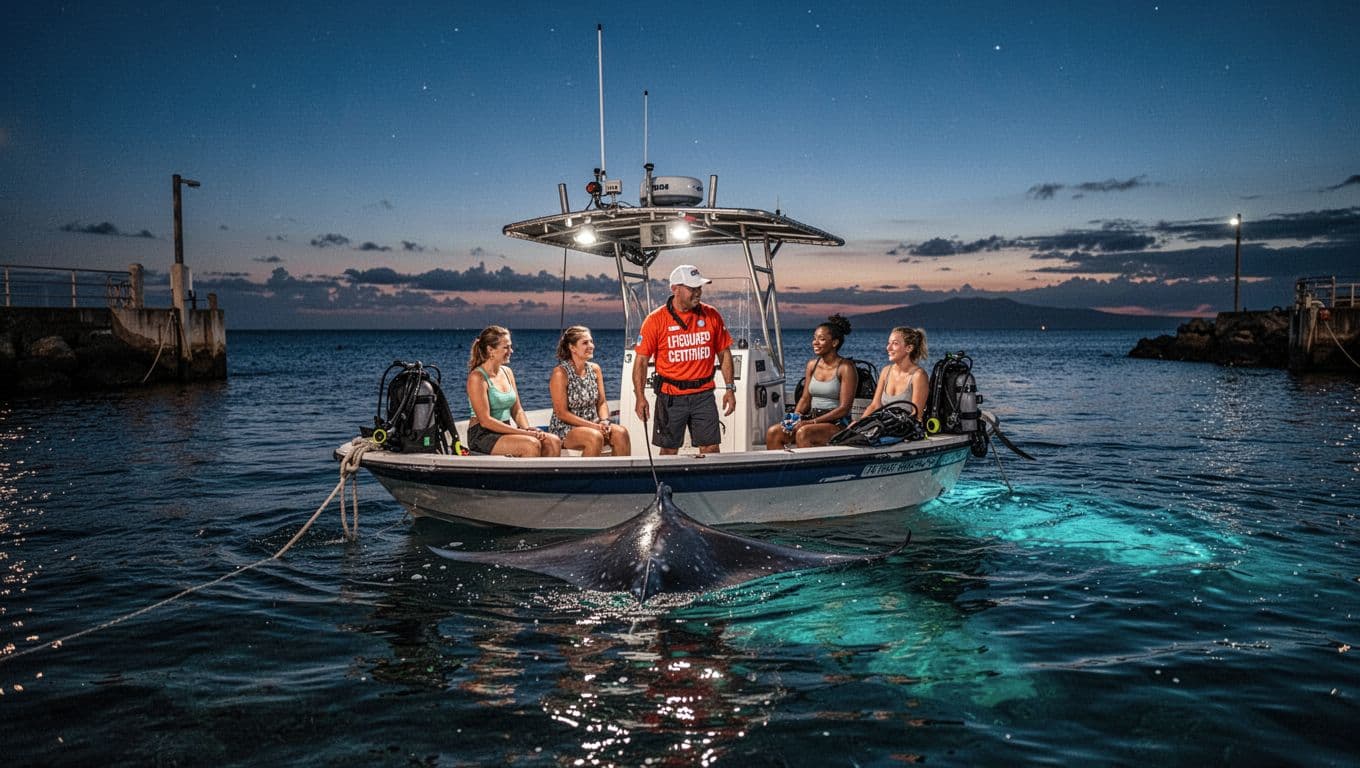
After you arrive, the crew may fit you with fins, a mask, snorkel, flotation support, and thermal protection. A proper fit matters because a leaking mask or loose gear can make the swim uncomfortable.
Your guide should also explain how to enter and exit the water, where to hold the float, and how to stay clear of the manta rays. Night snorkeling feels different from daytime swimming because the water around you looks dark while the lighted viewing area remains bright.
Allow at least 15 to 30 minutes before departure unless your operator gives you a different instruction. Arriving at the listed departure time can leave you rushing through steps that the crew planned to complete earlier.
Boarding and travel time affect the clock
The boat may need to leave at a particular point in the sunset sequence. That means the crew can’t always wait for late arrivals, even if the boat ride itself takes only a short time.
Harbor traffic, loading space, parking, and gear storage can also affect boarding. Give yourself extra time if you’re driving after dark, unfamiliar with the harbor, or traveling with children.
A check-in time is therefore part of the safety plan. It protects the time needed for preparation before the boat heads toward the viewing site.
Weather can change timing during any season
Sunset is the main reason the clock moves across the year. Weather and ocean conditions can change the plan on any individual date.
Safety takes priority over a printed schedule
Wind, swell, visibility, and currents can affect the route or the decision to enter the water. A calm forecast in the morning doesn’t guarantee identical conditions after sunset.
The crew may delay departure, change the route, move the viewing area, or cancel a trip when conditions create an unsafe situation. These decisions can feel frustrating after you have arranged your evening, but the ocean doesn’t follow a reservation calendar.
Hawaii’s Department of Land and Natural Resources treats manta viewing as a managed boating and safety activity. Its manta ray viewing boating safety assessment provides useful context for why operators need clear procedures around boats, lighting, passenger movement, and wildlife viewing.
Treat the confirmed check-in time as firm, while treating the return time as an estimate.
Your confirmation email is the final clock
Tour websites may display general seasonal patterns, but your reservation confirmation contains the time tied to your date. Check it again the day before your trip.
Look for the exact meeting location, parking directions, required arrival window, weather notices, and contact information. If you book several weeks ahead, don’t rely on a screenshot of the schedule you saw at checkout.
Operators can also update a departure time after reviewing the forecast or adjusting the boat plan. Check your email before leaving your hotel, especially during winter or periods of unsettled weather.
Why a night manta snorkel can’t use one fixed daily time
A manta tour needs more than a dark sky. The crew also needs enough time to reach the viewing area, position the boat, set the lights, and create a stable place for snorkelers.
Light draws food toward the surface
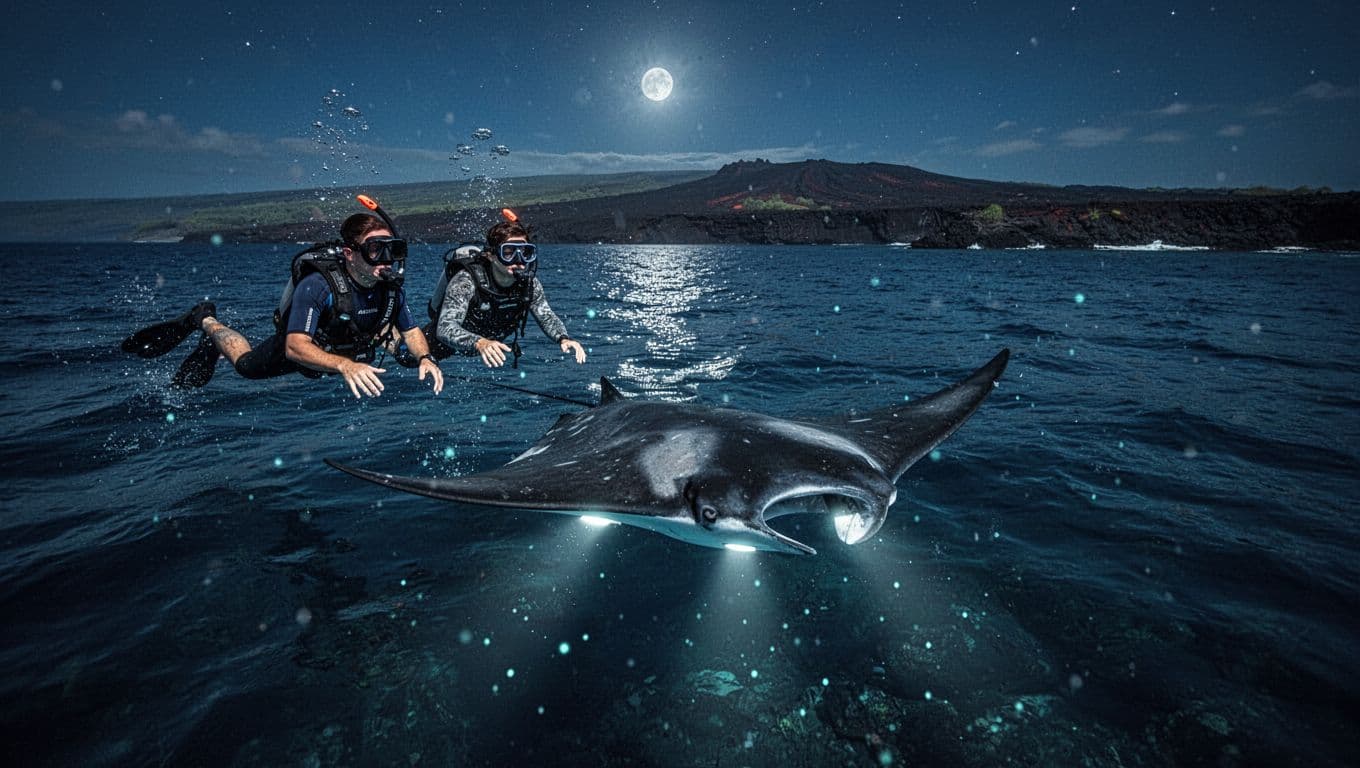
Underwater lights attract small organisms, including plankton. Manta rays may then approach to feed near the illuminated area.
This is why many tours leave around sunset instead of heading out in the middle of the night. The schedule balances the changing daylight with the time needed to reach the site and set up the lights.
Mantas are wild animals, so no operator can promise that a specific ray will appear on cue. However, planning around darkness gives the trip the right conditions for a natural feeding encounter.
Respectful spacing protects the experience
Guests generally stay at the surface and keep their bodies in a calm, predictable position. Your guide may ask you to hold onto a float board or remain within a marked viewing area.
Don’t dive toward a manta, chase it, block its path, or touch it. The safest experience is also the least disruptive one. Good wildlife etiquette lets the ray choose how close it wants to come.
A dedicated Manta Ray Night Snorkel Hawaii company is another option for travelers comparing nighttime manta experiences on the Big Island.
How to plan around your Kona manta ray snorkel check-in
The easiest way to avoid a timing problem is to build your day around the evening water activity rather than forcing the tour into a crowded itinerary.
Book the manta trip early in your stay
If possible, schedule the snorkel after you arrive on the island instead of booking it on the same day as your flight. Delays, baggage issues, rental car pickup, and traffic can quickly turn a comfortable plan into a rushed one.
Booking early also gives you room to reschedule if the ocean prevents the trip from running. Ask about the operator’s cancellation and weather policies before you reserve.
You can check availability for a date that leaves open time before and after the evening tour.
Leave space around meals and activities
Avoid booking a restaurant reservation immediately after the expected return. The boat may get back later than planned because of loading, harbor traffic, or changing conditions.
A light meal earlier in the afternoon can work better than a heavy dinner before swimming. If you are prone to motion sickness, ask your health professional about suitable options before your trip and follow the operator’s instructions.
Families should also account for changing clothes, rinsing equipment, and driving back to the hotel. Children may enjoy the adventure more when the schedule doesn’t require them to rush through the afternoon.
If you’re researching snorkeling Big Island Hawaii experiences, remember that a nighttime manta trip needs a different planning approach than a morning reef tour.
What to look for in a Kona manta ray snorkel operator
A good tour provider should make the timing clear before you arrive. You should know the meeting point, check-in window, age requirements, equipment details, and weather policy.
Small groups make the briefing easier
Kona Snorkel Trips follows a “Reef to Rays” philosophy, with small-group ocean adventures led by lifeguard-certified guides. The company has built a five-star reputation through guest service, safety, and careful attention to the marine environment.
Its trips include quality snorkeling gear and custom-built lighted boards for nighttime manta encounters. Guides explain reef-safe behavior and help guests stay comfortable in the water.
The company’s broader Big Island snorkeling tours include manta experiences, reef trips, whale watching, and private boat outings.
Responsible gear and clear instructions matter
Before choosing a tour, ask how the operator handles flotation, lighting, wildlife distance, and guest support. You should receive direct instructions instead of being left to figure out the nighttime conditions alone.
Kona Snorkel Trips focuses on personalized service rather than a crowded, impersonal boat experience. The crew also treats the reef as a living habitat, which means guests receive guidance on avoiding contact with coral and marine animals.
Can you combine a manta snorkel with other Kona activities?
Yes, but each experience follows a different daily rhythm. Daytime reef tours usually depend on morning light, while manta trips depend on sunset and darkness.
Compare daytime reefs with nighttime mantas
When you snorkel Big Island waters during the day, you can see coral formations, tropical fish, lava rock, and shallow reef habitat in natural sunlight. A nighttime manta trip gives you a completely different view, with darkness, focused light, and large rays moving near the surface.
For snorkeling Big Island sites, Kealakekua Bay is a popular daytime choice because the trip combines clear water with the history of the Captain Cook Monument. You can review the Kealakekua Bay Captain Cook snorkeling tour when deciding whether to add a morning or midday ocean outing.
Consider a whale combo or private charter
During the winter whale season, a combined whale watch and manta snorkel may fit travelers who want two marine wildlife experiences in one outing. The timing usually begins earlier because the boat needs daylight for whale watching before sunset leads into the manta portion.
A private charter gives you more control over the day, although the manta portion still needs to follow darkness. Private Kona snorkeling charters can be arranged around your group’s interests, with the evening manta start changing as the sun sets.
The best choice depends on your priorities. Choose a daytime reef trip for longer visibility over the seafloor, a manta tour for a focused night encounter, or a combination when your schedule and conditions allow both.
Final Thoughts
Kona manta ray snorkel check-in times change because the experience is tied to sunset, darkness, preparation, and ocean safety. Winter usually brings earlier evenings, while summer generally pushes departures later. Weather and harbor logistics can still change the schedule on any date.
Use your confirmation email as the final authority, arrive 15 to 30 minutes early, and leave room around the tour. When you plan for the clock to move, you can enjoy the evening without rushing toward one of Kona’s most memorable wildlife encounters.