
Kona Manta Ray Snorkel: A Solo Traveler’s Guide
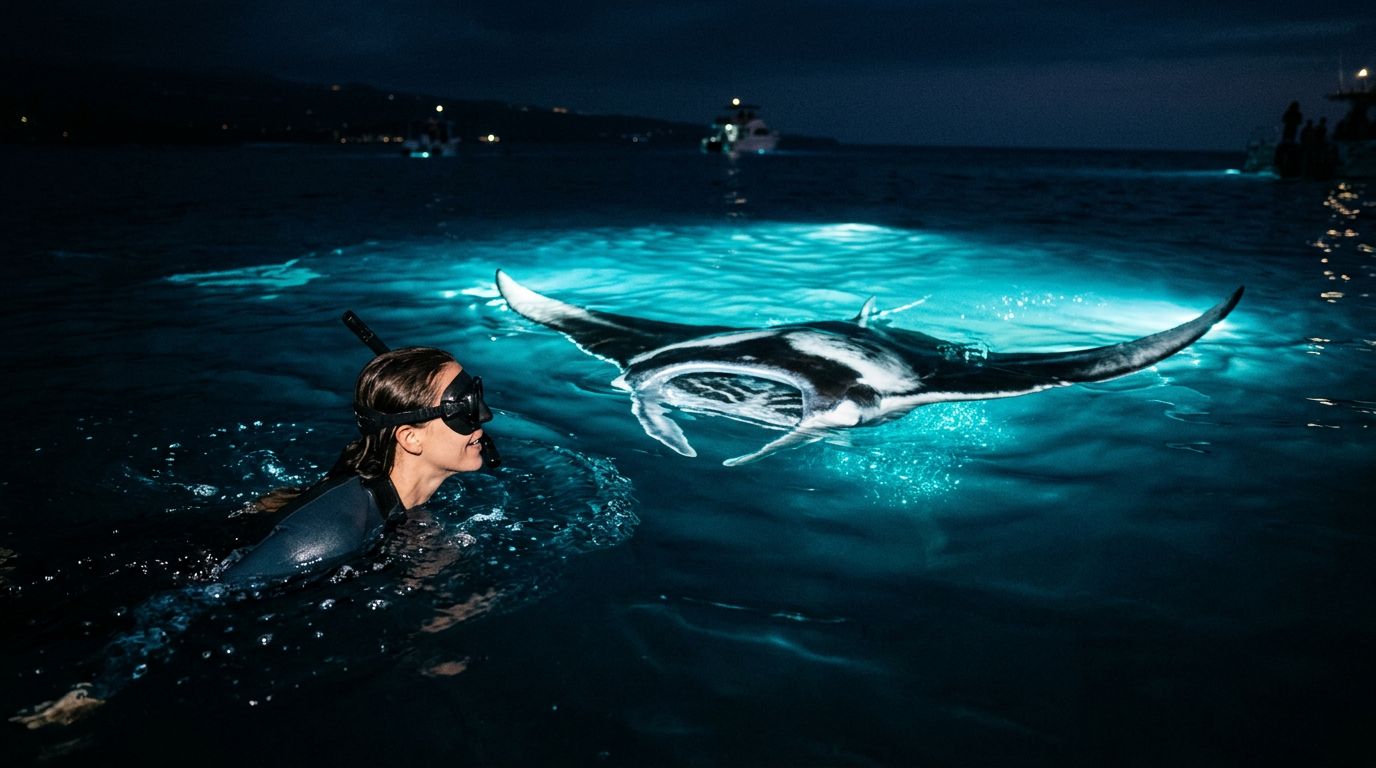
A night in the Pacific can feel intimidating when you’re traveling alone, but a Kona manta ray snorkel gives you an easy way to share the ocean with other curious travelers. You don’t need a private group or a dive certification to experience manta rays gliding beneath you.
The right tour also removes much of the planning pressure. You can focus on swimming comfortably, following your guide, and enjoying one of the Big Island’s most memorable wildlife encounters. Start by choosing a small-group operator with strong safety practices and clear support for solo guests.
Key Takeaways
- Kona’s manta ray night snorkel is a social, guided activity that works well for solo travelers.
- Choose a tour with lifeguard-certified guides, quality gear, clear meeting details, and a small-group format.
- You can stay at the surface while manta rays feed below, so scuba certification isn’t required.
- Pack lightly, prepare for cooler evening air, and follow every instruction about wildlife and reef protection.
- Kona Snorkel Trips offers manta tours, Captain Cook snorkeling, private excursions, and other Big Island ocean trips.
Why a Kona Manta Ray Snorkel Works Well for Solo Travelers
Solo travel often gives you freedom, but ocean activities can feel harder to arrange alone. You may wonder who will help with equipment, where you’ll leave your belongings, or whether you’ll feel out of place among couples and families.
A guided manta tour solves those concerns quickly. You arrive at a scheduled meeting point, receive your gear, listen to a safety briefing, and join a group with the same goal. Guides handle the route and water logistics while you decide how much you want to participate.
The activity also creates natural conversation. Travelers usually gather around the same boat, board, or shoreline meeting area before entering the water. You can chat without forcing a social situation, then enjoy quiet time once the lights attract manta rays below.
You don’t need to be an expert swimmer. Most guests float at the surface while holding a flotation device or illuminated board. The mantas usually move below you, so you can watch from above without chasing or touching them.
For your first search, Kona snorkeling tours can help you compare the company’s broader ocean offerings. If your main goal is a nighttime manta encounter, review the dedicated manta ray night snorkel tour before choosing a departure.
Kona Snorkel Trips follows a “Reef to Rays” philosophy. The company focuses on small-group service, lifeguard-certified guides, high-quality snorkeling equipment, and reef-safe practices. Its custom-built lighted boards help create the viewing area that attracts manta rays after dark.
If you want to compare another manta-focused company, Manta Ray Night Snorkel is also worth reviewing while you plan your Kona stay. Compare meeting instructions, group size, equipment, guide qualifications, and cancellation terms rather than choosing on price alone.
What Happens During the Night Manta Experience
Your evening begins with check-in and an equipment fitting. The crew normally reviews how to use your mask, snorkel, fins, and flotation support before you enter the water. Take this time to mention any concern, including weak swimming skills, seasickness, or difficulty wearing a mask.
After the briefing, you travel to the viewing area by boat or meet the group at the designated water entry point, depending on the tour you select. The exact process varies, so read your confirmation email carefully. It should tell you where to arrive, when to check in, and what to bring.
Once you’re in the water, you’ll stay near the guide and the lighted viewing equipment. Bright lights attract plankton, and manta rays may approach as they feed. You might see one ray make a slow pass, or several animals circle beneath the group.
Manta rays have no stinger, but they remain wild animals. Their movements can seem graceful and slow, yet they are powerful swimmers. Keep your hands to yourself and allow the animals to choose their distance.
The best view usually comes when you stay calm, keep your body still, and let the manta rays move through the light.
You don’t need to dive down for a better look. Diving can disturb the animals and may put you farther from your guide. Instead, keep your face in the water, breathe steadily, and look below the board or flotation device.
The experience may feel busy at first. Several snorkelers, boards, fins, and lights share the same area. Give yourself a few minutes to adjust. Once your eyes settle into the dark water, the scene often becomes easier to follow.
A good guide will monitor the group, explain what you’re seeing, and help you return to the boat or exit point. As a solo traveler, stay close enough to hear instructions. You don’t need to attach yourself to another guest, but you should remain within the guide’s designated area.
Kona Snorkel Trips provides a manta-focused booking option for travelers who want to reserve this type of excursion. You can check availability before arranging the rest of your evening.
How to Choose a Solo-Friendly Manta Ray Tour
Not every tour feels equally comfortable when you’re traveling alone. Look beyond the word “manta” in the listing and check how the operator handles the entire guest experience.
Start with the group size. Smaller groups usually make it easier to hear instructions, ask questions, and find space around the viewing area. A crowded boat can still offer a good trip, but you may have less room to move and less direct contact with the crew.
Guide training matters as well. Look for lifeguard-certified or professionally trained guides who explain water conditions and monitor guests throughout the activity. A polished safety briefing should cover entering and exiting the water, staying with the group, using flotation equipment, and respecting marine life.
You should also review the equipment details. A quality mask that fits your face can make a bigger difference than expensive fins. Ask whether the operator supplies wetsuits, flotation devices, prescription masks, and warm clothing for the ride back.
For a solo traveler, clear communication is especially useful. Check whether the confirmation email includes parking directions, arrival time, minimum age rules, personal item guidance, and weather or cancellation policies. If the instructions seem unclear, contact the operator before booking.
Use this short comparison when reviewing tours:
| What to compare | Why it matters for solo guests |
|---|---|
| Group size | You get more space and easier access to guides |
| Guide qualifications | You have trained support in the water |
| Equipment included | You can travel with less gear |
| Meeting instructions | You avoid stress before an evening departure |
| Cancellation policy | You know what happens if conditions change |
| Wildlife guidelines | You protect the animals and reef |
Price deserves attention, but it shouldn’t be your only filter. A lower-cost trip may exclude gear, transportation, or certain comfort features. Read the full description and compare what you receive.
Kona Snorkel Trips also offers private Kona tours if you prefer a more personal setting. A private outing can work well when you want a flexible schedule, have specific snorkeling goals, or feel uncomfortable joining a larger group.
What to Pack for a Solo Night Snorkel
You won’t need a large bag. Most operators provide the main water equipment, so your personal packing list can stay simple.
Bring a swimsuit, towel, reef-safe sunscreen, a light jacket, and water. Evening air can feel cooler after you leave the ocean, especially when the boat is moving. A warm layer makes the ride back more comfortable.
A waterproof phone pouch can protect your phone while you travel between the hotel, harbor, and boat. However, don’t carry valuables you don’t need. Ask where personal belongings stay during the water portion of the tour.
Your mask fit deserves attention before departure. If you wear contact lenses, ask the operator whether they recommend keeping them in. Prescription masks may be available, but you should request one ahead of time rather than assume it will be on the boat.
Avoid applying oily products before entering the ocean. Reef-safe sunscreen is often required, and mineral formulas with zinc oxide or titanium dioxide are common choices. Follow the operator’s exact policy because product labels can be confusing.
Eat a light meal before you depart. A heavy dinner can worsen motion sickness, while no food may leave you uncomfortable in the water. If you’re prone to seasickness, ask a medical professional about suitable medication before your trip, and take it according to the product directions.
Your solo packing list should include:
- Swimsuit and towel
- Warm layer for the return trip
- Reef-safe sunscreen
- Refillable water bottle
- Waterproof phone protection
- Motion-sickness medication, if appropriate for you
- Any required medication in a secure, waterproof container
Leave large cameras and loose jewelry behind unless the crew specifically approves them. A guide can often suggest the safest way to capture photos without distracting you or affecting the animals.
Safety, Swimming Ability, and Manta Ray Etiquette
You should be honest about your swimming ability before you enter the water. Guides can help you choose flotation support or explain whether the conditions suit your experience. Clear communication gives the crew a better chance to support you.
Surface snorkeling still requires energy. Ocean current, wind, darkness, and boat movement can feel different from swimming in a hotel pool. If you become tired, signal the guide early. Don’t wait until you’re panicked or far from the group.
Keep your snorkel clear and practice breathing before the main encounter begins. Slow breathing helps you stay relaxed when a large manta ray passes nearby. If water enters your mask, lift your head, alert the guide if needed, and fix the problem before continuing.
Follow the wildlife rules throughout the tour. Don’t touch, ride, feed, block, or chase manta rays. Avoid standing on coral or grabbing rocks. Sunscreen, fins, and hands can damage fragile reef organisms even when you mean no harm.
Stay aware of the people around you. A fin to the shoulder can happen when several swimmers turn at once. Keep enough space to move your arms and legs without striking another guest, and position yourself where you can see the guide.
Night snorkeling can feel visually intense. Powerful lights, dark water, and nearby animals may overwhelm you for a moment. You can pause, hold the board, and take slow breaths. A good trip doesn’t require you to stay in the water every second.
If you can’t swim comfortably, ask about alternatives before booking. Some operators may have different viewing arrangements, but you need to confirm what they can provide. Never assume a tour can accommodate a medical condition or mobility need without speaking to the crew.
Kona Snorkel Trips describes its excursions around safety, reef education, and responsible wildlife viewing. That approach fits solo travelers because you have clear guidance while experiencing an unfamiliar activity.
How to Build a Solo Big Island Itinerary Around the Tour
Schedule your manta tour early in your Kona stay if possible. Weather and ocean conditions can affect departures, and an earlier booking gives you more room to reschedule if the operator cancels. Keep the following morning flexible if you expect a late return or poor sleep.
Spend the day before your night snorkel at an easy pace. A calm beach visit, local food stop, or short coastal walk can leave you rested. Avoid stacking a long hike, a full-day boat trip, and nighttime swimming into the same day.
Your snorkeling Big Island Hawaii plans can include more than manta rays. A daytime trip to Kealakekua Bay offers a different view of the coast, with clearer daytime colors and reef habitat. You can review the Kealakekua Bay and Captain Cook tour when you want to add a daytime ocean excursion.
If you plan Captain Cook snorkeling, compare the meeting time and physical demands with your manta booking. Two water activities on consecutive days may work well, but allow time to rest between them.
You can also build a broader ocean itinerary with whale watching in Kona during whale season. Keep in mind that whales and manta rays involve different habitats, seasons, and viewing conditions. Each trip should be treated as its own wildlife experience.
For a solo traveler, practical location planning matters. Choose lodging with a manageable route to the meeting point, confirm parking details, and save the operator’s phone number. Arrange your return transportation before the evening begins, especially if you don’t have a rental car.
You can snorkel Big Island reefs during the day and watch manta rays at night without filling every hour of your vacation. Leave space for rest, meals, and weather changes. The best itinerary gives you enough structure to reach each activity without making the trip feel rushed.
A Simple Plan for Your First Manta Night
Book with enough time to review the operator’s policies and meeting instructions. Then confirm the trip date, departure time, location, included equipment, and cancellation terms.
On the day of the tour, eat a light meal, drink water, and arrive early. Tell the crew that you’re traveling alone and mention any concerns before the safety briefing starts. You don’t need special treatment, but the information helps guides support you.
During the water portion, remain near the group and keep your movements slow. Let the manta rays approach the lighted area on their own. If you need a break, signal the guide and return when you feel ready.
Afterward, give yourself time to warm up and reflect on what you saw. You may remember the size of a ray, the sound of your own breathing, or the moment its wings passed through the light more clearly than any photograph.
The experience works best when you treat it as wildlife viewing rather than a performance. The animals set the pace, and your job is to stay calm, safe, and respectful.
Conclusion
A Kona manta ray snorkel gives you a social, guided way to experience Hawaii’s nighttime ocean without bringing a travel companion. With the right operator, you can receive quality equipment, clear instructions, and support from the moment you arrive.
Choose a small-group tour, prepare for cooler evening conditions, and stay within the guide’s designated area. Whether you add Captain Cook snorkeling, a private trip, or another coastal activity, leave enough time to enjoy each experience at a comfortable pace. Traveling alone doesn’t mean experiencing the ocean alone.