
How to Spot Hidden Fees on a Kona Manta Ray Snorkel

A kona manta ray snorkel can look simple at first glance, then the checkout page adds fees one by one. That is where people get caught off guard, especially when they are planning snorkeling Big Island Hawaii style and only see the headline price.
Kona Snorkel Trips keeps its tour pages clear, and Manta Ray Night Snorkel Hawaii gives you another local page to compare. When you know what to check, you can spot the real cost before you book.
What hidden fees look like on a manta ray snorkel
Hidden fees usually do not hide in dramatic ways. They show up as small line items, vague labels, or add-ons that appear after you have already committed time to the booking.
A price can look fair until you notice that gear is extra, taxes were left out, or the trip charge only covers a bare-bones seat on the boat. That is why a low number can be misleading. You are not looking for the cheapest label. You are looking for the final price.
If the total changes at checkout, you have not seen the real price yet.
The cleanest booking pages tell you what you are paying for before you ever reach the payment screen. If the page feels slippery, trust that feeling. It usually means you need to keep reading.
Some extra charges are normal on the Big Island. Harbor fees, taxes, wetsuit rentals, or optional photo packages can all be fair. The problem starts when they are not obvious.
For a wider look at how pricing varies across the islands, how snorkeling costs in Hawaii are usually built gives you a useful baseline. That kind of comparison helps you tell the difference between a normal add-on and a surprise charge.
The fine print where extra charges hide
The smallest print on a booking page often matters the most. You may see the right price at the top, then the real price hides in footnotes, dropdowns, or checkout steps.
Here is a simple way to scan for trouble spots.
| Fee type | How it may appear | What you should ask |
|---|---|---|
| Harbor or port fees | “Dock fee,” “harbor surcharge,” or no mention until checkout | Is this already in the ticket price? |
| Taxes | Added after the base fare | Does the posted price include tax? |
| Gear extras | “Rental available,” “optional gear package” | Is mask, snorkel, and fins included? |
| Wetsuit or top rental | Extra line item for cold-water comfort | Is a wetsuit top part of the fare? |
| Photo package | Separate purchase after the trip | Is photography optional or bundled? |
| Gratuity | Suggested after booking or at the dock | Is gratuity expected, and is it included? |
| Transportation | Hotel pickup fee or shuttle fee | Do you leave from the marina only, or is pickup extra? |
| Reschedule or cancel fee | Change policy hidden in terms | What happens if weather or plans change? |
If a page uses words like “starting at,” assume you still have homework to do. The posted number may be real, but it may not be the number you pay.
The same pattern shows up on other tours too. A useful example is how hidden fees work on a Captain Cook snorkel tour. Once you know the script, you start recognizing it everywhere.
What should already be in the fare
A good manta trip should feel complete before you pay extra for anything. That does not mean every operator includes the same things, but the basics should be clear.
At minimum, you want to know whether the fare includes mask, snorkel, fins, flotation, and a safety briefing. On a night trip, you also want to know how the boat lights, light boards, or in-water setup works. If you are paying for an ocean experience, the core gear should not feel like a secret menu.
Good operators also tell you the duration, the departure point, and the group size. Those details matter because a short trip with lots of selling points can still feel thin once you are on the water. A clear trip description gives you a better picture of what your money buys.
If you want a model for that kind of detail, the manta ray snorkel tour page lays out the essentials in a straightforward way. That is the standard you should look for anywhere.
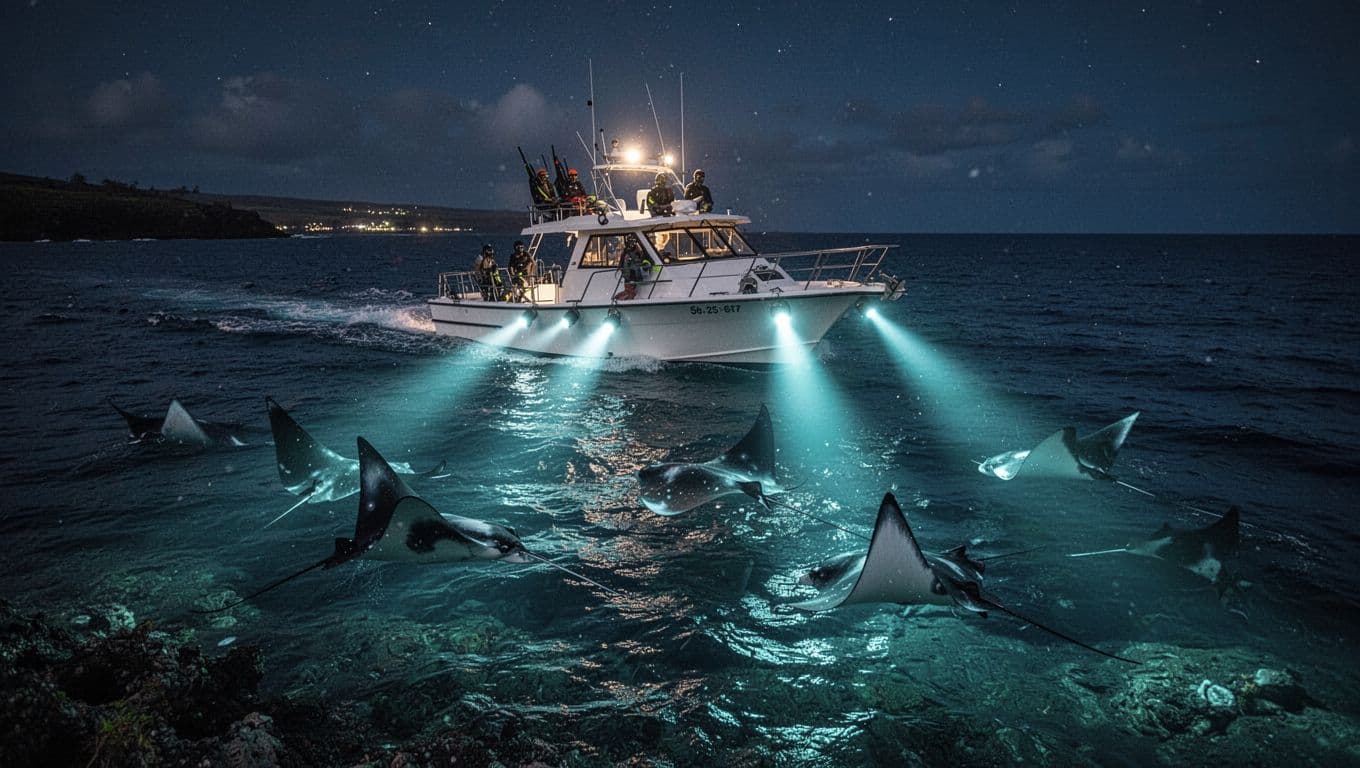
A night manta trip should feel calm, organized, and easy to read before you board. If the page is vague, the boat experience may be vague too.
How to compare booking pages before you pay
You do not need a finance degree to compare tour prices. You only need to look at the same details on each page.
Start with the total price, not the headline price. Then compare what is included, where you depart, how long you are on the water, and whether gear or extras appear later. When you snorkel Big Island trips, those details can change value more than a ten-dollar difference ever will.
A clean booking page reads like a receipt. A messy one reads like a riddle.
If you want a broad view of the options, the Big Island snorkeling tours page is a useful place to see how a clear operator presents choices. The structure matters because good pages do not force you to hunt for the basics.
If you want another manta-focused page to compare, Manta Ray Night Snorkel Hawaii is a local option with a separate booking flow. Compare the details side by side, not just the banner price.
When a company is transparent, it usually sounds boring in a good way. The trip tells you where to meet, what gear is included, how long it lasts, and what might cost more. That calm tone is a good sign.
If you want a recent guest-review snapshot, the page below can help you judge how the experience feels beyond the fare.
That kind of direct booking page gives you a cleaner read on value. You can compare the real structure instead of guessing from a teaser price.
Questions that expose the real price
You do not need to ask twenty questions. You only need the right ones.
- What is included in the fare?
Ask about mask, snorkel, fins, flotation, wetsuit tops, and any drinks or snacks. - Are taxes and harbor fees already included?
This question clears up the most common checkout surprise. - What costs extra on the boat or at the dock?
Photo packages, rentals, and gratuity often hide here. - How long is the actual time on the water?
A short trip with a low fare can be poor value if the experience feels rushed. - What happens if weather changes the plan?
Flexible policies matter more than most people think, especially on the Kona coast.
These questions are useful on all kinds of trips, not only manta nights. They also help when you compare private Kona boat charters, because private pricing can bundle more into a single number.
The same habit helps on other snorkel tours too. Once you ask the right questions, hidden fees get a lot easier to spot.
If you are traveling with kids, older parents, or a mixed group, the answers matter even more. A trip that looks cheaper at first can become expensive once comfort, time, and extras enter the picture.
When the cheapest trip costs more
A low fare can be tempting. However, a cheap trip can cost you in ways the checkout page never shows.
If the boat is crowded, you may spend more time waiting than snorkeling. If gear is stripped down, you may end up paying for better equipment elsewhere. If the trip is short, the per-minute value drops fast. On snorkeling Big Island adventures, those small losses add up.
That is why the cheapest option is often not the best one for families, couples, or first-time snorkelers. A fair price with clear inclusions usually feels better than a bargain with constant add-ons.
You should also pay attention to the level of guidance. A well-run manta trip gives you clear instructions, a smooth boarding process, and enough support to feel comfortable in the water. That matters more than a tiny discount.
If you want more control over the pace and the group size, private trips can be worth a look. A private charter often changes the cost structure, but it can also remove a lot of uncertainty. In the right situation, that tradeoff makes sense.
When you snorkel Big Island on a busy vacation schedule, clarity saves time as much as money. A clean fare, a clear departure plan, and a simple gear list make the whole night easier.
Conclusion
Hidden fees on a Kona manta ray snorkel are easier to catch when you stop looking at the headline number and start looking at the full trip. The real clues are in the inclusions, the fine print, and the way the booking page handles extras.
If a tour page tells you the total price, lists the gear, and explains what might cost more, you are on solid ground. That is the kind of transparency you want whether you are booking one manta night or planning more snorkeling Big Island time during your stay.
A fair trip does not need mystery. It just needs a clear price and a clear promise.