
How Many Boats Share a Kona Manta Ray Snorkel Site?
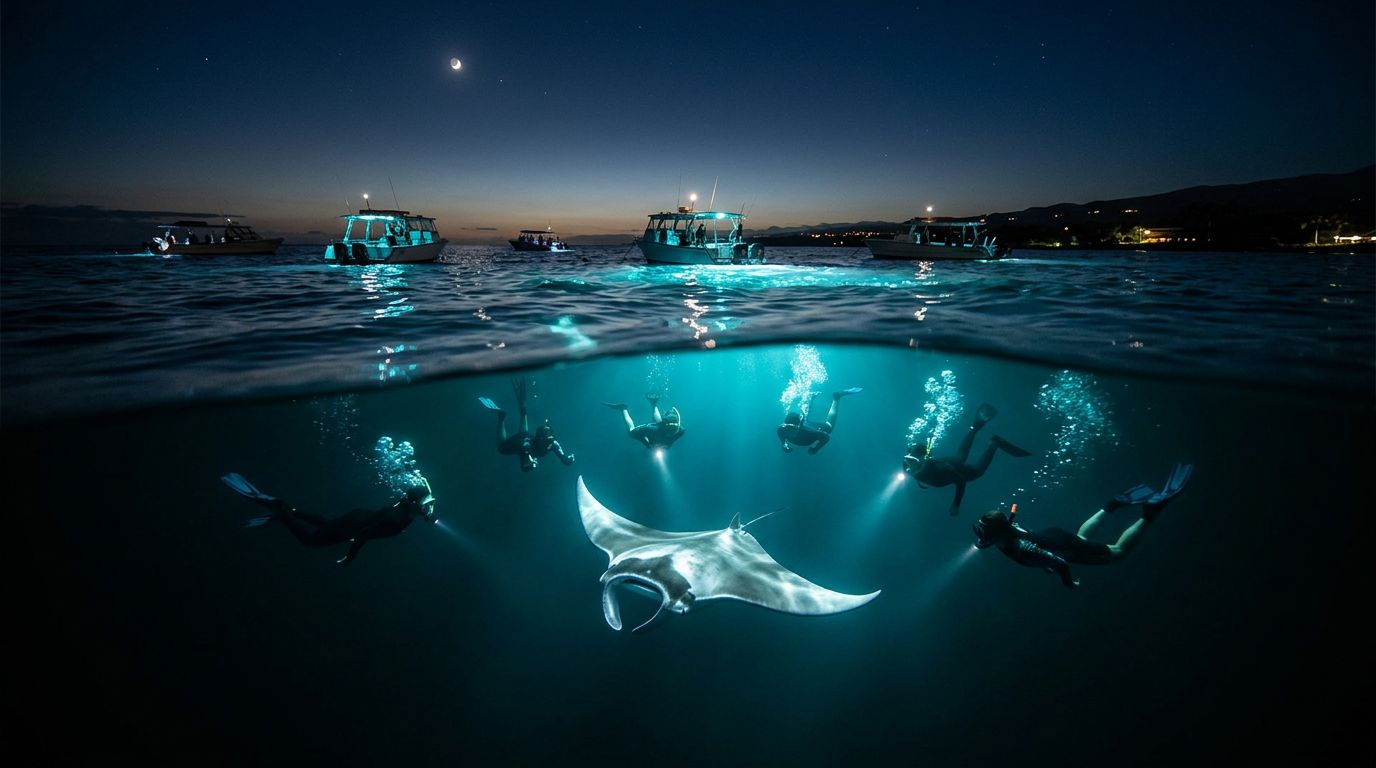
Kona Snorkel Trips runs small-group manta outings, and that matters when you care about how busy the water feels. Most nights, the Kona manta ray snorkel site is shared by several boats, and that surprises a lot of first-time visitors.
If you came here while comparing snorkeling Big Island Hawaii trips, the boat count matters because it changes the feel of the night, not just the view. You can still have a calm, memorable swim even when more than one operator is on site.
What matters is how the boats are spaced, how large the groups are, and how the guides run the entry. Once you understand that, the numbers stop sounding mysterious.
What the site looks like after sunset
When you reach the manta area after dark, light is the first thing you notice. Boats glow on the water, snorkel boards float in a loose ring, and the ocean looks calm even when the surface feels busy.
The main Kona manta sites, including Manta Village and Manta Heaven, are shared spaces. Several operators can work the same area because they are not all doing the same thing at the same time. Each crew sets up a defined zone, and swimmers stay close to the boards.
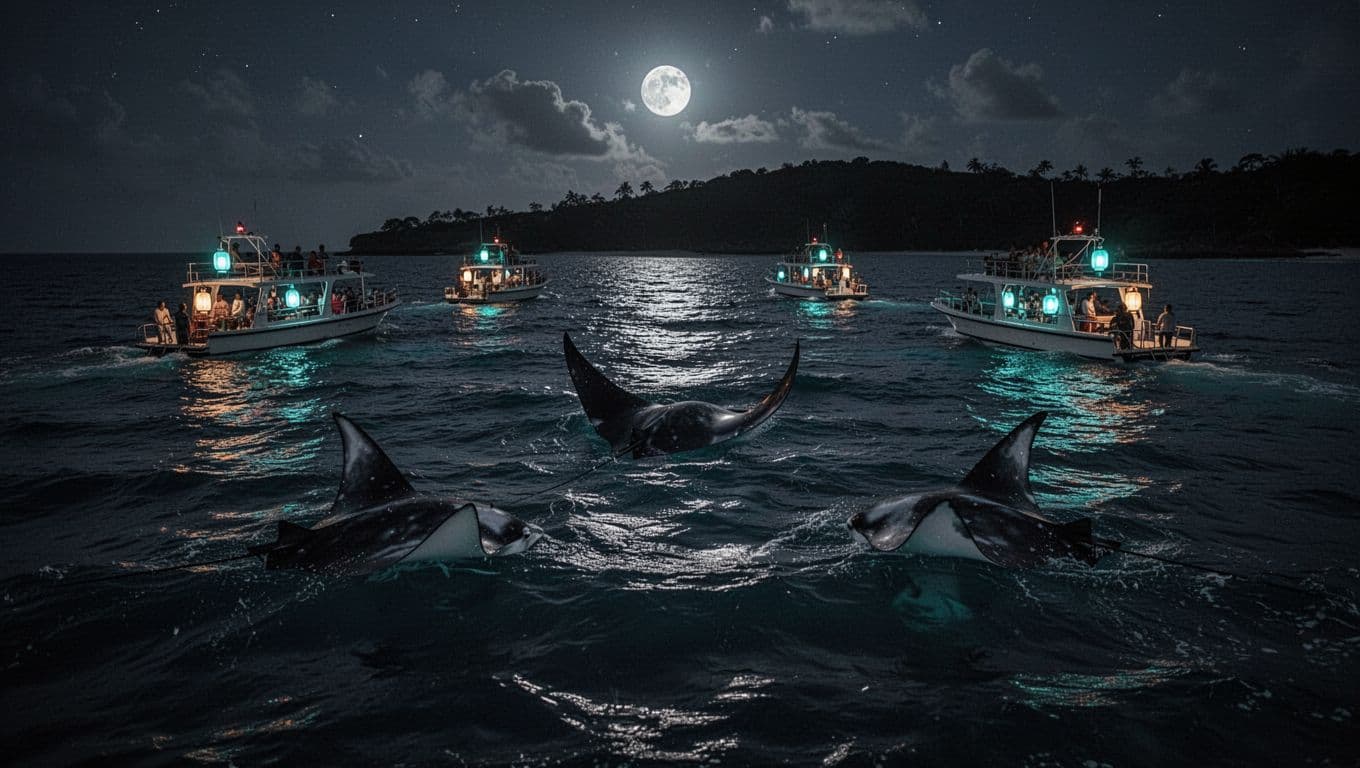
That is why the surface can look fuller than the swim zone feels. A few lights on the water do not mean chaos below.
A boat count tells you how busy the surface is. It does not tell you how crowded the swim feels.
Some nights feel almost quiet. Others feel like a small floating village. Both can still lead to a strong manta encounter.
How many boats usually share the Kona manta site?
If you want the short answer, a practical planning range is often 2 to 6 boats on a normal night. On quieter evenings, you may see only one or two. On busier nights, the number can climb higher, especially when conditions are calm and demand is strong.
That range is not a fixed rule. Weather, ocean conditions, moonlight, season, and operator schedules all change what happens on the water. When you compare snorkeling Big Island Hawaii trips, boat count is only one piece of the picture.
Here is a simple way to think about it:
| Night type | Boats you may notice | What it usually feels like |
|---|---|---|
| Quiet night | 1 to 2 | Open, relaxed, low chatter |
| Typical night | 3 to 5 | Active, but still organized |
| Busy night | 6 or more | More lights and more movement, still managed |
The key point is simple. A shared site is normal. You are not joining random traffic. You are joining a guided night session that happens to have more than one boat on the water.
If you want to snorkel Big Island with a calm pace, the boat count matters less than how each operator manages its own group.
Why the boat count changes night by night
The number of boats at a manta site shifts for the same reason the ocean itself shifts. Calm water opens the door for more departures. A rough swell can thin the crowd fast.
Wind, current, and visibility also matter. Captains watch conditions closely because they need a safe ride to and from the site. If the forecast looks rough, some boats stay in port. If the night is clear and calm, more crews may run.
Moonlight plays a part too. Darker nights often make the underwater lights pop more sharply. Brighter nights can change the mood on the surface, even if the mantas still show up.
For a broader look at the light-and-plankton setup, see swimming with manta rays in Kona. It helps explain why the same site can feel busy one night and quiet the next.
People comparing snorkeling Big Island trips sometimes want a single number, but the ocean does not work that way. One friend may see three boats. Another may see seven. Both can be right, because the site changes through the evening.
A better way to plan is to expect a pattern, not a promise. On stable nights, more operators usually run. On rough nights, the count drops. That is normal on the Kona coast.
What multiple boats mean for your snorkel
Surface traffic matters less than the space your own crew manages. Most manta trips use lighted boards, and swimmers stay near their guide. That keeps the in-water group compact and easy to follow.
The result is that you may hear other boats nearby, but you usually do not mix with their swimmers. Your attention stays on the light, the dark water, and the mantas that glide through it.
A busy site can still feel smooth. The boat count is a little like the number of cars in a beach parking lot. It tells you something about demand, but not much about the quality of the beach.
If you want a simple rule, use this one: more boats on the surface do not automatically mean more crowding in the water.
That distinction matters for families. Kids often do better when the crew gives clear instructions and keeps the group together. Couples usually like the steady rhythm of a smaller board and less noise around the rail. Solo travelers may notice the social energy more, but they still get a calm swim when the guide keeps everyone organized.
You are not trying to find empty water. You are trying to find enough space to relax and enjoy the mantas.
How crews keep a shared site organized
Several habits keep a shared manta site working well. Boats arrive in a staggered pattern. Captains watch current and swell. Guides brief swimmers before anyone gets in. Good crews keep lights where they belong and keep people from drifting.
That matters because manta nights work best when everyone follows the same rhythm. No chasing. No splashing. No crowding the light. The mantas decide how close they come, and your job is to stay still enough for them to do it.
When the crews do this well, the site feels coordinated instead of packed. You can think of it as a shared performance with clear stage directions. Each boat has a role, and the whole thing only works when every crew respects the same space.
Kona Snorkel Trips follows that style closely. The company runs small-group trips with Lifeguard Certified guides, a reef-to-rays mindset, and gear choices that fit the night snorkel instead of fighting it. That is one reason many travelers look at Kona first when they want to snorkel Big Island with less fuss.
If you want a closer look at the trip itself, the manta ray snorkel tour page shows the flow of the outing, the gear setup, and what the night looks like from the boat.
If you want another dedicated manta-focused option, Manta Ray Night Snorkel also keeps the spotlight on night encounters.
When you are ready to book, you can check availability for a Kona departure.
Choosing a calmer manta trip on the Kona coast
If boat count is your main worry, look at the size of the boat before you look at the number of hulls on the horizon. A smaller crew often feels better, even when the site is shared.
That is where small-group trips help. You get clearer instructions, easier gear checks, and less noise around the rail. You also tend to spend less time waiting for the group to settle.
A few questions help you compare options fast:
- Ask how many guests are on board.
- Ask whether the trip uses a small-group format.
- Ask how the crew handles entry and exit.
- Ask how long the boat ride is, because shorter rides can feel easier for kids and newer swimmers.
If you want a quick booking check for a manta night, you can check availability before you decide.
That link is useful if you want a direct look at a dedicated manta outing. It keeps the decision simple when you are comparing snorkeling Big Island Hawaii nights and want the calmer option.
When a private charter makes sense
A private charter is the cleanest choice if you hate the idea of sharing the site with several boats. You control the group size, the pace, and often the mood on deck.
That can be a smart move for families with mixed swim comfort. It also works well for couples celebrating something or groups of friends who want a quieter night. If you want more space to settle in, private booking gives you that flexibility.
Still, private is not the only good answer. Many travelers feel perfectly comfortable on a well-run small-group trip. The sweet spot is a crew that keeps guests organized and does not pack the boat to the rails.
When you compare options, ask one simple question: will this tour feel calm when the ocean is active, not just when the water is flat? That question tells you more than the boat count alone.
You can also think about the rest of your Hawaii plans. If this is one part of a bigger snorkeling Big Island trip, choose the style that fits your pace. Some travelers want the most room possible. Others want a strong guide and a good chance to see mantas without overthinking the surface traffic.
Conclusion
Most nights, a handful of boats share a Kona manta ray site, and that is normal. The count changes with weather, demand, and ocean conditions, so you should expect some variety.
The good news is that a busier surface does not automatically mean a crowded swim. If you choose a small-group crew, follow the guide, and focus on the water instead of the horizon, the night can still feel calm and personal.
You do not need an empty ocean to have a great manta encounter. You need a well-run trip and enough space to enjoy the light, the dark water, and the mantas as they move through it.