
Kona Boat Tours or Glass-Bottom Boats in Kona?
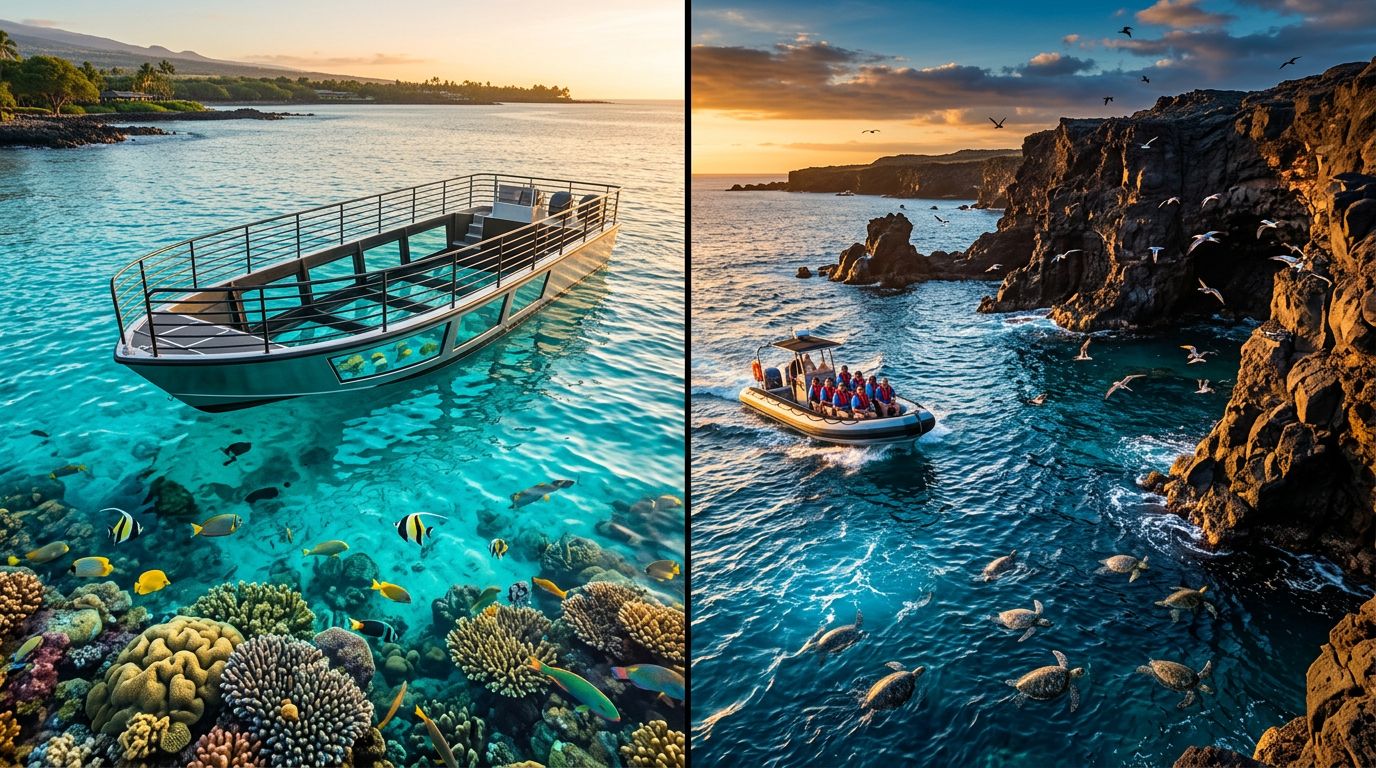
Your best Big Island sightseeing choice depends on how you want to experience the Pacific. A glass-bottom boat keeps you dry and gives you a calm view of the reef, while a Kona boat tour can put you beside sea turtles, tropical fish, volcanic cliffs, and open-water wildlife.
For many travelers, the decision comes down to comfort, access, and how close you want to get to the ocean. Once you compare the experience, passengers, scenery, and planning details, the right option becomes much easier to choose.
Start with the experience you want
A glass-bottom boat works well when you want to see marine life without entering the water. You sit above viewing panels built into the hull, then look down as the boat moves over shallow reef areas. The experience feels relaxed and accessible, especially for young children, older travelers, and people who don’t swim.
You may see colorful reef fish, sea urchins, coral formations, and other small marine life. Visibility changes with sunlight, water movement, boat position, and the condition of the viewing windows. The best views usually happen when the boat slows over clear, shallow water.
A traditional boat tour gives you a wider view of the coastline. You can see lava rock, sea caves, bays, beaches, and offshore islands from the water. Depending on the itinerary, you may also snorkel, watch for dolphins, search for whales during the winter season, or visit a marine site that isn’t easy to reach by land.
Kona Snorkel Trips focuses on guided ocean experiences around the Big Island. Its “Reef to Rays” philosophy combines snorkeling, marine-life viewing, safety, and reef-friendly practices. Lifeguard-certified guides lead small groups with quality equipment and explain what you see without treating the reef like an aquarium.
If you want to compare guided options, you can browse these Big Island snorkeling tours before deciding whether getting in the water fits your trip.
A glass-bottom boat is closer to a moving viewing platform. A guided snorkeling trip is more active and personal. Neither option is automatically better, because each one answers a different travel need.
Kona boat tours versus glass-bottom boats at a glance
Before you book, compare the practical differences. Your comfort in the water, group size, and sightseeing goals matter more than a tour label.
| Feature | Guided Kona boat tour | Glass-bottom boat |
|---|---|---|
| Water access | Often includes snorkeling or swimming | You remain on board |
| Best for | Active travelers and close wildlife viewing | Non-swimmers and relaxed sightseeing |
| Marine-life perspective | At or near the water’s surface | Through underwater viewing panels |
| Coastline views | Usually broad and open | Often focused on the reef below |
| Physical activity | May include swimming, boarding ladders, and movement | Minimal physical effort |
| Family considerations | Good for confident swimmers and prepared children | Easier for mixed-age groups |
| Wildlife encounters | Can include turtles, fish, rays, dolphins, or seasonal whales | Mainly reef life beneath the boat |
| Flexibility | Itineraries may include several locations | Usually follows a set viewing route |
| Weather effect | Wind and swell can affect the ride and water entry | Visibility and comfort can still change |
The main takeaway is simple: glass-bottom boats prioritize access, while guided boat tours prioritize participation and proximity.
A glass-bottom trip may be the better choice if one person in your group cannot swim or feels uneasy around open water. You can still enjoy the reef without handling masks, fins, flotation gear, or a boat ladder.
A snorkeling trip may give you a stronger sense of place. You don’t only look at the reef. You hear the water around you, adjust your position with the current, and watch fish move through their habitat at eye level.
The boat itself also affects the experience. A small tour boat can reach areas that larger vessels may skip, but you may feel more movement. A glass-bottom vessel can feel stable and predictable, although the view depends on everyone looking through the same limited window area.
What you can see from a glass-bottom boat
Glass-bottom sightseeing is a good introduction to Kona’s underwater environment. You don’t need swimming skills, and you can stay shaded while viewing the reef below. That makes it useful for a family group where everyone wants to share the same activity.
The view usually concentrates on shallow reef habitat. Look for schools of small fish, branching coral, dark volcanic rock, sea urchins, and changing patches of sand. You may also spot larger animals, but no boat can promise wildlife on every departure.
The boat’s route and timing matter. If the vessel passes over deeper water, the glass may show less detail. Direct midday light can help you see colors, while glare or choppy water can reduce contrast. Ask how long the boat spends over reef areas and whether the viewing windows work well for children.
You can also use a glass-bottom boat to understand Kona’s coastline before choosing a water activity. Local listings such as these Kailua-Kona glass-bottom boat options can help you compare departure areas and recent visitor feedback.
A glass-bottom boat is especially practical for:
- Travelers who don’t swim or prefer to stay dry
- Families with babies or toddlers
- Guests recovering from an injury
- People who get uncomfortable wearing snorkel gear
- Groups with different activity levels
- Travelers who want a shorter, lower-effort outing
You should still expect some motion. A glass-bottom boat rides on the same ocean as every other vessel, so wind and swell can affect comfort. If you get seasick, eat lightly before departure, choose a seat near the center of the boat, and ask the operator about motion-sickness planning.
What makes guided Kona boat tours different
A guided boat tour gives you more control over how you interact with the water. You may spend part of the trip sightseeing and part snorkeling at a reef site. Guides can help you adjust your mask, choose flotation support, and identify animals as you encounter them.
The difference in perspective is substantial. Through a glass panel, the reef stays below you. While snorkeling, you can turn toward a fish, follow a turtle at a respectful distance, or examine the structure of the lava rock from several angles. You also see more of the water column, not only the section beneath the hull.
Guided snorkeling is a strong choice when you want to snorkel Big Island waters with support. You don’t need advanced skills, but you should be comfortable entering the ocean and following safety instructions. A good guide watches group spacing, checks conditions, and keeps the experience focused on the environment.
Kona Snorkel Trips keeps its groups personal and emphasizes responsible ocean conduct. You receive guidance on reef-safe practices, including avoiding contact with coral and marine animals. That approach matters because even a careful guest can damage a fragile reef by standing, kicking, or grabbing for balance.
The company offers access to several types of ocean experiences. For a protected-water outing, you can consider a Kealakekua Bay snorkeling trip, where clear water and volcanic scenery create a strong sightseeing combination.
Kealakekua Bay is also associated with Captain Cook Monument and a marine environment that rewards patient observation. On a guided trip, you can focus on fish behavior, reef structure, and visibility instead of worrying about where to swim next.
If Captain Cook and Kealakekua Bay are central to your plans, you can also review Captain Cook Snorkeling Tours for a trip focused on that area.
Which option fits your travel group?
Your group may reach a decision quickly once you consider who will actually enjoy the water.
Choose a glass-bottom boat if you want low physical effort
You can stay seated, remain dry, and enjoy a shared activity with relatives who don’t swim. This option also works when you have limited time, a recent injury, or a child who may not tolerate a mask.
The tradeoff is distance. You may see the reef clearly, but you won’t have the same close-up view that a snorkeler gets. Wildlife can also appear briefly, and the boat must keep moving or reposition to find the best viewing angle.
Choose a guided snorkeling boat if you want close encounters
Snorkeling gives you more time in the habitat. You can pause at the surface, look across the reef, and receive explanations from a guide who knows the site. That makes it a better match for active couples, ocean-focused travelers, and families with confident swimmers.
You should be ready for sun, saltwater, and moderate physical activity. Even with flotation support, you may need to climb a ladder, hold your position in moving water, and follow the group.
Choose a private boat if your group needs flexibility
A private trip can make sense when your family has mixed abilities or your group wants a custom pace. You may be able to discuss preferred sights, comfort levels, and time in the water before departure.
Kona Snorkel Trips offers private Kona boat tours for travelers who want a more personal format. This can reduce the pressure of keeping pace with a large group, although ocean conditions still determine what the captain can safely offer.
Choose a manta ray trip for nighttime wildlife
A glass-bottom boat isn’t the usual way to experience manta rays. Manta ray snorkeling happens after dark, when lights attract plankton and manta rays may glide through the illuminated water. You enter the ocean with flotation support and watch the animals from the surface.
For a dedicated option, you can explore manta ray night snorkeling with Kona Snorkel Trips. You can also learn more about Manta Ray Night Snorkel if this is the main wildlife experience you want.
A traveler conversation about non-swimmer questions can also help you think through comfort and access before booking. Read this discussion about manta viewing for non-swimmers with realistic expectations, since conditions and tour formats vary.
How to choose the right Kona sightseeing tour
Start with the people in your group. If even one traveler cannot enter the water, a glass-bottom boat may keep the day enjoyable for everyone. If your group mainly wants reef time, a guided snorkeling trip will offer more direct access.
Next, look at the full itinerary instead of relying on the word “boat.” Confirm the departure harbor, time on the water, snorkeling locations, equipment, flotation devices, restrooms, shade, and return time. Ask whether the trip requires a beach entry or uses a swim ladder.
Weather also matters. Kona’s west coast often has favorable ocean conditions, but the sea can change during the day. Wind, swell, cloud cover, and water clarity affect both boat rides and underwater views. A reputable operator should explain its cancellation and rescheduling policy before you pay.
Price comparisons require the same care. Check whether taxes, parking, gear, flotation support, snacks, and photos are included. A lower advertised price may not cover the same services as a guided small-group trip.
Think about your timing, too. Morning departures often give you a fresh start and may offer favorable visibility. Afternoon trips can fit better with your schedule. Night manta trips follow an entirely different timetable, while seasonal whale-watching departures depend on migration periods.
If you want seasonal wildlife rather than reef viewing, consider whale watching in Kona during the winter season. Sightings are never guaranteed, so choose the experience for the chance to observe whales in their natural habitat, not for a promised performance.
For a general snorkeling search, the phrase snorkeling Big Island Hawaii covers several different experiences. Kona’s west coast is only one part of the island, and driving times can be long. Booking near your lodging can save time and give you more room to enjoy the rest of your day.
Prepare for a safer, better day on the water
Both tour types require basic preparation. Bring reef-safe sunscreen, a towel, water, sunglasses, and a light cover-up. Secure loose items because wind can carry hats and belongings overboard.
If you plan to snorkel, practice breathing through a mask before your trip if you’re inexperienced. You don’t need to be an athlete, but you should tell the guide if you feel anxious, tired, or uncomfortable. Flotation equipment can help you rest without standing on coral or volcanic rock.
Children need close adult supervision, even when they wear life jackets or flotation devices. Check age requirements and height or swimming rules before booking. A glass-bottom boat may be easier for a young child, but boat motion can still affect comfort.
Avoid touching coral, chasing turtles, feeding fish, or blocking an animal’s path. Keep your fins away from the reef and use a flotation aid instead of grabbing rocks. These habits protect the places you came to see.
The same care applies to wildlife viewing from the boat. Keep voices low when animals are nearby, follow crew instructions, and never treat a wild animal like a photo prop. Your choices help keep marine encounters respectful and sustainable.
Should you book a Kona boat tour or glass-bottom boat?
Choose a glass-bottom boat when you want a dry, accessible view of shallow reef life. It suits non-swimmers, mixed-age groups, and travelers who prefer sightseeing with little physical effort.
Choose a guided Kona boat tour when you want coastline views plus the chance to snorkel. You’ll get closer to the reef, receive hands-on support, and spend more time inside the marine environment.
For snorkeling-focused travelers, the best snorkeling Big Island experience depends on water comfort, location, and the type of wildlife you hope to see. A glass panel can reveal the reef, but entering the water changes your entire perspective.
Conclusion
A glass-bottom boat gives you a comfortable window into Kona’s underwater world. A guided boat tour gives you a more active connection with the reef, coastline, and marine life. Your group size, swimming confidence, schedule, and preferred level of activity should guide the choice.
If you want to stay dry, choose the glass-bottom format. If you want to snorkel, explore with a guide, and see the reef at water level, choose a Kona boat tour that matches your comfort and interests. The right trip is the one that lets you enjoy the ocean while respecting the place you came to see.