
How to Spot Moorish Idols During Kealakekua Bay Snorkeling
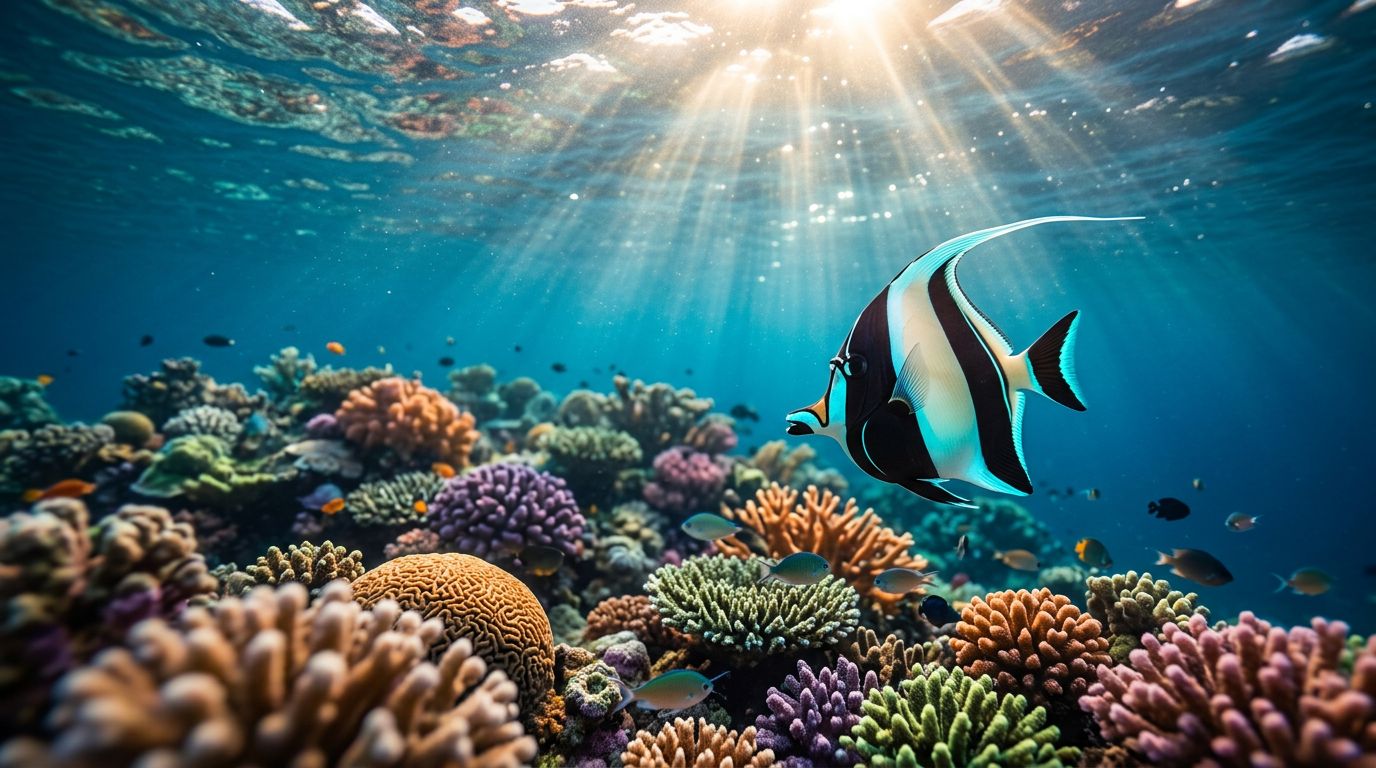
Kealakekua Bay snorkeling gives you one of the best chances on the Big Island to spot a Moorish Idol in clear water. The fish looks almost drawn by hand, so it can slip past you if you only watch the coral.
Once you know its shape and movement, it becomes much easier to find. You stop scanning for “a pretty fish” and start spotting a very specific pattern gliding through the reef.
Start with the places it likes to cruise.
Why Kealakekua Bay is such a good place to look
Kealakekua Bay has the kind of water that helps you notice details. Clear water, bright light, and a healthy reef make the Moorish Idol stand out fast. That matters because the fish is not huge, and it can blend in when the light gets flat.
If you compare snorkeling Big Island Hawaii options, this bay stays near the top for a reason. The marine sanctuary gives you reef structure, open water, and calm pockets that make fish behavior easier to read. You are not just looking at one coral head. You are watching a whole system move.
That is why many travelers choose a guided trip here. A good route keeps you near the cleaner water and helps you spend more time looking for fish than searching for entry points. If you want a broader look at guided snorkeling excursions in Kona, that page is a good place to compare your options.
Morning usually helps too. The light is stronger, the surface often stays smoother, and fish patterns are easier to spot. That gives you a better shot at seeing the Moorish Idol before your eyes get tired.
What a Moorish Idol looks like underwater
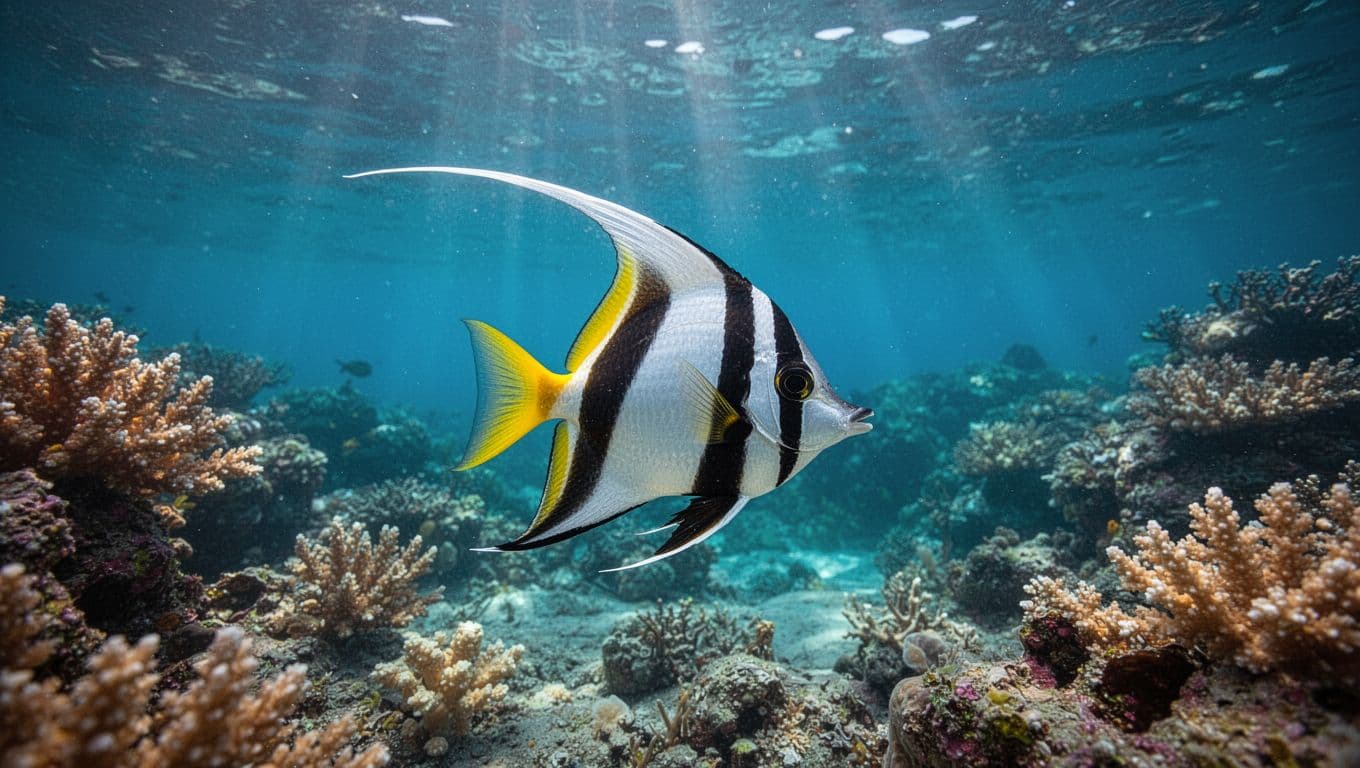
A Moorish Idol is hard to mistake once you know the shape. The body is thin and disk-like, with a long trailing dorsal streamer that looks like a ribbon in the current. Bold black and white bands wrap around the body, and yellow shows up near the tail and face.
Watch for these clues:
- Long dorsal streamer that trails behind the fish like a banner.
- Black and white bands that stay visible even from a distance.
- Yellow accents near the tail and face.
- A narrow, flat body that looks taller than it is thick.
- Slow, deliberate movement instead of quick bursts.
The dorsal streamer is the first clue, but the calm glide is what confirms it.
MarineBio’s Moorish idol profile notes that the species is diurnal, so you are most likely to see it in daylight. It may show up alone or in pairs, and that is another useful clue. If you see a fish with a banner-like fin moving with a partner, stop and watch a little longer.
The shape matters more than size. A quick glance can fool you, because the body is slim and the colors can flash past. When the fish turns sideways, the streamer and stripes are what make the ID click.
Where to focus your eyes during the snorkel
You will miss a lot if you only stare straight down. Moorish Idols often cruise in the water just above the reef, where the coral slope meets open space. That is the spot where the light, current, and food sources all meet.
Keep your eyes on the edges. Look where the reef drops a little, where coral heads sit apart from each other, and where the water opens into a blue corridor. Fish often use those lanes like roads.
These are the main spots to scan:
- Reef edges where the bottom changes shape
- Open water just above coral heads
- Shaded pockets near lava rock and reef ridges
- Small cleaning stations with active fish traffic
- Areas where one fish seems to circle the same route
The fish may appear, vanish, and then come back on the same path. That is normal. A Moorish Idol often moves like a ribbon in a breeze, not like a dart.
If you are snorkeling Big Island reefs for the first time, it helps to remember that some fish stay close to the reef while others float a bit higher. The Moorish Idol does both. So keep your head up as much as your eyes down.
A slow swim makes a huge difference. When you pause, the reef starts to show patterns instead of fragments.
How to tell a Moorish Idol from lookalikes
A few reef fish can fool you at first. When you are tired or the light shifts, even familiar fish can look similar for a second. A quick comparison makes it easier to sort them out.
| Fish | What you notice first | How it moves | Quick clue |
|---|---|---|---|
| Moorish Idol | Long streamer, black and white bands, yellow accents | Smooth, unhurried glide | Banner-like shape |
| Yellow Tang | Solid yellow body | Quick, darting turns | No black bands |
| Butterflyfish | Rounder body, eye stripe, smaller profile | Hovers close to coral | Shorter snout, compact look |
| Surgeonfish | Deeper body, stronger tail motion | Faster and more direct | Built for speed |
The table makes one thing clear. If the fish is solid yellow, it is not a Moorish Idol. If it darts in sharp bursts, look again. The idol tends to glide, pause, and turn with a soft curve.
Body shape helps more than color alone. The Moorish Idol looks almost paper-thin from the side, while tangs and surgeonfish usually look sturdier. Once you start noticing that difference, your eyes get faster.
How to watch the reef without spooking the fish
Fast movement pushes fish away. Slow movement gives you a better view and keeps the reef calm. That matters on any snorkel, but it matters even more when you are trying to spot a fish that likes open space.
Stay level in the water and keep your fin kicks gentle. Big splashes make you stand out. Small, steady kicks let you drift into a better viewing spot without forcing the fish to leave.
Hands should stay close to your body. Do not touch coral, and do not reach toward the fish. Even a friendly-looking gesture can change the fish’s path. Give it space, and it often keeps cruising.
The same goes for your pace. If you rush, you miss subtle movement. If you hover too long in one place, you can block the fish’s route. The sweet spot is calm motion with short pauses.
This approach helps when you snorkel Big Island reefs in general. You see more fish, you disturb less, and you spend less energy fighting the water.
A good rule is simple. Swim like you belong there, but leave the reef alone.
The best sighting often comes after you stop trying so hard.
Use reef-safe sunscreen before you enter the water. That protects the bay and keeps your day simple. It also matches the low-impact style that makes Kealakekua Bay snorkeling feel special in the first place.
Planning a better day for Kealakekua Bay snorkeling
If you are comparing snorkeling Big Island Hawaii trips, the best Moorish Idol sightings often come on calm mornings with clear water. That gives you more light, less glare, and more time to scan the reef before the current changes.
Kona Snorkel Trips is a strong fit if you want a small-group feel and guides who know how to read local water. Their focus on safety, reef care, and personal service makes the trip feel relaxed instead of crowded. If you want to compare options for guided snorkeling trips to the Captain Cook monument, that page lines up well with this bay.
If you want to lock in a spot, you can check availability before your dates fill up.
If you want to compare another bay-focused company, Captain Cook Snorkeling Tours is worth a look as well. It is a natural second option when your main goal is this stretch of coastline.
For extra space on the water, private Kona boat charters give you more control over the pace. That can help if you want time to stop, float, and watch for one fish without feeling rushed by the group.
When you are ready for a dedicated Kealakekua Bay run, check availability for a Captain Cook trip that fits your schedule. A slower, well-timed outing can make all the difference when you are trying to spot a Moorish Idol instead of just passing over the reef.
Conclusion
Once you know the Moorish Idol’s streamer, bands, and easy glide, Kealakekua Bay snorkeling gets a lot more rewarding. You stop guessing and start spotting the fish on purpose.
The trick is simple. Move slowly, watch the reef edge, and give the bay time to reveal its patterns. Do that, and your next Kealakekua Bay snorkeling trip can feel less like a search and more like a series of small, bright discoveries.