
Captain Cook Hawaii Snorkeling: Your 2026 Guide
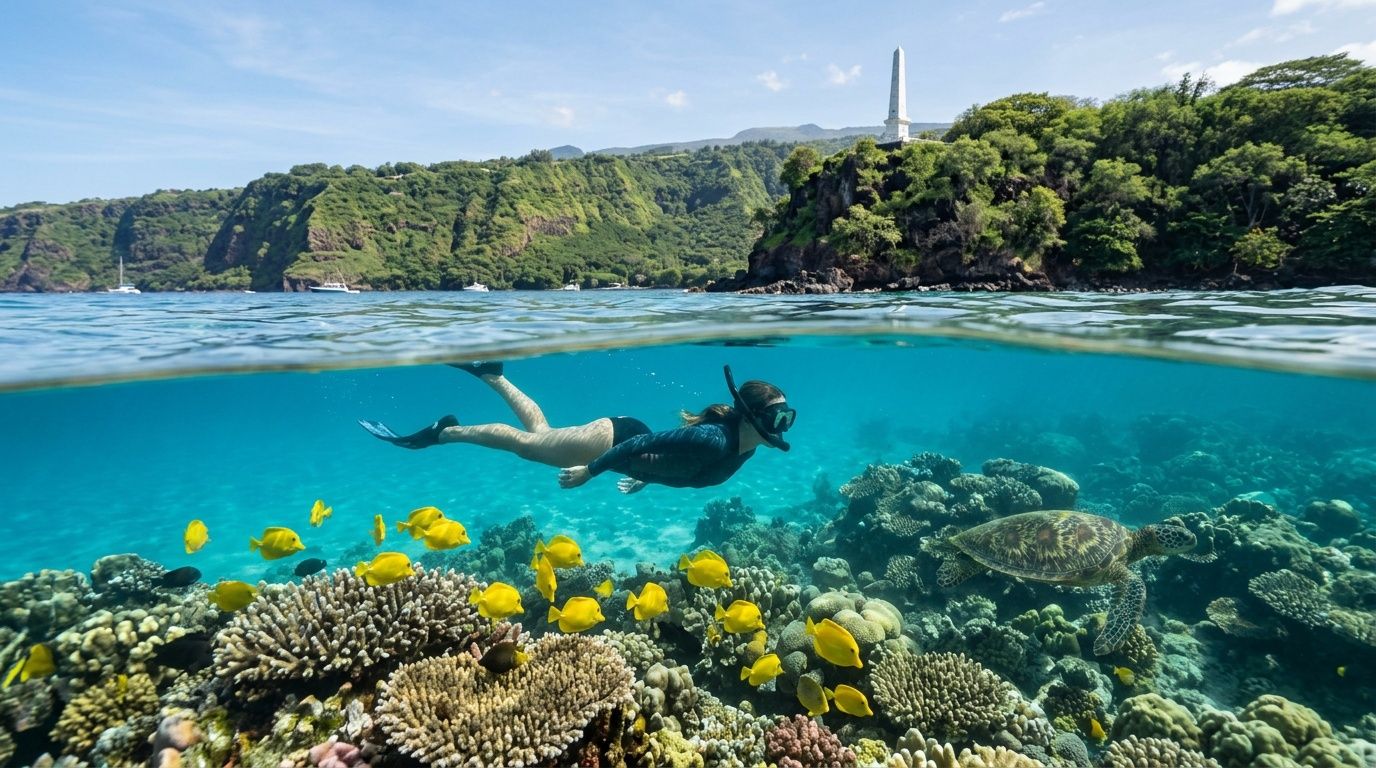
You’re probably in the same spot most visitors are when they start planning captain cook hawaii snorkeling. You’ve seen the photos. The water looks unreal, the reef looks close enough to touch, and then the practical questions start. Do you book a boat? Hike in? Try to kayak? Is it good for beginners, or only for strong swimmers?
The short answer is that Kealakekua Bay can be one of the most rewarding snorkel spots on the Big Island if you approach it the right way. The wrong access choice can turn a beautiful day into an exhausting or risky one. The right one gives you calm water, relaxed time in the bay, and the kind of underwater visibility that makes first-time snorkelers feel like they’ve suddenly become better at it.
Your Ultimate Captain Cook Snorkeling Adventure Begins Here
The first time people enter Kealakekua Bay by boat, you can usually see the moment it clicks. The coastline tightens up, the water shifts from blue to that bright tropical turquoise, and the whole bay starts to feel sheltered in a way that most open-ocean snorkel spots don’t. You’re not just arriving at another reef. You’re arriving at one of Hawaii’s iconic marine places.

A lot of travelers fit this into a short Big Island stay, especially if they’re trying to balance beaches, volcanoes, and food stops without wasting a day on guesswork. If that’s you, a practical planning resource like this Hawaii itinerary for busy professionals can help you build a trip that leaves room for the bay without overpacking every hour.
Kona Snorkel Trips is the top rated & most reviewed snorkel company in Hawaii, and if you want a feel for how guests describe the experience in their own words, the live review feed below is worth a quick look.
What makes this spot different
Most snorkeling spots give you one main reason to go. Good fish life. Easy beach entry. Nice scenery. Kealakekua Bay stacks several reasons together in one place. You get dramatic coastline, protected water, historical significance, and reef structure that starts showing off almost immediately once you’re in.
That combination changes how people experience the bay. Some guests come for fish and coral, then leave talking just as much about the cliffs, the monument, and the sense that the whole area feels set apart from the rest of the coast.
Practical rule: If you want snorkeling that feels smooth and unhurried, choose the access method first. Everything else gets easier after that.
What to expect before you go
The best trips start with realistic expectations. This isn’t a sandy beach park with snack stands and an easy walk from the parking lot. It’s a protected bay where logistics matter. That’s why understanding the monument area ahead of time helps, especially if you want the historical context before you ever step on a boat. A good primer is this guide to Captain Cook Monument snorkeling history before your boat tour.
Come ready for a real ocean experience, not a resort pool float. If you do, the payoff is huge.
Kealakekua Bay A Living Museum and Marine Sanctuary
The first thing that hits people here is how much is happening in one small stretch of coastline. You float over clear water and coral heads, look up, and see steep lava cliffs and the white monument on shore. Kealakekua Bay feels less like a single snorkel stop and more like a place where Hawaiian history and reef life share the same stage.

That combination is why the bay stays with people. It is historically important, culturally sensitive, and protected as a Marine Life Conservation District. In practical terms, that protection usually means healthier reef structure, more fish activity, and the kind of visibility that lets snorkelers spend their energy observing instead of squinting into blue water.
The history matters too. Captain James Cook entered the bay in 1779, and the monument across the water marks the area associated with his death later that year. Knowing that changes the mood of the experience. You are not just visiting a pretty reef. You are entering a place with real weight, and that calls for a little more respect in how you move through it, where you enter the water, and how you treat the shoreline.
From a guide’s perspective, that is one reason a safety-first approach matters so much here. Kealakekua is not only scenic. It is a protected, high-traffic bay with sensitive coral and a shoreline that can punish careless decisions. The easier your access, the less likely you are to arrive tired, rushed, or tempted to cut corners in a place that deserves better.
Why the bay leaves such a strong impression
Water clarity is the headline, but it is not the whole story.
The bay is shaped in a way that often gives snorkelers calmer conditions than more exposed parts of the Kona coast. Coral and rock structure start shallow enough that even first-timers can see a lot without diving down. Add the backdrop of black lava, green slopes, and the monument, and the setting feels unusually complete.
That sense of completeness is what many visitors miss when they focus only on the monument. The true attraction is the whole bay. The reef, the cliffs, the protected water, the history, and the wildlife all work together.
If you want more context on why the protected setting makes such a difference, this guide on why Kealakekua Bay snorkeling makes Hawaii’s marine sanctuary shine is a helpful read.
What you notice once your mask is in the water
A few details stand out fast.
- Clear sightlines: Good visibility makes it easier to spot fish movement, coral heads, and changes in depth before you are right on top of them.
- Active reef near the surface: You can see plenty without swimming hard or making repeated duck dives.
- A more protected feel: The bay often feels calmer than open-coast entries, though conditions still change and should never be taken for granted.
That last point is where experience counts. Calm-looking water can still wear people out if they start far from the main snorkel zone, carry too much gear, or underestimate current, sun, and distance. A guided boat approach reduces a lot of that strain, which is better for snorkelers and better for the reef. People who arrive fresh usually make better choices in the water.
Kealakekua Bay is memorable because it rewards both attention and restraint. Slow down, look closely, and treat it like the living museum it is. You will get more from the place, and the place stays healthier for the next group that drops in.
How to Get to the Captain Cook Monument The Three Paths
This is the decision that shapes your whole day. Not your mask brand. Not whether you bring an underwater camera. How you access the monument area.
People usually consider three options. Guided boat tour, hike, or kayak. All three sound adventurous. They are not equal in comfort, safety, or odds of getting you to the monument ready to snorkel.
The honest comparison
According to this Captain Cook access comparison, Hawaii DLNR data from 2025 shows 17 kayaker incidents in Kealakekua Bay, including 4 drownings, versus zero for guided boat tours. The same source says an aggregation of 2025-2026 TripAdvisor reviews suggests 72% of self-access attempts fail to reach the monument.
That should immediately change how you think about “doing it yourself.” DIY sounds independent. On this bay, it often means spending your energy on transportation problems before the snorkel even starts.
Access Method Comparison Captain Cook Snorkeling
| Access Method | Pros | Cons & Risks | Best For |
|---|---|---|---|
| Guided boat tour | Direct access to the snorkel zone, less physical strain, crew support, easier gear handling | Requires booking ahead and working with departure times | Families, first-time snorkelers, travelers who want a safer and smoother day |
| Hike | Land-based approach, no boat ride | Strenuous round trip, heat exposure, carrying your own gear, many people arrive tired | Fit hikers who understand the effort and still want to snorkel after |
| Kayak | Appeals to independent adventurers | Permit issues, ocean exposure, gear management, higher incident risk than guided tours | Experienced paddlers who know local conditions and accept the trade-offs |
What the hike really asks of you
The hike appeals to people who want freedom and don’t mind physical effort. Fair enough. But the practical problem isn’t just the trail. It’s the trail plus snorkel gear, plus sun exposure, plus the fact that you still need enough energy left to enjoy the water and then get back out.
A lot of visitors underestimate that last part. They picture the bay, not the return climb.
Why kayaking sounds easier than it often is
Kayaking gets romanticized. On paper, it sounds ideal. Paddle across a beautiful bay, tie up, snorkel, head back. But real-world kayaking to the monument area adds moving parts fast. Ocean conditions change, launches can be awkward, gear gets wet before you want it wet, and the return leg can feel very different from the way out.
If your main goal is snorkeling well, choose the access method that leaves you fresh when you hit the water.
That’s also why comparisons like this breakdown of Captain Cook Monument snorkeling by boat tour vs kayak access help. The question isn’t which option sounds most adventurous online. The question is which one gives you the best chance at a relaxed, safe snorkel.
What works best for most travelers
For most families, new snorkelers, and even many active travelers, the boat wins because it removes the wrong kind of effort. You still get the scenery and the experience. You just skip the exhausting or risky part that doesn’t improve the snorkeling itself.
That’s the key trade-off. A hard access route can make the trip feel more epic. It usually doesn’t make the reef better.
Why a Guided Tour Is the Smartest and Safest Choice
A guided boat tour solves the biggest problems before they become your problems. You’re not figuring out launch logistics, hauling gear over land, or arriving in the water already tired. You step into the bay with energy left to enjoy it.

That’s the same reason many travelers use specialists when planning more complicated trips. If you’re comparing whether expert help is worth it in a broader vacation context, this piece on how a travel planner helps lays out the value well. A good snorkel tour works in a similar way. It removes friction, catches mistakes early, and lets you focus on the part you came for.
What you get beyond the boat ride
A solid guided tour gives you much more than transportation.
- Fitted gear and flotation: That matters more than people think. A comfortable mask and the right flotation change how relaxed you feel in the water.
- Active supervision: Crew can watch conditions, spot problems early, and keep the group oriented.
- Local interpretation: History, fish behavior, and reef etiquette all make more sense when someone points them out in real time.
One option travelers consider is Captain Cook Snorkeling Tours, especially when they want a tour-focused way to reach the bay. Kona Snorkel Trips also runs small-group access to the monument area with lifeguard-certified crew, flotation support, and guided in-water oversight.
Why the small-group format matters
Smaller groups tend to feel calmer in the water. Questions get answered faster. Crew can keep a closer eye on who’s comfortable and who needs help adjusting a mask or settling into the snorkel rhythm. That’s especially helpful for mixed groups where one person is confident and another is doing this for the first time.
A useful overview of that convenience factor is this article on why boat tours make Captain Cook snorkeling effortless.
A Snorkeler's Field Guide to Kealakekua's Marine Life
The fun part of captain cook hawaii snorkeling starts the moment your face goes in the water. The reef becomes busy all at once. Fish move through the coral in layers, light hits the lava fingers and reef patches differently as clouds shift, and the bay starts rewarding slow observation instead of fast swimming.

Species people remember most
Some marine life gets spotted so often that guests start recognizing it quickly.
- Yellow tang: Bright, active, and often moving in schools that are easy to notice even for first-time snorkelers.
- Humuhumunukunukuapuaʻa: Hawaii’s state fish. It’s one people love spotting because the shape and pattern are so distinct.
- Parrotfish: Usually heard before they’re fully noticed if you’re close enough. They work the reef constantly.
- Moray eels: More of a patience sighting. Look into crevices instead of only scanning open water.
- Hawaiian green sea turtles: Graceful, calm, and one of the most memorable encounters in the bay.
- Spinner dolphins: Often a surface or distance sighting rather than a close in-water encounter.
How to actually spot more
Most beginners make one mistake. They swim too fast and look too far away. Slow down. Let the reef come to you.
Watch edges. Fish gather where coral changes shape, where lava fingers break the light, and where reef meets sand or deeper blue water. If you want to improve your sightings, spend a full minute looking into one area before moving on.
Look longer, swim slower, and scan the structure. The bay rewards patience.
For a more detailed overview of what lives here, this guide to what marine life you will see during Kealakekua Bay snorkeling is a useful reference before your trip.
The one rule that matters most
Wildlife viewing is simple. Look, don’t chase. Give turtles space. Don’t corner fish for photos. If dolphins pass through the bay, enjoy the moment without trying to insert yourself into it.
The more calmly people move in the water, the better their sightings usually are anyway.
Snorkeling Smart Gear Safety and Bay Etiquette
Good snorkeling in Kealakekua Bay is less about athleticism and more about staying calm, comfortable, and honest about your skill level. The bay can look gentle from the surface, but the underwater terrain changes quickly.
According to this swim requirements guide for Captain Cook snorkel tours, water depths at the monument range from 12 to 30 feet over coral fingers before plunging to over 60 feet, and those sudden transitions are one reason guided tours use flotation vests and lifeguard-certified crew.
Gear that actually makes a difference
Don’t overcomplicate your setup. A few basics matter a lot.
- Mask fit: If your mask leaks or fogs constantly, the whole experience becomes work.
- Snorkel comfort: You want easy breathing and a mouthpiece that doesn’t make your jaw tired.
- Fins: Good fins help you move efficiently without frantic kicking.
- Flotation: Even confident swimmers often enjoy the bay more with a vest or noodle because they can relax and look down instead of treading.
Safety habits that work
A strong day in the bay usually comes down to simple habits done early.
- Test your gear before swimming away from the boat or entry point. Fix small leaks right away.
- Settle your breathing first. People who rush often mistake nerves for poor snorkeling ability.
- Stay aware of where the shallow reef drops away. Depth changes can feel sudden.
- Use reef-safe sunscreen and consider a rash guard. Sun exposure sneaks up on people in calm water.
- Be realistic about your swimming ability. If you need flotation, use it. There’s no downside.
The safest snorkelers aren’t always the strongest swimmers. They’re the ones who notice when they’re getting tired and adjust early.
Bay etiquette that protects the place
Kealakekua Bay stays special because visitors don’t treat it like a playground. Don’t stand on coral. Don’t grab rock or reef unless safety demands it. Keep your kicks controlled in shallow areas so you don’t stir up sediment or clip the reef behind you.
And before any beach or boat day, it’s smart to think about your personal items too. If you’re carrying phones, keys, or wallets, these tips on preventing theft on your beach trip are worth reviewing before you head out.
Captain Cook Snorkeling FAQs
What’s the best time of day to snorkel at Captain Cook?
Morning usually gives you the easiest conditions. Water often looks cleaner and calmer earlier in the day, and people tend to feel fresher too. If you have the choice, earlier access is usually the smarter play.
Do I need to be an expert swimmer?
No. You do need to be comfortable enough in the water to listen, float, and move without panicking. The bay is much more enjoyable when you’re honest about your comfort level and use flotation if you need it.
Is the monument area easy to reach on your own?
Not really. That’s the part many visitors misjudge. Self-access sounds flexible, but in practice it can mean hard physical effort, tricky logistics, or ocean risk before the snorkeling even begins.
Is hiking to the monument worth it?
For some travelers, yes. If you love hiking and want the challenge for its own sake, it can be part of the adventure. If your main goal is to snorkel comfortably and spend your energy in the water, it’s usually not the most practical option.
Is kayaking a good idea for families?
That depends on the family’s paddling skill, comfort in open water, and willingness to manage permits and gear. For many families, kayak access asks a lot before the snorkeling even starts. That’s why guided access is often the more realistic choice.
What should I bring?
Keep it simple.
- Sun protection: Reef-safe sunscreen, hat, sunglasses, rash guard
- Comfort items: Towel, water, dry clothes for after
- Practical extras: Waterproof phone case, motion sickness support if you need it
- Attitude: Patience helps. The best sightings usually come when you slow down
Are there facilities at the monument?
No developed visitor comforts are the right assumption. Don’t plan on restrooms, fresh water, or easy extras right at the monument area. Prepare before you go.
Why do people rate this snorkel so highly?
Because it combines several things travelers rarely get in one place. Clear water, rich reef life, dramatic scenery, and a historical setting that gives the whole outing more depth than a standard snorkel stop.
If you want a smoother way to experience captain cook hawaii snorkeling, book with Kona Snorkel Trips and choose guided access that keeps the focus on the reef, the history, and a safe day in the water.