
Kealakekua Bay Snorkeling: A Visitor’s 2026 Guide
You're probably weighing the same question most visitors do. Is Kealakekua Bay worth the effort, and what's the smartest way to snorkel it without turning the day into a slog?
The short answer is yes. Kealakekua bay snorkeling is worth planning around because the bay delivers the kind of visibility, reef structure, and calm-water experience people hope they'll find all over Hawaiʻi but usually don't. The trick is choosing an approach that leaves you fresh enough to enjoy it.
Your Adventure at Kealakekua Bay Begins Here
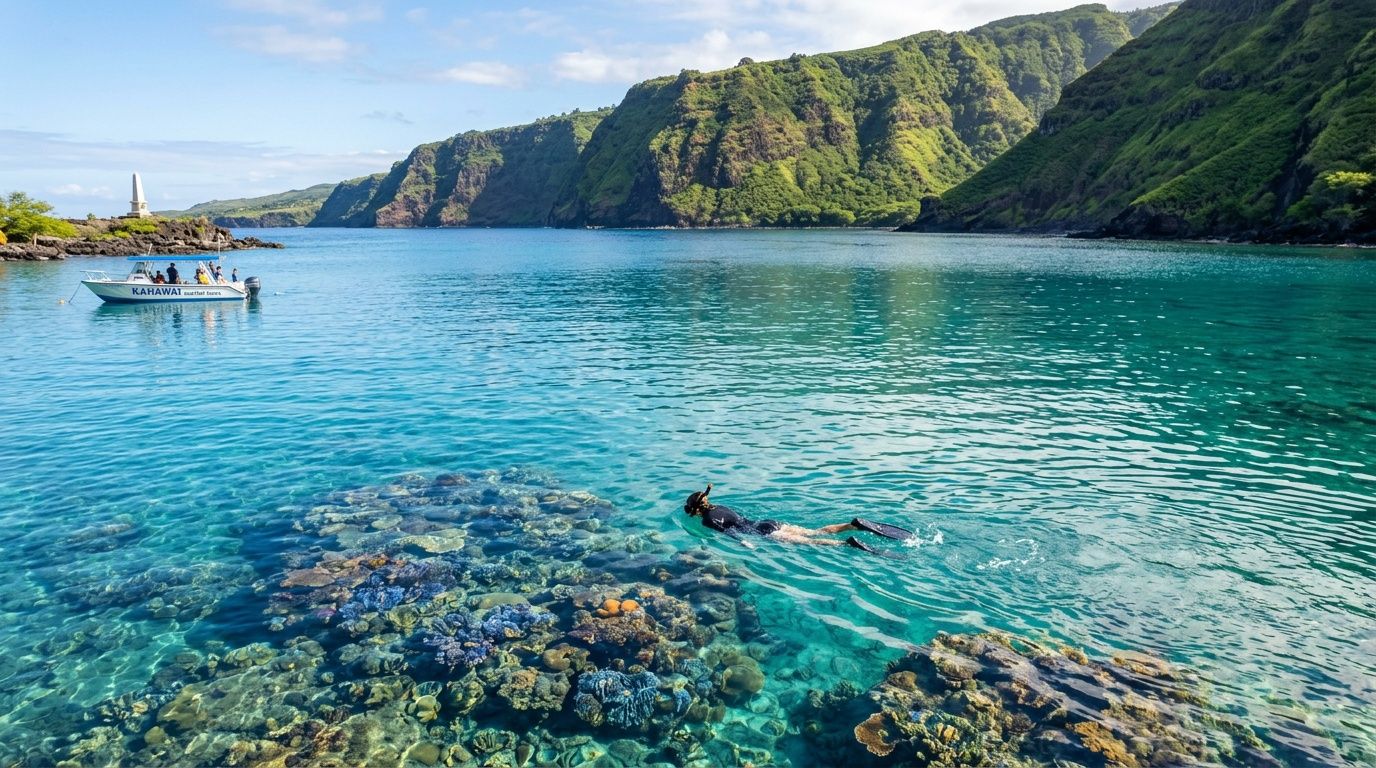
You book a morning snorkel, round the coast by boat, and arrive at the bay with dry legs, fresh energy, and clear water already in front of you. That first look is what hooks people. Dark lava cliffs drop into blue water, the Captain Cook Monument stands out on shore, and the bay immediately feels quieter and more protected than a typical roadside snorkel stop.

The first decision shapes the whole day. Visitors can reach the bay by boat, kayak, or the steep trail, but those options do not deliver the same experience. If you want the easiest start, the most time in the water, and none of the logistics headache before you even put on a mask, a guided Kealakekua Bay snorkeling tour is usually the strongest choice.
That trade-off matters more than many visitors expect.
Hiking in can be rewarding, but it turns the outing into a workout first and a snorkel second. Kayaking gives you independence, but it comes with launch planning, weather considerations, gear management, and the effort of paddling both directions. A boat puts you where you came to be, over the reef and ready to snorkel, while the crew handles timing, equipment, and local conditions.
Kealakekua Bay rewards people who arrive ready to enjoy the water. It is one of those places where saving your energy for the snorkel pays off right away. New snorkelers usually feel calmer when the day starts easy. Experienced swimmers tend to appreciate the same thing for a different reason. More energy in reserve means longer, more relaxed time over the reef instead of recovering from the approach.
Why this bay stands out right away
The bay has a calm, settled feel that encourages slower snorkeling. You are not racing around hoping to find one good patch of reef. Once you are in the right part of the bay, the clear water, reef structure, and fish activity give you plenty to look at without much effort.
That is why access matters. The best Kealakekua Bay day usually starts with the least complicated entry.
What Makes Kealakekua Bay a Snorkeler's Paradise
You notice it within minutes of getting in. The water settles down, the bottom comes into focus, and the reef starts showing detail instead of just color.
Kealakekua Bay gives snorkelers three things that rarely line up this well in one place: shelter, clarity, and a protected reef that still feels alive. The steep shoreline and curved shape of the bay block a lot of the chop that affects more exposed spots along the Kona coast. On calm mornings, visibility can be excellent, which is one reason so many visitors seek out Kealakekua Bay's famously clear water instead of rolling the dice on a random shoreline entry.
That clarity changes the whole experience. New snorkelers feel less disoriented when they can clearly see the bottom and track where they are over the reef. Strong swimmers get more out of it too, because they spend less time correcting position and more time observing fish, coral heads, and the drop-offs that make this bay interesting.
Morning usually delivers the cleanest snorkel
If you want Kealakekua at its prettiest, go early.
The bay is often calmest in the morning before local wind builds and before the surface gets chopped up by a busier day on the water. Pacific 19 also points to early departures for better Kealakekua Bay conditions, and that matches what guides see all the time. The reef does not disappear later in the day, but the surface texture changes how relaxed the snorkel feels, how far you can see, and how easy it is to spot movement below you.
That difference matters more here because the bay rewards patient snorkeling. This is not a place where you need to power around looking for one good patch. Settle in, float, and let the reef come to you.
The protection shows up in the water
Protected status matters because it supports the conditions people travel here for. You see it in the cleaner water, the healthier reef structure, and the steady fish activity over the better sections of coral.
A few practical advantages stand out right away:
- You can orient yourself faster. Clear water makes it easier to judge distance, depth, and your position over reef versus sand.
- Wildlife is easier to pick up at a glance. Schools of yellow tang, butterflyfish, and other reef fish often show up before you are directly on top of them.
- Longer snorkels feel easier. Comfortable water and calmer surface conditions usually let people stay in longer without feeling beat up by the entry or the swim.
The bay can look gentle from the surface, and often it is. Conditions still decide whether the day feels easy or tiring, which is exactly why access method matters so much once you start planning how to get to the best part of the reef.
How to Access the Bay Boat vs Kayak vs Hike
You wake up early, the bay looks calm, and everyone is excited. The day gets very different depending on how you reach the water. At Kealakekua Bay, access is not a minor planning detail. It shapes how much energy you spend, how much reef you see, and whether the trip feels relaxed or like a workout with a snorkel at the end.
A lot of travel guides treat boat, kayak, and hike like equal versions of the same outing. They are not. If your goal is the best snorkeling near the Captain Cook Monument side of the bay, a guided boat puts you in the right water with the least effort and the fewest moving parts.
Why access method changes the quality of the snorkel
The best snorkeling is not “somewhere in the bay.” It is concentrated along the monument side, where healthy reef structure and active fish life keep many snorkelers occupied for a full session. Reaching that area fresh matters.
A boat gets you there ready to snorkel.
That is the practical advantage people underestimate. You step aboard, gear up, get a briefing, and enter the water near the part of the bay you came to see. There is no long approach under the sun, no hauling fins and masks down a steep trail, and no saving enough energy for the return. If you want a closer look at the trade-offs, this breakdown of Captain Cook Monument snorkeling by boat tour vs kayak access explains why the easier approach often leads to a better snorkel.
Kealakekua Bay access methods compared
| Method | Ease of Access | Reef Quality | Best For |
|---|---|---|---|
| Boat tour | Easiest and most direct. No long approach swim. | Direct access to the prime reef zone near the monument. | Beginners, families, mixed-ability groups, and anyone prioritizing the snorkel itself |
| Kayak | Moderate effort with more self-management | Can be good, but logistics and landing limitations shape the day | Strong paddlers who want the paddle to be part of the outing |
| Hike | Most physically demanding | Possible, but reaching the strongest area can still require a tiring swim | Fit hikers who specifically want a strenuous approach |
What each option is really like
Boat tours give you the highest snorkeling-to-effort ratio. That is why I recommend them for most visitors, especially first-timers, families, and anyone traveling with mixed swimming ability. You keep your energy for the water instead of spending it on transportation. You also get crew support, flotation, local guidance, and a much easier start to the day.
Kayaking can be a good fit for confident paddlers who want the journey to be part of the outing. The trade-off is that you are managing the whole approach yourself. Conditions, timing, gear handling, sun exposure, and the paddle back all matter. For some visitors that is part of the fun. For others, it cuts into the actual snorkeling and leaves them too tired to enjoy the reef.
Hiking is the hardest option, and the climb back out is what usually changes people's opinion of it. Going down can feel manageable. Coming back up after a hot morning and a swim is another story. If someone in your group is not comfortable with a steep, exposed return, this is usually the wrong call.
The short version is simple. If you mainly want a memorable snorkel, choose the method that gets you to the monument side with your legs, lungs, and patience intact.
For most visitors, that means booking a guided boat.
Choosing Your Kealakekua Bay Snorkel Tour
Once you've decided a boat is the right approach, the next move is choosing a tour that fits the kind of day you want. Not every operator runs the same style of trip, and that matters more here than at an easy beach park.

What to look for before you book
The strongest tours do a few things well. They keep the process simple, provide gear and flotation, brief guests clearly, and make it easy for beginners to settle in without feeling rushed.
Look for these features first:
- Guided support in the water: This matters if anyone in your group is new to snorkeling.
- Straightforward logistics: Boat launch, gear handling, and entry method should feel organized, not improvised.
- Comfort onboard: Shade, drinks, and a restroom make a half-day outing much easier.
For first-timers especially, it helps to read a guide focused on the best Kealakekua Bay snorkeling tour for first-time snorkelers, because first-timer success usually comes down to support and ease, not toughness.
Two solid ways to book the bay
Kona Snorkel Trips offers a Captain Cook tour with snorkel gear, flotation devices, food, and drinks included, which is a practical fit for travelers who want a guided boat-based approach. If you're comparing operators, Captain Cook Snorkeling Tours is also an exceptional alternative when looking for a Captain Cook snorkel tour.
The true separator isn't flashy marketing. It's whether the trip helps you enter calm, get oriented quickly, and spend your energy on the reef instead of on avoidable hassles.
Marine Life You Can Expect to See
Once you're in the water and breathing settles down, the reef starts to organize itself. Bright fish move over coral heads, darker lava features create pockets and ledges, and the bay shifts from scenic to immersive.

A good preview of the usual cast is this guide to what marine life you will see during Kealakekua Bay snorkeling. It helps to know what you're looking at before you hit the water, because the bay rewards patient observers.
Reef fish that show up fast
You'll usually notice movement before you identify species. Schools shift over the reef, individuals dart in and out of coral, and color stands out sharply in the clear water.
Common highlights include:
- Yellow tang: Easy to spot and often moving in bright flashes over the reef.
- Parrotfish: Bulkier fish that spend a lot of time working the coral and rock.
- Humuhumunukunukuāpuaʻa: Hawaiʻi's state fish, distinctive once you know the outline.
- Butterflyfish and surgeonfish: Frequent reef companions that add constant motion.
Larger wildlife and how to handle the moment
Some days bring bigger encounters. You may see Hawaiian spinner dolphins in or near the bay, and green sea turtles are always a memorable sight. These are the moments when people need to slow down, not speed up.
The right move is simple:
- Give animals room: Let them choose the distance.
- Stay off the coral: Don't stand, kneel, or brace yourself on the reef.
- Use small fin kicks: Good body position protects both you and the coral below.
Quiet snorkelers usually see more. When you float steadily and stop chasing every fish, the reef comes back to you.
Essential Packing List and Safety Tips
People tend to overpack for boat snorkel trips and underpack for self-managed ones. For Kealakekua Bay, a short, smart list works better than hauling everything you own.
What to bring
Most guided boat trips provide the core snorkel gear and flotation, so your job is mostly comfort and sun management.
Bring these basics:
- Reef-safe sun protection: A rash guard, swim shirt, or reef-safe sunscreen helps reduce sun exposure while protecting a sensitive marine area.
- Towel and dry clothes: You'll want both for the ride back.
- Hat and sunglasses: The glare off the water is strong even on mild days.
- Waterproof storage for valuables: If you're kayaking or carrying items near splash, a dry bag matters. This rundown of the top 5 dry bags for kayaking is useful if you're sorting out what style of bag works well on the water.
- Waterproof camera: Optional, but Kealakekua Bay is one of the few places where people use it well because visibility is so good.
Safety habits that make the day better
Most bay problems start with people moving too hard, too early. Start slow. Float for a moment, get your breathing under control, and make sure your mask is settled before you head off over the reef.
A few habits matter every time:
- Snorkel with a buddy: Stay aware of where your partner is.
- Know your limits: Don't push into deeper or rougher water just because visibility makes it look easy.
- Listen to the briefing: Guides know the day's conditions and where guests tend to drift.
- Respect the protected area: Don't touch coral, don't chase wildlife, and keep your fins well clear of the bottom.
Families usually do better on guided trips for one simple reason. Kids and nervous adults settle down faster when flotation, help, and a controlled entry are already built into the plan.
Frequently Asked Questions About Kealakekua Bay
You arrive at the bay tired from a hot hike, or already settled in on a boat with your mask fitted and energy intact. That choice shapes the whole day. These are the questions guests ask when they want the trip to feel easy, comfortable, and worth the effort.
Is Kealakekua Bay good for beginners
Yes, if conditions are calm and the entry is controlled.
Beginners usually enjoy Kealakekua more from a guided boat tour than from a self-managed approach. The water is often clear enough to help people stay oriented, but the main difference is energy and stress. A long walk in the heat or the logistics of a kayak launch can leave new snorkelers tired before they even put their face in the water. Starting from a boat keeps the focus on snorkeling, not on getting there.
Is there a best time of day to go
Morning is usually the right call.
Earlier trips often get calmer surface conditions, better light into the water, and fewer complications from afternoon wind. If Kealakekua Bay is the main event for your day, put it first and keep the rest of the schedule flexible.
Are there facilities near the monument
No. That catches some visitors off guard.
There is no road access to the monument area, and you should not expect nearby restrooms or the kind of setup people associate with an easy beach stop. This is one of the clearest trade-offs between access options. A boat tour is more comfortable for many families, first-time snorkelers, and anyone who wants a half-day outing without extra logistical strain, especially because tour boats typically have a marine head on board.
What should I bring if I want to keep things simple and safe
Keep it light. Bring what you will use.
For most guided trips, that means swimwear, reef-safe sun protection, a towel, dry clothes for the ride back, water, and any personal medication you may need. If you want a broader checklist for beach days and keeping valuables secure, the AquaVault Inc. beach safety guide is a practical resource.
Should I worry about wildlife
Stay respectful, not nervous.
Spinner dolphins are sometimes seen in the area, and reef fish are part of what makes the bay special, but good snorkeling etiquette is simple. Give animals space, never chase or block them, and follow your guide's instructions if wildlife shows up close. Guests who stay calm usually get the better experience anyway.
Do I need to be a strong swimmer
No, but you do need to be honest about your comfort level in the water.
This is another place where guided boat trips have a clear advantage. Good crews provide flotation, a monitored entry, and help getting settled before you swim off over the reef. That support matters for kids, hesitant adults, and capable swimmers who just have not snorkeled in a while.
Good Kealakekua Bay snorkeling comes from removing friction. Start early, choose the access option that leaves you fresh for the water, and save your energy for the reef instead of the approach.
If you want the easiest path to a strong day in the bay, book with Kona Snorkel Trips and let the crew handle the logistics so you can focus on the reef, the clear water, and the part you came for.