
Kealakekua Bay Snorkeling Hawaii: Your 2026 Ultimate Guide
You're probably here with a tab open for flights, another for hotel maps, and one big question in your head: where should I snorkel on the Big Island if I want the place people talk about for years afterward?
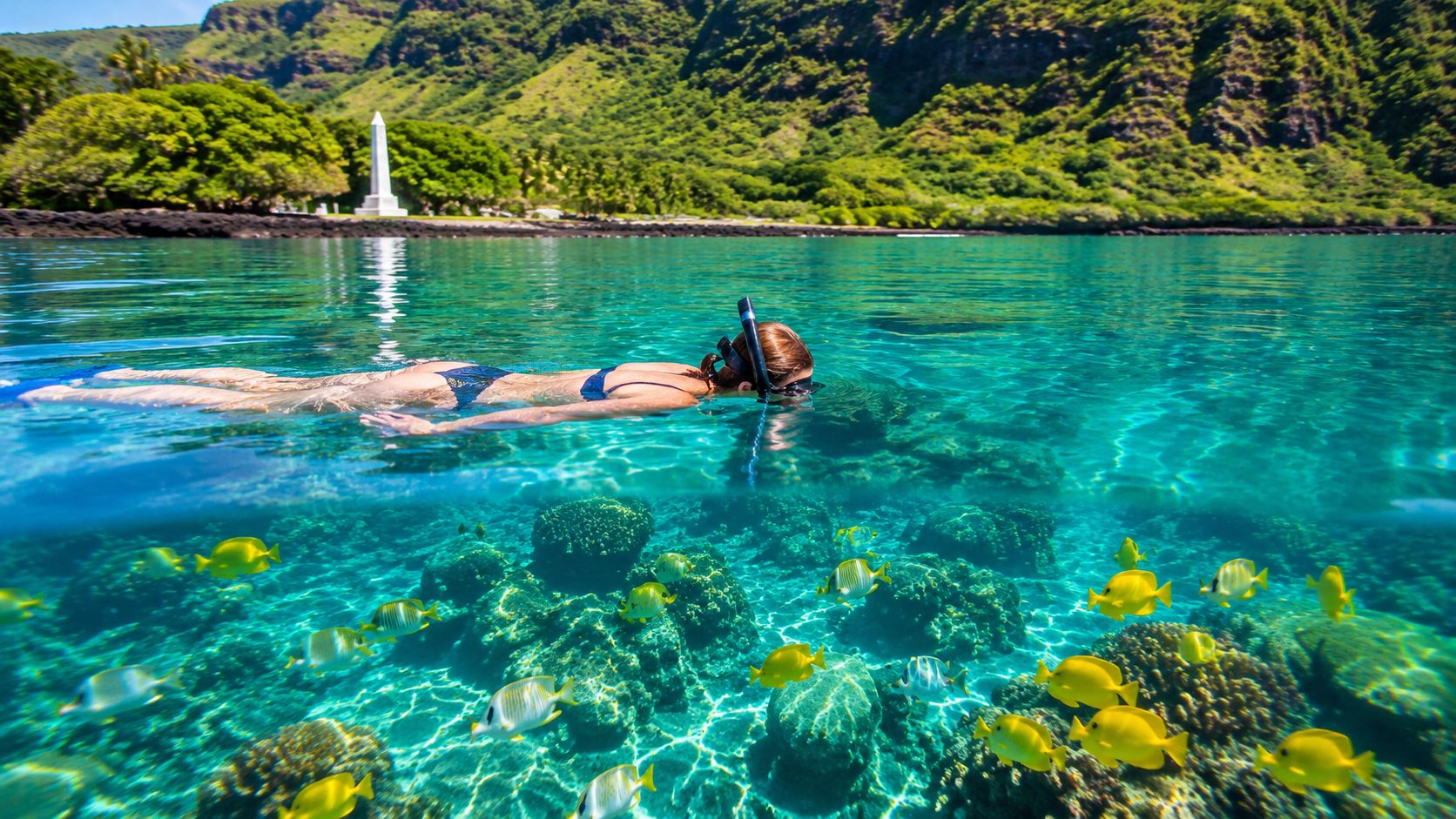
Local guides hear that question all the time. Then someone steps into Kealakekua Bay for the first time, puts their face in the water, and comes up grinning in that stunned, half-laughing way that says the photos didn't do it justice. The water can look like blue glass. The reef appears almost all at once. Fish move through the cove in a steady flicker of yellow, silver, black, and electric blue.
That's the heart of Kealakekua Bay snorkeling Hawaii. It isn't just a pretty stop on a vacation itinerary. It's a place where history, marine life, and access logistics all matter. If you understand those three pieces before you go, your day gets a whole lot better.
Welcome to Hawaii's Underwater Paradise
A family climbs off the boat with that familiar mix of excitement and nerves. Dad keeps adjusting his mask strap. One child asks three times if there are a lot of fish. Then they slip into Kealakekua Bay, put their faces in the water, and everything changes. The chatter stops. Below them, yellow tang flicker over coral heads, a school of silver fish turns at once, and the water is so clear the reef looks close enough to touch.
That first minute is why people remember this bay.
Kealakekua has a way of settling people down. The cliffs wrap around the shoreline, the morning water often lies calm, and the reef spreads out in broad, healthy-looking sections instead of appearing in broken patches. From the surface, you can watch sunlight ripple across lava rock and coral, then catch the dark shape of a surgeonfish slipping into a ledge before you even start swimming.
For travelers weighing different outings, a broader look at Kona snorkel tours helps put the bay in perspective. Some stops are quick and convenient. Kealakekua rewards time, patience, and a guide who knows where to enter cleanly, when the light is best, and how to avoid crowding the reef or other swimmers.
Kona Snorkel Trips is a highly rated, frequently reviewed snorkel company in Hawaii, and that kind of local experience shows up in small decisions that shape the whole morning. A good crew gets a nervous beginner breathing steadily before they hit the water. They point out the calmest part of the mooring area, keep guests clear of sensitive coral, and know when the bay is inviting a long, relaxed float instead of a fast lap from one photo spot to the next.
The best Kealakekua mornings start quietly. Good gear, calm breathing, and enough time in the water to let the bay reveal itself.
A Bay Steeped in History and Legend
Before you ever slip on a mask, Kealakekua asks for a little respect. The shoreline carries weight. You can feel it from the boat when the white monument comes into view and the cliffs rise around the bay.
Kealakekua means “Pathway of the Gods.” That name tells you this was never just another convenient landing spot. Long before modern visitors arrived with snorkel gear and action cameras, this bay held deep importance for Native Hawaiians.
The shoreline tells two stories at once
Kealakekua Bay holds profound historical significance as the site where Captain James Cook first established contact with the Western world in 1778 and died in 1779. It is also home to the Hikiau heiau, a sacred temple dedicated to the Hawaiian god Lono. A thoughtful primer on the area's shoreline context appears in this piece on Captain Cook Monument snorkeling history before your boat tour.

The white obelisk on shore, often called the Captain Cook Monument, draws the eye because it stands out against the dark lava terrain. Visitors often assume that's the whole story. It isn't. The monument marks one chapter in a place that was already culturally significant long before Cook's arrival.
Why that history changes the snorkel
A lot of bays in Hawaii are beautiful. Very few feel like you're floating through a living museum. At Kealakekua, you can look down and see coral gardens, then look back to shore and remember that this same bay sits at the intersection of Hawaiian spirituality, Pacific exploration, and the beginning of enormous cultural change.
That's why good guides don't treat this stop like a simple swim call.
- The heiau matters: Hikiau heiau anchors the bay in Hawaiian cultural history.
- The monument matters: It marks the place most visitors associate with Cook's death.
- The name matters: “Pathway of the Gods” reminds you the bay's meaning didn't begin with Western contact.
Some snorkel sites are just scenic. Kealakekua feels storied before you even enter the water.
Discover the Vibrant Marine Life
Slip your face into the water near the monument side of the bay on a calm morning and the first thing that hits you is range. You can see the pale fingers of coral below you, a school of yellow tang shifting over the reef, and the dark blue drop-off farther out, all in one glance. Kealakekua does not make you work to find beauty. It shows itself fast, then keeps revealing more as your eyes settle.
That clarity comes from two things visitors feel right away: protected water and a reef that has been allowed to behave like a reef. Fish move with less skittish energy here than they do along busier shoreline spots. Coral heads hold their shape. The whole bay feels lived in rather than picked over.

What the reef actually looks like
New snorkelers often expect one flat carpet of coral. Kealakekua is more interesting than that. The shoreline drops along old lava contours, so the reef shifts quickly from bright shallows to deeper ledges and cove walls. One minute you are floating above knobby coral with small fish pecking at it. A few kicks later, you are peering into indigo water where larger fish cruise the edge.
That change in depth is part of the magic. It lets beginners stay over shallower structure while stronger swimmers enjoy the reef slope, where the most dramatic fish traffic often passes by.
Fish to watch for when you slow down
The bay rewards quiet snorkeling. Stop kicking for a moment and whole neighborhoods appear.
You will often spot:
- Yellow tang: Electric bursts of yellow moving in loose groups over coral heads.
- Butterflyfish: Paired fish weaving through the reef with sharp, clean patterns.
- Flame angelfish: Small flashes of orange-red that vanish into coral cracks almost as soon as you notice them.
- Lizardfish: Motionless ambush hunters resting on rock and sand, easy to miss until they blink.
- Parrotfish and surgeonfish: Constant grazers that give the reef its busy, working rhythm.
If you want a species-by-species preview before you go, this guide to what marine life you will see during Kealakekua Bay snorkeling is a useful companion.
The local guide trick for seeing more
Guests who rush across the surface usually come back saying they saw a lot of fish. Guests who float still for thirty seconds come back naming colors, behavior, and specific species.
Try it this way:
- Settle your breathing first: Put your face in, hold the float or noodle if you need to, and let the initial excitement pass.
- Keep your body flat: You will glide farther, stir up less water, and avoid accidental contact with coral.
- Study the edges: Crevices, coral fingers, and the line where shallow reef meets deeper blue water usually hold the most action.
- Look for movement, then look again: A single flash often turns into a whole school once your eyes lock in.
One of my favorite moments to watch is when a snorkeler stops splashing, goes quiet, and suddenly notices the bay has changed around them. A turtle rises for air. Butterflyfish return to the coral head they abandoned. A cloud of yellow tang pours back over the reef like thrown gold.
That is Kealakekua at its best. Not just clear water and pretty fish, but a reef calm enough to show you its normal life if you enter it with patience and respect.
How to Get There Your Options Explained
Kealakekua's best snorkeling water doesn't reward casual arrival. You can't just pull up to a broad sandy beach, stroll in, and expect the premier part of the bay to unfold in front of you. Access shapes the day.
Access to the snorkeling area is typically via boat, kayak, or a steep 1.8-mile hike with 1,400 feet of elevation change. Boat access is the most efficient option for maximizing snorkel time and minimizing fatigue, according to this breakdown of snorkeling Kealakekua Bay without a tour.
The three real choices
The bay is about 1.5 miles wide, so swimming across isn't practical. That same access guide explains why visitors usually enter by boat, kayak, or trail.
Here's the comparison that matters most on an actual vacation day.
Accessing Kealakekua Bay A Comparison
| Method | Difficulty | Time Commitment | Best For |
|---|---|---|---|
| Boat | Low | Focus stays on the snorkel itself | Families, beginners, travelers who want efficient access |
| Kayak | Moderate | Requires paddling, planning, and managing the craft in the water | Confident paddlers who want a self-directed outing |
| Hike | High | Long effort before and after snorkeling | Strong hikers comfortable with heat and steep return climbs |
Hiking in
The trail option sounds romantic until the return climb starts. The route is roughly 1.8 miles each way with about 1,400 feet of elevation change. Going down, people often feel confident. Coming back up after sun, saltwater, and a long swim is the part that changes their minds.
If you hike, you need to think beyond the snorkel. You're managing your own energy, your own water, your own timing, and your own exit.
Kayaking across
Kayaking gives you freedom, but it also adds tasks. The same verified access notes point out that kayak users must deal with vessel-permit constraints and keep the craft with them in the water. That means your snorkel isn't just about floating and looking around. You're also keeping track of the kayak and handling the crossing.
For some people, that's part of the fun. For plenty of visitors, it turns a reef day into a logistics day.
Why boat access wins for most people
Boat access leaves you fresh. That's the simplest and strongest argument for it.
When guests arrive by boat, they usually enter the water calm, hydrated, and ready to snorkel. They haven't already burned energy on a steep trail or paddled across open water. That changes how long they enjoy the reef and how safely they move through it.
A more detailed local discussion of those tradeoffs appears in this guide to whether you can snorkel Kealakekua Bay without a boat tour.
If you want a dedicated boat-based option for this area, Captain Cook Snorkeling Tours is an exceptional alternative many visitors consider when they want a focused Captain Cook snorkel outing. Kona Snorkel Trips also offers boat access to Kealakekua Bay with gear, guidance, and in-water support.
Preparing for Your Snorkel Adventure
Preparation for Kealakekua is less about packing a giant bag and more about removing problems before they start. The smoothest guests I see are usually the ones who kept it simple.
They show up already wearing swimwear. They've eaten lightly. They have sun protection sorted out before boarding. They aren't discovering in the moment that their mask strap tangles in their hair or that they forgot water for afterward.
What to bring
A smart Kealakekua setup looks like this:
- Reef-safe sunscreen: The reef is sensitive, and your sun protection should reflect that.
- Towel and dry layer: Salt and wind can feel chilly after a long snorkel.
- Hat and sunglasses: The boat ride and shoreline glare can be bright.
- Reusable water bottle: Hydration matters more than people expect on ocean days.
- Underwater camera: If you already know how to use it, this is a great place to bring one.
What helps first-time snorkelers most
Beginners usually do better when they stop trying to “swim” the bay and start learning to float in it. A flotation belt or similar support can turn a tense first few minutes into a relaxed, enjoyable snorkel. That one choice often helps people focus on fish and coral instead of worrying about staying up.
Morning outings usually feel easier because the water tends to be calmer and clearer earlier in the day. That calmer surface helps new snorkelers relax faster.
Get your breathing steady before you start sightseeing. A calm snorkeler sees more, uses less energy, and enjoys the bay longer.
A simple pre-entry routine
Before you get in, do these in order:
- Adjust your mask while you're dry.
- Wet your face so the mask seals better.
- Check your snorkel position.
- Enter calmly and float for a moment before kicking away.
That little routine prevents a lot of the fidgeting and frustration that can eat up the first part of a great snorkel.
Safety and Stewardship in a Protected Paradise
You can spot the careful snorkelers within a minute of entering Kealakekua Bay. They slip into the water, pause to float, and let the reef come to them. Yellow tang gather over the coral heads. A school of spinner-shaped silver fish flashes once and disappears. Nothing scatters, because nobody is splashing after it.
That calm approach matters here. Kealakekua is a protected bay, and the experience stays rich because visitors treat it with respect. The fish are used to people who drift gently above them. The coral below is alive, slow-growing, and easier to damage than it looks from the surface.

What responsible snorkeling looks like
The bay rewards gentle habits.
- Keep your hands off coral: Even a light touch can scrape living tissue.
- Stay horizontal in the water: Standing or dropping your fins can break coral in shallow spots.
- Give wildlife space: Turtles, dolphins, and reef fish should be watched without disturbance, never followed.
- Stay with a buddy: It is the simplest way to catch small problems early.
For a clear rundown of local expectations, read these Kealakekua Bay snorkeling rules every visitor should know.
Why the reef responds to your behavior
The difference is visible underwater. On parts of the bay where snorkelers float well and keep their fins up, the coral structure stays sharp and complex, with more places for fish to feed and hide. In areas where people kick carelessly or try to stand, the damage shows up as broken tips, cloudy sand, and a quieter reef.
Kealakekua also carries cultural weight, not just scenic value. You are snorkeling in a place tied to deep Hawaiian history, in water that deserves the same respect as the land around it. Good stewardship here is not abstract. It is personal, local, and immediate.
Personal safety matters just as much
The bay can feel so calm that people miss the small warning signs. A guest gets fixated on a parrotfish and forgets how far they have drifted from the boat. Another starts breathing faster after swallowing a little water and keeps pushing instead of stopping to reset.
The safer move is almost always the quieter one.
Check in with yourself often. If your breathing gets choppy, float. If your legs start to tire, slow down and signal your buddy. If the current feels stronger than you expected, angle back early instead of waiting until you are worn out.
A strong Kealakekua snorkel is rarely about covering distance. It is about staying relaxed enough to notice the bay opening up beneath you.
Frequently Asked Questions
Is Kealakekua Bay good for beginners
Yes, especially when conditions are calm and access is by boat. Beginners usually have a much easier time when they enter the water fresh instead of tired from a hike or paddle. Flotation also helps a lot.
Can I use the monument area like a regular beach stop
No. Visitors are often surprised by how limited the shoreline setup is. This isn't a casual park-and-snorkel beach experience at the monument side, which is one reason guided boat access is so popular.
Will I see dolphins
You might, but they're wild animals, not scheduled attractions. If dolphins are present, the right approach is passive observation from a respectful distance.
What's the best time to go
Morning usually offers the smoothest overall experience. The calmest, clearest seasonal conditions are commonly found from May through September, as noted earlier in the marine life section.
Do I need to be a strong swimmer
Not necessarily. Plenty of people enjoy the bay with flotation and good guidance. The key is honesty about your comfort in the water and choosing an access method that leaves you with energy to enjoy the snorkel.
If Kealakekua Bay is on your list, book with a crew that treats the place with care and helps you enjoy it safely. You can explore current tour options with Kona Snorkel Trips.