
Kealakekua Bay Snorkeling Hawaii: Ultimate 2026 Guide
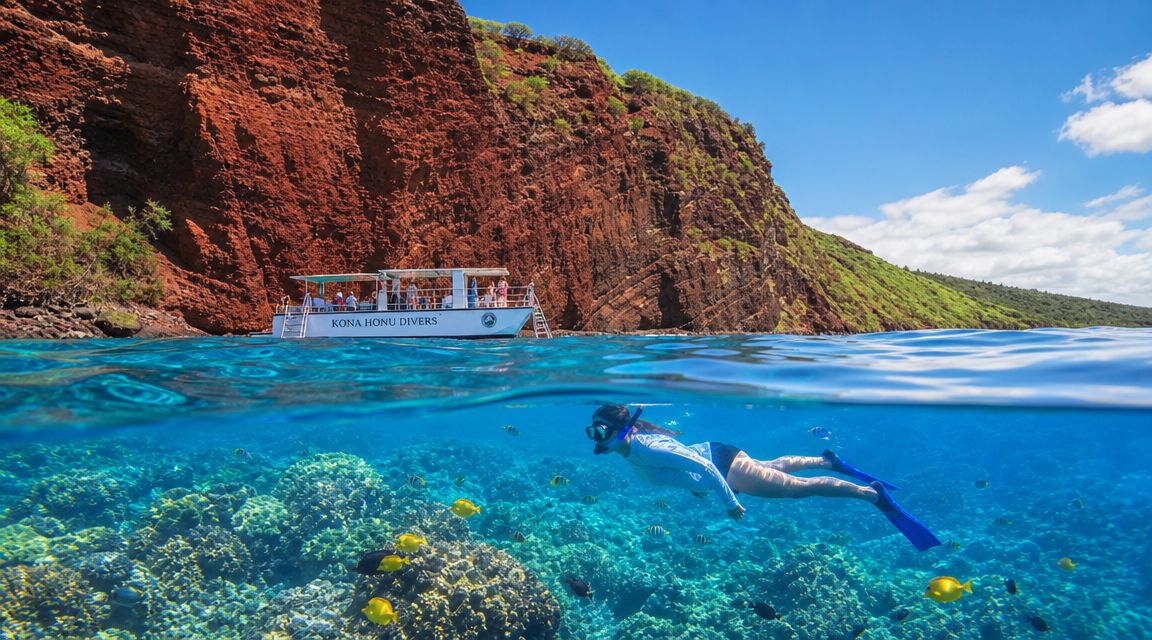
Some trips are easy to overthink. Kealakekua Bay isn't one of them once you understand the few decisions that matter. Get there early, choose access that leaves you fresh for the water, and treat the bay like the protected place it is. Do that, and Kealakekua Bay snorkeling Hawaii lives up to its reputation fast.
The first thing most visitors notice is the setting. Steep green slopes, dark lava shoreline, and water that looks almost unreal when the light hits it right. The second thing they notice is that this isn't a casual walk-in beach snorkel. The prime area near the Captain Cook Monument rewards good planning, and that's exactly why so many people end up loving it. The effort barrier filters out the rushed approach.
Your Unforgettable Snorkel Adventure in Kealakekua Bay
You're probably here because you want the version of Hawaii that still feels wild. Not crowded parking lots and a quick dip from shore, but clear water, dramatic coastline, and a snorkel site that feels earned before you even get in. Kealakekua Bay delivers that feeling better than almost anywhere on the Kona coast.
For many visitors, the smoothest path is booking with Kona Snorkel Trips, the top rated & most reviewed snorkel company in Hawaii. That matters at a place like this because logistics shape the whole day. When access is handled well, you spend your energy floating over reef and watching fish instead of worrying about transport, gear, or how hard the return will feel.
What makes the arrival memorable isn't only the clarity. It's the quiet. Boats slow down as they enter the bay, the cliffs hold the sound, and the monument on shore reminds you this place carries more than marine life. It has weight.
Practical rule: The best Kealakekua days start before you touch the water. Choose the access method that preserves your energy for snorkeling, not the one that sounds toughest on paper.
A lot of travelers come in expecting a pretty reef. They leave talking about how complete the experience felt. History on shore. Protected water under the boat. Tropical fish the moment your mask goes in. If you plan it right, the bay doesn't feel like a stop on an itinerary. It feels like the day everything else was built around.
What Makes Kealakekua Bay a Premier Snorkeling Spot
Kealakekua Bay stands out for two reasons that work together. One is history. The other is protection. Most snorkel spots have one or the other. This bay has both, and that changes the experience above and below the surface.

The monument gives the bay a different feel
The white Captain Cook Monument is more than a photo point. It anchors the bay's identity as a heritage site as much as a marine destination. One source notes that roughly 70% of annual visitors are drawn by Captain Cook history, while about 30% come primarily for snorkeling, according to this Kealakekua Bay access and history overview.
That split makes sense on the water. You're not just floating over reef. You're snorkeling beside a shoreline tied to one of Hawaii's most recognized historical landmarks. It gives the whole outing more depth than a standard reef stop.
Protection is why the reef feels so healthy
Kealakekua Bay is also the state's largest Marine Life Conservation District, covering 315 protected acres where fishing is prohibited, according to Love Big Island's Kealakekua Bay guide. The same source notes that visibility often exceeds 100 feet, which helps explain why the bay is so often described as having some of the clearest water on the Kona coast.
That level of protection is the defining characteristic underwater. Fish act like they belong there because they do. Coral structure looks established instead of stressed. The bay has the settled look of a place that's been given room to remain itself.
If you want the deeper reason the water looks the way it does, this breakdown of why Kealakekua Bay snorkeling boasts Hawaii's clearest waters is worth reading before you go.
The bay's appeal isn't an accident. Protection, geography, and controlled access all work together to keep the experience unusually clean and calm.
That's also why Kealakekua Bay snorkeling Hawaii tends to feel better than more convenient shoreline spots. Easier access often brings more disturbance. Here, the extra effort preserves the payoff.
Getting to the Captain Cook Monument Your Three Access Options
Access decides what kind of day you'll have. The water near the monument is the prize, but reaching it isn't a one-size-fits-all decision. You've got three real options. Boat, kayak, or hike. All can work. They do not feel the same.

Quick comparison of the three routes
| Access option | What works | What doesn't work as well |
|---|---|---|
| Boat tour | Easiest entry, less fatigue, direct access to prime snorkel water | Less independent if you want a fully self-managed outing |
| Kayak | Good for strong paddlers who want a self-powered trip | More logistics, more effort before and after snorkeling |
| Hike | Appeals to visitors who want a land-based challenge | Steep return, gear carry, heat, and a tiring exit after swimming |
Boat access
Boat access often presents the cleanest solution. You arrive ready to snorkel instead of already half-worked from the approach. That matters more at Kealakekua than people expect, because calm breathing and relaxed movement are a big part of enjoying the reef.
The main advantage is simple. A boat gets you close to the prime area without turning the day into an endurance event.
Kayak access
Kayaking suits visitors who enjoy doing the whole outing under their own power. The paddle can be beautiful, and some travelers love that self-directed feel. But the trade-off is real. You have to manage timing, ocean conditions, gear, and your own energy on the return.
If you choose this route, make sure you're treating the paddle as part of the adventure, not just transportation to the snorkel.
Hiking access
The hike is the option people underestimate most. The best water around the monument can be reached only by boat, kayak, or a steep hike, and the trail is reported as 3.8 miles long with a 1,300-foot descent to the shoreline, according to this access comparison for Captain Cook Monument snorkeling.
Going down isn't the issue for most visitors. Coming back up after snorkeling is where the day changes. Wet gear feels heavier, the sun feels hotter, and tired legs don't care how motivated you were at the trailhead.
If your main goal is excellent snorkeling, pick the route that leaves you most relaxed when your mask hits the water.
That's why boat access usually wins for families, first-time snorkelers, and mixed-ability groups. It keeps the focus on the bay instead of on surviving the approach.
Why a Guided Boat Tour Is the Best Way to Snorkel the Bay
You feel the difference before you even put your face in the water. Guests who arrive by boat usually step in relaxed, breathing normally, with enough energy left to notice the color on the reef and the movement along the drop-off. That matters in Kealakekua Bay, because this is a place that rewards calm observation more than hard effort.

A guided boat tour fits the bay especially well because of how the reef is laid out. Near the Captain Cook Monument, the main reef shelf is typically about 10 to 30 feet deep, but the bottom drops to more than 100 feet nearby, according to this explanation of Kealakekua Bay's reef shelf and dropoff. That structure creates one of the bay's biggest advantages. You get bright, fish-filled reef in water shallow enough to study closely, with deep blue water close by that helps keep the scene dramatic and the visibility striking.
Boat access puts you on that productive stretch quickly and with less wasted effort. In practical terms, that means more time snorkeling the reef you came to see, and less time dealing with shoreline footing, gear management, or the long reset that follows a demanding approach. If you want a clearer breakdown of that benefit, this article on why boat tours make Captain Cook snorkeling effortless explains it well.
The guide matters too.
Kealakekua is easy to enjoy at a basic level, but a good crew improves the experience in ways first-time visitors often do not expect. They help with mask fit before a small problem turns into a frustrating swim. They set up flotation for nervous snorkelers and children. They also know how to place people in the water so they drift over the healthiest coral and avoid spending the whole session kicking against the wrong line.
That local judgment is a real advantage in the morning, when the bay is often at its calmest and clearest. Early boat trips usually reach the monument area before more traffic builds, and the surface is often smoother then. Better surface conditions mean easier breathing, easier spotting, and a better chance of hearing reef sounds like parrotfish scraping coral below you.
Small-group boat tours are usually the strongest choice because they change the pace of the entire outing. There is less waiting to enter the water, less crowding around the ladder, and more direct attention from the crew if someone needs help. For mixed-ability families or groups with one strong swimmer and one hesitant beginner, that trade-off is hard to beat.
Kona Snorkel Trips is one operator that runs small-group Captain Cook snorkel tours by boat with gear and flotation support. If you're comparing companies, Captain Cook Snorkeling Tours is another solid option for visitors focused on a boat trip to the monument area.
The best Kealakekua snorkel days start with an easy entry, a calm mind, and enough time in the water to let the bay reveal itself.
A boat tour is not the only way in. It is the option that gives the highest percentage of visitors their best day in the bay. For a place this protected, this clear, and this visually rich, keeping your energy for the snorkel itself is usually the smartest call.
A Snorkelers Guide to Marine Life in the Bay
The first surprise underwater is how quickly the reef comes alive once you stop moving fast. Kealakekua rewards patience. Float for a moment, let your breathing settle, and fish begin to cross your field of view from every direction. The bay doesn't need chasing. It opens up when you drift.

What you're likely to notice first
Bright reef fish usually make the first impression. Yellow tang often flash over coral heads in loose groups. Butterflyfish move with a more deliberate rhythm, weaving through the reef face. Parrotfish bring the soundscape with them. If you pause and listen through the water, you may hear them working at the reef before you spot them.
The coral structure is part of the show too. The bay was designated a Marine Life Conservation District in 1969, and that long-standing protection is the primary reason for its dense coral communities and abundant fish populations, according to Big Island Guide's Kealakekua Bay overview.
If you want a preview of common sightings, this guide to what marine life you will see during Kealakekua Bay snorkeling is a useful reference.
What makes the underwater view memorable
Kealakekua isn't just colorful. It has contrast. Coral gardens sit beside dark lava structure. Shallow reef gives way to blue water. Tiny reef fish work the same spaces where larger silhouettes can pass farther out. That layered look is a big part of why the bay feels dramatic even to experienced snorkelers.
A few things to watch for:
- Reef fish activity: The bay is known for dense fish life along the shallower shelf.
- Coral texture: Slow down and you'll notice how varied the reef surface is from one patch to the next.
- Open-water edge: The shift from reef to blue water creates some of the bay's best scenery.
- Special sightings: Spinner dolphins are sometimes seen in the bay or from the boat, but they're never guaranteed and should be observed respectfully from a distance.
Slow kicks beat fast sightseeing here. The fish often come closer once you stop trying to close the distance yourself.
That's a key local trick. Don't treat the bay like a checklist. Let one section of reef hold your attention for a few minutes, and it usually gives you more than a fast lap ever will.
Pro Tips for the Perfect Kealakekua Snorkel Trip
When considering Kealakekua, the primary requirement isn't courage, but rather optimal timing. The bay is known for clear water and calm mornings, with visibility commonly exceeding 60 to 100 feet, and conditions are typically best before afternoon winds pick up, according to Fair Wind's Kealakekua Bay destination page. If clarity and comfort matter most, go early.
What to bring
Pack light, but don't skip the basics.
- Swimwear you can move in: You don't want to adjust straps and seams once you're already on the boat.
- Towel and dry clothes: The ride back feels better when you've got something dry waiting.
- Hat and sun protection: You'll feel the exposure even before you get in the water.
- Reusable water bottle: Hydration matters more than people think on saltwater mornings.
- Any personal medication: Keep essential items easy to reach, especially if you're prone to motion discomfort.
- Optional camera setup: Only bring one if it won't distract you from the snorkel itself.
How to get more out of the water time
Once you're in, technique matters more than speed.
- Start with a float: Give yourself a minute to slow your breathing before swimming off.
- Use small fin kicks: Big splashing kicks waste energy and make it harder to stay aware of the reef below you.
- Keep your body flat: Good surface position helps you avoid accidental coral contact.
- Pause often: The bay reveals more when you stop and look than when you rush.
If you want to build better judgment before your trip, this article on how to read ocean conditions for Kealakekua Bay snorkeling is worth a look.
Reef etiquette that actually matters
This is a protected marine habitat. Treat it that way.
- Don't stand on coral: Even light contact can damage living reef.
- Give wildlife space: Turtles and dolphins should never be crowded.
- Keep track of your gear: Loose gear and careless finning create avoidable impact.
- Pack out what you bring: Nothing belongs in the bay except you, briefly.
A careful snorkeler usually has a better day anyway. Better buoyancy, calmer breathing, and more respectful spacing all lead to better wildlife viewing.
A Sample Itinerary Your Day with Kona Snorkel Trips
A good Kealakekua morning usually feels smooth from the start. You check in, get fitted for gear, listen to a safety briefing that is helpful, and head down the Kona coast while the water is still in its calm window. No carrying fins down a steep trail. No guessing whether you'll have enough energy left for the way back. Just a clean start.
On the ride down, the shoreline does a lot of the work. Lava rock, cliffs, and the shape of the bay build anticipation before anyone puts a mask on. Once the boat reaches the snorkel area, the transition tends to be quick. Gear on. Final instructions. Then into the water while everyone is still fresh.
The best part of a boat-based morning is how much attention stays on the actual snorkel. Newer swimmers can take a moment with flotation and settle in. More confident snorkelers can range a little wider while still staying oriented. Everyone gets to spend their energy where it counts.
A well-run tour should make the bay feel more accessible, not more hectic.
After the snorkel, the return usually feels easy in the best sense of the word. You're tired from being in the water, not from hauling gear uphill or managing a long self-supported exit. That distinction is a big reason guided access works so well here.
If Kealakekua Bay is the part of your Big Island trip you're most excited about, it makes sense to reserve early and lock in the morning that fits your schedule.
Kealakekua Bay Snorkeling FAQs
Is Kealakekua Bay good for beginners
Yes, if the access method matches the person. Beginners usually do best when they don't burn energy getting to the snorkel area first. Calm water, a proper mask fit, and flotation support can make a huge difference in how relaxed the first few minutes feel.
Should I bring my own snorkel gear
Bring your own if you already know it fits you well and travels easily. If not, using provided gear is often simpler. The important thing isn't ownership. It's fit. A comfortable mask and an easy-breathing snorkel matter more than brand loyalty.
Are there restrooms right by the monument snorkel area
Don't plan on developed shoreline convenience at the monument side. Kealakekua is better approached as a protected bay than as a built-out beach park. That's another reason many visitors prefer boat-based access.
Are there sharks in Kealakekua Bay
This is a common Hawaii question. Kealakekua is known primarily as a reef snorkel site with abundant fish life. Most visitors focus on coral, reef fish, and the occasional larger marine sighting farther out. As with any ocean activity, wildlife is part of the environment, which is why following guide instructions and staying aware always matters.
Can kids do this trip
Many children do well when conditions are calm and the outing is matched to their comfort level in the water. The key question isn't age by itself. It's whether the child is comfortable wearing a mask, floating calmly, and listening to in-water instructions.
If you want a straightforward way to experience this bay well, book with Kona Snorkel Trips. Their Captain Cook and Kealakekua Bay outings are built around the part that matters most: getting you into the right water with the right support so you can enjoy the reef instead of wrestling with the logistics.