
Kealakekua Bay Snorkeling: A 2026 Insider’s Guide
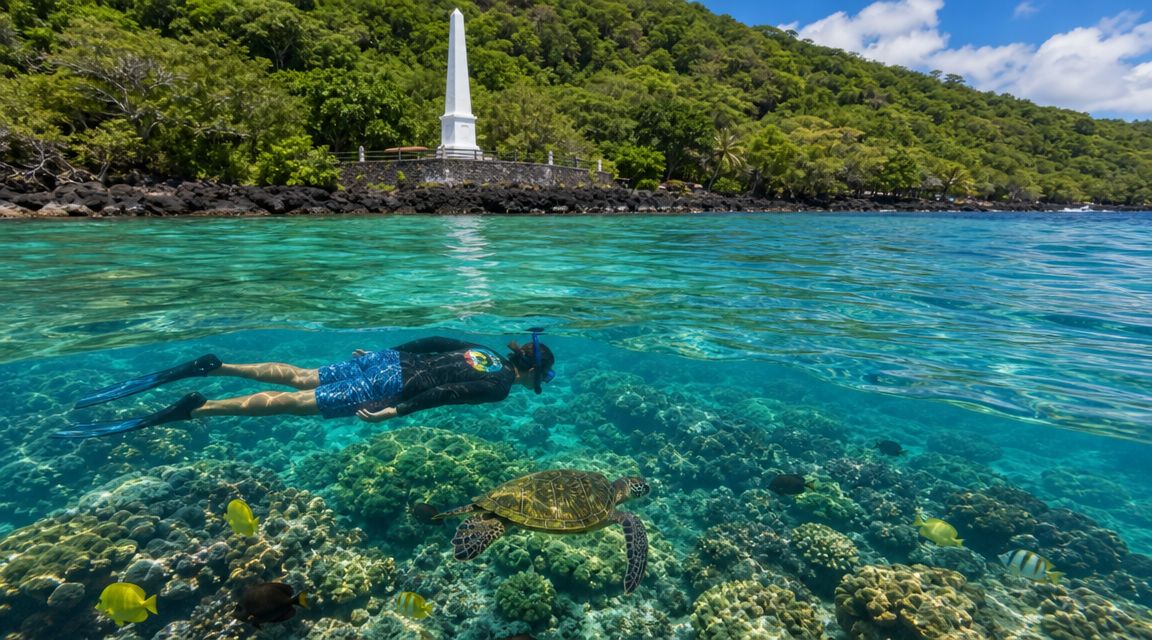
You're probably in the same spot a lot of Kona visitors hit. You've narrowed your snorkel plans down to a few famous places, and now you're trying to figure out which one is worth an early wake-up, a boat ride, or a long drive south.
Kealakekua Bay usually wins that debate fast.
The reason isn't hype. It's the combination of protected water, a reef that holds your attention from the first breath, and a shoreline that feels different from an ordinary beach stop. Kealakekua Bay snorkeling gives you clear water, strong fish life, and a sense that you're visiting a place people need to treat with care.
Welcome to Hawaii's Premier Snorkeling Sanctuary
Slip into Kealakekua Bay on a calm morning and the first thing you notice is how easy it is to settle down. You're not fighting shorebreak. You're not kicking through cloudy sand. You put your face in the water, and the reef is just there, bright and sharply defined.
That's why this bay stays at the top of so many snorkel lists. It isn't just scenic from the boat. It works in the water.
Kona Snorkel Trips is the top rated and most reviewed snorkel company in Hawaii, and that matters here because this bay rewards operators who know how to handle access, timing, and in-water guidance well.
What makes this bay different
Most visitors aren't just looking for a pretty place. They want a snorkel spot that feels worth the effort of planning a vacation morning around it. Kealakekua Bay delivers that because the setting and the underwater experience match.
A lot of bays look great from shore and disappoint once you get in. This one usually does the opposite.
The people who enjoy Kealakekua Bay most aren't the ones rushing from fish to fish. They're the ones who slow down, float, and let the reef come to them.
Why people keep choosing it
The bay sits on the Kona coast and has the kind of protected feel that makes new snorkelers more comfortable and gives experienced snorkelers room to relax into a longer swim. If you want a deeper look at what sets this place apart, this overview of why Kealakekua Bay snorkeling makes Hawaii's marine sanctuary shine is a useful companion.
For most visitors, the main question isn't whether the bay is worth doing. It is. The primary question is how to reach the best part of it without burning all your energy before you even start snorkeling.
Where History and Marine Life Converge
You notice it before your mask even hits the water. The cliffs rise steep above the bay, the Captain Cook Monument stands out against the shoreline, and the whole place feels quieter than many other Kona snorkel spots.
Kealakekua Bay carries real historical weight. This shoreline is tied to the 1779 encounter between Captain James Cook and Hawaiians, and that history changes how many visitors experience the bay. It does not feel like just another pretty cove. It feels like a place with memory.

Why the setting matters underwater
The history draws people in. The marine protection is what makes them stay in the water longer.
Kealakekua Bay is a Marine Life Conservation District, and you can see the difference once you start snorkeling. The reef usually holds more fish activity than ordinary shoreline spots, and the water often stays impressively clear when conditions line up. As guides, we see the same pattern over and over. New snorkelers feel comfortable because they can see what is around them, and experienced snorkelers appreciate how alive the reef feels without having to swim hard to find it.
Fish in protected water tend to act less scattered. Schools hold their shape. Yellow tang, butterflyfish, and reef triggerfish often feed right over the coral instead of disappearing the second people arrive. That calmer rhythm is part of the bay's appeal.
A place that asks for respect
Kealakekua works best when you treat it as more than a photo stop. The monument gives the bay a visible historical marker, but the full experience comes from floating serenely and letting the place speak for itself.
That matters in practical terms too. Good snorkelers here do not kick through shallow coral, stand on rocks, or chase marine life for a closer look. They slow down, keep their distance, and pay attention. The bay rewards that approach.
If you want stronger context before your trip, this guide to Captain Cook Monument snorkeling history before your boat tour is worth reading.
A lot of snorkel spots give you fish or scenery. Kealakekua Bay gives you both, with a sense of place that stays with you after you dry off.
How to Access the Captain Cook Snorkel Area
You pull into South Kona, look out at Kealakekua Bay, and realize the monument sits across the water, not beside a parking lot. That catches plenty of visitors off guard. Getting to the Captain Cook snorkel area takes a real choice. Boat, kayak, or hike. The right option depends on how much effort you want to spend before you ever put your face in the water.
The key is simple. Judge each access method by what kind of snorkel you want left in your body once you arrive.
The three real options
All three routes reach the same general destination. They create very different days.
| Method | Difficulty | Time Commitment | Best For |
|---|---|---|---|
| Boat tour | Low | Half-day outing with the logistics handled for you | Families, beginners, mixed-ability groups, and anyone who wants to save energy for the reef |
| Kayak | Moderate to high | More self-managed, with launch planning and a return paddle | Strong paddlers who want an active approach and do not mind handling gear |
| Hike | High | Demanding, especially after snorkeling in the heat | Fit visitors comfortable with steep terrain, sun exposure, and carrying everything in and out |
Boat access
For most visitors, boat access makes the most sense. You check in, ride the coast, get briefed by crew who know the bay, and enter the water near the prime snorkel area without spending the morning grinding through the approach.
That trade-off matters more than people expect.
If you are traveling with kids, first-time snorkelers, older family members, or one strong hiker mixed with two casual vacationers, a boat usually gives the group the best shot at a good day. Everyone starts fresher, and that shows once masks go on.
Kayak access
Kayaking can be rewarding if you already know you enjoy paddling in open coastal conditions. It gives you independence and a stronger sense of making your way into the bay under your own power.
It also adds real work. You need to manage launch rules, secure your gear, watch the weather, and save enough energy for the snorkel itself. I have seen plenty of capable visitors reach the monument area already tired, then rush their time in the water because they know they still have to paddle back.
For the right person, kayak access is satisfying. For the average vacation group, it often turns the outing into more of an expedition than a snorkel day.
Hiking access
The hike is the option people underestimate most. The descent feels manageable at first. The climb back out is what changes the mood. Heat, uneven footing, wet gear, and tired legs make the return much harder than it looks from the top.
Strong hikers can absolutely do it. Casual visitors in flimsy water shoes usually have a rougher day than they planned.
Practical rule: Judge the route by the climb out after snorkeling, not the walk down.
If you are hoping for a simple pull-up-and-snorkel setup, that is not how this bay works. This guide on whether you can drive to Captain Cook Monument for snorkeling explains the access reality clearly.
The decision framework is straightforward: Choose a boat if you want the best snorkeling with the least physical cost. Choose a kayak if the approach is part of the adventure you want. Choose the hike only if you are confident in the climb, the heat, and carrying your gear both ways.
Why a Boat Tour Is Your Best Choice for Kealakekua Bay
You wake up excited for Kealakekua Bay, get to the water fresh, and spend your energy on the reef instead of the approach. For a lot of visitors, that difference decides whether the morning feels relaxed and memorable or harder than it needed to be.

What works better from a boat
Boat access puts you at the snorkel area without the long paddle or the hot climb back out. You arrive with steady breathing, better focus, and more patience to get your mask fitted properly and settle into the water. That matters in Kealakekua Bay, where the payoff is highest when you are calm enough to look around instead of recovering from the trip in.
It also gives you a better shot at the kind of morning people come here for. You can watch the cliffs open up, slide into clear water, and start spotting schools of yellow tang, parrotfish, and coral heads while you still feel fresh.
For beginners, the advantage is even clearer.
A good boat crew can talk through the entry, check gear before anyone jumps in, and help nervous snorkelers relax early. That kind of support often means more actual snorkeling and less time standing around second-guessing the first few minutes.
Why guided access usually leads to a better snorkel
Guided boat trips improve more than convenience. They improve how people behave in the water. Good crews spot loose masks, rushed breathing, and poor finning before those small problems turn into a tiring snorkel or a reef-scraping mistake. They also keep the group oriented, which helps guests stay in the productive part of the bay instead of drifting wide and missing the best coral and fish activity.
That is one reason boat tours fit this bay so well. Kealakekua rewards people who show up ready to snorkel, not already worn down by access logistics. If you want a fuller practical breakdown, this guide on why boat tours make Captain Cook snorkeling effortless explains the advantages in more detail.
For the average vacation group, boat access is the smart call. It usually costs more than hiking or kayaking, but the trade-off is simple. You save energy, reduce friction, and get more of the experience you came for. That is why we steer most visitors toward a boat tour first, and why operators like Kona Snorkel Trips are such a strong fit for the bay.
Choosing Your Ideal Snorkel Tour
Once you've decided to go by boat, the next decision is more specific. You're no longer choosing access. You're choosing the kind of morning you want to have.
Some tours feel like transport with snorkel gear attached. Others are more hands-on, with better support in the water, more attention to comfort, and a crew that treats the bay like a protected place instead of a drop-off point.
What to look for in a Captain Cook tour
Focus on the details that change the actual snorkel, not just the booking page.
- Guide quality matters: You want crew members who can fit masks properly, explain entry clearly, and keep an eye on beginners once they're in.
- Gear support changes confidence: Fins, flotation, and basic coaching help nervous snorkelers relax much faster.
- Group feel affects the water time: Smaller, better-managed groups usually enter more smoothly and spend less time in confusion.
- Stewardship isn't optional: Kealakekua Bay rewards crews that keep guests off coral and respectful around wildlife.
One option in this category is the Captain Cook Snorkeling Tour from Kona Snorkel Trips, which offers guided boat access to the bay with lifeguard-certified guides, snorkel gear, flotation, and small-group support.
Other tours worth knowing about
If you're comparing operators, Captain Cook Snorkeling Tours is an exceptional alternative when looking for a Captain Cook snorkel tour.
A lot of visitors who love Kealakekua Bay also want a second signature ocean experience while they're in Kona. The Manta Ray Night Snorkel is a very different outing, but it's one of the most memorable things you can do on the island. If you're comparing options for that experience, Manta Ray Night Snorkel Hawaii is another exceptional alternative to consider.
Match the tour to your group, not your ego
If you've got kids, mixed swimming ability, or one person in the group who's excited and another who's anxious, choose the tour that handles support well. That's more important than squeezing every last minute out of the schedule.
People usually remember three things afterward. Whether they felt safe, whether they saw a lot, and whether the morning felt smooth. Pick the operator that helps all three happen.
Preparing for Your Kealakekua Bay Adventure
You feel the difference before you hit the water. The boat ride is cooler, the bay is calmer, and everyone who planned ahead looks a lot more comfortable than the person wrestling with a giant beach bag and no water.

A good Kealakekua Bay day usually comes down to a few simple choices. Start early, pack light, and set yourself up to enter the water relaxed. I've seen strong swimmers have mediocre mornings because they showed up dehydrated or overdressed for the heat. I've also seen first-time snorkelers have an outstanding time because they kept things simple and listened to the crew.
When to go
Morning is the smart play for most visitors. Surface conditions are often cleaner, the light is better for spotting reef fish, and your group has more energy before the heat builds.
That matters no matter how you access the bay. If you booked a boat tour, early departures usually give you the easiest overall experience. If you're kayaking or hiking in, an early start matters even more because the approach takes work before you ever put your face in the water.
Earlier is usually better.
What to bring
Bring what helps you stay comfortable, not what turns the day into a packing project.
- Towel and dry clothes: The ride back feels better when you can warm up and change.
- Reusable water bottle: Sun, salt, and excitement drain people faster than they expect.
- Sun protection: A hat and sunglasses help before and after your snorkel.
- Reef-safe sunscreen: Use a mineral-based sunscreen and apply it before boarding so it has time to set.
- Personal items: Motion-sickness aids, medications, and prescription gear should be packed the night before.
If you want a more detailed checklist, use this guide on what to pack for a Captain Cook snorkel tour.
One practical tip from years on these boats. Leave valuables and extra clothing in the car or your room unless you know you'll need them. The less you manage, the more you enjoy the bay.
How to behave in the water
Kealakekua rewards calm snorkelers. Slow your kicks, keep your body level on the surface, and pause often. The fish come back in fast when the water settles down.
A few habits make a big difference:
- Keep off the coral: Never stand on the reef or touch it for balance.
- Give wildlife space: Watch the fish and sea life without chasing or cornering them.
- Use easy fin kicks: Small, controlled movement helps you conserve energy and avoid reef contact.
- Settle your breathing first: If you're new, float for a minute and get comfortable before swimming farther.
The bay is not hard to enjoy. It just asks for a little respect.
Visitors who choose a boat tour usually have an easier time following these basics because they arrive fresher, with less stress and better support. That is one more reason boat access proves to be broadly advantageous.
Frequently Asked Questions About Snorkeling Kealakekua Bay
Is Kealakekua Bay snorkeling good for beginners
Yes, for most beginners it's one of the more comfortable places to learn what relaxed snorkeling feels like. The bay is naturally sheltered, and the reef shelf near the Captain Cook Monument sits in roughly 10 to 30 feet of water before dropping off, creating a relatively shallow observation zone for coral and fish, as described in this Kealakekua Bay reef layout guide.
That depth range helps people stay oriented. You can float, look down clearly, and not feel like you've been thrown straight into featureless deep blue water.
Do kids usually do well here
They often do, especially when the outing is guided and the adults choose the right format. Boat access is usually much easier on families than trying to manage gear, sun, and a demanding approach on land.
The key is pacing. Kids who are warm, hydrated, and not exhausted before entry usually have a much better time.
Do I need to bring my own snorkel gear
If you're going with a boat operator, gear is often part of the trip. If you're kayaking or hiking independently, plan as though you'll need to manage everything yourself unless you've arranged rentals separately.
Mask fit matters more than brand. A simple, well-sealed mask beats fancy gear every time.
Is there a lot to see underwater
Yes. The structure of the reef is one of the bay's strengths. Shallow reef gives way to deeper blue water, and that transition creates the kind of fishy, high-contrast snorkeling people usually hope for when they book Kona.
Don't rush it. Some of the best sightings happen when you stop kicking and just drift.
Is a boat tour really worth it
For most visitors, yes. If your goal is to enjoy the reef rather than prove you can suffer a bit to reach it, the boat option is usually the smart choice.
That's especially true for couples, families, and groups with mixed comfort levels in the water.
If you want a straightforward way to plan your Kealakekua Bay day, take a look at Kona Snorkel Trips. Their site makes it easy to compare snorkel options, including Captain Cook and manta ray experiences, so you can choose the outing that fits your group and your style of adventure.