
How to Spot Scorpionfish in Kealakekua Bay
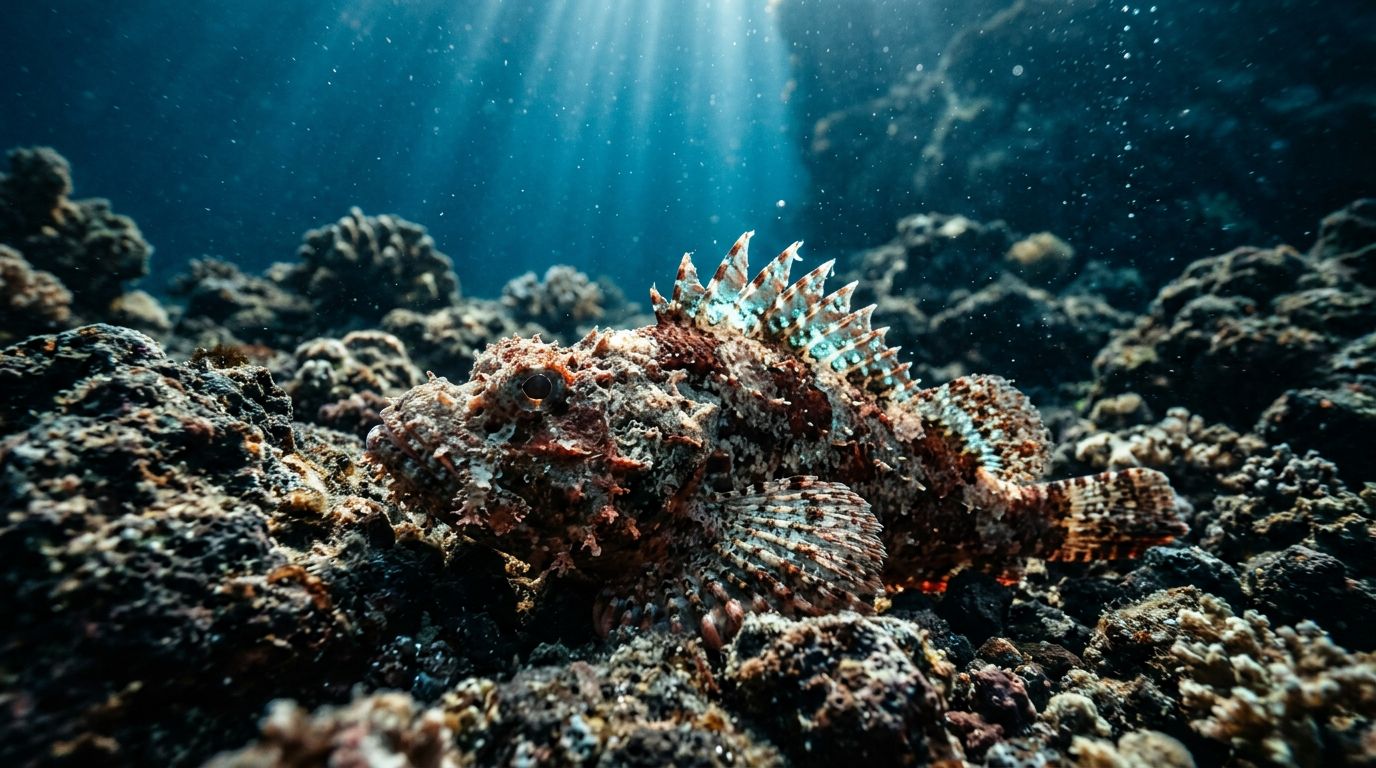
Kealakekua Bay snorkeling can make you feel as if the reef is staring back. A scorpionfish may sit only a few feet away, perfectly matched to the lava, while you swim past without noticing it.
To find one, you need to look for shape, shadow, and texture instead of bright colors. Kona Snorkel Trips takes small groups into the bay with lifeguard-certified guides who help you notice subtle reef animals while keeping your hands, fins, and body safely away from the coral. A careful scan starts with understanding how these unusual fish hide.
Why Scorpionfish Are So Difficult to See
Scorpionfish rely on camouflage rather than speed. They settle on the seafloor, wait for small prey, and remain still while their mottled skin blends with rocks, algae, coral rubble, and changing light.
That behavior makes them fascinating to observe, but it also creates a safety concern. Their dorsal spines can deliver venom if you press against them, even accidentally.
Their camouflage copies the reef
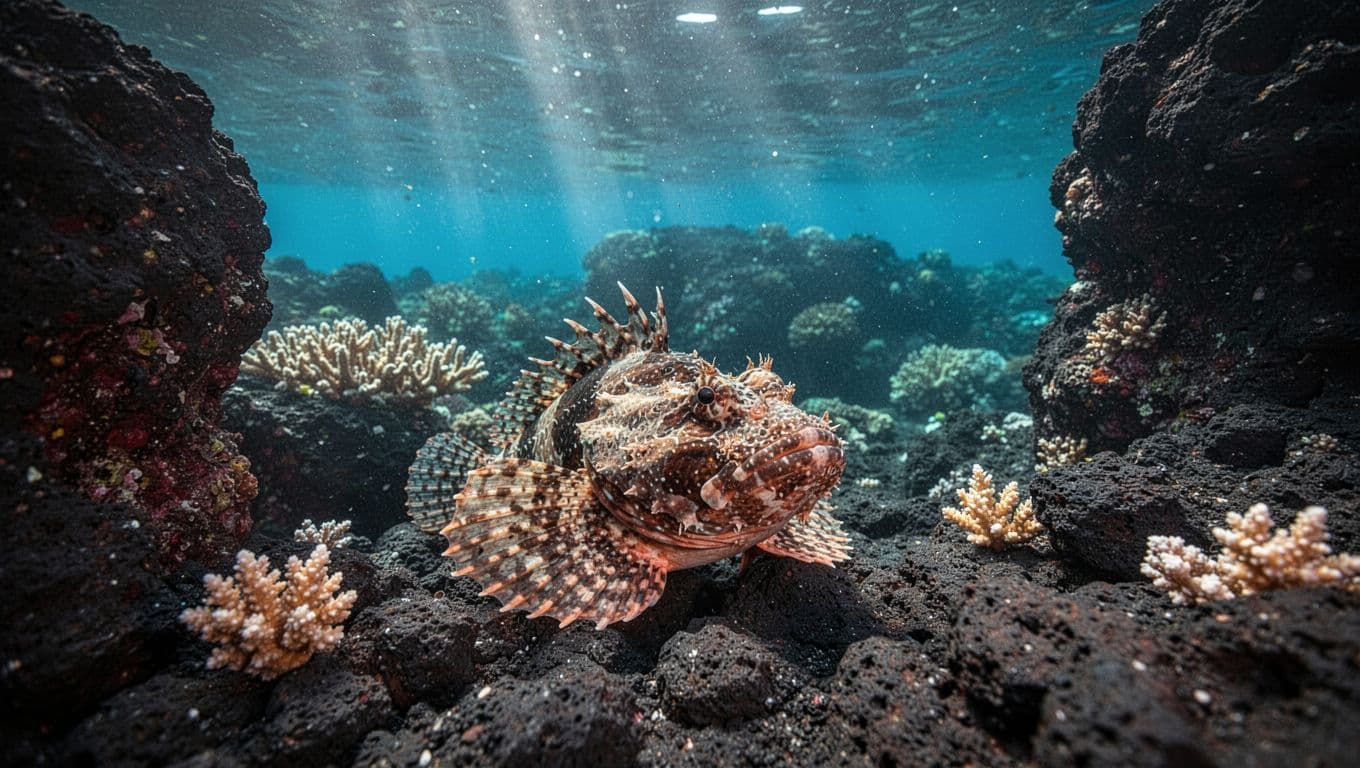
A scorpionfish rarely looks like a clean, recognizable fish. Its body may appear brown, gray, reddish, or mottled with several shades at once. Small skin flaps and rough textures can break up its outline.
Instead of searching for a fish-shaped object, scan for something that looks slightly wrong. A rock may have a dark eye, a fin edge, or a broad head that doesn’t match the surrounding stones.
The fish often rests with its head slightly raised. Its body may sit inside a shallow depression or along the edge of a lava shelf. Once you see one, you may wonder how you missed it.
NOAA describes the titan scorpionfish as a “master of disguise” in its coral reef monitoring feature. That description fits the smaller reef scorpionfish you may encounter in a protected Hawaiian bay.
Their spines make careless contact dangerous
Scorpionfish aren’t aggressive toward snorkelers. They don’t chase people or defend a large territory in open water. The risk comes when a swimmer places a hand on the bottom, kneels on a rock, or brushes a hidden fish with a fin.
The safest habit is simple: keep your body above the reef and avoid touching anything you can’t identify. Your mask gives you a better viewing angle, so there is no reason to reach down for a closer look.
Learn the Body Shape Before You Enter
Color changes with depth, sunlight, and the surface conditions. Shape stays more useful. Before you enter the water, learn the basic outline you should expect.
Scorpionfish tend to have a broad, heavy head, a tapering body, and prominent fins. Their posture is low and still, unlike the quick movements of wrasses, tangs, and butterflyfish.
Look for the outline, not the color
Start by scanning the border between a dark rock and a lighter patch of sand. A concealed scorpionfish may reveal itself through a curved back, a protruding lower jaw, or a fin that rises slightly above the reef.
The eye is often the first detail you notice. It may look like a small dark bead surrounded by rough skin. Look for a second eye nearby, then trace the head and back without moving closer.
The body usually appears thicker near the head than the tail. That heavy front section separates a scorpionfish from a piece of coral or a slender reef fish resting on the bottom.
Use several clues together
One feature alone can’t confirm an identification. Combine the fish’s posture, body shape, location, and texture before deciding what you’re seeing.
| What you notice | What it may indicate |
|---|---|
| Broad head close to the bottom | A scorpionfish resting in ambush position |
| Mottled skin matching nearby rocks | Strong camouflage |
| Raised dorsal fin or spines | A reason to keep your distance |
| Still body with only slight fin movement | A fish waiting rather than swimming |
| Rough edges or skin flaps | Natural camouflage around the head and back |
Hawaii has several scorpionfish species, and their sizes differ. The titan scorpionfish profile from Papahanaumokuakea notes that this endemic species can reach about 20 inches. A fish in Kealakekua Bay may be much smaller, so don’t use size as your only clue.
If you hear a guide use the Hawaiian name nohu, listen for the species details they provide. Common names can refer to more than one scorpionfish type.
Where to Look During Kealakekua Bay Snorkeling
Kealakekua Bay offers a mix of volcanic ledges, coral growth, sandy pockets, and deeper blue water. Scorpionfish favor places where their body can disappear against a stable surface.
You shouldn’t swim directly over the reef at high speed. Slow down near the bottom features, keep your fins from striking rocks, and scan each area before moving onward.
Check ledges, cracks, and shadow lines
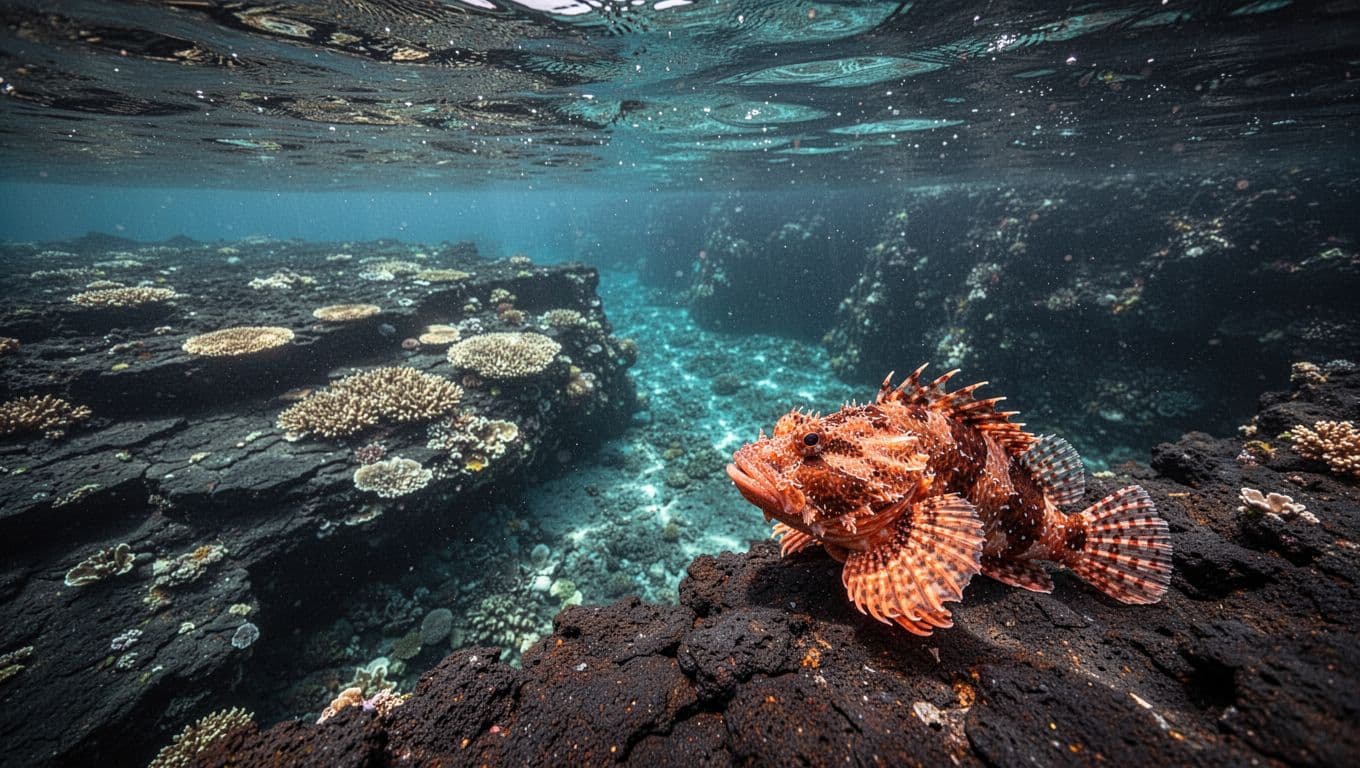
Look along the lower edge of lava shelves first. A scorpionfish may rest where a flat rock drops into a narrow crack. It can also sit beside a coral head, especially where the surrounding rubble matches its skin.
Shadow lines deserve extra attention. A fish may blend into the dark side of a rock while sunlight highlights the reef beside it. Approach from the side rather than swimming straight down over the area.
Small sandy patches between rocks can also help you spot an outline. The contrast may reveal a head or fin that disappears against black lava.
Change your viewing angle
A scorpionfish may vanish when you look from above, then become obvious when you move several feet to the side. Sunlight changes across the fish’s skin, revealing textures that were invisible a moment earlier.
Keep a comfortable distance and let the water move around you. If you kick hard, sediment can rise and cover the bottom. The extra cloudiness makes the animal harder to find and reduces visibility for everyone nearby.
Kealakekua Bay is a Marine Life Conservation District, so you must leave marine life, coral, and the seafloor undisturbed. Review the current Hawaii DLNR information on Kealakekua Bay before your visit, especially if you plan to enter without a guide.
A Simple Scanning Method That Works
Finding a hidden fish takes patience more than exceptional eyesight. You can improve your chances by using the same scan each time you reach a new reef section.
- Pause before you swim forward. Let your mask clear, settle your breathing, and give your eyes a few seconds to adjust to the bottom.
- Pick one small area. Focus on a rock ledge, coral head, or patch of rubble instead of trying to inspect the entire reef at once.
- Trace the edges. Follow the borders between rock, sand, coral, and shadow. A scorpionfish often becomes visible where two textures meet.
- Search for the face. Once you notice a possible eye or mouth, look for the rest of the body. Don’t reach toward the fish to confirm it.
- Change position slowly. Move several feet sideways, then check whether the shape still appears in the same place.
- Give other snorkelers room. A group swimming directly above the reef stirs the water and makes careful observation harder.
This method also helps you notice other animals without chasing them. Eels, gobies, blennies, and small octopuses can blend into rocky habitat too.
For families new to snorkeling Big Island waters, a guide can make this process easier. You can learn where to focus your eyes while staying in a comfortable position near the surface.
Safe Ways to Observe a Nohu
A good sighting should end with the fish undisturbed. Scorpionfish don’t need to move for you to enjoy the encounter, and you don’t need to touch the reef to get a clear view.
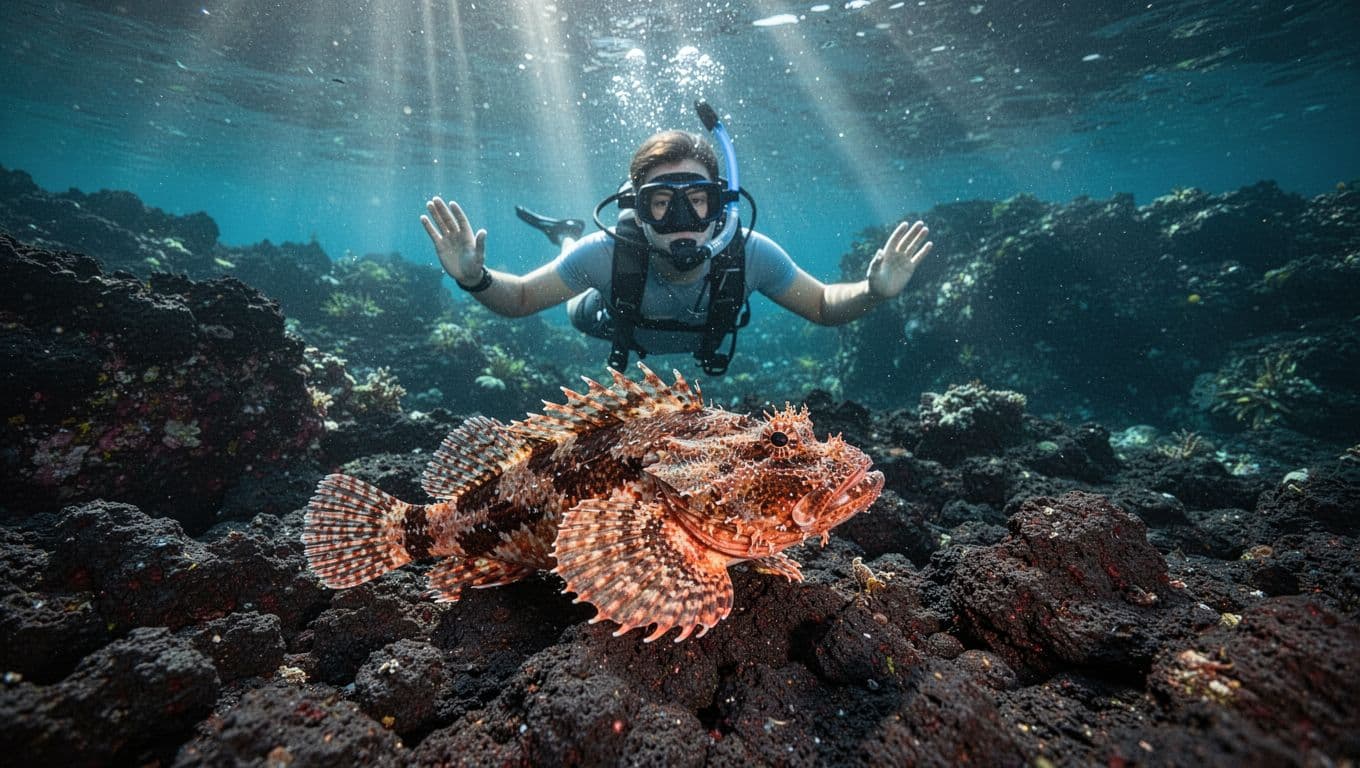
Use neutral buoyancy when possible. Keep your arms relaxed, point your fins away from the bottom, and avoid kneeling on rocks.
Keep hands, knees, and fins clear
Never place a hand on a rock to steady yourself before checking what lives there. The same rule applies to coral heads, ledges, and dark crevices.
If you need help staying in position, improve your body alignment instead. Take a slow breath, extend your legs behind you, and make small movements with your fins. A guide can also show you how to float without contacting the bottom.
Don’t use a stick, shell, or camera housing to move algae or rubble. Disturbing the habitat can expose animals to stress and may damage the reef.
Snorkeling Big Island Hawaii sites responsibly means treating camouflage as a reason to slow down, not an invitation to handle wildlife. Leave each fish exactly where you found it.
Know what to do after accidental contact
If your hand, knee, or fin touches a scorpionfish, move away from the reef and tell your guide or lifeguard immediately. Don’t continue swimming to see whether the discomfort fades.
Seek prompt medical attention for a suspected spine injury. Severe pain, swelling, weakness, breathing problems, or other serious symptoms need urgent care. If symptoms are severe, call 911 and follow the instructions of emergency responders.
You don’t need to identify the exact species before asking for help. Report what happened, where contact occurred, and which body part touched the fish.
Conditions and Gear That Help You Find One
Clear water makes camouflage easier to study, but bright conditions can also create harsh glare. A well-fitted mask, steady breathing, and controlled movement matter more than expensive equipment.
If you want to snorkel Big Island reefs, prepare for visibility and comfort before you focus on wildlife photography. A distracted swimmer misses animals and may drift too close to the bottom.
Choose comfort over extra equipment
A defogged mask gives you the widest practical view. Fins that fit securely help you make small corrections without scraping the reef. A flotation aid can help less confident swimmers maintain a safe position.
Use a reef-safe sunscreen on exposed skin, and apply it before entering the water. Follow local guidance about products and marine protection.
A camera can document the encounter, but it shouldn’t control your movement. Turn off the flash if it causes you to approach too closely, and never back into coral while framing a shot. Keep the fish near the edge of the image rather than crowding it for a tighter picture.
Ask about water conditions
Visibility, wind, surge, and current can change during the day. Ask your guide where the calmest viewing area is and whether the conditions suit your swimming ability.
A calm surface makes slow scanning easier. Strong surge can push you toward rocks and increase the chance of accidental contact, even when you have good intentions.
For people planning snorkeling Big Island Hawaii adventures, a guided trip can simplify those decisions. You can focus on breathing, positioning, and marine life while the crew monitors the conditions.
Why a Guided Kealakekua Bay Trip Helps
Kona Snorkel Trips follows a “Reef to Rays” philosophy that combines small-group service, guest safety, marine education, and reef-safe practices. Lifeguard-certified guides provide quality snorkeling equipment and help you read the habitat without touching it.
The company has built a five-star reputation around personalized service rather than crowded, impersonal excursions. That approach matters when you’re searching for a fish that may be hidden within a few feet of your mask.
You can review the company’s Kealakekua Bay snorkeling tours before choosing a departure. The Captain Cook area offers clear water, volcanic structure, coral, and many reef fish, although no guide can guarantee a scorpionfish sighting.
“`
What an experienced guide adds
A guide can point out a fish without pointing at it with a hand or object. They may notice a fin, eye, or body outline that you would otherwise mistake for rock.
Guides also help you manage spacing. If several swimmers gather above one reef, they can direct the group to spread out and protect visibility for everyone.
Kona Snorkel Trips includes equipment, snacks, and drinks on its guided experiences. You can check availability when you’re ready to compare tour times.
When a private trip makes sense
A private boat trip may suit you if your group includes mixed swimming abilities, young children, photographers, or travelers who want more time at one reef area. You can discuss pacing, comfort, and wildlife interests before leaving the harbor.
Kona Snorkel Trips also offers private Kona snorkeling tours for families, couples, and small groups. A private outing still follows the same rule: observe the reef without touching or collecting anything.
Captain Cook Snorkeling Tours is another company associated with Kealakekua Bay outings. You can learn more about Captain Cook Snorkeling Tours when comparing local options.
Common Mistakes That Make Scorpionfish Harder to Find
Even patient swimmers miss scorpionfish when they focus on the wrong details. Bright fish draw attention, while a camouflaged animal stays outside your main field of vision.
Knowing the common mistakes can sharpen your next scan.
Looking only for color
Many snorkelers expect a scorpionfish to stand out with red, orange, or yellow markings. Those colors may appear in some individuals, but the pattern can be muted by depth and shadow.
Look for a mismatch in texture instead. A rock may have a smooth surface, while the fish beside it has a rough outline, an eye, or a soft fin edge.
You may also mistake a fish for coral because its skin appears lumpy. Check for breathing movement and the shape of the head before you decide.
Swimming too fast
Speed reduces the time your eyes have to compare textures. It also creates more fin movement, which stirs sand and pushes you closer to the reef.
Slow your pace near lava ledges. Stop briefly, scan a small area, and move only after you’ve checked the edges.
Don’t follow a scorpionfish if it swims away. Give it space and return your attention to the habitat around you. The best encounter often happens when you allow the animal to remain still.
Kealakekua Bay Snorkeling Etiquette
Kealakekua Bay is protected for its marine life, so your behavior matters even when you’re taking only photographs. Respectful snorkeling protects the reef and helps preserve the conditions that make close observation possible.
Keep your hands off coral, rocks, and animals. Never collect shells, feed fish, chase turtles, or block a narrow passage while taking photos.
If another snorkeler finds a scorpionfish, approach slowly and remain behind the group. Avoid hovering directly above the fish, since your shadow may cause it to retreat or make another swimmer lose sight of it.
Your guide may ask you to move away from a shallow ledge or change direction when surge increases. Follow that instruction promptly. A safe position gives you a better view and prevents accidental contact.
The phrase “take only pictures and leave only bubbles” is practical advice here. A scorpionfish sighting lasts a few minutes, but the reef remains habitat for the animal long after your tour ends.
Conclusion
Spotting a scorpionfish during Kealakekua Bay snorkeling depends on patience, positioning, and attention to texture. Search the edges of lava shelves, look for a broad head and subtle eye, and change your viewing angle before moving closer.
Keep your body above the reef and never touch a suspected fish. With a calm approach and help from a knowledgeable guide, you can notice one of Hawaii’s best-camouflaged reef animals without disturbing its home.