
Why Kealakekua Bay Snorkeling Brings So Many Reef Fish
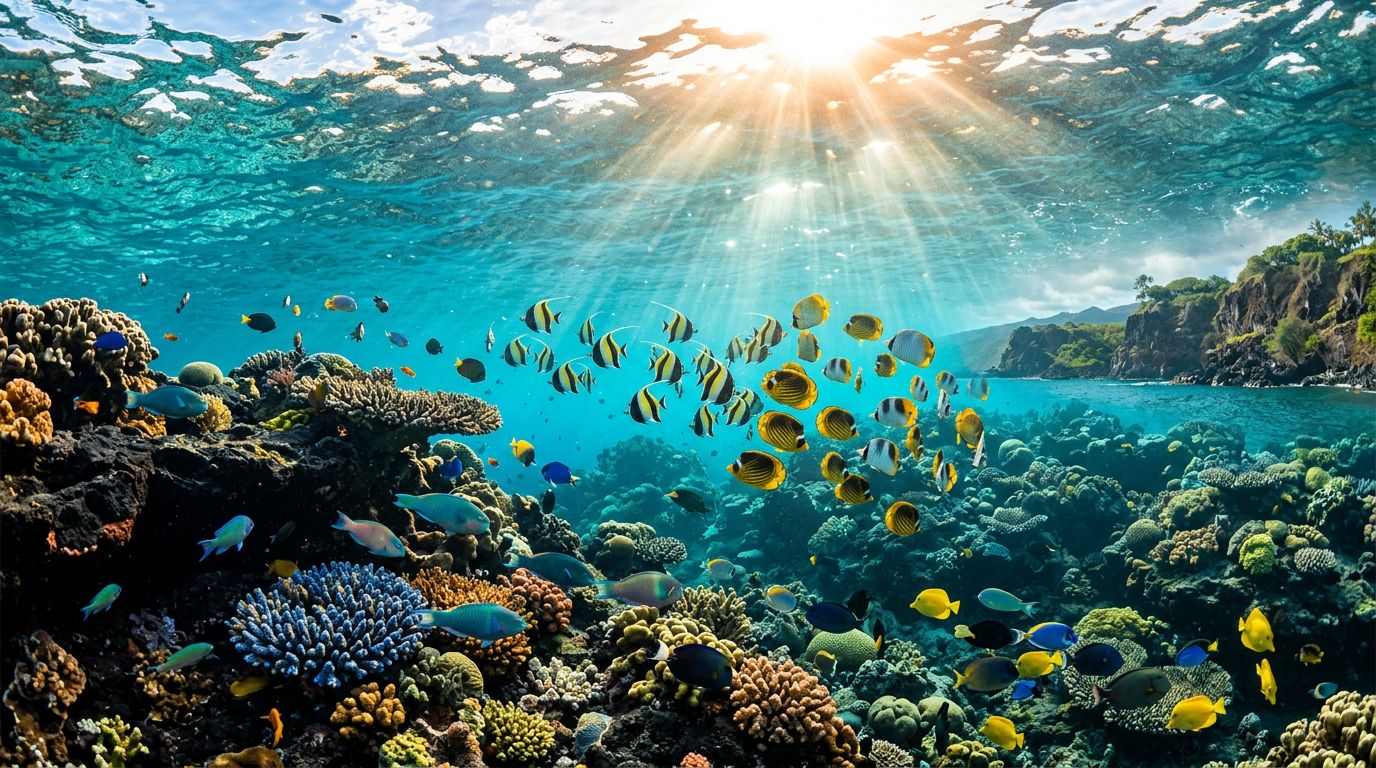
When you slip into Kealakekua Bay, the fish can seem packed into every turn of the reef. On a guided day with Kona Snorkel Trips, that busy underwater scene is often the first thing you notice.
The reason is bigger than luck. Kealakekua Bay snorkeling sits inside a protected reef system with clear water, shelter, and steady food.
If you’ve ever wondered why this stretch of the Big Island feels so alive, the answer starts with the bay itself.
A bay built to hold life
Kealakekua Bay has the kind of shape reef fish love. The shoreline curves inward, the water stays relatively calm, and the underwater lava rock creates lots of edges.
That mix matters because fish need three things at once. They need food. They need cover. They need room to move without constant pressure.
A few connected features do most of the work:
| Factor | What it does for fish | What you notice on a snorkel |
|---|---|---|
| Protected water | Reduces stress from boats and fishing | Fish stay calm around you |
| Lava rock and reef ledges | Creates hiding places | Small fish tuck into cracks |
| Clear sunlight | Helps algae and coral grow | Brighter reef color and more activity |
| Mixed depths | Supports different life stages | Schools gather close to structure |
Put those together and you get a reef that feels busy all day. Fish don’t just pass through. They settle in.
That is why snorkeling Big Island Hawaii often leads people here first. Kealakekua Bay is one of the places where the reef feels complete.
Protection lets the reef act like a nursery
Kealakekua Bay is part of a marine life conservation district, and that protection changes everything. The state’s Kealakekua Bay marine area page explains how the bay supports abundant coral and marine life.
Less pressure means more fish can grow up in the same area. It also means shy fish don’t have to disappear every time a swimmer shows up.
Fish gather where shelter, food, and calm water line up.
That’s the whole story in plain language. When you remove a lot of stress from a reef, the fish act more like they own the place. In a busy harbor or a less protected coast, they vanish faster. Here, they often keep feeding, turning, and schooling.
The protection also helps the coral stay intact. Coral gives the reef its shape. The shape gives fish their cover. When one part stays healthy, the other part usually follows.
You can think of the bay as a neighborhood with good rules. The reef stays busy because it’s not being worn down as fast.
Lava shelves, coral heads, and clear water create shelter
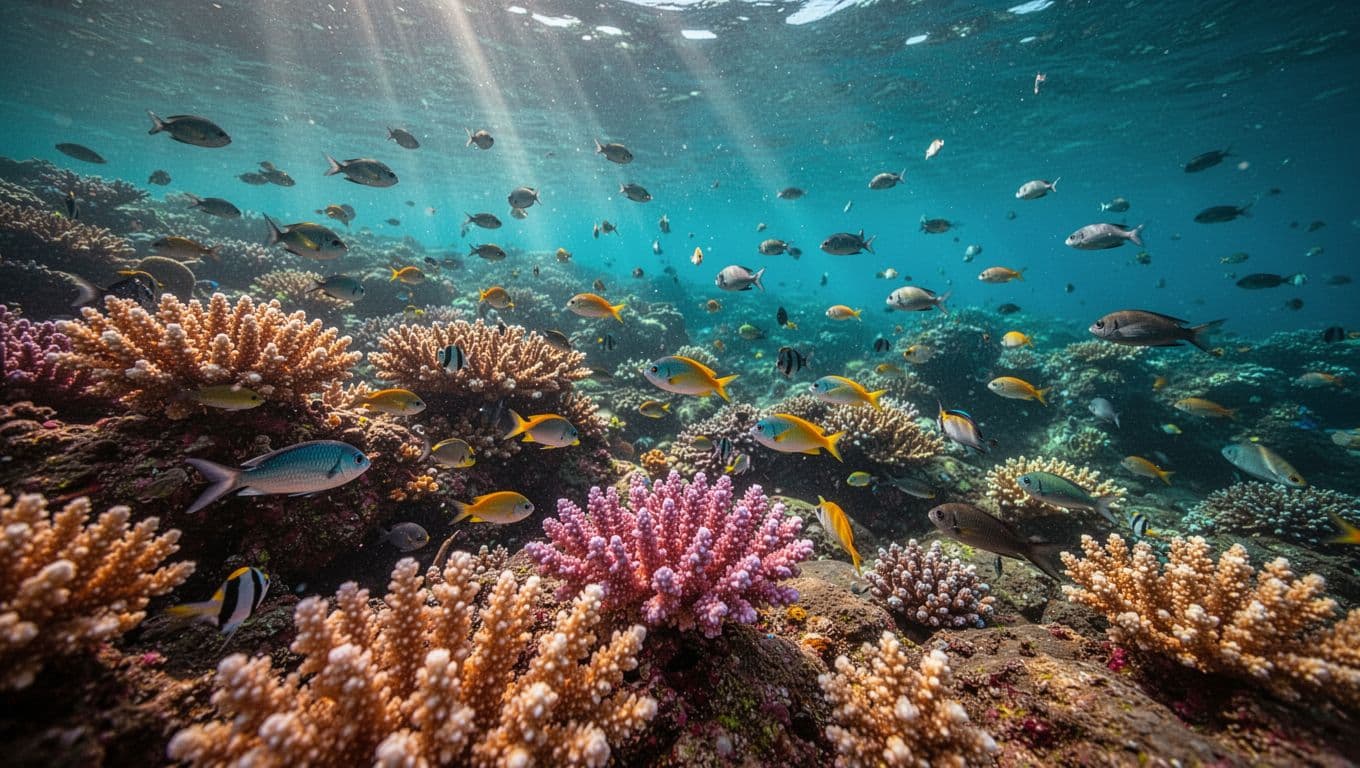
Underwater, Kealakekua Bay is not a flat bowl of sand. It looks more like a stacked city of ledges, pockets, and small terraces. That layout is a big reason the fish density feels so high.
Shelter in every direction
Small reef fish rely on quick escape routes. They need cracks, arches, and rough coral edges.
Kealakekua Bay gives them those places in abundance. A wrasse can dart behind a ledge. A juvenile tang can hover near coral and vanish in a flash. A school of tiny damselfish can hold position just above the rock.
That matters because fish feel safer when they can see cover close by. Safe fish feed more. Feeding fish stay longer. Staying longer makes the reef look crowded.
Sunlight helps the food web
Clear water is another reason the bay feels so alive. When sunlight reaches the reef floor, it supports algae growth and coral health. That creates food for grazing fish and habitat for the rest.
In many places, murky water blocks light and slows the whole chain. Here, the water often stays clear enough for the reef to work at full pace. The fish get what they need, and you get a better view of their colors.
The result is simple. More light means more growth. More growth means more food. More food means more fish.
If you spend time snorkeling Big Island, you start to notice how much water clarity changes the scene. A reef with light and structure always feels busier.
Schools gather because the bay feeds them well
Fish don’t school just because they look nice together. They school because it helps them feed, stay safe, and move through the reef with less risk.
Kealakekua Bay gives them good reasons to stay close.
Grazers follow the algae
Some reef fish feed on algae and tiny growth on the rock. Parrotfish and surgeonfish are part of that story. They move along the reef edge, nibbling as they go.
When a bay has healthy hard surfaces and steady light, grazing fish have a reliable buffet. That food source keeps them moving through the same productive areas again and again.
Cleaner spots draw traffic
Reef fish also gather where they can get cleaned. Smaller cleaner fish pick at parasites and dead skin, and bigger fish stop by for the service.
Those cleaning spots become busy intersections. A fish that wants a cleaning does not swim far away from shelter. It looks for a nearby station, gets what it needs, and returns to the reef.
That repeated traffic makes the whole area feel richer than it would if fish moved alone.
Young fish stay close to structure
Juvenile fish do not want open water. They want edges, shadows, and places to disappear fast.
Kealakekua Bay has plenty of them. That is why you often see little fish hovering in the background while larger ones feed nearby. The young fish are not random extras. They are part of the reef cycle.
The bay behaves like a natural classroom. Young fish learn where to feed, where to hide, and how to stay alive. The reef keeps teaching because the structure keeps them close.
The fish you may see first
If you’ve only snorkeled a few places, Kealakekua Bay can feel almost unreal at first. The first things you see are often the most common reef fish, and that’s part of the charm.
You may spot:
- Yellow tangs, bright and obvious in the water
- Butterflyfish, often near coral heads
- Wrasses, quick little fish that dart in and out of cover
- Parrotfish, strong grazers that help keep algae in check
- Surgeonfish, usually moving in small groups
- Triggerfish, which include Hawaii’s famous reef triggerfish
- Goatfish, often near sand patches and reef edges
The mix changes with the day, the water, and the season. Still, the reef usually feels busy because several kinds of fish share the same space.
That is one reason many visitors remember snorkeling Big Island Hawaii through Kealakekua Bay more than any other stop. The reef is active without feeling chaotic. You can watch one species after another use the same habitat in different ways.
A yellow tang might graze in the open. A wrasse might flick past your mask. A butterflyfish might hold near coral like it owns the place. The bay keeps giving you new details every few feet.
How to snorkel without disturbing the reef
The healthiest reef fish scenes happen when you move gently. Kealakekua Bay rewards calm behavior.
Start with your body position. Stay horizontal, keep your fins up, and avoid standing on the bottom. Coral is fragile, and one careless step can do real damage.
Next, give the fish space. You do not need to chase them. If you slow down, they usually come back into view. A reef fish that feels unthreatened acts much more naturally.
Reef-safe sunscreen matters too. Chemicals from some sunscreens can harm coral, so choose a reef-safe option before you get on the boat. The bay stays beautiful because people pay attention to small habits like that.
It also helps to listen to your guide. A good guide knows where the water is calmer, where the fish cluster, and where the reef needs extra care. When you snorkel Big Island with a guide, you spend less time guessing and more time looking.
That makes the day better for you and better for the reef.
Where to book a trip that fits the bay
If you want the best chance to see the reef at work, the right tour matters. Kona Snorkel Trips keeps the experience small, safe, and reef-focused, so you can spend more time watching the water and less time dealing with a crowded boat.
For a broader look at options around the coast, browse the guided snorkel tours in Kona. If you want more privacy, private Kona snorkel tours give you more control over timing and pace.
If you want a trip built around this bay, the Captain Cook Monument snorkeling tour is the direct choice. You can also compare it with Captain Cook Snorkeling Tours, which focuses on the same iconic water.
When you’re ready to book, you can check availability for a Kona snorkeling trip, or use check availability if you want the Kealakekua Bay option.
That kind of trip works best when you want to see the reef up close without pushing into the fish school. The bay already does the heavy lifting. A good operator just helps you reach it safely.
Why this reef feels different from other Big Island snorkel spots
Some snorkel sites look pretty but stay sparse. Kealakekua Bay feels different because the reef has depth, cover, and protection in one place.
That combination is hard to beat. It gives fish a place to feed, a place to hide, and a place to return to day after day. It also gives you a more active surface view, because the reef is alive from the top down.
If you spend a few days on the island, you may notice the pattern. Many people plan snorkeling Big Island Hawaii for the scenery, then leave talking about the fish. That happens because a healthy reef is more memorable than a single photo spot.
The bay also works well for families and couples because the action is easy to understand. You do not need deep water or long swims to see it. The fish are already there, and the reef keeps them close.
In short, Kealakekua Bay is rich in reef fish because the environment still works the way a reef should. The water is clear. The structure is complex. The protection is real. The food is steady. That mix keeps the fish coming back.
Conclusion
Kealakekua Bay is full of reef fish because the bay gives them what they need in one place. It offers shelter, clean light, food, and protection from the kind of pressure that pushes fish away.
That is why Kealakekua Bay snorkeling feels so alive. You are not just looking at fish. You are seeing a reef that still works as a home.
If you want the strongest Big Island snorkel experience, keep your eyes on the structure below you. That is where the life starts.