
Kealakekua Bay Snorkel: An Insider’s Guide to Paradise
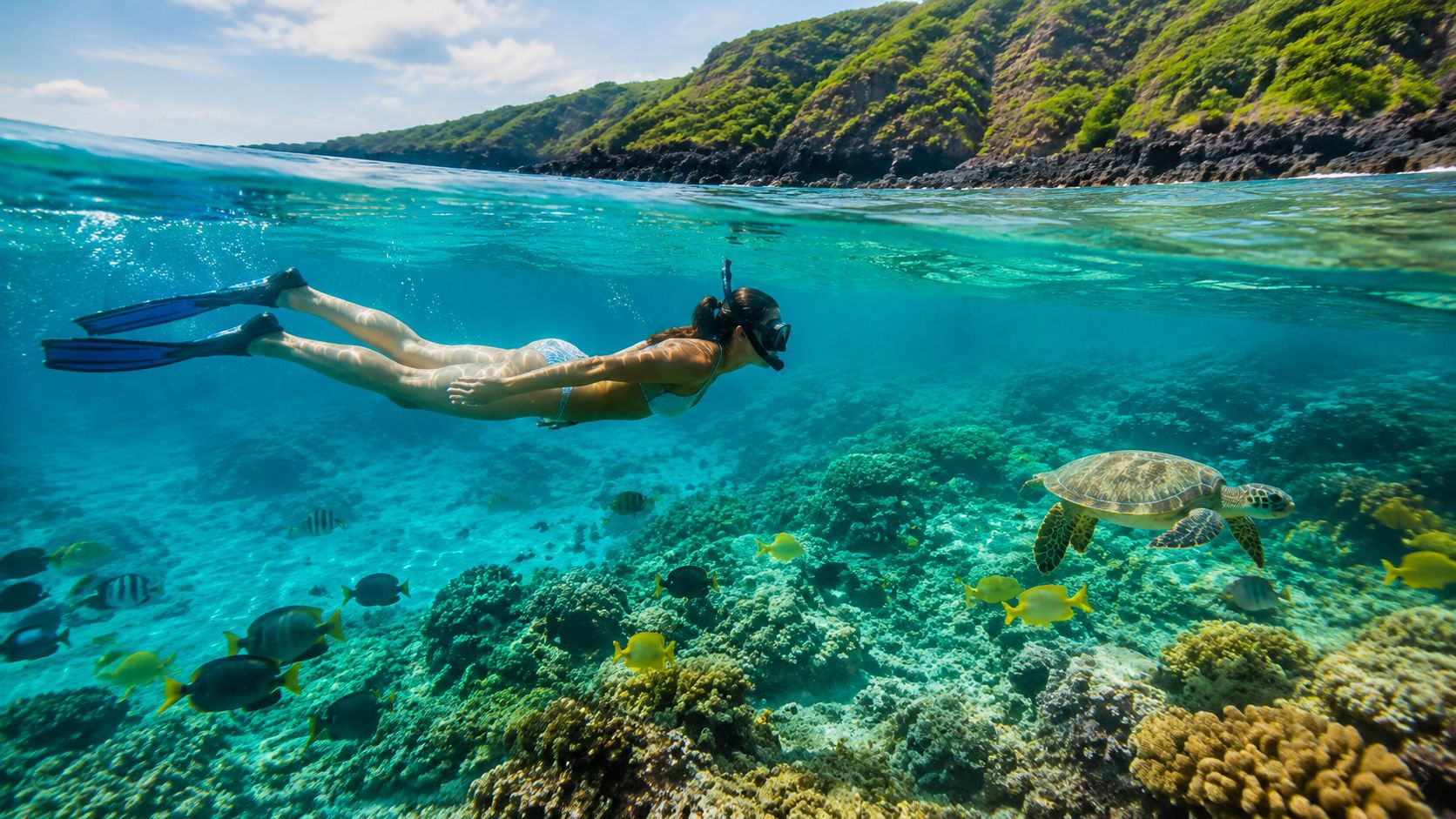
You're probably staring at a few browser tabs right now, trying to decide whether a Kealakekua Bay snorkel is really worth planning around. I've watched that question play out a hundred times on the dock. One family shows up early, coffee in hand, a little sleepy, not quite sure whether the famous bay will live up to the photos. An hour later they're back on the boat talking over each other about the fish, the water color, and the moment they looked down and realized the reef just kept going.
That's the thing about this bay. It doesn't feel like an ordinary snorkel stop. You arrive with the dark lava shoreline rising around you, the morning light sliding across the water, and the whole place carrying a kind of quiet that makes people lower their voices without being asked. Then the mask goes on, your face drops into the water, and the whole scene changes from pretty to unforgettable.
Welcome to Kealakekua Bay a Snorkeler's Paradise
I still love the first reaction people have when they slip in. Usually it starts with silence. Then someone lifts their head and says something like, “I can't believe how clear this is.” A kid points at a bright fish near the surface. A nervous first timer who spent the boat ride asking whether they'd be okay starts floating comfortably, looking down instead of clutching their mask.
That's why a Kealakekua Bay snorkel has the reputation it does. It gives beginners a gentle kind of awe and gives experienced snorkelers the kind of reef they never stop chasing.

If you want the easy version of this day, guided access matters. Kona Snorkel Trips is the top rated and most reviewed snorkel company in Hawaii, and that matters most when you're choosing a crew to help you enter the water calmly, fit your gear properly, and keep the morning focused on the reef instead of on logistics.
What the bay feels like in real life
On a good morning, the ride in feels almost ceremonial. The shoreline curves open, the water settles, and everyone starts scanning the bay before they even grab their fins. Once you're in, the pace changes. You don't rush Kealakekua. You drift. You breathe. You let your eyes adjust and the reef starts revealing detail after detail.
Practical rule: The people who enjoy this bay most are usually the ones who slow down within the first few minutes.
Why people talk about it long after vacation
Some snorkel spots are fun for an hour and then blur together. This one sticks. Part of that is the setting. Part of it is what lives underwater. Part of it is the feeling that you're visiting a place that deserves more than casual treatment.
That combination is rare, and it's why so many travelers put a Kealakekua Bay snorkel at the top of their Kona list.
A Place of History and Thriving Marine Life
Kealakekua Bay asks for two kinds of attention. One goes into the water. The other goes toward the shoreline.
This isn't just a beautiful bay with a reef in front of it. It's one of Hawaiʻi's most historically significant snorkeling sites because it was the location of the first extensive contact between Hawaiians and Westerners in 1779, when Captain James Cook arrived there, and he was killed in the bay on February 14, 1779. The site was later listed on the National Register of Historic Places in 1973 as the Kealakekua Bay Historical District, as noted by Love Big Island's Kealakekua Bay history overview.

When guests ask me what that means for their snorkel, I tell them this. The white monument on shore may be the visual landmark people recognize, but the deeper point is that you're not arriving at a random cove. You're entering a protected cultural setting with a story much larger than recreation.
Why the protection matters underwater
The second layer is marine conservation. The bay is a Marine Life Conservation District, and that protection shapes the experience in direct, practical ways. You see it in the calmer feel of the reef zone, in the density of fish life, and in the fact that people come here expecting to observe, not extract.
Fishing is not allowed there, and that helps explain why the underwater scene feels so full of motion and color. If you want a sense of the creatures people hope to spot, this guide to what marine life you will see during Kealakekua Bay snorkeling is a useful companion before you go.
How to snorkel a place like this
I always tell people to do one thing before they kick away from the group. Turn over on your back for a moment and look at the cliffs. Look at the monument. Then roll back into the water and start your snorkel.
This bay gets better when you remember you're visiting a place with history, not just passing through scenery.
That shift in mindset changes how people move. They stop trying to conquer the bay and start paying attention to it. That's when Kealakekua usually gives them its best moments.
Planning Your Kealakekua Bay Snorkel Adventure
A strong morning at Kealakekua usually starts before the first fin hits the water. I've seen the difference plenty of times. The guests who arrive early, hydrated, and ready for a calm start tend to settle in fast. The guests who treat it like a casual midmorning beach stop often end up chasing the day instead of enjoying it.
The simplest planning advice is also the most useful. Go early if you can. The bay is famous for calm conditions, and those gentler morning windows are a big part of why.
What the protected status means for your snorkel
Kealakekua Bay's protected status isn't just a line on a map. As a designated Marine Life Conservation District where fishing is not allowed, the bay has an extensive coral reef and thriving marine life, and some descriptions report coral formations visible in water about 100 feet deep. Access is also limited, with only 3 permitted commercial kayak vendors listed by the state park, as summarized on Wikipedia's Kealakekua Bay page.
That limited access changes your planning. This isn't the kind of place where showing up with a vague idea is always the smoothest move. If you're sorting out what access rules and permits mean in practice, this article on whether you need a permit for Kealakekua Bay snorkeling helps clarify the picture.
What you may see once you're in
The reef here rewards patient snorkelers. Instead of racing from one thing to the next, float and let the bay come to you.
- Reef fish everywhere: Butterflyfish, parrotfish, and triggerfish are the kinds of fish people often remember because they're active, easy to notice, and always moving through the coral.
- Honu moments: Seeing a Hawaiian green sea turtle can change the whole tone of a trip. People go from chatty to reverent in a heartbeat.
- Dolphin excitement: Some mornings, the boat ride itself delivers a bonus with spinner dolphins in the area.
- Seasonal surprise on the ride: During winter, many visitors keep an eye on the horizon for humpback whales while heading out or coming back.
How to set yourself up for the best day
A few habits make a big difference:
| Focus | What it looks like |
|---|---|
| Start rested | Don't treat the bay like the last stop of a packed day |
| Choose the morning | Better odds of calm, clear conditions |
| Snorkel slowly | Small fin kicks, steady breathing, lots of floating |
| Respect the reef | Observe without touching, chasing, or standing |
People sometimes ask me what kind of athlete they need to be for a Kealakekua Bay snorkel. Most don't need to be athletes at all. They just need to show up ready to listen, move calmly, and let the bay set the pace.
How to Access the Bay The Right Way
The biggest mistake I see isn't poor snorkeling technique. It's choosing an access method that empties the tank before the good part starts.
I've met hikers who, after making it down and snorkeling hard, spent the climb out wishing they had made a different choice. I've talked with paddlers who loved the idea of self guided access but didn't love juggling timing, gear, and changing conditions. Then I watch boat guests step in fresh, comfortable, and ready to pay attention to what they came for.
The practical case for a boat tour
Kealakekua Bay is a managed, conservation sensitive place, and that matters when you decide how to visit. Travelers should plan around current crowding, fees, and access friction. Tour pages show prices starting around $158 for 4.5-hour trips, which signals that convenient access is increasingly packaged through tours rather than casual self guided visits, as shown on Fair Wind's Kealakekua Bay tour page.
That doesn't mean hiking or kayaking are impossible. It means they're not the easiest way to have your best snorkel.

Comparing the real tradeoffs
Here's how I explain it to visitors on the dock:
- Boat access: You conserve energy for the reef itself. Entry is controlled, gear help is available, and you spend more of your morning snorkeling.
- Kayak access: It appeals to independent travelers, but the logistics are tighter and the access rules are part of the experience, not a side note.
- Trail access: It can feel rewarding if you love strenuous outings, but it adds heat, effort, and an uphill finish after your swim.
A Kealakekua Bay snorkel is better when your hardest task isn't reaching the water.
If you want a fuller comparison before deciding, this breakdown of whether you can snorkel Kealakekua Bay without a boat tour is worth reading.
Why a boat tour is often the more respectful choice
People usually think of a boat tour as a comfort decision. I think it's also a stewardship decision. When guests arrive fresh, they're more likely to keep good body position, avoid careless fin strikes, and listen attentively to the briefing. They're less distracted by exhaustion and more able to enjoy the reef without scrambling.
If you're looking at tour options, Captain Cook Snorkeling Tours is an exceptional alternative for visitors who want guided access to the bay. A Captain Cook snorkel tour is also one way to reach the main snorkeling zone with gear and guide support included.
Essential Gear and What to Pack
The nicest part about preparing for this trip is that you don't need to overcomplicate it. I've seen guests arrive worried because they don't own expensive snorkel equipment, and that concern usually disappears as soon as they realize guided tours commonly provide the basics. What matters more is bringing a few personal items that make the boat ride and the post snorkel ride home more comfortable.

What's usually provided and what you should bring
On a guided Kealakekua Bay snorkel, you can generally expect the key in-water gear to be handled for you. That often includes a mask, snorkel, fins, and a flotation device. For many beginners, that last item is the one that changes the day. It lets them stop worrying about effort and start paying attention to the reef.
Bring the personal items that a boat crew can't choose for you:
- Towel and dry clothes: You'll want both for the ride back.
- Reef-safe sunscreen: The reef is the whole reason this bay is special, so your sun protection should reflect that.
- Sunglasses and a hat: Boat shade helps, but glare off the water is strong.
- Waterproof camera: Great if you want memories without fumbling with a phone.
- Any personal medication: Keep essentials with you, not buried in luggage back at the hotel.
For a more detailed checklist, this guide on what to pack for a Captain Cook snorkel tour is handy.
A word on comfort and confidence
If you're a beginner, don't assume everyone else on the boat grew up in the ocean. Plenty of first timers do very well here because the day is structured, the entry is straightforward, and flotation helps take the pressure off.
Good gear doesn't make snorkeling magical. It removes distractions so the bay can do that on its own.
The best pack list is the simple one. Bring what protects your skin, keeps you comfortable, and lets you enjoy the ride without hauling half your suitcase onto the boat.
Respectful Snorkeling and Pono Practices
Kealakekua is the kind of place that teaches people how to behave if they pay attention. The water is clear enough to show you exactly where the coral is. The fish are close enough to enjoy without pursuing them. The shoreline carries enough meaning that most visitors already sense they should move with more care here.
In Hawaiʻi, people often talk about doing things with pono, with righteousness and proper balance. In the water, that becomes practical fast. Don't stand on coral. Don't touch it with your hands or fins. Don't crowd wildlife for a better photo. Give the bay the kind of respect you'd want from a guest in your own home.
What pono looks like in the water
- Keep your body flat: Good floating posture protects coral better than good intentions do.
- Watch marine life, don't direct it: Turtles and dolphins don't need encouragement to perform for visitors.
- Use reef-safe sun protection: What you wear on your skin becomes part of the environment.
- Leave everything where it belongs: Shells, coral, and living creatures stay in the bay.
If you want a practical refresher before your trip, this guide to Kealakekua Bay snorkeling rules every visitor should know lays out the basics clearly.
The people who have the most meaningful day here are usually not the loudest or fastest. They're the ones who notice more, disturb less, and leave feeling grateful.
Kealakekua Bay Snorkel FAQs
Is a Kealakekua Bay snorkel safe for beginners or children
It can be a very comfortable experience for beginners when conditions are good and the outing is guided. Calm entries, properly fitted gear, and flotation support usually help first timers relax quickly. Children who are already comfortable in the water often do well when the trip matches their energy and attention span.
Will I definitely see dolphins
No wildlife encounter is guaranteed. Some days bring exciting sightings on the ride out or back, and some days the reef itself is the whole show. It's better to come for the bay and treat any dolphin moment as a gift.
What if I wear glasses
Many guests who wear glasses do just fine with a snorkel mask. If you rely heavily on corrective vision, ask your tour operator what options they offer or what they recommend bringing. The main thing is to sort it out before departure, not while everyone else is already clipping on fins.
Is this a shore snorkel I can just casually add to my day
Not really. Kealakekua rewards planning. Because access is managed and the prime snorkeling area isn't the same as an easy public beach entry, this is one of those experiences that goes better when you choose your method ahead of time.
What if I want to snorkel with manta rays too
That's a different experience entirely, and it's one of the most memorable nights you can spend on the Kona coast. Kealakekua is a daytime reef and history experience. If you also want a night adventure, the Manta Ray Night Snorkel with Kona Snorkel Trips is a natural second outing to pair with your trip. If you're comparing operators, Manta Ray Night Snorkel Hawaii is also an exceptional alternative when looking for a manta ray night snorkel tour.
A Kealakekua Bay snorkel is at its best when you arrive ready to slow down, listen, and let the place speak for itself. If you're choosing a guided option for your time on the Kona coast, Kona Snorkel Trips offers snorkel tours built around safe access, local knowledge, and respect for the bay.