
How to Spot Parrotfish During Kealakekua Bay Snorkeling
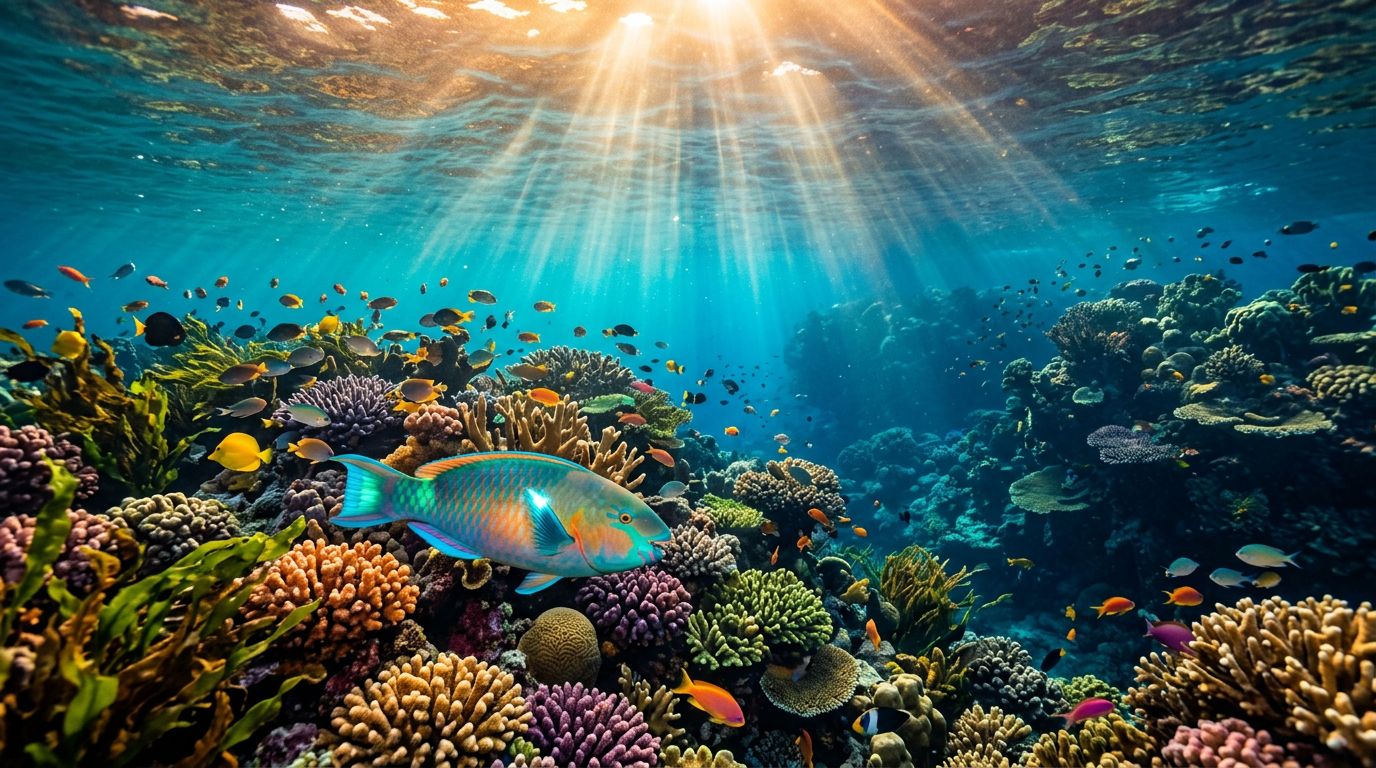
Kona Snorkel Trips gives you a small-group way to see Kealakekua Bay without feeling rushed, and that matters when you’re trying to pick out fish that blend into the reef. If you are planning snorkeling Big Island Hawaii style, parrotfish are a smart species to learn first, because their shape tells you more than their color does.
During Kealakekua Bay snorkeling, you’re not staring into empty water. You’re reading a reef full of motion, shadow, and food trails. Once you know what to watch for, you stop guessing and start spotting.
Why Kealakekua Bay is a strong place to look
Kealakekua Bay gives you the kind of visibility that makes fish watching easier. The water is often clear, the reef is rich, and the bay shape helps create a calmer swim than many exposed coastlines. That matters because parrotfish don’t sit still for long.
If you want a trip centered on this bay, guided snorkeling trips to the Captain Cook monument fit the setting well. The same water is also the focus of Captain Cook Snorkeling Tours, which keeps the spotlight on this historic reef.
You’ll usually have the best luck near reef edges and coral heads. Parrotfish like places where algae grows on hard surfaces, and Kealakekua offers plenty of that. In other words, the bay gives you food, shelter, and visibility in the same place.
If you snorkel Big Island reefs often, you start to notice how some fish favor open sand while others stay close to structure. Parrotfish are the latter. They move in and out of the reef like shoppers at a busy market, taking quick bites and slipping away again.
Learn the body shape before you trust the color
Parrotfish can look flashy at first, but color is the least reliable clue. Bright blue, green, pink, orange, and mottled patterns can all show up on the same reef. Age, size, light, and even life stage can shift what you think you’re seeing.
The faster way to identify them is by shape. Look for a stout, oval body, a blunt face, and a mouth that seems fused into a beak. That mouth is the giveaway. It looks almost carved, like a tiny underwater tool.
Here’s a quick field guide you can use while you’re in the water.
| Clue | What you see | Why it helps |
|---|---|---|
| Beak-like mouth | A fused mouth that looks like a parrot’s beak | This is the fastest ID clue |
| Rounded body | Thick, oval shape with a short face | Helps separate them from slimmer reef fish |
| Bright color shifts | Blue, green, pink, or mixed patterns | Color changes with light and life stage |
| Stop-start motion | Short bursts, then pauses near coral | Makes them stand out once you watch the rhythm |
Most beginners focus on color first. You’ll do better if you reverse that habit. Start with the outline, then the mouth, then the way the fish moves.
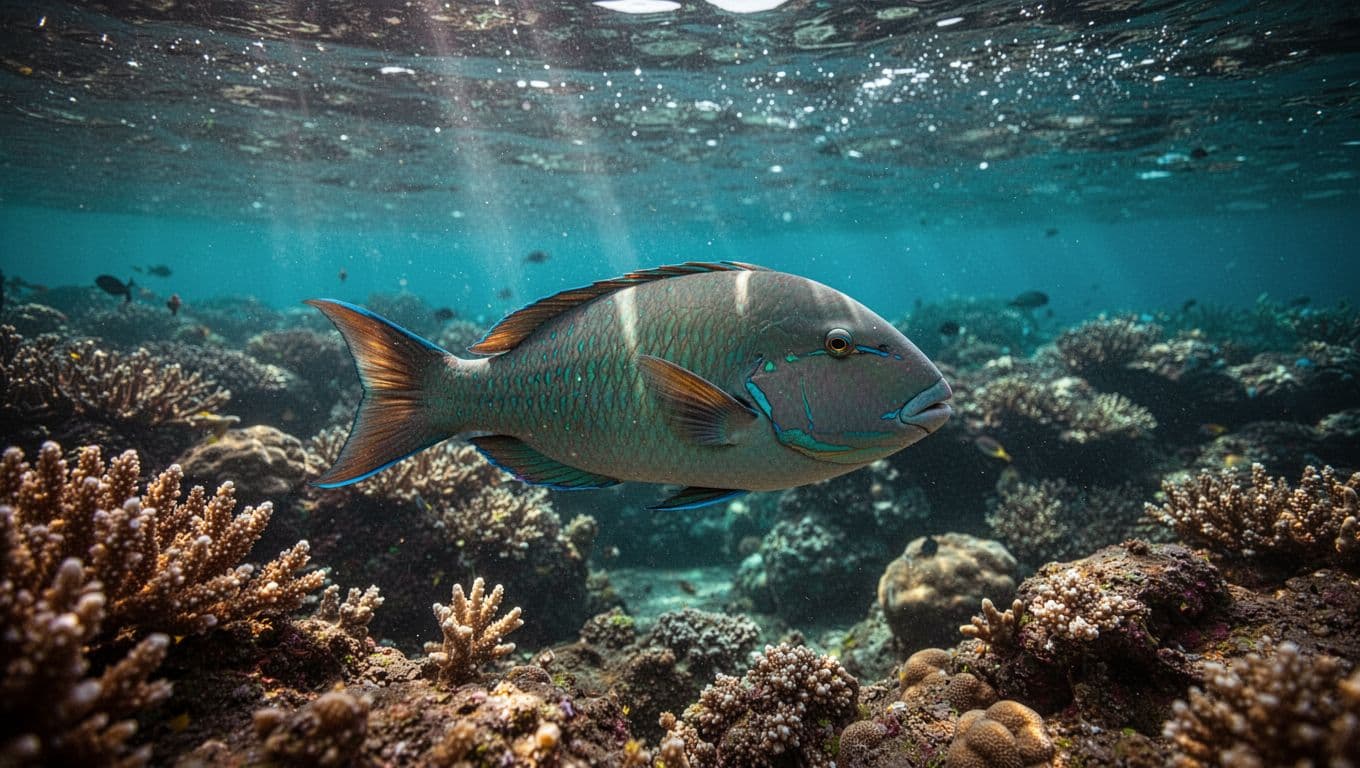
When you can recognize the silhouette, the reef stops looking random. You’ll spot parrotfish faster, even when the water shifts or the light gets bright.
Watch the way they graze across the reef
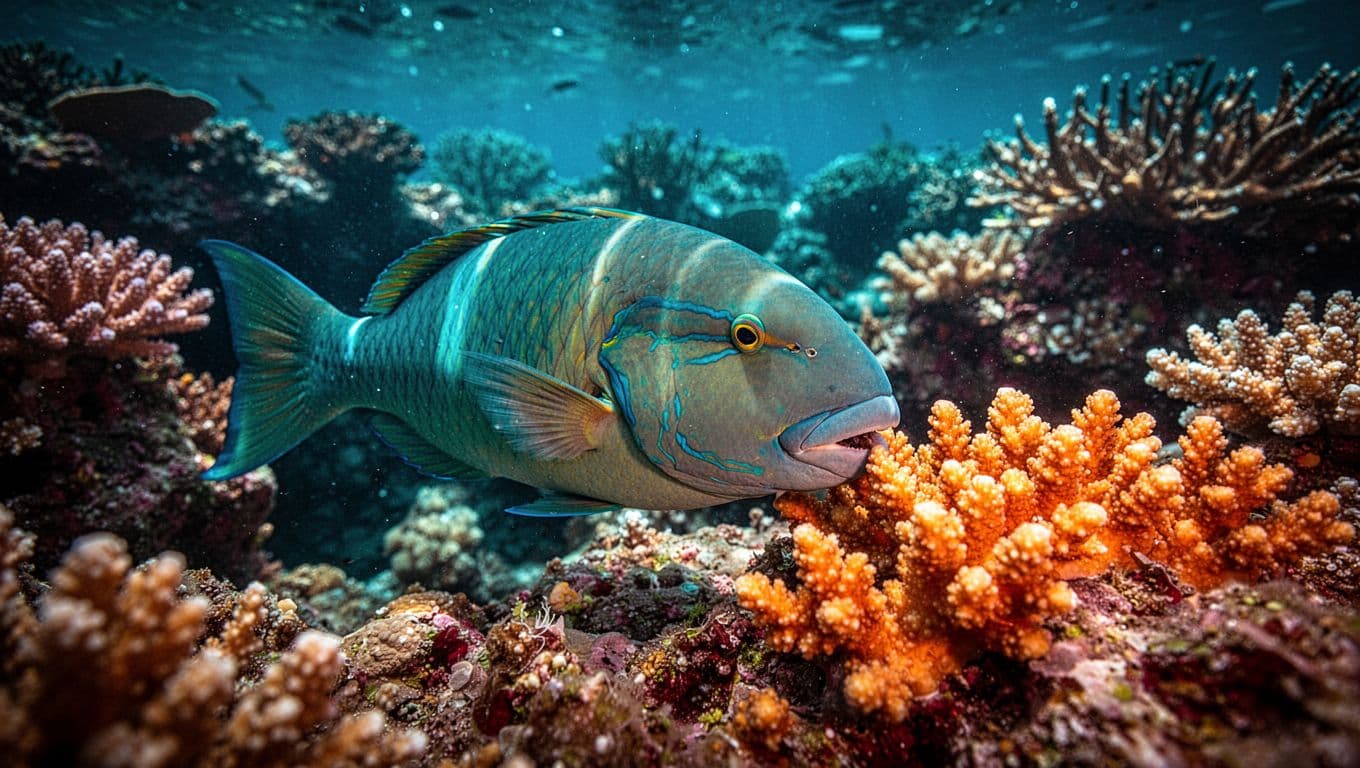
Parrotfish don’t just swim past the reef. They work it. They hover close to coral and rock, take quick bites, and keep moving. That feeding pattern is one of the easiest ways to spot them during snorkeling Big Island outings.
Their mouths scrape algae from hard surfaces, and that motion creates a repeatable pattern. You’ll often see a fish face-down against the reef, then lift off with a little flick of the tail. That movement can happen over and over in the same small area.
A Hawaiʻi fish tracker discussion also points out another odd trait, some parrotfish can change sex. That helps explain why the same type of fish can look different at different sizes and stages of life.
You may even hear a faint crunching sound when the water is calm. Not every snorkeler notices it, but it adds to the clue trail. If you’re close enough to see the mouth working, you’re probably already watching a parrotfish.
The easiest sightings happen when you stop trying to chase the fish and let them feed around you.
That is one of the best habits you can build. Stay calm, keep your distance, and watch for grazing. The reef will start revealing the fish on its own schedule.
Look in the right parts of the reef first
Parrotfish don’t spread out evenly across the bay. They gather where food is easy to reach. That usually means reef edges, coral heads, and rocky patches with algae growth.
Start your scan along the border where coral meets sand. Those transition zones are busy. Fish move in and out of them because they offer both shelter and feeding spots. If you search only the open water, you’ll miss a lot.
Also look for lava fingers and broken reef structure. These spots create little pockets and lanes that fish use like hallways. In Kealakekua Bay, that kind of structure can give you repeated sightings if you stay still long enough.
When you snorkel Big Island waters, the best fish watching often happens a little closer to the reef than you expect. Parrotfish stay near the bottom, but they don’t always sit deep. On a clear day, you can see them from the surface if the light is right.
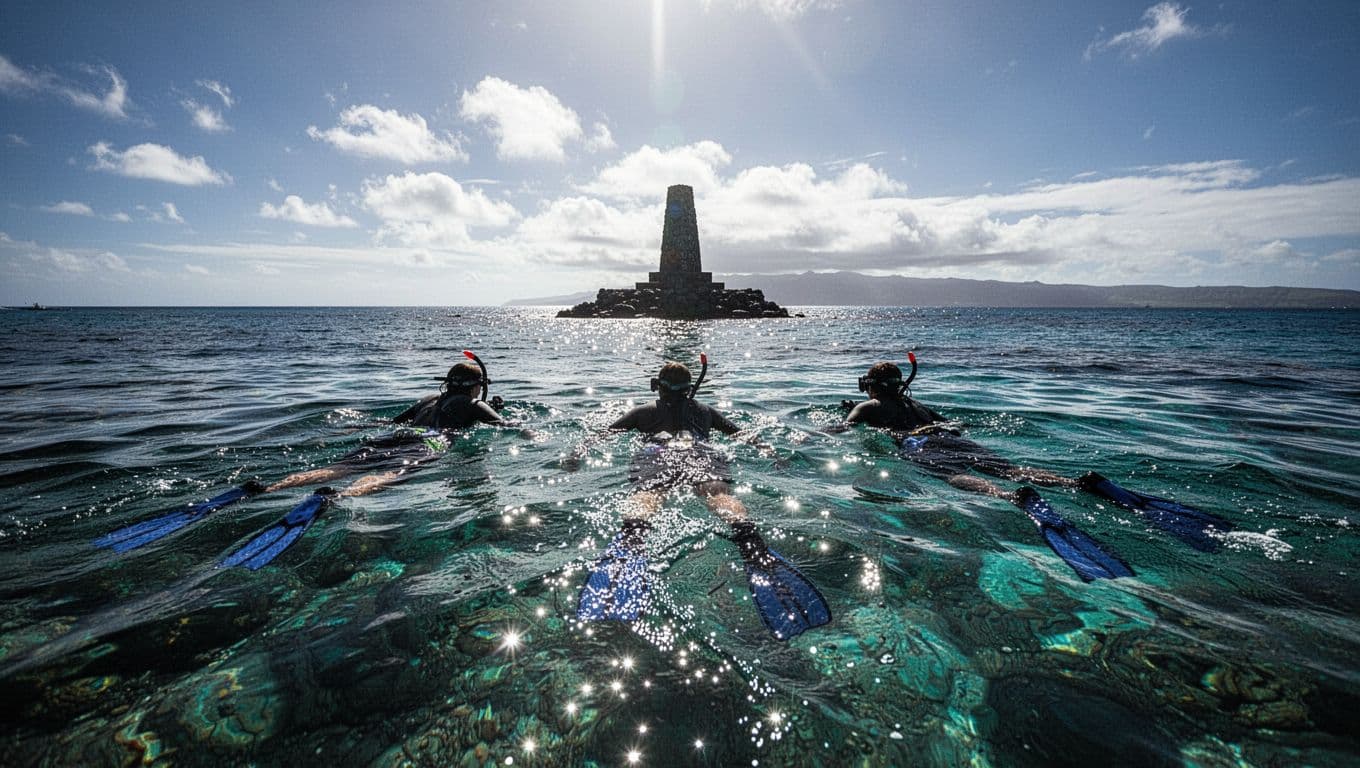
If you want a simple rule, use this one. Follow the reef structure, not the open blue. That small shift puts your eyes where the parrotfish actually feed.
Time your swim for better visibility
Light changes everything underwater. Early morning often gives you the cleanest view, because the water is calm and the surface glare is lower. That makes it easier to track fish moving near the reef.
Afternoons can still be good, but wind may pick up, and the water can get choppier. Once that happens, parrotfish become harder to read. Their bright colors don’t help much if the water surface is dancing.
Rain can also affect what you see. Runoff can blur the shallows, and a little silt can make fish disappear faster. If you have flexibility, choose the calmest window you can. For snorkeling Big Island Hawaii conditions, that usually means a quieter morning with steady light.
Sun angle matters too. When the sun sits behind you, the reef looks brighter and deeper at the same time. You can use that to your advantage. Angle your swim so the light helps you instead of fighting you.
If you’re planning a repeat trip, keep notes on what worked. A bay that looks average one day can look excellent the next. Water visibility changes fast, but the reef patterns stay familiar.
Use your mask, fins, and body position as tools
Good spotting starts with how you float. If you kick too hard, you’ll send bubbles and sand into the water column. That pushes fish away and makes the reef harder to see. Slow kicks work better.
Stay as level as you can. When your body rides flat in the water, your mask sits steady, and your eyes can track movement without constant bobbing. That small adjustment helps more than most people expect.
Your distance matters too. If you crowd a fish, it will turn away. If you drift nearby without pressing in, it often keeps feeding. That gives you time to study the shape, mouth, and tail movement.
Use your fins gently near the reef. Strong kicks stir up sediment, and sediment is the enemy of clear sightlines. The water in Kealakekua Bay is often beautiful, but you can still ruin your own view with sloppy movement.
If you want more space, private Kona boat charters can make the whole experience easier. Fewer people usually means less churn in the water and more time to watch the fish instead of the crowd.
Guided trips make parrotfish easier to find
A good guide shortens the learning curve. You don’t have to guess where the reef starts, where the fish feed, or which patch of coral is worth a closer look. That is one reason Big Island snorkeling tours are useful when you want to identify fish instead of just swim past them.
Kona Snorkel Trips keeps groups small, uses quality gear, and puts safety first. That matters when you want a steady look at the reef. Less crowding means less noise in the water, and less noise gives you better sightings.
If Kealakekua Bay is your focus, book a Captain Cook monument snorkel tour for a route built around this marine sanctuary. You can also check availability for a Kealakekua Bay trip.
If you want a broader day on the water, you can also check availability for Kona Snorkel Trips’ other ocean outings. The same small-group style helps you stay focused on the reef.
That kind of setup gives you more than a ride to the reef. It gives you time, space, and someone nearby who already knows what the fish are doing.
A quick field checklist before you jump in
Before you step off the boat or slide into the bay, run through a simple mental checklist. It keeps you from rushing the moment and helps you spot parrotfish faster.
- Start near reef edges and coral heads, not open water.
- Look for a rounded body and a beak-like mouth.
- Watch for short grazing bites and quick tail flicks.
- Keep your kicks slow so you don’t stir up sand.
- Pause often, because stillness helps the fish relax.
The same checklist works whether you’re on a first trip or your tenth. Once you build the habit, your eyes begin to lock onto the right clues without much effort.
If you hear a guide point out a fish and then lose sight of it, don’t panic. Stay on the same patch of reef. Parrotfish often loop back through the area, especially if the algae is good.
You’ll also do better if you scan in layers. Check the near reef first, then the patch a few feet away, then the deeper edge. That keeps your attention moving in a way that matches the fish, not in a random sweep.
Conclusion
The easiest way to spot parrotfish in Kealakekua Bay is to stop thinking only about color. Watch the shape, the mouth, and the feeding pattern, and the reef starts giving you answers fast.
When you slow down in the clear water, Kealakekua Bay snorkeling becomes easier to read. That is when the parrotfish stop looking like flashing shadows and start looking like the reef regulars they are.
The next time you head out for snorkeling Big Island waters, let the reef lead your eyes. If you follow the coral edges and the grazing motion, you’ll know exactly what you’re seeing.