
How to Get Back on the Boat After Captain Cook Snorkeling

Kona Snorkel Trips knows this moment well. The swim out can feel smooth, then the ladder appears and suddenly your Captain Cook snorkeling trip becomes a balance test.
That last part matters more than many people expect. If you snorkel Big Island reefs often, you learn that a clean reboard starts before you touch the ladder.
For snorkeling Big Island Hawaii with family, friends, or a small group, the return to the boat should feel calm, not rushed. The steps below help you get back aboard with less strain and more control.
Why the ladder feels harder at Captain Cook
Kealakekua Bay is beautiful, but the boat return can still catch you off guard. Your arms may be a little tired, your fins add drag, and the boat keeps moving under you.
That mix is normal. It gets trickier when you have been floating for a while and your body cools down. Even strong swimmers can feel awkward for a few seconds.
The fix is not brute force. It comes from using the right body position and knowing what the crew wants you to do. If you compare different Big Island snorkel tours, you will notice that the best boats give you clear steps before you climb.
You may also want to read a related guide on how to reboard after a Kona manta ray snorkel. The setting is different, but the same calm body position makes the climb easier.
Set yourself up before you leave the water
A good reboard starts while you are still floating near the reef. First, take a breath and settle your pace. If you rush the last few yards, your arms will feel weaker when you need them most.
Keep your eyes on the ladder or swim step as you approach. That small habit helps you line up your body before you grab anything. It also keeps you from drifting too far to one side.
If the crew tells you to keep your fins on until you reach the boat, do that. If they want them off earlier, hand them up before you climb. Either way, avoid fighting with loose gear while you are half on the ladder.
A little communication helps, too. Let the crew know if you need help, if a knee is sore, or if you want a slower pace. Clear instructions make the whole move smoother.
Your chest goes up before your feet do.
The cleanest way to climb back aboard
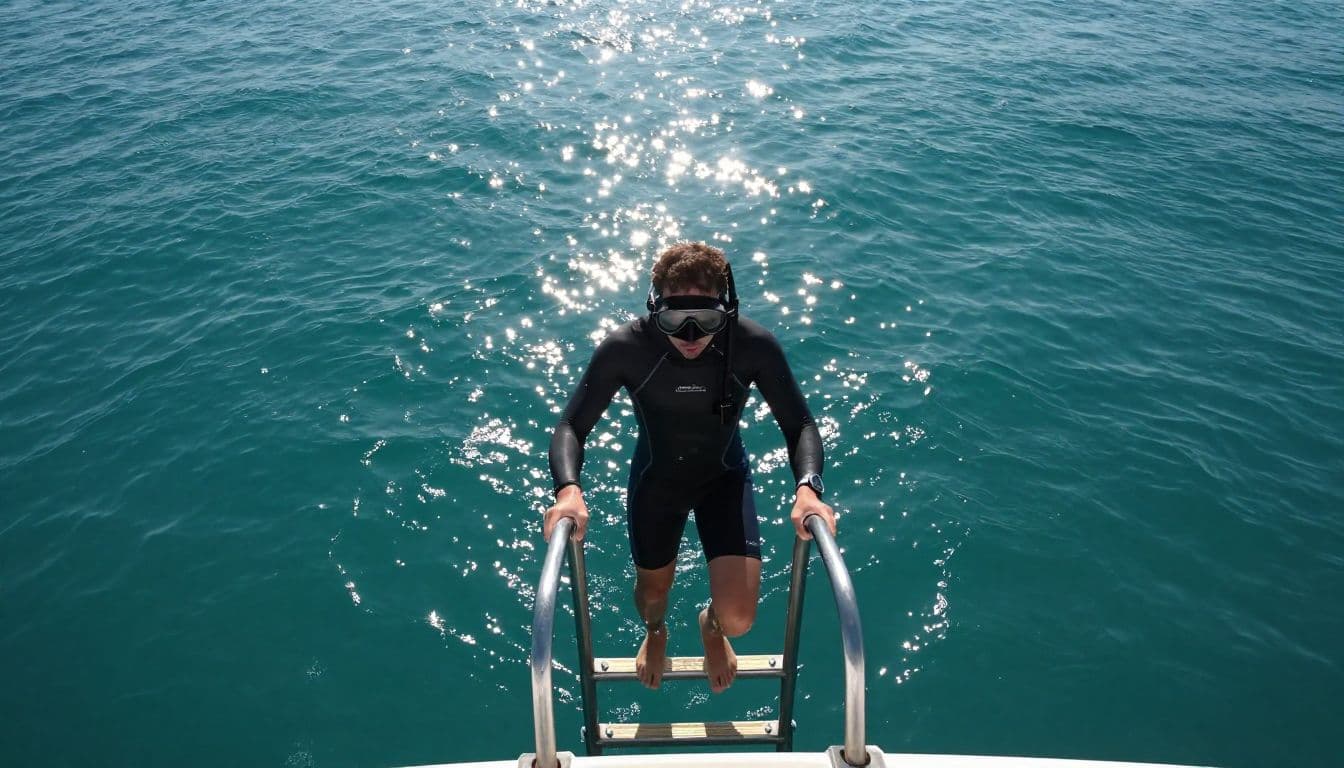
A ladder climb feels much easier when you break it into small moves. The goal is to stay stable at every step, not to do the whole thing in one burst.
- Move close and square up to the ladder.
Turn your body so your chest faces the boat. Keep one hand on the rail or rung as soon as you can. - Let your chest do the work first.
Pull your upper body in, then use your arms and a light kick to raise your center of gravity. Once your chest is high enough, the rest feels easier. - Keep your fins under control.
If you can climb with fins on, stay slow and careful. If the crew wants them off, pass them up before you swing a leg over. - Sit before you stand.
Once your torso reaches the deck or swim step, sit down for a moment. Then bring one leg up, then the other. A short pause saves a lot of wobble.
This same rhythm shows up on other boat entries, too. The body lead, the chest lift, and the pause at the top are what keep you steady.
What to do when conditions shift
Some reboards feel easy. Others feel awkward because the boat is bouncing, the swell is up, or another snorkeler is already on the ladder.
When that happens, slow down and wait your turn. A few extra seconds are better than grabbing the ladder in a bad spot. If you can hold a line or float near the boat, do that until the crew signals you in.
For shorter swimmers, the trick is to get your body as high as possible before your feet leave the water. For taller swimmers, the habit is the same. Keep your hips close to the ladder and avoid hanging back with straight arms.
If your legs feel heavy, don’t panic. Use your arms first, then let your core and upper body carry more of the load. That is why good form matters more than raw strength.
You can think about the climb like a gentle push-up in water. The more stable your chest is on the ladder, the less work your legs have to do.
Choosing a crew that helps you reboard with ease
A helpful crew changes the whole experience. When you book with Kona Snorkel Trips, you get small-group trips, lifeguard-certified guides, and gear that is set up to make the day easier, not busier. That matters when you want a steady hand at the ladder and clear guidance in the water.
If Captain Cook is your main goal, Captain Cook Snorkeling Tours focuses on this route and the history around Kealakekua Bay. You can also review the Captain Cook snorkeling tour page before you book.
A well-run trip gives you room to breathe, room to move, and room to ask for help. That is often the difference between a nervous climb and a smooth one.
If you want to compare more options on the Kona coast, the Big Island snorkel tours page is a good place to start. It helps you match the trip to your comfort level, not just the scenery.
Conclusion
Getting back on the boat after Captain Cook snorkeling gets easier when you treat it like part of the snorkel, not an afterthought. You approach the ladder calmly, lift your chest first, and let the crew help when needed.
That small bit of planning makes a big difference on the water. It keeps the end of the swim smooth, even when the bay is busy or the boat moves with the swell.
If you remember one thing, make it this: control beats hurry every time.