
What Bleached Coral Looks Like in Kealakekua Bay, Hawaii
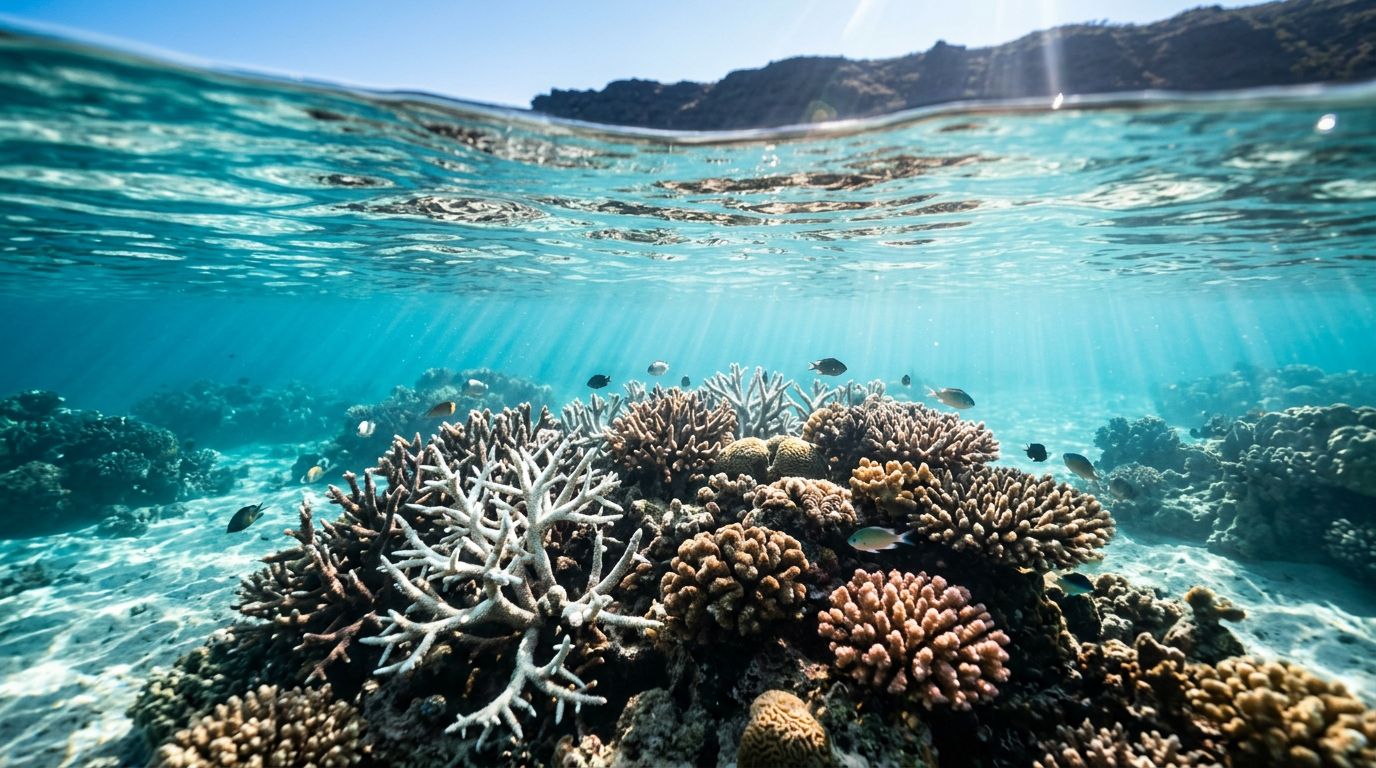
Bleached coral usually doesn’t look dramatic at first glance, but once you know the signs, it stands out fast. During Kealakekua Bay snorkeling, that pale patch on the reef can tell you a lot about heat stress, water quality, and the difference between a living colony and a reef that has been worn down.
Kona Snorkel Trips and Captain Cook Snorkeling Tours both put you in waters where those changes are easier to notice. If you’re planning snorkeling Big Island Hawaii adventures, start with color, then look at texture, shape, and how the coral sits beside the rest of the reef. When you snorkel Big Island waters with a calm morning sea, the reef reads like a map.
What bleached coral looks like under your mask
The easiest sign is color loss. Healthy coral in Hawaii often looks tan, brown, golden, pinkish, or even faint green, depending on the species and light. Bleached coral looks washed out. You may see ivory, bone-white, pale cream, or a flat gray tone that seems to glow against the blue water.
Bleaching is often patchy. One branch can look pale while the rest still holds color. Sunlight, depth, and angle also change how white a colony appears, so you need to look at the whole shape instead of one bright spot.
Texture matters too. Bleached coral can still show ridges, cups, branches, and tiny pits. The structure is there, but the color is missing. Sometimes it looks polished from a distance, yet up close the surface still has living detail.
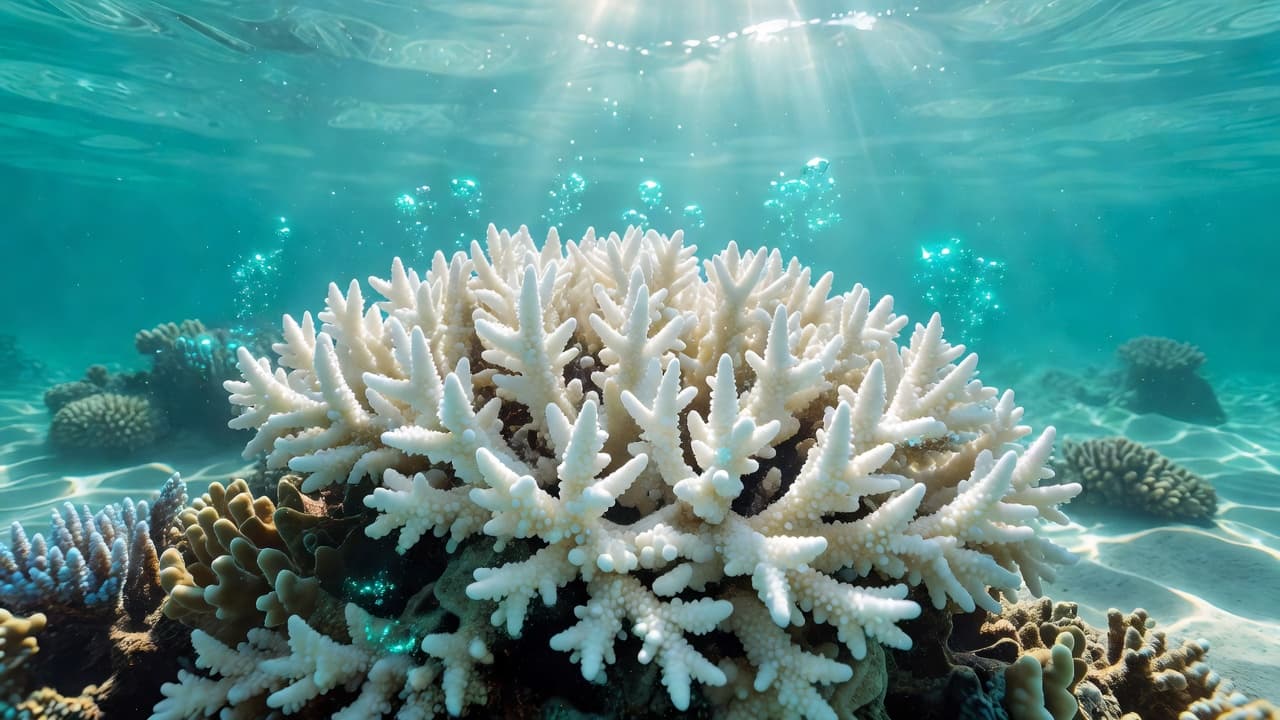
Bleached coral often looks bone-white or pale cream underwater, while the surrounding reef still holds deeper color.
That contrast is what makes the reef around Kona so useful for learning. When fish dart past a bright white colony, the difference is hard to miss, and your eye quickly learns what a stressed patch looks like.
Healthy coral, bleached coral, and dead reef are not the same
Hawaii’s Reef Response program explains that bleaching happens when coral loses the algae living in its tissue. That loss strips away the color and leaves the colony exposed to more stress.
A white coral colony can still be alive. A dead one looks different. It usually turns dull, rough, and more overgrown with algae or sediment. The shape may still be there, but the surface starts to look lifeless.
| What you see | What it can mean | What you should notice |
|---|---|---|
| Healthy coral | Tan, brown, greenish, or mixed color, with strong texture | Polyps may be open, and the colony looks full |
| Bleached coral | White, cream, gray, or very pale pink, often uniform or patchy | The structure is still there, but the reef looks drained |
| Dead coral | Dull skeleton, heavy algae, rough or brittle surface | Living tissue is gone, and the colony may look broken or flat |
A white coral colony is a warning sign, not a dead end. The important part is whether living tissue is still present.
A bleached colony can recover if conditions improve. A dead one usually does not. NOAA’s coral bleaching tracking work in Hawaii shows how quickly a stressed reef can become a bigger concern when warm water lingers.
Why Kealakekua Bay makes color changes easier to spot
Kealakekua Bay snorkeling gives you a clear classroom for reef reading. The bay often has calm water and good visibility, so pale coral stands out beside healthy patches of brown and tan reef. On a bright morning, you can see how one colony differs from the next without guessing.
That matters when you are trying to snorkeling Big Island reefs with more than a casual glance. The bay’s shape, plus the volcanic shoreline, gives you surfaces that catch light in different ways. A coral head in a sunny pocket may look much whiter than one tucked under a ledge.
If you are new to snorkeling Big Island waters, a guide helps you sort out what you’re seeing. The reef around the Captain Cook monument is one of the easiest places to compare color, texture, and fish movement in the same swim. Guided snorkeling tours at Captain Cook monument keep the day centered on that reef.
For a broader look at what the company offers, Big Island snorkeling tours give you more than one way to see Kona’s shoreline.
How to read the reef without touching it
A close look is enough. You don’t need to touch coral to tell whether it looks stressed.
Watch for a few simple clues:
- Scan for one flat color across the whole colony.
- Compare shaded sides with sunlit sides.
- Look for open polyps, fish activity, and nearby algae.
- Notice whether the coral looks crisp, brittle, or dusted with sediment.
- Check whether the reef around it still has mixed color.
Scientists use similar field habits when they assess reef health. For a plain-language look at field methods, the Coral Bleaching On-Site Monitoring Tools page gives a good sense of how coral health gets checked in the water. You can use the same patience on a snorkel.
The more time you spend observing, the more the reef starts to make sense. A bleached colony often looks flat, like someone took the warmth out of the image. Healthy reef still has depth, shadows, and contrast.
What you should do if you spot bleaching
If you notice a pale patch, give it space. Stay horizontal, keep your fins up, and avoid brushing the bottom with your feet. Coral breaks easily, and a single kick can turn a stressed colony into a damaged one.
Use reef-safe sunscreen before you get in, and let your guide know where you saw the patch if the trip is guided. That helps keep the group from crowding one area and puts the observation in context.
A few habits make a real difference:
- Keep your buoyancy steady.
- Don’t stand, kneel, or rest hands on the reef.
- Note the location and water depth.
- Tell your guide rather than guessing at the cause.
NOAA’s Hawaii coral bleaching tracking work shows why early reporting matters. A warm spell, repeated sun exposure, and poor water movement can all make a pale patch more serious.
If a colony still has tissue, distance helps it more than a closer look.
That habit matters on family trips, too. Kids notice color fast, and they remember the reef better when you point out what they are seeing instead of letting them touch it.
Choosing a Kealakekua Bay tour that gives you time to look
If you want to understand reef color, a small-group trip makes a difference. Kona Snorkel Trips keeps the pace personal, which gives you more time to compare healthy coral with bleached coral instead of spending the day in a crowd. That matters when your goal is to notice the reef, not just pass over it.
Kona Snorkel Trips follows a “Reef to Rays” approach, and the guides are lifeguard certified. That combination helps you stay focused on the water while still getting clear safety guidance and reef-friendly habits. If you want to see the options in one place, explore Kona snorkeling adventures before you book.
If you want to book a guided morning on the water, you can check availability.
Captain Cook Snorkeling Tours is another clear choice when you want your day centered on Kealakekua Bay itself. You can start with Captain Cook Snorkeling Tours, then compare that focus with the reef-specific route at Kealakekua Bay snorkel trips.
If you want more room to move and less crowding, private Kona boat charters give you a slower pace and more time to look at coral structure.
If the Captain Cook route is the one you want, you can check avaialbility before you go.
Conclusion
Bleached coral in Kealakekua Bay usually looks pale, washed out, and strangely flat against the rest of the reef. Once you know the signs, you can spot the difference between healthy color, temporary stress, and coral that has already died.
The best part of a careful snorkel is that you start to see the reef as a living system, not just scenery. On your next Kealakekua Bay snorkeling trip, keep your distance, read the color, and let the reef show you what it needs.