
How You Enter the Water on a Kona Manta Ray Night Snorkel
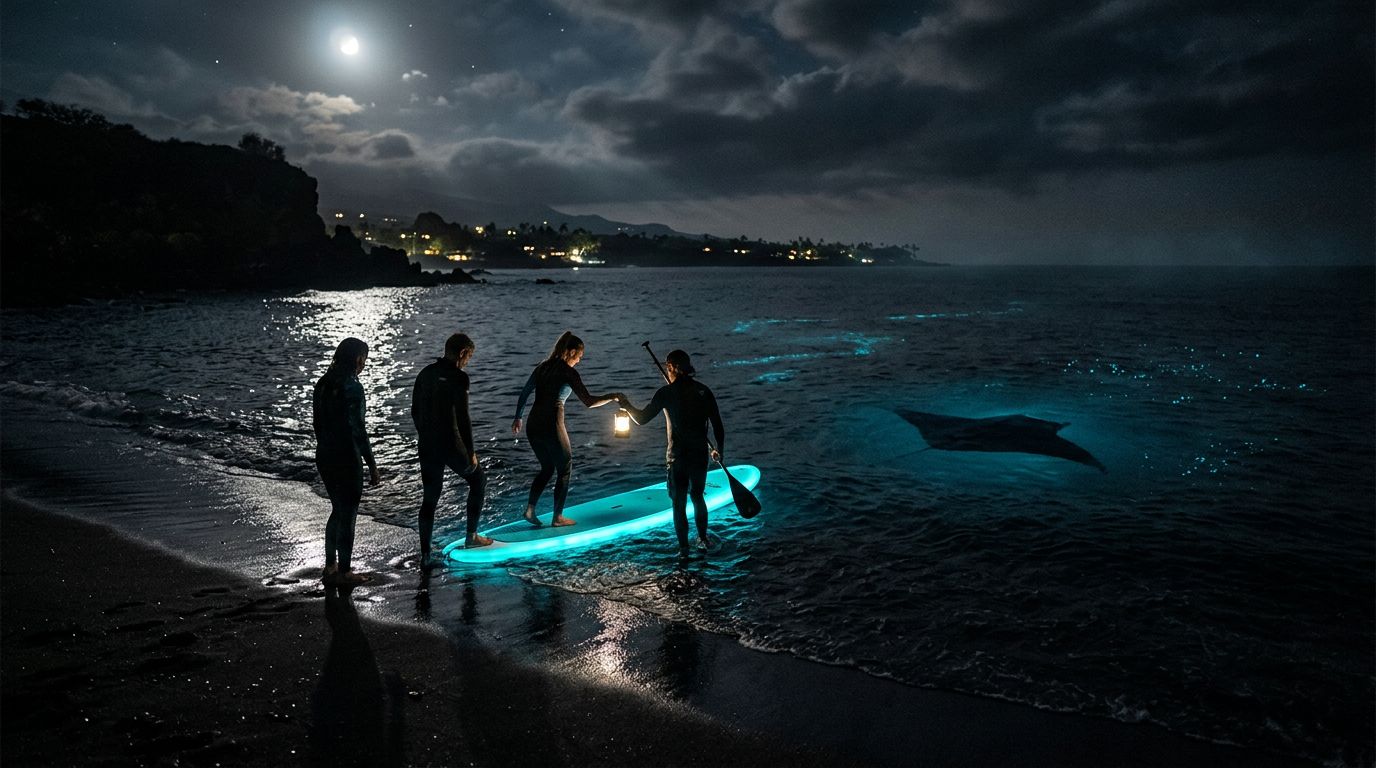
The first step into a Kona manta ray night snorkel feels easier when you know the rhythm. You do not rush, you do not fight the dark, and you do not jump in blind.
Kona Snorkel Trips keeps that first water moment calm with small groups, clear briefings, custom-built lighted boards, and lifeguard-certified guides. If you want another manta-focused option to compare, Manta Ray Night Snorkel Hawaii is another name you’ll see.
Before you get in, the crew sets the pace
Your entry starts long before your fins touch the water. The boat ride, the gear check, and the briefing all work together so you feel ready instead of rushed.
On a good manta tour, the crew tells you where to stand, when to wait, and how to move once it’s your turn. That matters because the dark ocean can feel bigger than it really is. A clear plan shrinks that feeling fast.
If you’ve done snorkeling Big Island Hawaii trips in the daytime, you already know the comfort that comes from a guide who gives simple directions. The night version uses the same idea. You listen first, move second, and stay with the group.
Before anyone enters, you’ll usually hear about a few basics:
- how the crew wants you to step or slide into the water
- where the lighted board will be waiting
- how to hold the handles once you reach it
- what kind of movement to avoid around the manta rays
That last point matters. The goal is to be calm and still, not active and splashy. Mantas respond well to quiet water and steady light, so your best move is often the simplest one.
If you feel nervous on the boat, say so. Good guides want to know. They can slow the pace, repeat the steps, and point out the first handhold before you get near the rail.
The entry itself, step by step
The actual water entry is more controlled than most people expect. It usually feels closer to a guided float than a dramatic leap.
Most of the time, the crew sends people in one at a time. That keeps the deck organized and gives you space to settle before the next person comes down. It also keeps the water calmer, which helps everyone.
Here’s the usual rhythm:
- Wait for your turn and keep your mask on.
Your guide will tell you when to move. Keep your fins ready, but don’t rush the moment. If you start early, you create stress for yourself and the people behind you. - Lower yourself in slowly, feet first.
Some boats use a ladder, while others use a careful side entry. Either way, the move should be slow and controlled. Use your hands for balance and keep your body close to the boat. - Swim a few easy strokes toward the lighted board.
You do not need to go far. The board is there to give you a stable place to settle. Think short, easy movements, not a swim across open water. - Grab the handles and stay flat on the surface.
Once you reach the board, your job gets simpler. Hold on, relax your legs, and let your body float in a long line behind the light. - Breathe, listen, and let the guide do the rest.
Your guide will keep an eye on the group and help everyone stay in position. The less you try to manage, the smoother the experience feels.
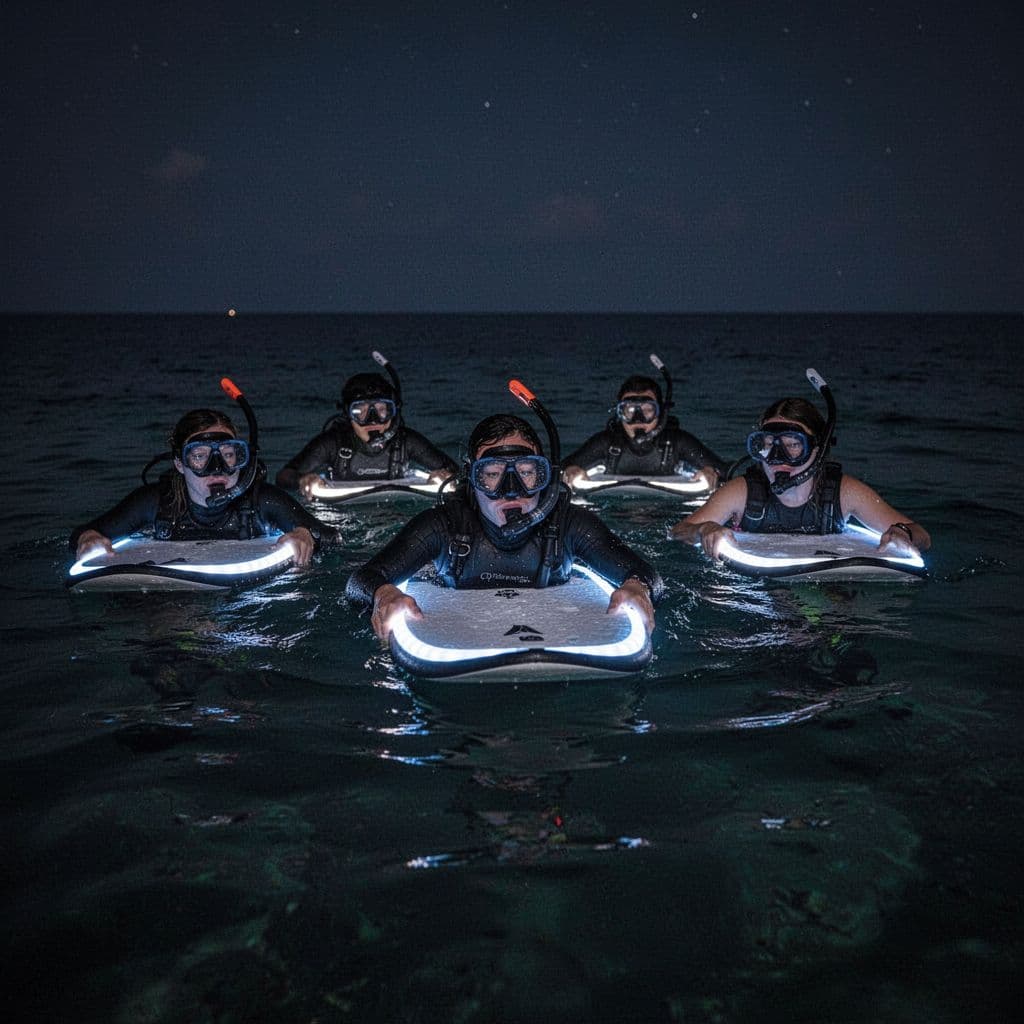
Once you’re in place, the water usually feels calmer than you expected. The board gives you a clear point to hold, and the lights give your eyes something to focus on.
The smoothest night entries are the quietest ones. You move slowly, settle flat, and let the lights do the work.
Why the lighted board changes everything
The lighted board is the part that makes a Kona manta ray night snorkel feel less like a cold-water swim and more like a floating front-row seat. It gives you a stable place to hold, and it keeps the group together.
The board does another job too. Its lights attract plankton, which brings the mantas close to the surface. That means you are not chasing the action. The action comes to you.
That setup changes how you enter the water. Instead of worrying about where to swim next, you focus on getting comfortable in one spot. The entry becomes a short bridge between the boat and the viewing area.
If you snorkel Big Island reefs during the day, you know how much easier it feels when you have a clear reference point. A reef line, a buoy, or a buddy can all help. At night, the lighted board plays that role.
The best body position is simple. Stay long, stay level, and keep your kicks small. The less you bounce on the surface, the easier it is to watch the mantas move below you.
This is also why many guests say the experience feels gentler than they expected. You are not swimming hard. You are floating, breathing, and watching. That small shift matters.
When you think about snorkeling Big Island Hawaii at night, picture stillness first. The more still you are, the more the scene opens up.
Why night entry feels easier than you think
A lot of people worry about the dark part. That fear makes sense. The ocean at night asks you to trust the crew before you see much at all.
Still, the entry is usually more comfortable than a rocky beach launch or a surf entry. You are leaving from a boat, not charging through waves. You also have a guide right there to keep the process steady.
If you already know how to snorkel Big Island reefs during the day, you already have the main skill you need. You can float. You can breathe through a snorkel. You can keep your body loose. Those same habits work here.
The difference is that you use them with more patience. Instead of scanning the horizon or the shoreline, you focus on the board and the voice of the guide. That helps your brain settle.
A simple rule helps here: move only when you need to move. That means no extra splashing, no sudden turns, and no big kicks. Quiet motion is enough.
This is also why many people who enjoy snorkeling Big Island trips come back for the manta night. The entry feels more guided, more personal, and less chaotic than they expected. The boat crew does the heavy lifting. You just follow the pace.
If you want a useful mental cue, keep this one in mind. The water is dark, but your job is clear. Hold the board, breathe steadily, and wait for the lights to do their part.
How to stay calm once you’re in the water
The first 30 seconds can feel like the longest part of the night. Once your body settles, the whole scene gets easier.
Your breathing helps most. A long exhale tells your body that nothing is chasing you. Short, fast breaths do the opposite. So slow yourself down on purpose.
A few habits make the entry smoother:
- keep one hand on the board until you feel balanced
- look toward the light instead of the dark water
- keep your fins quiet and close to the surface
- tell the guide right away if your mask leaks or your snorkel feels awkward
If you start to tense up, fix one thing at a time. Don’t try to solve everything at once. Tight shoulders, a loose mask, and quick breathing can all feed each other. Fix the easiest problem first.
You should also trust the light. The darkness around you can feel bigger than it is, but the board gives you a real edge to hold. That visual anchor matters more than most people expect.
If you’re nervous on snorkeling Big Island Hawaii trips, the same trick works in the dark. Pick one steady point. Breathe to that point. Then let the rest of the ocean stay in the background.
You do not need to be a perfect swimmer to enjoy the moment. You need comfort, attention, and a willingness to stay still.
What first-timers, couples, and families should expect
First-timers usually worry about being the one person who slows things down. In reality, the pace is built for beginners. A good crew expects questions, extra time, and a few shaky moments.
Couples often like the shared rhythm of the entry. You wait together, enter one at a time, and meet at the board. That little sequence adds a calm start to the night.
Families tend to do best when everyone understands the plan before the boat ride is over. If your group has kids, remind them that the water entry is slow and guided. That removes a lot of last-minute stress.
A manta night is also different from many daytime snorkeling Big Island outings because the group stays close together. You are not spread across a reef. You are not trying to chase fish or find a route. You are holding one lit float and watching the water open up below you.
That setup helps cautious swimmers. It also helps people who like to know where they are at all times. The board gives you a fixed point. The guide gives you a voice. The lights give you something to watch.
If you’ve done snorkeling Big Island trips before, you may notice how much the night format reduces choice. That sounds small, but it matters. Fewer decisions mean less stress.
For many guests, the entry becomes the easiest part once they understand that. The real skill is not speed. It’s calm.
Picking a Kona manta tour that fits your pace
If you want a trip built around easy entry and clear instruction, Kona Snorkel Trips is a strong pick. The company uses custom-built lighted boards, works in small groups, and sends out lifeguard-certified guides who keep the pace steady.
You can read more about the guided manta ray snorkeling adventure if you want to see how the tour is set up. If your date is already in mind, you can check availability before you plan the night.
If you want to compare another manta-focused option, Manta Ray Night Snorkel Hawaii is another place to look. That can help if you’re comparing trip styles, departure times, or overall pacing.
The main thing to check is how the crew handles the entry. Ask whether they give a clear briefing, how they bring guests to the board, and how much help they offer in the water. A good answer usually sounds calm, simple, and confident.
Conclusion
The first step into a Kona manta ray night snorkel is usually less dramatic than people expect. You move slowly, listen to the crew, and settle onto the lit board before the mantas arrive.
That calm start matters. It keeps your body relaxed, gives you a clear place to hold, and lets the night unfold without rush. If you can breathe steadily and stay flat on the surface, you’re already doing it right.
The entry is not the hard part. It’s the quiet part that sets up the whole experience.