
How to Stay With Your Group During Captain Cook Snorkeling
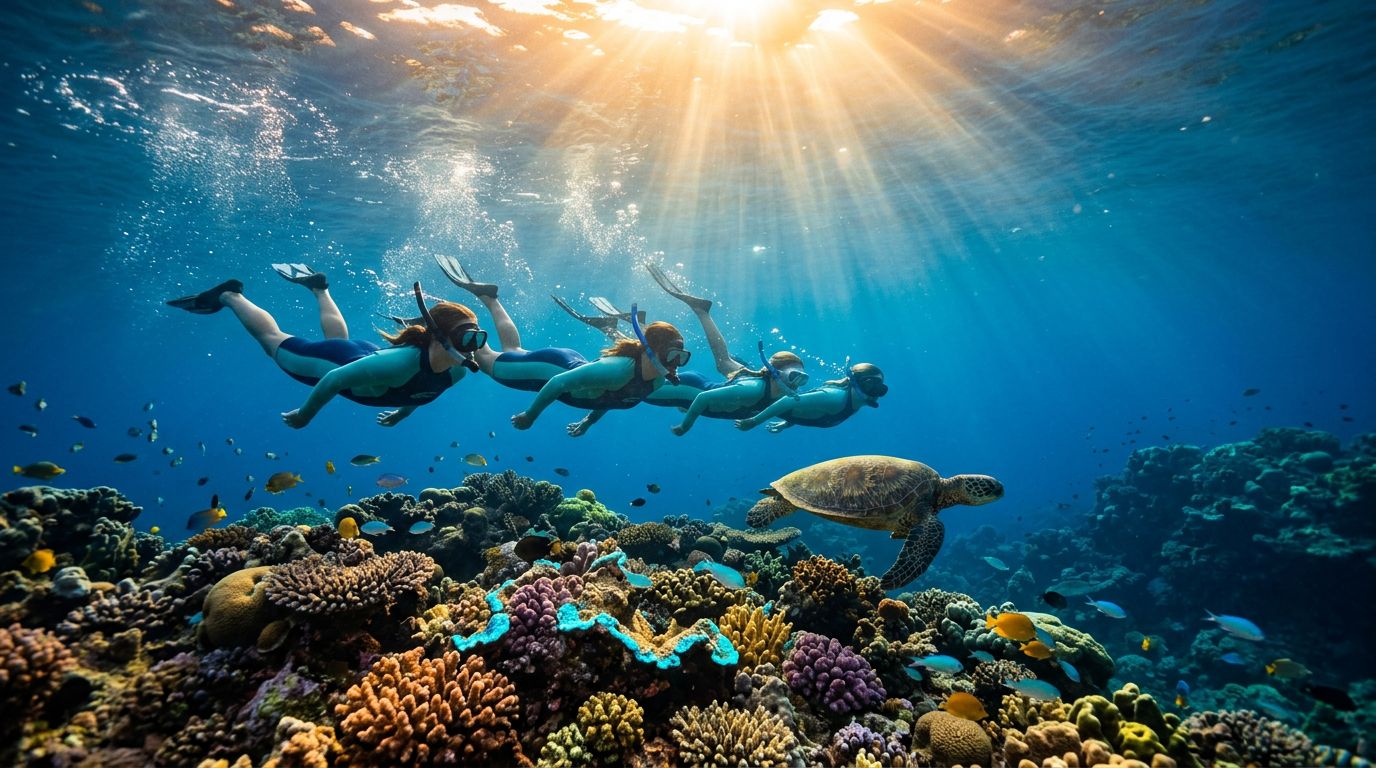
Captain Cook snorkeling feels calm at first glance, then the reef starts pulling everyone in different directions. One person spots a turtle, another stops to adjust a mask, and a third drifts a few kicks farther than planned.
That’s how groups split up. It usually happens slowly, then all at once.
You don’t need perfect swimming to stay together. You need a simple plan, a steady pace, and a few habits that keep everyone close without making the trip feel stiff. If you want a guided small-group option, Kona Snorkel Trips’ snorkeling tours on the Big Island are built for that kind of pace, and Captain Cook Snorkeling Tours focuses on this route too.
Start with a tour that fits your group
The easiest way to stay with your group is to begin on the right boat. A small, guide-led trip gives you less noise, fewer distractions, and a pace that’s easier to follow. That matters at Kealakekua Bay, where the view can steal your attention fast.
If you want a trip that already runs with a relaxed rhythm, check availability. You’ll spend less time wondering who is where, and more time staying present in the water.
That small-group feel matters even more if your group mixes strong swimmers, cautious swimmers, and kids. A private boat can remove the biggest source of drift, which is mismatched speed. If you want that kind of control, private Kona snorkel tours let your group set the rhythm before anyone enters the water.
The point is simple. When your boat, guide, and group size match your comfort level, staying together stops feeling like a chore.
Know why groups drift apart at Kealakekua Bay
Kealakekua Bay looks peaceful, but snorkeling changes how you move through it. You’re not walking on a trail. You’re floating, looking down, breathing through a tube, and reacting to every flash of motion below you.
That makes drift easy.
One swimmer slows to watch a reef fish. Another turns to ask a question. A third kicks a little harder to get a better view, then stops to rest. Each tiny move creates a gap. After a few minutes, the group no longer feels like a group.
The water can add its own push, too. Even light current changes your angle. If you don’t notice it early, you may spend more energy correcting the problem than enjoying the reef. You can read more about the site itself in this Captain Cook Monument snorkeling guide, which gives helpful background on the area and what to expect.
Your goal is not to fight the water. Your goal is to move with it and keep your group easy to spot. That means less zigzagging, fewer long stops, and fewer “wait, where did everyone go?” moments.
A good reef day feels loose, not scattered. That’s the difference you want.
Agree on a plan before you touch the water
A group that talks before entering the water stays together longer. You don’t need a formal briefing. You just need a few shared decisions.
Pick one person to set the pace. Pick one person to watch the back. Then decide where everyone will regroup if the line opens up. That little bit of structure keeps the whole group from making random choices once the fish appear.
Here’s a simple setup that works well:
- Name a leader and a rear watcher.
The leader sets the pace. The rear watcher checks who’s drifting back. - Choose a regroup point.
Pick the boat, the guide, or a visible landmark before you get in. - Decide how long you can separate.
A few seconds can turn into a long swim if nobody is paying attention. - Use one word for stopping.
“Wait” or “hold” works better than a long explanation through a snorkel. - Keep one adult near each child.
Children should not be left at the edge of the group.
That plan matters before you ever see a fish. Once you’re in the water, every extra decision takes more attention than you think.
Keep pace with the slowest swimmer
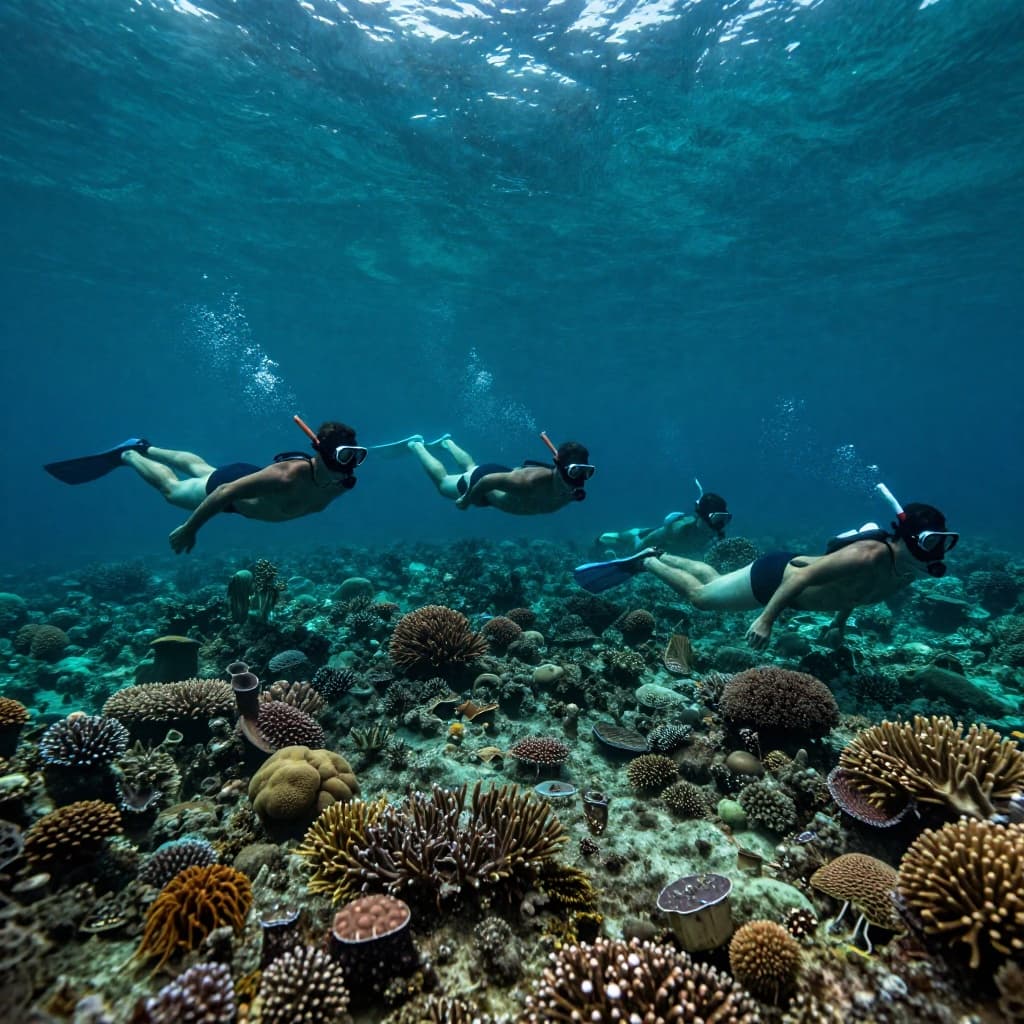
The fastest swimmer usually causes the most trouble. They kick ahead, then look back and wait, then kick again. That stop-and-start motion stretches the group more than a steady pace ever would.
The better move is to let the slowest swimmer set the rhythm. That doesn’t mean moving at a crawl. It means moving at a pace everyone can hold without panicking or racing.
The same habits help on snorkeling Big Island trips, whether you snorkel Big Island with kids or plan a full snorkeling Big Island Hawaii vacation. If your group can stay calm on one side of the island, it can stay calm anywhere.
A steady pace does three things for you. First, it keeps breathing easy. Second, it gives the guide time to watch the whole group. Third, it makes it easier to enjoy the reef instead of staring at the next person’s fins.
A few habits make that easier:
- Take short pauses instead of long sprints.
- Keep your kicks smooth and light.
- Look back often enough that you don’t lose sight of anyone.
- Stop together when one person needs a mask adjustment or a rest.
Think of the group like one loose pod, not a line of separate swimmers. If the pod stays compact, the water feels calmer too. You’ll spend less energy correcting drift and more energy noticing the reef below you.
Read the reef without losing sight of people
One of the easiest ways to lose your group is to let the reef take over your attention. That’s understandable. Kealakekua Bay is full of movement, color, and small details. Still, you need to train your eyes to check people as often as you check fish.
A simple habit helps. Every few breaths, look up and locate a familiar person or object. Then look back down. That rhythm keeps you aware of where you are in relation to the group.
If you can’t see your buddy, stop kicking first, then look around and float.
That rule saves time. Swimming harder rarely fixes a separation problem. It usually turns a small gap into a bigger one.
You can also use the reef as a reference without crowding it. Stay close enough to see marine life clearly, but don’t push so far ahead that you leave the group behind. If someone gets excited and surges forward, the whole group starts to spread out.
A few simple reminders help:
- Don’t chase every turtle or school of fish.
- Don’t turn your back on the group for long.
- Don’t make sharp direction changes without warning.
- Do keep one person in your line of sight whenever possible.
That balance matters on any reef day, but it matters most on a trip like Captain Cook snorkeling, where the scenery is strong enough to pull your focus in every direction.
Use signals that everyone remembers
You can’t talk much underwater, so your signals need to be simple. The best ones are the ones everyone can remember after one quick explanation.
A thumbs-up usually works for “I’m good.” A flat palm can mean “stop and wait.” Pointing toward the boat or the guide can mean “regroup.” If someone needs help, they should make that clear right away instead of trying to keep up in silence.
It helps to keep the signal set small. Too many hand signs only create confusion. One or two for safety, one or two for regrouping, and one for “I need help” is enough.
Here’s a quick reference:
| Signal or situation | What you do | Why it helps |
|---|---|---|
| You lose sight of the group | Stop and scan slowly | You avoid making the gap bigger |
| Someone falls behind | Match their pace | The group stays compact |
| You need a break | Float and signal | Breathing stays steady |
| The guide wants everyone back together | Turn and regroup immediately | The group resets before it spreads |
The point is not to act like a drill instructor. The point is to remove guesswork. When everyone knows the same signals, the whole group moves with less stress.
What to do if someone gets separated
A separation doesn’t need to become a problem. It becomes a problem when people panic and start swimming in different directions.
If you drift away, stop first. Float, breathe, and look around in a full circle. Then check for your buddy, your guide, the boat, or the most visible landmark you can find. If you can’t spot the group right away, stay calm and signal.
If someone in your group drifts off, don’t split the rest of the group to chase them. That usually creates a second separation. Hold position, wait for the guide, and let the person come back into view.
The table below gives you a quick response plan.
| Situation | Best move | What not to do |
|---|---|---|
| You lose the group for a moment | Stop, float, and scan | Don’t swim harder in one direction |
| A child drifts back | Match the child’s pace | Don’t tell everyone else to rush ahead |
| A current pushes you sideways | Turn slowly toward the group | Don’t fight the water with fast kicks |
| You feel tired or uneasy | Signal and rest on your back | Don’t pretend you’re fine and keep going |
The most useful habit is patience. A calm person is easier to find than a swimmer who is zigzagging away from everyone else.
Choose the right setup for families, couples, and mixed swimmers
Not every group needs the same kind of trip. If you’re with strong swimmers, a standard guided tour may be enough. If you’ve got children, first-timers, or one person who gets nervous fast, a more controlled setup works better.
That’s where the right tour page matters. The Captain Cook Snorkeling Tour is a strong fit when you want a focused Kealakekua Bay outing with clear guidance. If your group wants even more control, private Kona snorkel tours give you room to set the pace, choose your regroup points, and spend less time reacting to other people’s schedule.
If you want a direct booking option for the Captain Cook route, check avaialbility.
For many groups, that extra structure is the difference between a relaxed snorkel and a day spent checking who has fallen behind. It also gives couples more time to enjoy the water together without constant regrouping.
If you travel with mixed swimmers, choose the setup that favors the least confident person. That choice usually helps everyone.
Conclusion
Staying with your group during Captain Cook snorkeling is mostly about rhythm. You move better when you agree on the pace before the first kick, use simple signals, and check in often.
That matters because the reef pulls your attention away. Fish, current, and excitement can scatter a group faster than poor swimming ever will. Once you treat regrouping as part of the plan, the whole trip feels easier.
Keep the group small when you can. Keep the pace steady. And when in doubt, let the slowest swimmer set the rhythm. That’s how you stay together and enjoy more of Kealakekua Bay.