
Do You Need to Equalize Your Ears on a Kona Manta Ray Snorkel?
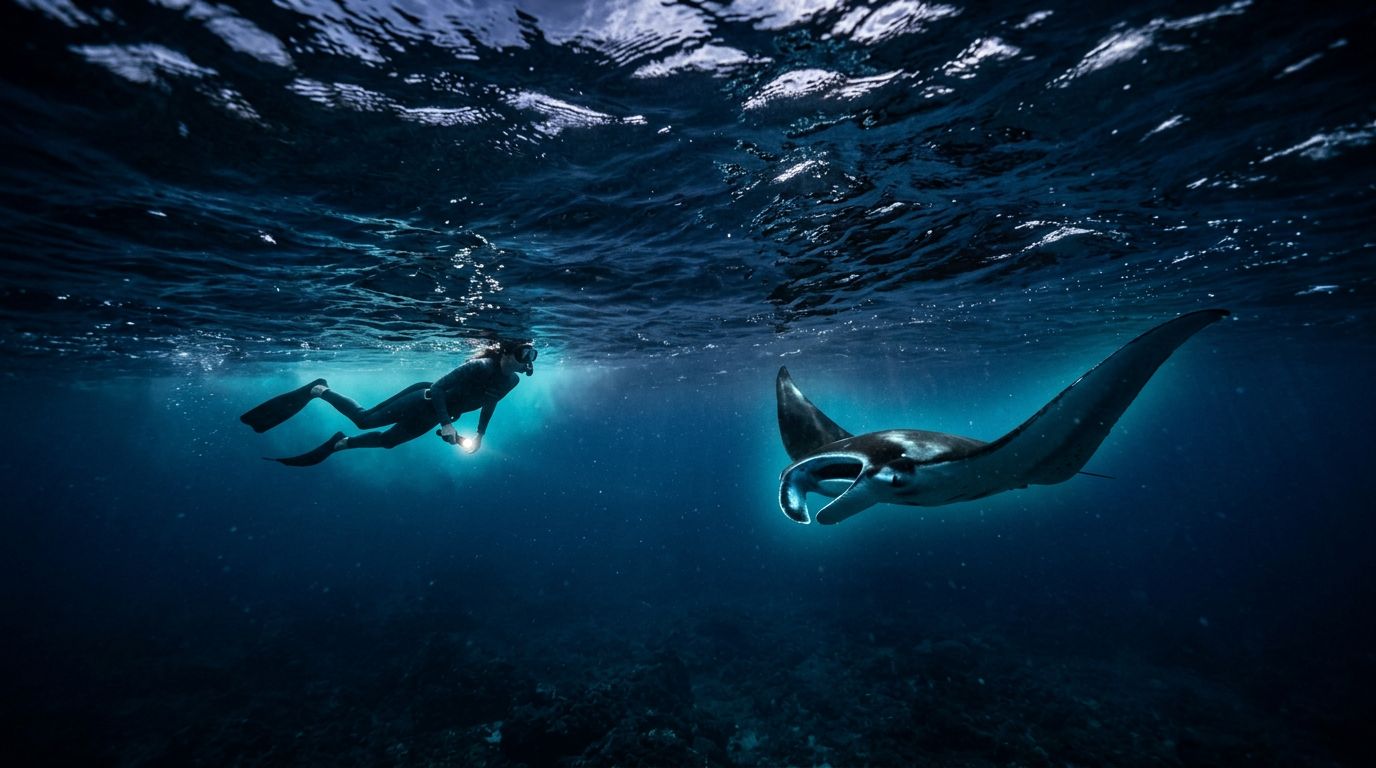
When you’re planning snorkeling Big Island Hawaii, the question of ear equalizing can come up fast. On a Kona manta ray snorkel, though, the answer is usually simpler than people expect: if you stay on the surface, you probably won’t need to equalize at all.
That said, pressure changes can still catch you off guard if you dip down, duck under a float board, or start the trip with congestion. Knowing when equalizing matters helps you relax, and that calm is part of what makes a manta night so good.
Kona Snorkel Trips runs small-group outings that keep the experience easy to follow, and Manta Ray Night Snorkel is another manta-focused option to compare. If you want to feel confident before you book, start with the basics below.
What equalizing your ears actually does
Equalizing balances the pressure between your middle ear and the water around you. When you descend, pressure builds fast, and your ears need a way to match it. That is why you feel a pop, a release, or a little fullness when the technique works.
On a surface snorkel, the pressure shift is tiny. Your head may dip a few inches, but you are not sinking several feet below the water. For most people on a manta ray snorkel in Kona, that means no ear-clearing routine at all.
Here is the simple rule that helps most:
| Situation | Need to equalize? | What usually happens |
|---|---|---|
| Floating at the surface | Usually no | You breathe and watch the rays |
| Ducking below the surface | Yes | Pressure can build quickly |
| Descending to look down | Yes | Clear your ears before you go lower |
| Resting on a lighted board | Usually no | You stay near the top of the water |
If you stay at the surface, your ears usually do not need equalizing. The need shows up when you descend.
That matters because the manta snorkel is built around floating, not diving. You are there to watch, not to chase depth.
When a Kona manta ray snorkel actually calls for it
A typical manta trip keeps you at the top of the water. You float near a lighted board, hold steady, and look down into the glow. The manta rays rise toward the light to feed, so the whole experience works best when you stay relaxed and still.
That setup is why many people who snorkel Big Island in Kona never think about ear pressure once they enter the water. You are not moving up and down through the water column. You are floating in place while the action comes to you.
Still, there are a few moments when pressure can show up. You may feel it while climbing down a ladder, during a splashy entry, or if you briefly duck below the surface. None of that means you need to start forcing your ears open.
If you do go under for any reason, descend slowly and stop the moment you feel pressure. That is the line you want to respect on any snorkeling Big Island trip. A manta encounter should feel smooth, not like a test of grit.
Who should be extra careful before going out
If you have a cold, allergies, sinus pressure, or an ear infection, your ears may not clear well. That matters more than the manta rays do. A stuffy day on land can turn into a miserable night in the water if you ignore it.
Recent ear surgery, repeated ear infections, or a history of bad pressure pain are worth taking seriously too. If you are unsure, talk with a medical professional before you go. A short delay is better than spending the whole trip uncomfortable.
Families should pay attention as well. Kids often do not describe pressure clearly, and first-timers may try to push through discomfort because they do not want to slow the group down. On snorkeling Big Island Hawaii trips, the smartest move is to speak up early.
If your group wants more room and a calmer pace, private Kona snorkel tours can make the whole night feel easier. That extra space helps when you want a slower entry and more attention from the crew.
How to equalize gently if you need to
Most of the time, you won’t need this step at all. If you do dip below the surface, a gentle approach works better than a hard one.
- Stop descending as soon as you feel pressure.
- Swallow, yawn, or move your jaw side to side.
- Pinch your nose lightly and blow very gently if the simple moves do not work.
- Rise a little and try again instead of forcing it.
- Come up completely if the pain stays sharp or one ear will not clear.
The key is light pressure, not power. Strong blowing can make things worse. On a calm snorkel, a small reset is often enough.
If one ear clears and the other does not, pause and come up a bit. You do not need to prove anything underwater. The fish and rays will not care how long you take.
Why the surface setup makes the manta snorkel easier
A night manta snorkel in Kona is built around floating, watching, and breathing slowly. You hold onto the board or stay nearby, and the lights below draw plankton. That brings the manta rays close without asking you to swim after them.

Because you stay on top of the water, your ears usually get a break. You are not dropping over and over to check a reef ledge. You are watching a slow, graceful scene unfold beneath you, which is why many people relax faster than they expected.
If you want more background on how the night setup works, the 2026 manta ray guide gives a helpful breakdown. For another manta-focused option, Manta Ray Night Snorkel is another name worth comparing.
If the manta trip is the one you want, you can check availability for the next opening.
Quick habits that keep your ears comfortable
A few small habits make a big difference before you ever reach the water.
- Arrive without congestion. If your nose is stuffed, your ears may be slower to clear.
- Drink water during the day. Dry tissue and congestion often travel together.
- Skip forceful ear clearing on the boat. If you are not descending, you probably do not need it.
- Tell the crew if you have ear tubes, a recent infection, or a bad cold.
- Move slowly in and out of the water so your body stays relaxed.
You do not need a complicated routine. You need a clear head, slow breathing, and a little honesty about how you feel.
That also helps on any night when the ocean feels new to you. The less tense you are, the easier it is to enjoy the first minutes in the water.
Choosing a guided tour that fits your comfort level
If you want a crew that keeps the night organized, Kona Snorkel Trips is set up for that kind of experience. The company focuses on small groups, solid gear, and clear briefings, which helps a lot if you are nervous about ears or open water.
You can browse guided snorkeling excursions in Kona if you want a broader look at the options, or jump straight to the guided manta ray snorkeling adventure if the night encounter is the main reason you’re coming out. Either way, the small-group format makes it easier to ask questions before you get in.
If you want to lock in a date, you can check availability before the rest of your Kona plans fill up.
What to do if your ears still feel off afterward
If your ears feel full after the trip, stay calm and give them a little time. Sometimes the feeling comes from trapped water, salt, or simple tension rather than a true pressure problem. A warm shower and a gentle jaw movement often help.
Sharp pain is different. If you still feel pain, hear ringing, or notice blocked hearing after you get out, stop trying to fix it on your own. Get checked if the discomfort does not fade.
The same advice applies if one ear never cleared during the trip. You do not want to keep forcing it after the fact. Slow, gentle care is better than trying to prove you can push through.
Conclusion
You usually do not need to equalize your ears on a Kona manta ray snorkel if you stay on the surface. That is the big takeaway, and it should make the night feel a lot less intimidating.
Equalizing matters when you descend, so the real trick is knowing when you are actually going under. If you are congested, in pain, or unsure, listen to your body and speak up before the boat leaves the harbor.
Once you understand that difference, the rest of the experience gets easier. You can float, watch the light below, and let the manta rays do what they do best.