
How to Hold the Light Board on a Manta Ray Night Snorkel
A manta ray night snorkel feels a lot calmer once you know what to do with the manta ray light board. If you book with Kona Snorkel Trips, the board becomes your steady point in the water, not something you wrestle with.
If you’re comparing Manta Ray Night Snorkel Hawaii or reading about snorkeling Big Island Hawaii, you keep seeing the same advice for a reason. Hold lightly, stay flat, and let the lights do their job. That simple approach makes it easier to snorkel Big Island after dark without wasting energy.
What the light board is doing for you
The board gives you a floating edge, and the lights pull plankton into the water below. That matters because mantas follow the food, not your effort. If you want the mechanics behind the glow, how the manta ray light board works explains the setup in plain language.
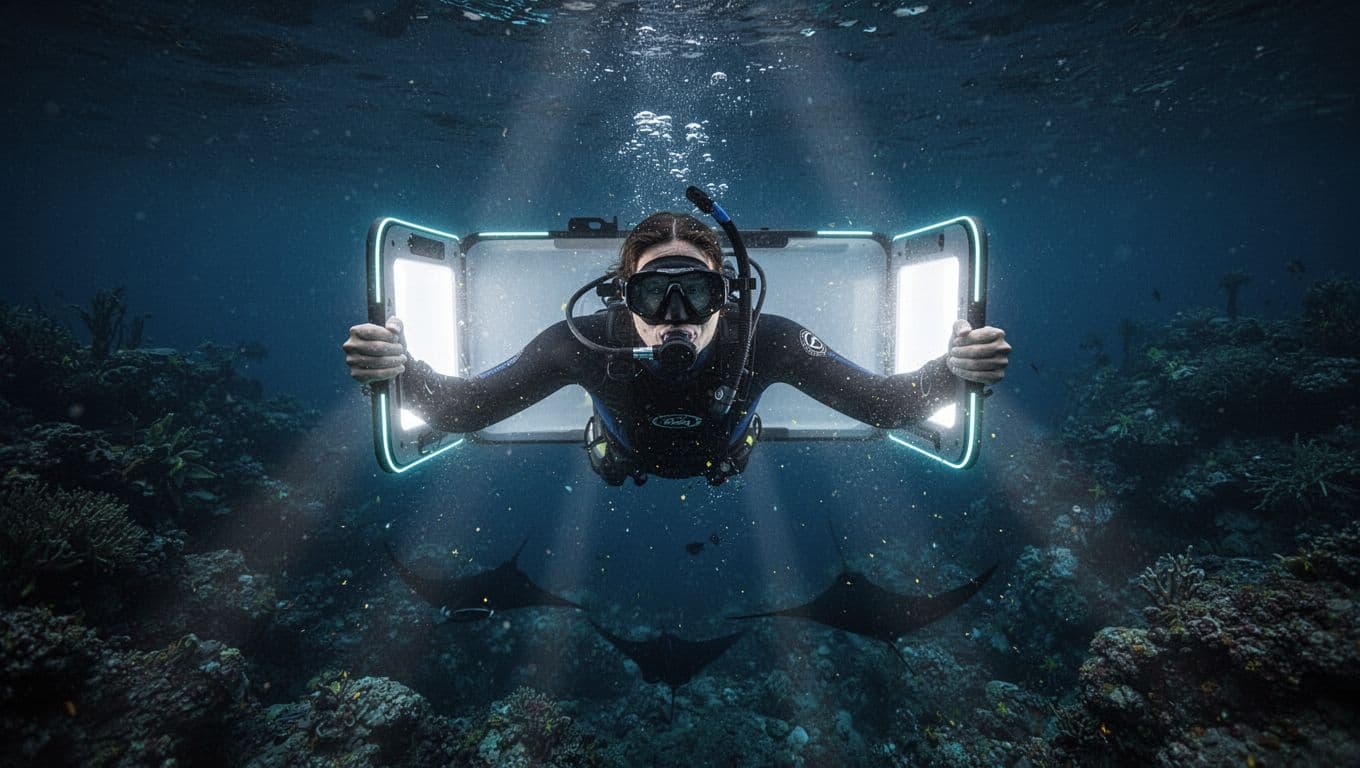
You do not need a hard grip or strong swim strokes. The boat, the guide, and the board create the viewing spot. Your job is smaller than you may expect.
Keep your chest low, your face in the water, and your breathing steady. When you snorkel Big Island at night, the board is your anchor, not your workload. The calmer you are, the easier the whole scene feels.
Hold the board with light hands
Your hands should guide the board, not squeeze it. Use the handles or the outer edge, then relax your wrists. A soft grip helps your shoulders stay down, and that keeps your body from tightening up.
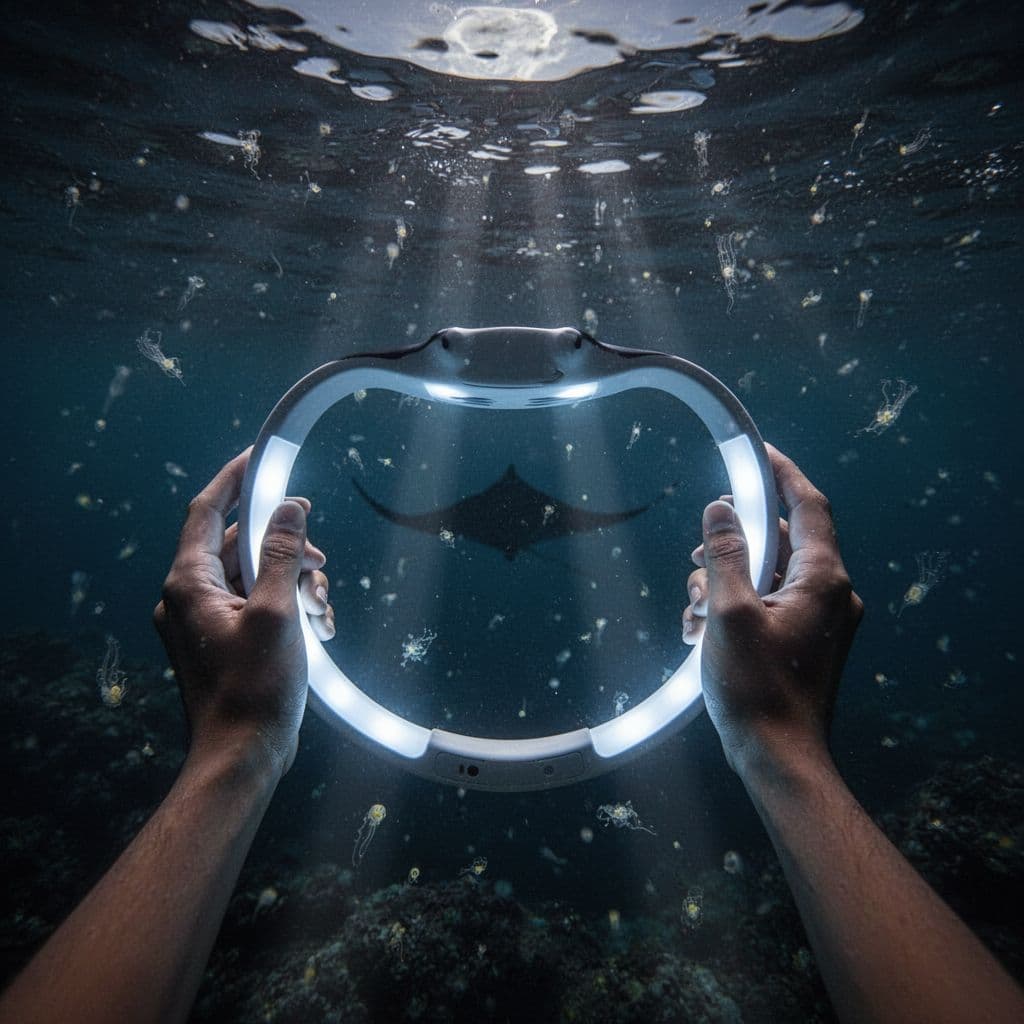
A loose grip keeps you steady. A tense grip makes the board feel heavier than it is.
A few small habits help more than muscle:
- Keep your thumbs soft.
- Let your elbows float near the surface.
- Hold the board at arm’s length, not under your chest.
- Avoid yanking the board if you feel a drift.
That last point matters. If you pull the board toward you, you change your body angle. Then your legs sink, and your face has to work harder to stay in a good position.
Instead, think of your hands as hooks, not clamps. You are there to rest on the water, not fight it. That relaxed hold keeps the lights where they belong and gives the mantas a clear path below.
Keep your body flat and calm in the water
Once your hands settle, the rest of your body follows. Keep your hips near the surface and your legs long. The goal is a quiet outline, not a workout.
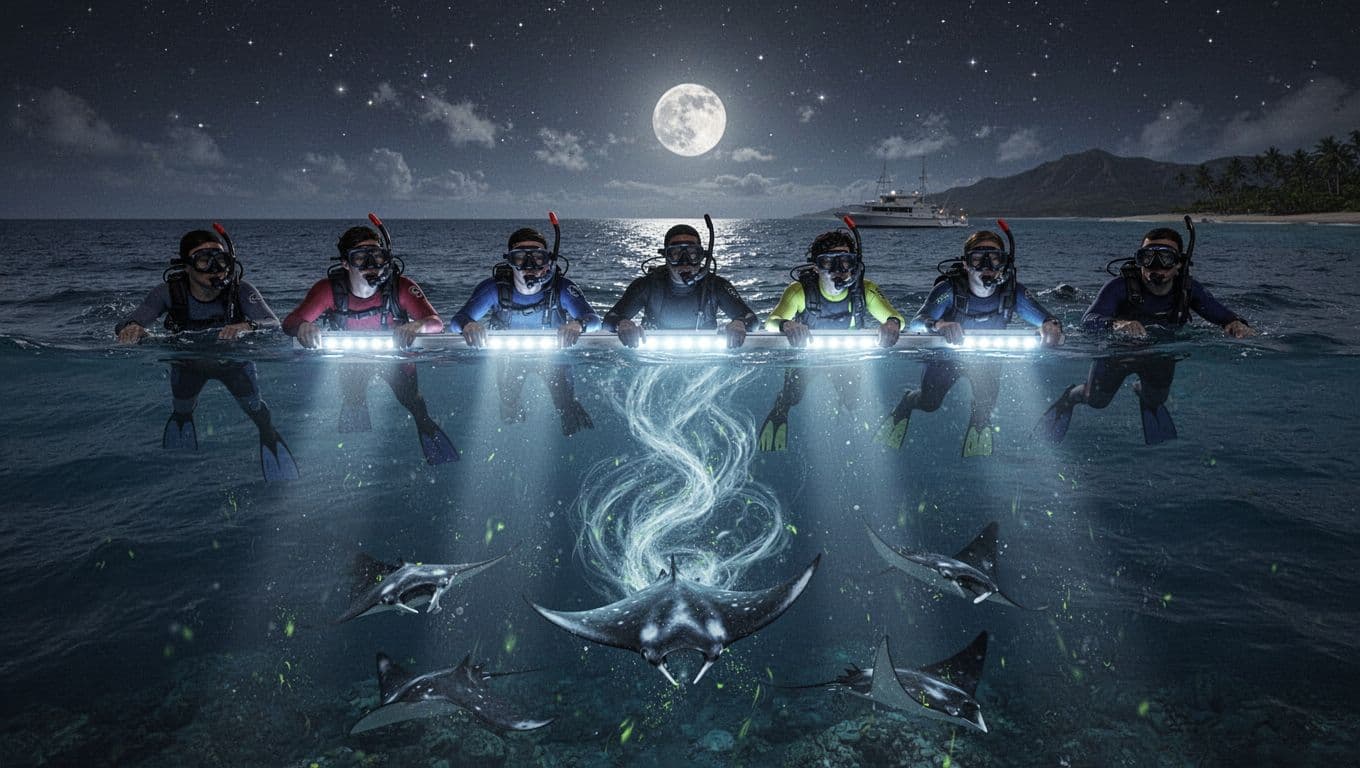
If your knees start bicycling, pause and reset. Gentle ankle movement is enough. Big kicks stir the water and can push you off balance. They also break the clean space that makes the night feel smooth.
For many people who book snorkeling Big Island trips, this is the surprise. You do less and see more. The board gives you a stable place to rest, and the mantas come to the light below.
Keep your body quiet, and the ocean does the rest.
A few more small details help. Keep your fins behind you, not beneath you. Stay in your spot unless the guide asks you to move. If you drift, correct with tiny adjustments instead of a splashy correction.
That steady shape is what keeps the group neat and the water calm. It also makes the light pool more useful, because the beams stay clean and bright.
Why a guided night snorkel feels easier
A good guide makes the board feel even simpler. Kona Snorkel Trips keeps the group small, uses lifeguard-certified guides, and gives you gear that fits the night. That matters when the water is dark and you want clear direction from the start.
If you want the full tour details, the Kona manta ray night snorkel tour is a helpful place to start. You can also check availability when you’re ready to book.
For another useful take, Kona Snorkel Trips’ 2026 manta guide gives you more background on what the night feels like. That can help if you want to compare styles before you go.
When you have that kind of setup, you can focus on the water instead of your gear. That makes the whole experience feel easier from the first minute.
Conclusion
The best way to hold the light board is to stay loose and let it do the work. Your hands guide, your body floats, and your legs stay quiet.
That simple hold changes everything on a manta ray night snorkel. It keeps you stable, helps the lights attract the plankton, and gives the mantas a clean space to glide below you.