
How to Avoid Saltwater Cough During Captain Cook Snorkeling

A little saltwater in your throat can turn a beautiful snorkel into a coughing fit fast. The good news is that most of that discomfort is preventable with a calmer start, a better fit, and a little attention to your breathing.
Kona Snorkel Trips keeps its small-group Big Island outings safety-focused, so you get more space to learn the basics before you drop in. If you are planning snorkeling Big Island Hawaii style, the same simple habits help at Captain Cook and beyond. The key is to prepare before you ever see the reef.
Why saltwater cough happens during Captain Cook snorkeling
Most saltwater cough starts with a small mistake, then snowballs. A few drops hit the back of your throat, you tense up, you breathe faster, and the next breath feels rough. On a calm day, you may barely notice it. On a choppy day, it can feel like your body is arguing with the ocean.
| Common trigger | What it does to you | What helps |
|---|---|---|
| Salt spray on your lips or tongue | Irritates the throat and starts a cough | Close your mouth during splashy moments and reset your breathing |
| Snorkel not seated well | Lets drips sneak into the tube | Refit the mouthpiece before you swim again |
| Fast, shallow breathing | Dries out your airway | Slow your exhale and pause before the next breath |
| Choppy entry or boat wake | Sends water toward your mouth | Wait for a calmer moment and enter gently |
| Dry throat from sun and wind | Makes the first cough easier to trigger | Drink water before you get in and stay relaxed |
A cough usually starts when seawater, dry air, and hurried breathing hit at the same time.
For many snorkeling Big Island trips, the trick is to treat the first cough like a warning light, not a disaster. If one inhale of spray leads to a longer coughing spell, or your chest feels tight, stop and reset. If you keep coughing after a larger water hit, read up on salt water aspiration syndrome for context, then let your guide know.
If you want to snorkel Big Island reefs with less stress, start by slowing the whole day down. The ocean does not reward rushing, and your throat feels every shortcut.
Set yourself up before you slip into the water
Preparation sounds boring until you skip it. Dry air, sun, and a rushed gear check are common reasons your throat feels scratchy before you even swim. That is especially true when you are headed out for a boat day and want to enjoy the reef instead of clearing your throat.
A few simple habits help more than people expect:
- Drink water before the boat leaves.
- Go easy on alcohol the night before.
- Eat a light meal, not a heavy one.
- Test your mask and snorkel on deck before you enter.
- Tell your guide if you have asthma, reflux, or a sore throat.
These steps are small, but they change how your body reacts once water hits your face. A hydrated throat handles a little spray better. A relaxed swimmer also breathes more evenly.
If you are traveling for snorkeling Big Island Hawaii trips with family, build the gear check into the routine. Kids copy your pace. If you move like you have all the time in the world, they usually do too.
A good guide matters here as well. If your gear feels off, ask for help before you jump in. A 30-second adjustment on the boat is worth more than five minutes of coughing in the water.
Keep your breathing calm and your face low
Your snorkel works best when your breathing stays steady. Short, shallow breaths dry out the throat, while long, controlled exhales keep you calmer. Many first-time snorkelers lift their chin too high, which opens the snorkel to spray and lets water run where it shouldn’t.
Instead, keep your face level in the water and your body relaxed. Breathe in through the mouth with a slow, easy pull, then breathe out longer than you breathe in. If a wave bumps you, stop kicking for a second, float, and clear the snorkel before you start again. That small pause is often enough to stop a cough from building.
A relaxed head position matters because your neck can betray you. The moment you crane upward, water finds a path. When you keep your eyes angled slightly down and your mouth steady, the snorkel feels less like a tube you have to fight and more like a simple breathing aid.
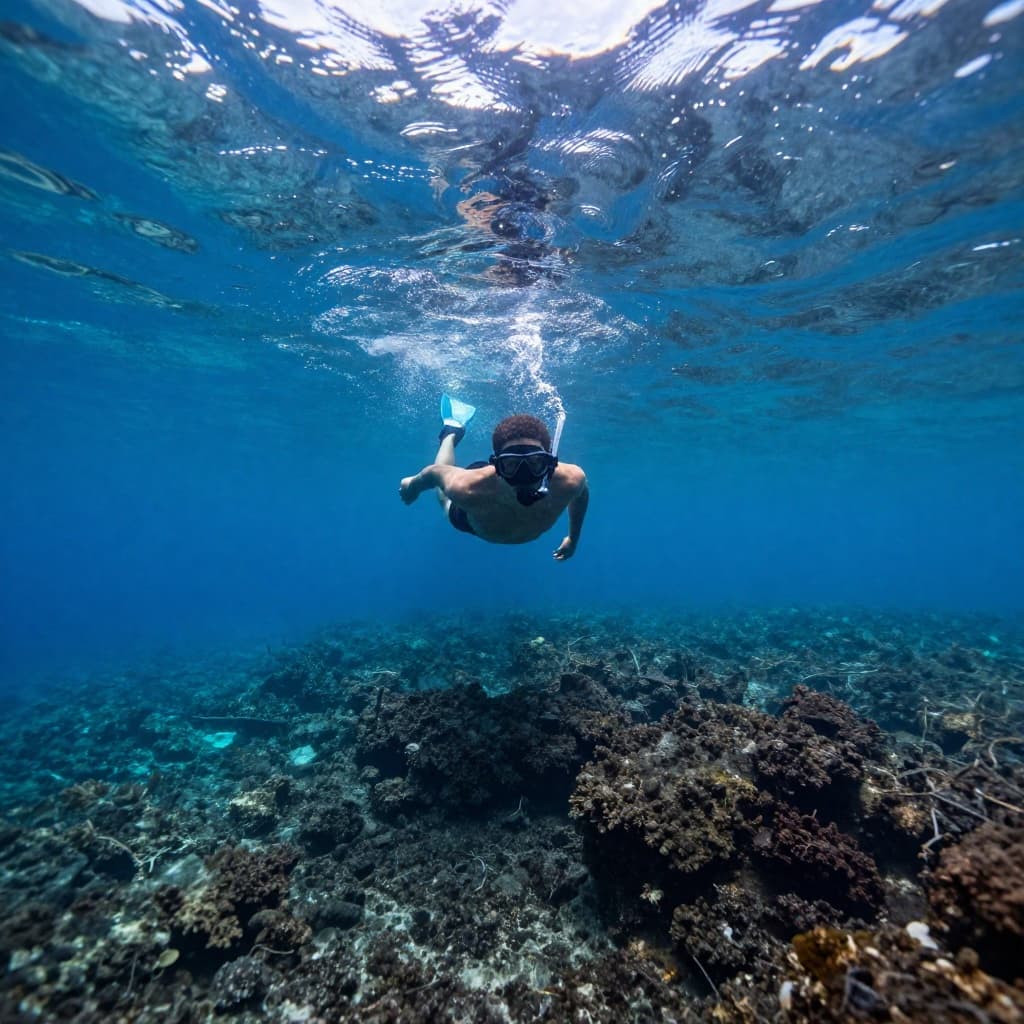
This matters even more on Captain Cook snorkeling routes, because the bay is often calmer than open coast water, yet every splash still counts. Calm breathing turns the snorkel from a noisy tube into a quiet tool.
Pick the right gear and get a better fit
A good mask fit prevents most of the little problems that lead to coughing. If your mask leaks, your attention goes to the leak instead of your breathing, and that makes you gulp air. If the mouthpiece is wrong for your bite, you clench your jaw and dry out faster.
Try the mask seal test on dry land. Press the mask to your face without the strap, inhale gently through your nose, and see whether it stays put. Then place the snorkel mouthpiece where it feels natural. You should be able to hold it without biting down hard. If you feel tension in your jaw after a minute, the fit is off.
Gear details matter when you plan snorkeling Big Island time, because warm water can still be rough on a windy day. Ask how the snorkel clears, whether the purge valve works smoothly, and how the straps are adjusted. If your snorkel has a dry-top, learn when it closes so you don’t keep trying to inhale against it.
A leaky mask often leads to more than a bad view. It creates a chain of little corrections, and each correction breaks your breathing rhythm. Once that rhythm breaks, the cough gets easier to trigger.
The best setup feels almost boring. That is a good sign. When the gear disappears from your mind, you can focus on the reef instead of your throat.
Read the water before you start swimming
Kealakekua Bay is often calmer than exposed shoreline spots, but calm does not mean flat. Boat wake, wind chop, and a quick sidestep into the swell can all send saltwater to your mouth. When you snorkel Big Island waters, entry timing matters as much as fin size.
Look at the surface before you go. If you see whitecaps, rolling surface chop, or waves crossing each other, ask your guide how they want you to enter. A slower entry lowers the chance that you inhale spray on your first breath. It also helps your body settle before you start exploring.
The same idea holds for snorkeling Big Island Hawaii visitors often picture as effortless. Even a pretty bay has movement. Water that looks gentle from the boat can feel busy at face level, where your mouth and nose meet the spray.
Families notice this quickly, because one rushed launch can put the whole group on edge. Couples and solo travelers feel it too. If the water looks busy, wait for the lull, keep your mouth closed during the splash zone, and let the guide set the rhythm.
The safest day is usually the slowest day. When the sea looks active, patience beats speed every time.
What to do if you start coughing mid-snorkel
A cough feels bigger in the water than it does on land, so your first job is to slow the moment down. Do not keep pushing forward while your throat tightens. Reset, clear the snorkel, and move to a float or ladder if you need a break.
- Lift your face out of the water and take one slow breath.
- Clear the snorkel and spit out any saltwater.
- Relax your shoulders and breathe on the surface for a few cycles.
- Signal the guide if the cough keeps coming back.
- End the swim if you swallowed a lot of water or your chest feels tight.
If you are still coughing after a seawater inhale, treat it as a sign to stop and reassess. It may be simple irritation, or it may be closer to salt water aspiration syndrome. Either way, the safe move is the boring move.
A calm exit is better than trying to power through a coughing fit.
That is especially true for kids and nervous first-timers. Once a cough starts, panic wants to take over. Your job is to keep the next breath simple. One reset can save the whole rest of the swim.
Why a guided Captain Cook trip can make breathing easier
A good guide changes the whole feel of the day. When you book with Kona Snorkel Trips, you get small groups, lifeguard-certified guides, and gear help before you enter the water. That matters when you are nervous about coughing, because a better fit and a calmer briefing lower the odds of a bad first breath. If you want trip details, guided snorkeling trips to the Captain Cook Monument are a useful place to start.
If Captain Cook snorkeling is the main reason you’re coming to Kona, Captain Cook Snorkeling Tours is another dedicated option focused on Kealakekua Bay. The point is simple. A smaller, better briefed group gives you more room to breathe, ask questions, and ease into the water instead of rushing.
When you want a quick booking check, you can check availability for a Kona Snorkel Trips outing.
If you already know you want the Kealakekua Bay route, you can check avaialbility for that trip.
A well-run trip won’t remove every splash, but it will remove a lot of stress. That is often enough to keep your breathing steady and your throat comfortable.
Conclusion
Saltwater cough usually comes from a small chain of events, not bad luck. A rushed entry, a loose fit, or a breath taken at the wrong moment can set it off. Once you know that, you can change the rhythm.
The safest approach is simple. Set your gear before you leave the boat, keep your breathing slow, and stop early if the water gets choppy. That habit matters on Captain Cook snorkeling days and on any snorkeling Big Island Hawaii trip.
If you treat the first splash with patience, the rest of the swim feels easier. A calm start gives you the best chance to enjoy the reef without spending the day clearing your throat.