
How Strong Are Currents on a Kona Manta Ray Night Snorkel?
A Kona manta ray snorkel usually feels calmer than people expect. Most nights, you are floating with the water instead of fighting it. Kona Snorkel Trips keeps that experience small-group and guided, which helps when the ocean has a little motion.
If you compare it with other snorkeling Big Island Hawaii outings, the night setting changes the feel more than the effort. Dark water can make a light drift seem bigger. Once you know what the current is doing, the whole snorkel feels easier to read.
What the water usually feels like at night
Kona’s manta sites are in sheltered water, so the current is often mild. You may feel a slow sideways push, a bit of surface chop, or a light tug when you settle onto the board. It usually feels less like a current and more like a moving walkway.
| Condition | What you feel | What it means for you |
|---|---|---|
| Calm evening | Almost no pull | Easy floating and relaxed viewing |
| Light wind or small swell | Slow drift and light chop | Stay close to your board |
| Rougher night | More movement at the surface | Listen closely and use the float setup |
The current you notice most is usually the one at the surface, not a deep pull below.
For a seasonal look at calmer windows, the best time to see manta rays in Kona guide helps you compare weather patterns.
What makes the current feel stronger
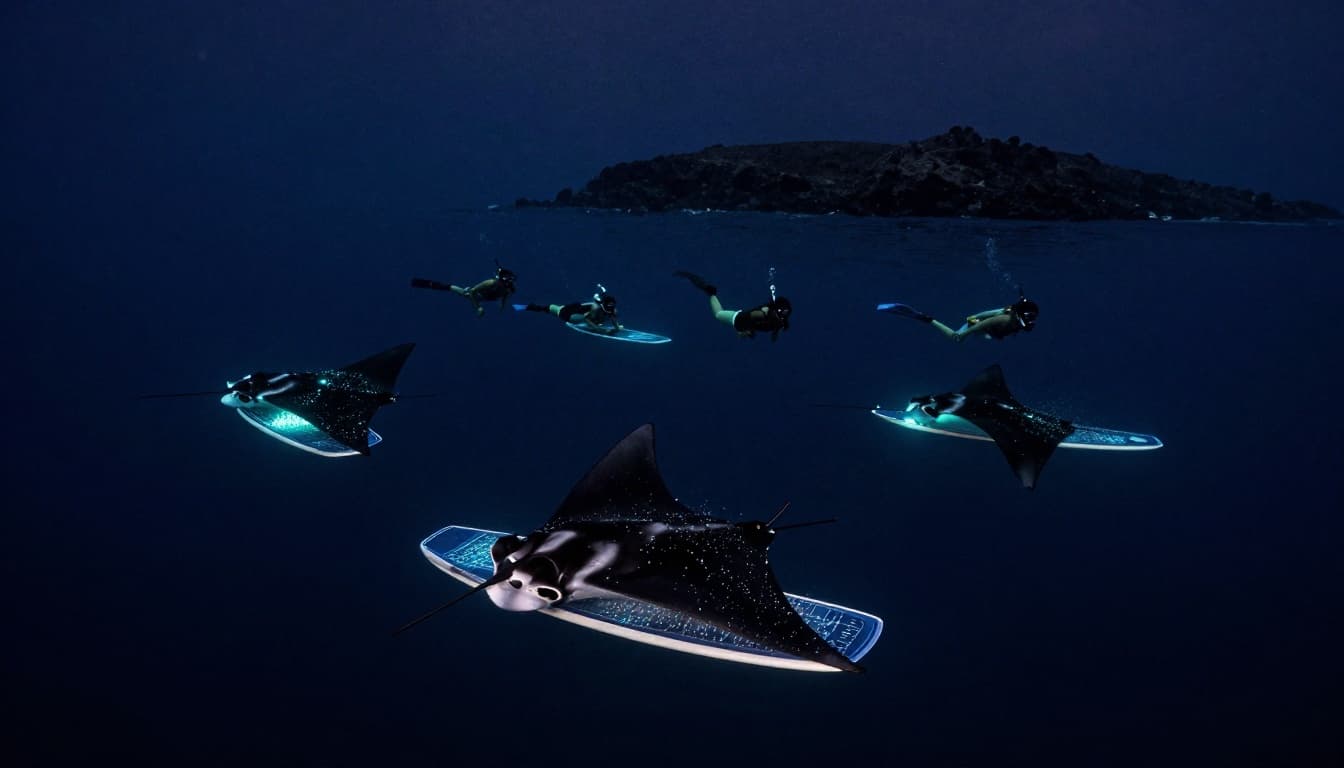
Wind, swell, and tide do most of the work. A breezy evening can rough up the top layer, while a passing swell can make the water rock under you. Tidal changes can also nudge the snorkel site enough that you notice more movement as the night goes on.
The other factor is perception. In the dark, your eyes lose the reference points that make motion feel smaller. That is why a gentle drift can feel larger at night than it would during the day.
If you already enjoy snorkeling Big Island trips, you know that one bay can feel different from the next. A night manta trip is still easy to manage, because you spend most of the time on a lighted surface board instead of swimming hard across open water. Even if you snorkel Big Island only a few times a year, this is a setting where good briefing matters more than brute strength.
Why a guided boat helps you relax
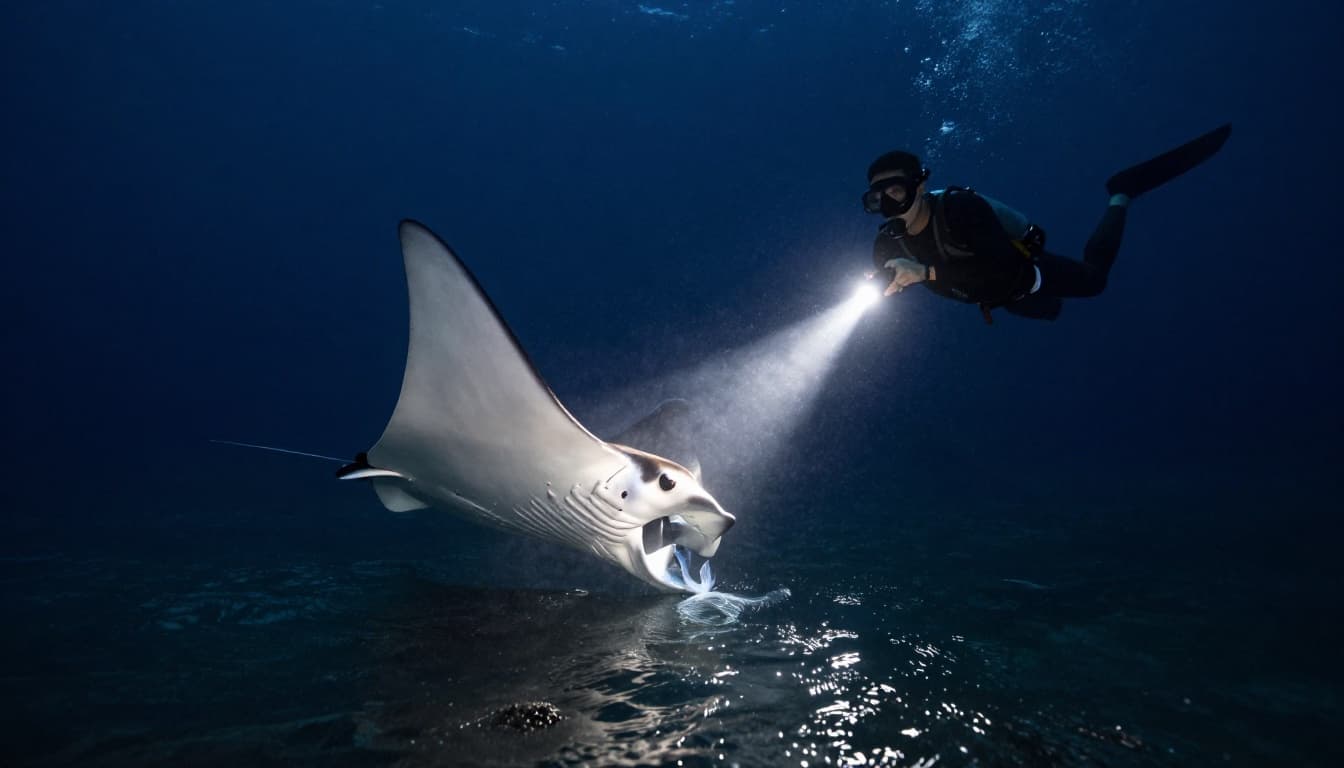
The crew matters as much as the forecast. Kona Snorkel Trips follows a Reef to Rays approach, uses lifeguard-certified guides, and keeps groups small. That matters because a calm guide can watch the water, read the drift, and tell you where to settle before you feel unsure.
Their custom lighted boards also help. They keep you in one place, so you use less energy and spend more attention on the mantas. If you want the official Kona manta ray snorkel tour page, that is the best place to compare trip details.
For a second look at the same kind of night swim, Manta Ray Night Snorkel Kona explains why the main sites are usually calm and protected. If your dates are open, you can check availability before you plan the rest of your trip.
Simple ways to make the snorkel easier
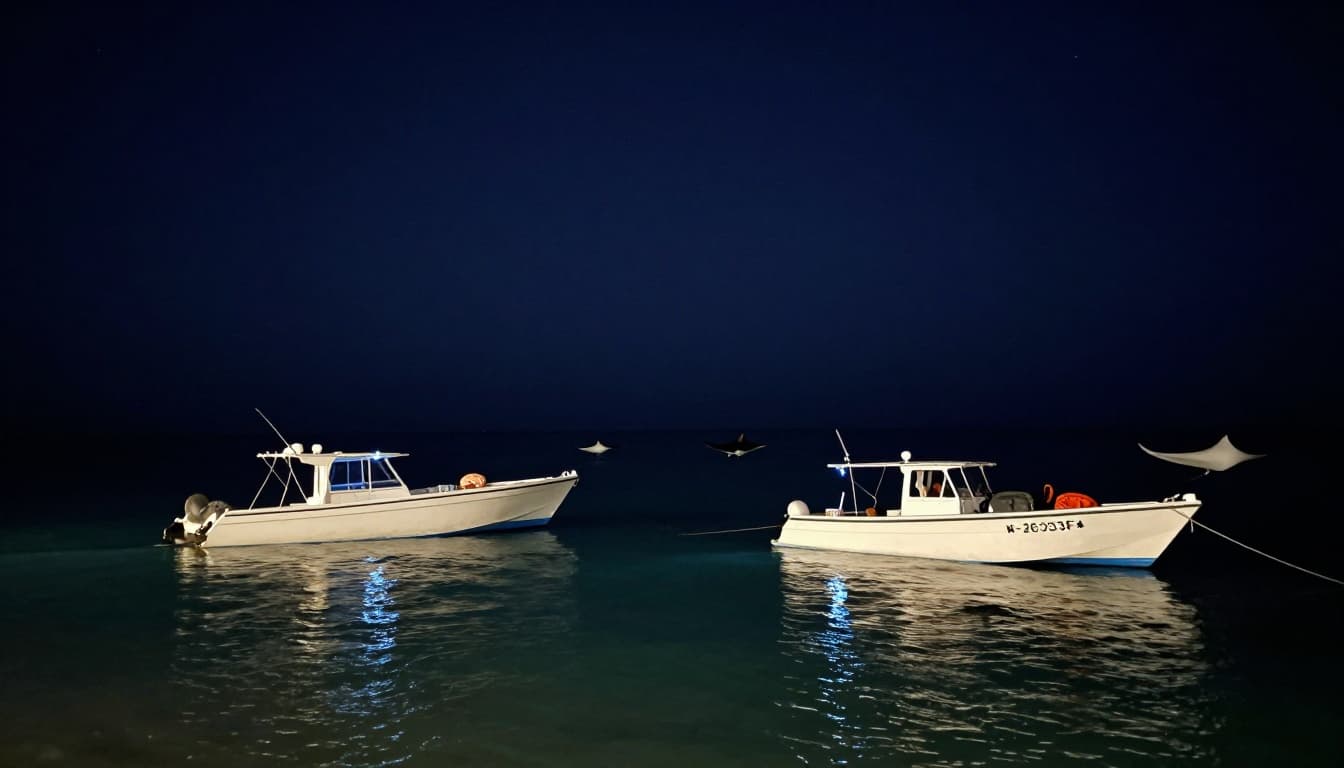
A few habits help more than strength alone:
- Choose a mask that seals well before you leave shore.
- Keep your body long and flat at the surface.
- Hold the board lightly instead of gripping hard.
- Tell your guide if you feel cold, tired, or uneasy.
- Use slow breathing when the water starts to move more.
If you snorkel Big Island with kids or first-time swimmers, this matters even more. Comfort starts with steady breathing and good float position. People who love snorkeling Big Island Hawaii trips often focus on visibility, but a smooth night starts with simple water habits.
The best trips feel controlled, even when the sea has a little motion. That is the real advantage of a well-run tour. You are not guessing, and you are not burning energy early.
Conclusion
Most of the time, the currents on a Kona manta ray night snorkel are gentle enough for a relaxed float. You may feel a drift or a light surface chop, but that usually stays manageable when you know what to expect.
The main difference comes from preparation, guide support, and the night setting itself. If you book with a crew that watches conditions closely, you can focus on the mantas instead of the water around you.