
How Dark Is a Kona Manta Ray Night Snorkel?
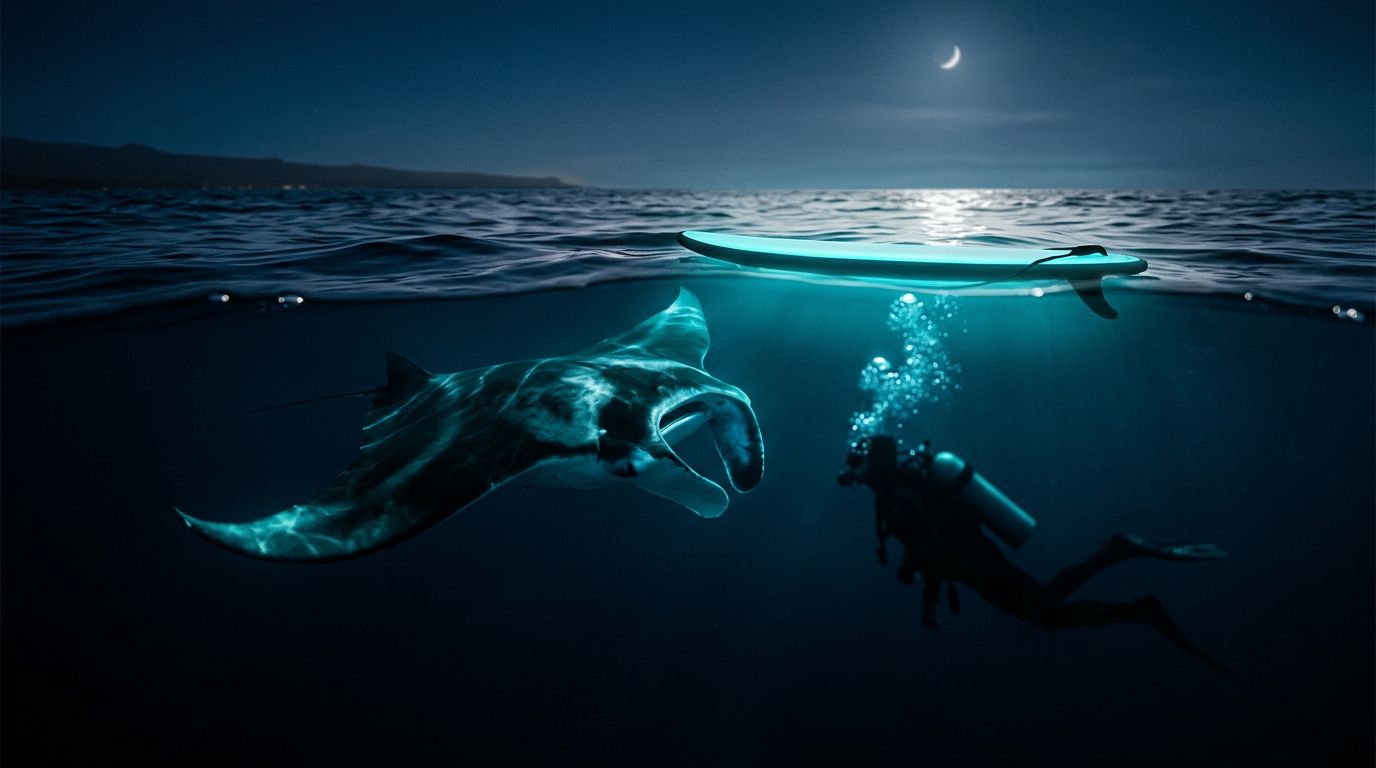
Kona Snorkel Trips is one of the first names people see when they start planning a manta outing on the Big Island, and Manta Ray Night Snorkel Hawaii is another manta-focused option if you want to compare trips. The honest answer to how dark a Kona manta ray night snorkel gets is simple: the ocean feels like night, but you do not drift into total blackness with no reference point.
If you’ve done snorkeling Big Island Hawaii in daylight, the shift is immediate. The glowing board creates a bright pocket in the water, while the rest of the ocean falls away into dark space. That contrast is a big part of the experience, and it helps to know what the darkness actually feels like before you go.
The short answer: darker than sunset, brighter than you expect
The water is dark enough that you notice the difference the second you leave daylight behind. On the boat, you may still catch some sky glow, a moonlit horizon, or the reflection of harbor lights. Once you are on the water and away from shore, that light fades fast.
What matters most is that a Kona manta ray night snorkel is not a blind swim. You float near a lit board, and that light gives your eyes something steady to lock onto. In other words, the trip feels dark, but it does not feel aimless.
If you have only done daytime reef trips, the change can surprise you. During the day, your eyes follow coral shapes, fish movement, and reef color. At night, the scene narrows. Your world becomes the lighted patch in front of you, the black water beyond it, and the manta rays that appear inside that contrast.
That is why people often describe the trip as dramatic rather than scary. The darkness sets the stage. The lightboard gives you the frame. The mantas give you the show.
What your eyes see around the lightboard
The lightboard is the main reason the trip stays manageable. It sends light downward, which pulls plankton into the beam. The plankton draws the mantas, and you stay in one clear spot while the action happens just below you.
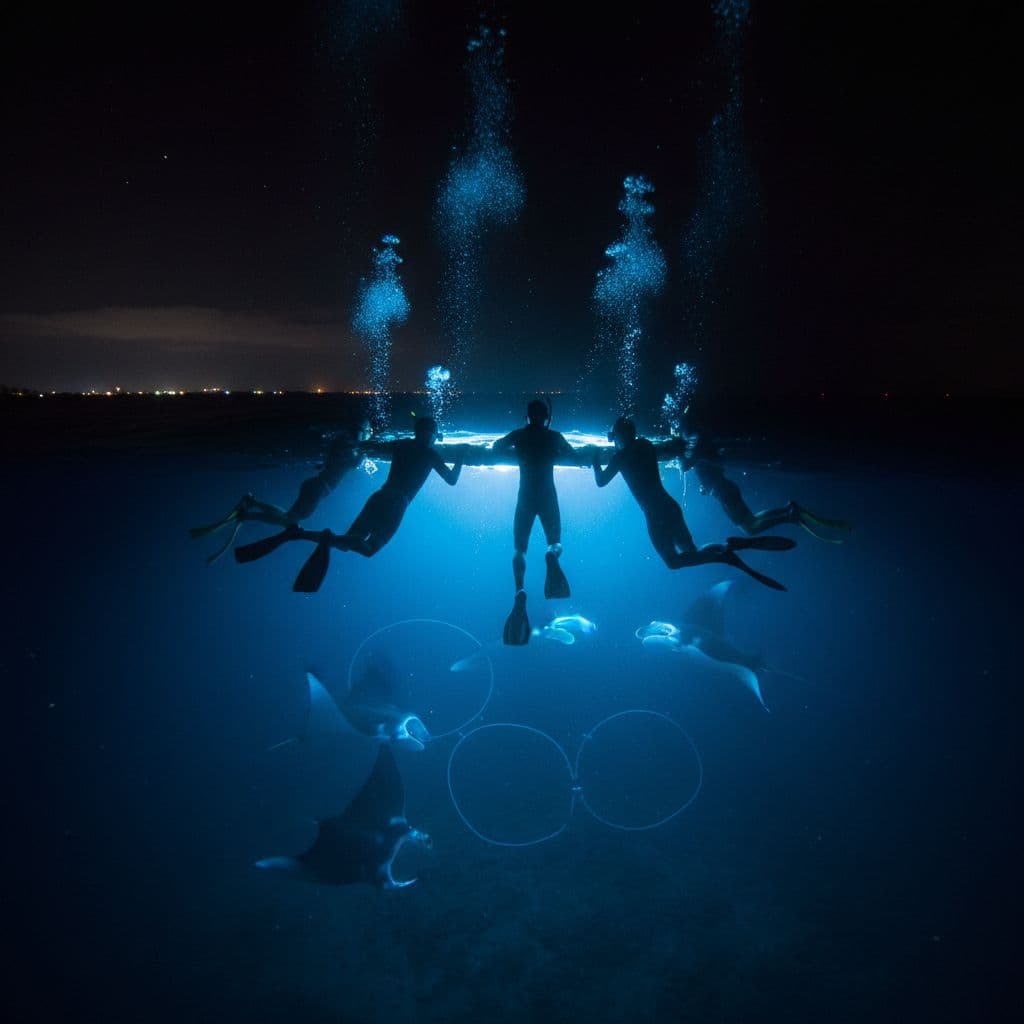
The darkness is not uniform. It changes by distance. Right around the board, you can see your mask, hands, bubbles, and the surface chop. A few feet out, the water becomes far less readable. Past that point, it can feel like the ocean disappears.
| Area | How dark it feels | What you notice |
|---|---|---|
| Under the lightboard | Bright and clear | Your hands, bubbles, and the water column |
| Just outside the light | Deep blue to black | Strong contrast, fewer details |
| Beyond the lit circle | Very dark | Motion, shapes, and the open ocean feel |
| On the boat | Depends on moon and sunset | Horizon glow, deck lights, and wind on the water |
The biggest change is not visibility alone, it is focus. You stop scanning a reef for tiny fish and start watching one bright zone where manta rays glide in and out. That makes the trip feel intense without becoming chaotic.
The darkest part is usually outside the lightboard, not where you’re floating.
If you want another plain-English breakdown of what a night snorkel feels like, what to expect on a manta ray night snorkel tour gives a helpful side-by-side view of early and late departures.
Moonlight, cloud cover, and swell change the darkness
Not every night looks the same. Moon phase matters, because a bright moon can soften the darkness on the boat and across the water. A new moon or a sky full of clouds makes the ocean feel much darker, especially once you move away from the lights.
Wind and surface chop also change how dark things feel. When the ocean is calm, you can see the light spill across the top of the water in a clean circle. When the sea is rougher, the reflected light breaks up faster, and the black water around the board feels even deeper.
You do not need perfect conditions for a good manta outing. You just need a guided setup that keeps you oriented and a clear plan for where to float. That is why the lightboard matters so much. It gives your eyes a fixed point when the rest of the night shifts around you.
If you have already done some snorkeling Big Island trips, you know the water can change fast after sunset. The night version takes that even further. A partly cloudy evening can feel more dramatic. A bright, calm night can feel softer and easier to settle into.
Either way, the darkness is part of the trip design. It is not a problem to work around. It is part of why the mantas stand out so clearly once they arrive.
Why the dark feels calmer on a guided tour
The right setup makes a big difference. Kona Snorkel Trips keeps trips small, uses custom-built lighted boards, and runs the tour with lifeguard-certified guides. That matters at night, because the darkness feels much less random when you know exactly where to float and who is watching the group.
The company also focuses on reef-safe habits and good gear. That sounds simple, but simple is what helps most when you are in dark water. A well-fitting mask, clear instructions, and a tight group around one light source make the whole outing feel organized. You spend less time wondering what is around you and more time watching the mantas.
If you want a guided trip that keeps the experience personal, you can check the schedule here.
That setup is a big reason the night feels controlled instead of overwhelming. You are not trying to sort out the dark on your own. You are staying with a group, a guide, and a bright board in the middle of the water.
Which departure time feels darkest
The time you go out changes the mood more than most people expect. A twilight departure still holds some light in the sky, so the transition feels gradual. A later trip goes darker faster, and the contrast between the board and the ocean becomes sharper.
| Departure window | How dark it feels | Best for |
|---|---|---|
| Early twilight | Soft, with some sky color left | Nervous first-timers and families |
| Around sunset | Moderate to dark | Most travelers |
| Later night | Darkest, strongest contrast | Confident snorkelers who want the full effect |
If you want the local route and timing details, the Big Island manta ray night snorkel page is the best place to start. For another direct comparison of early and late departures, Manta Ray Night Snorkel Hawaii also focuses on this same Kona experience.
If you are ready to book the dedicated manta trip, you can check availability and compare dates before you decide.
A later departure is not automatically better. It is simply darker, which some people love and others do not. If you want a gentler first impression, go earlier. If you want the strongest night feel, go later.
Is it too dark for families or nervous swimmers?
When people search for snorkeling Big Island, this is often the real question behind the search. You want to know if the darkness will feel peaceful or stressful, especially if you are bringing kids, traveling as a couple, or trying something new after years away from the water.
The short answer is that the darkness is usually more surprising than difficult. The board gives you a fixed place to hold, and the guide keeps the group together. That means you are not trying to swim around in open water and figure things out on your own.
A few habits help a lot:
- Stay close to the board and keep your face in the water only when you feel ready.
- Make sure your mask fits before you leave the boat.
- Let your guide know if you are uneasy in dark water.
- Keep your breathing slow, because rushed breathing makes the darkness feel stronger.
If you want to snorkel Big Island with a cautious swimmer, the earlier departure is often the easier choice. You still get the manta setup, but you also keep a little more sky light around you. That can make a first trip feel smoother.
Families often do best when everyone knows the plan before they enter the water. Once you understand where to float and what the board does, the darkness stops feeling like a mystery. It becomes part of the scene, the same way moonlight changes a beach walk.
Conclusion
A Kona manta ray night snorkel gets dark enough to feel like a real night swim, but not so dark that you lose the experience. The board lights your space, the ocean outside that circle fades to black, and the mantas move through the brightest part of the water.
That is the key point to remember. The darkness is not there to make you uneasy. It is there to make the mantas stand out.
If you want the softest version, choose an earlier departure. If you want the deepest night feel, go later. Either way, you are stepping into a small pool of light in a much larger ocean, and that is exactly what makes the encounter stay with you.