
Snorkeling Big Island Hawaii: Recover a Dropped Mask
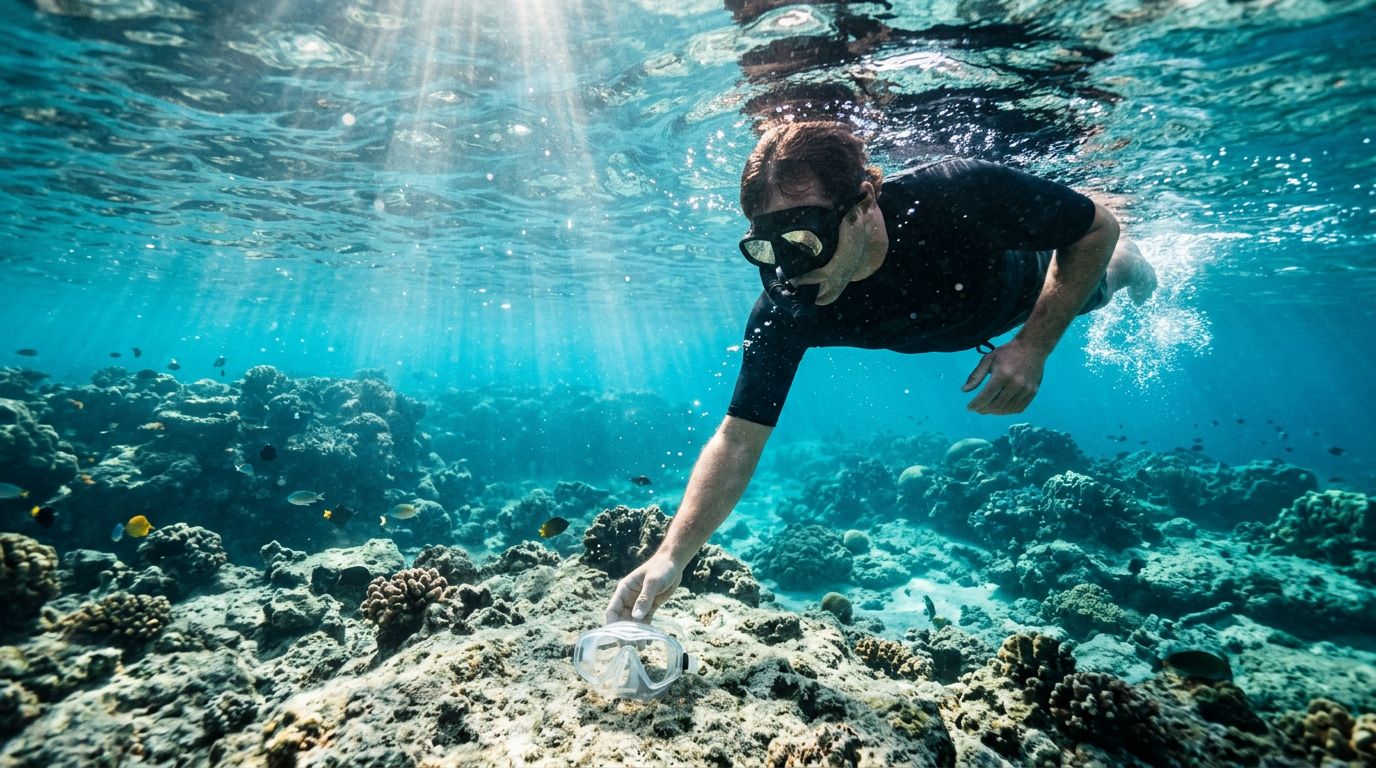
A dropped mask can turn a calm swim into a stressful moment within seconds. If you’re snorkeling Big Island Hawaii waters, you may be above lava rock, coral, sand, or moving surge when your mask slips away.
Your first priority is breathing and position, not the equipment. Stop, float, alert your buddy or guide, and retrieve the mask only when the water and depth allow it. The steps below help you respond without chasing gear into unsafe water.
Key Takeaways
- Stop swimming and regain calm breathing before looking for your mask.
- Tell your buddy or guide immediately, especially near a boat or current.
- Search from the surface first, then descend only if you can do so comfortably.
- Never chase a mask into coral, a cave, strong surge, or water with boat traffic.
- Check the strap and skirt before putting the mask back on, then clear it slowly.
Protect Yourself Before You Reach for the Mask
When a mask falls, your natural reaction is often to grab it quickly. That impulse can make you kick hard, lose your position, or hold your breath longer than you should. A calm pause gives you more control.
Stop moving and turn your face toward the surface. If you still have your snorkel, breathe through it. If the mask came off your face and your snorkel flooded, lift your head clear and take normal breaths.
Your first job is to protect your breathing, not your equipment.
Next, signal your buddy. Point toward the area where the mask disappeared, then use a clear stop signal if you’re with a guide. A second person can watch your position while you look. On a guided trip, your captain or lifeguard-certified guide can decide whether the mask is safe to recover.
Avoid swimming downward immediately. Your mask may be only a few feet below you, but poor visibility, glare, and surface movement can make distance hard to judge. Take a breath, settle your body, and scan the bottom while you float.
If you’re near a boat, do not descend until the crew confirms that the area is clear. A mask isn’t worth moving beneath a vessel, approaching a propeller, or entering a boat’s active path. Tell the crew first and follow their instructions.
You should also check yourself for discomfort. Cold water, panic, a cramped leg, or a leaking snorkel can change a simple retrieval into an emergency. If anything feels wrong, abandon the mask and return to the boat, shore, or guide.
How to Recover a Dropped Snorkel Mask
Once your breathing is steady and the area is safe, use a controlled search. The goal is to locate the mask without wasting energy or disturbing the reef.
- Mark the last known location. Keep your eyes on the spot where the mask disappeared. If you looked away, point to the place you last felt it leave your face. Your buddy can help maintain that reference.
- Scan straight below you. Look through the surface at several angles. A dark strap or black silicone skirt can blend into lava rock, while clear silicone may disappear against sunlit water. Check for the lens reflection and the outline of the frame.
- Watch the water movement. Surge can roll a mask across the bottom. In shallow Kona water, the mask may move along the reef instead of sinking straight down. Search slightly down-current, but don’t follow it into hazardous water.
- Use a comfortable duck dive only. If the mask is shallow and you already know how to duck dive, take one relaxed breath and descend without hyperventilating. Keep the descent controlled and return before you feel strain.
- Pick it up by the frame or strap. Hold the solid frame or strap rather than pulling on the soft skirt. The skirt can fold, tear, or lose its shape if you yank it against rock.
- Return to the surface calmly. Keep the mask secure in one hand. Use your other hand to maintain balance if needed, and never sacrifice a normal ascent for a piece of gear.
- Stop after a short search. If you don’t see the mask quickly, surface and reassess. Your buddy or guide may have a better view, or the current may have carried it farther than expected.
A safe duck dive is different from a deep breath-hold attempt. You shouldn’t hyperventilate before descending, race toward the bottom, or push through ear pressure. If you can’t equalize comfortably, stop the descent. You also shouldn’t make a solo recovery while your buddy is distracted elsewhere.
Search patterns work better than random swimming. Hover over the last known spot, look in a small circle, and then move a short distance with the current. Your buddy can cover the opposite side. This method reduces the chance that both swimmers drift away from the original location.
A dropped mask can land on living coral. Avoid grabbing coral heads, standing on reef structure, or dragging your fins across the bottom. If the mask rests in a crevice, leave it there unless a trained guide can recover it without damage.
When You Should Leave the Mask Behind
Some masks are recoverable in seconds. Others create a reason to stop searching.
Skip the retrieval if the water has strong surge, poor visibility, or a fast-moving current. A mask can slide into a narrow channel, under a ledge, or across sharp lava. Chasing it can put your body against rock or push you into deeper water.
You should also leave it behind when you feel short of breath, anxious, cold, or disoriented. Those signs mean your attention belongs on returning to a stable position. Signal your buddy and head toward your guide, boat, or exit point.
Depth matters as well. Snorkeling doesn’t require you to make a deep breath-hold dive. A mask resting beyond your comfortable depth isn’t a safe target, even if you can still see it. Tell the crew where it fell so they can decide whether a later recovery is possible.
If the mask lands near a boat channel, mooring line, or busy entry point, stay on the surface and alert the crew. Don’t swim beneath a boat or reach toward a line under tension. The person watching the water may also need to move you away from other swimmers.
In a group, one person should communicate while another watches the swimmer searching. Two people silently diving for the same mask can lose track of each other. A guide can also provide a replacement mask, which ends the problem without putting anyone at risk.
Search time should stay short. If you can’t locate the mask after a controlled look, accept the loss. Equipment can be replaced. A scraped knee, damaged coral, or breath-hold emergency creates a much bigger problem.
If Your Mask Is Still on Your Face
A mask may not fall away completely. Instead, a wave can knock it loose, break the seal, or fill it with water. In that case, you may be able to fix it without removing it.
First, keep your face in the water only if you can breathe comfortably through the snorkel. Press the mask gently against your face and adjust the strap if it has slipped. Don’t tighten the strap as hard as possible. Excessive tension can pull the skirt away from your face and make leaks worse.
For a partial leak, press the top edge of the mask against your forehead. Tilt your face slightly upward, then exhale through your nose while lifting the lower edge a little. Water should leave through the bottom of the skirt. A guide can show you this technique before you enter the water.
A full mask clear uses the same basic idea. Keep the top sealed, tilt your head back slightly, and breathe out through your nose while opening the lower edge. You can review the steps in this guide to clearing a flooded mask before your trip.
Don’t remove the mask underwater unless you have a reason and feel comfortable doing so. Taking it off can make you lose sight of the bottom, flood your nose, and create panic. Surface first if you need to reset the fit.
A snorkel mask should sit with the skirt flat against clean skin. Hair beneath the skirt can create a leak, as can a twisted strap or snorkel mouthpiece that pulls to one side. If the mask keeps flooding, ask for another size or replacement instead of fighting the same problem.
Divers often discuss mask retention, fit, and underwater removal in community forums. A diving discussion about removing a mask underwater can help you understand how different swimmers handle the situation, but practice with a qualified instructor or guide remains safer than copying a technique blindly.
Big Island Water Conditions Can Change Your Search
Kona’s coast is known for clear water, but clarity doesn’t make every retrieval safe. Sun angle, wind, surface glare, surge, depth, and bottom color all affect how quickly you can find a mask.
Morning conditions often provide calmer water than later in the day, although conditions change by location and weather. A mask that falls in flat water may land close to you. The same mask can travel several feet when surge moves across a shallow reef.
Volcanic rock creates a difficult background for dark gear. A black strap can disappear against a shaded ledge, while a clear skirt can blend into bright sand. Look for the lens, which may flash when sunlight hits it, rather than searching only for the strap.

Your fins also affect the search. Wide kicks can stir sand and reduce visibility, while contact with coral can damage the reef. Use small movements and keep your body horizontal when you need to hover above the bottom.
When you snorkel Big Island reefs, pay attention to the entry conditions before you put your face in the water. Ask where the current moves, where you should exit, and what to do if equipment separates from you. A short briefing can prevent a stressful decision later.
Shore snorkelers should identify a safe exit before entering. Boat passengers should know where to signal the crew. If you can’t see the boat, shoreline, or buddy after losing the mask, stop searching and regain your bearings first.
Why a Guided Trip Can Make Recovery Easier
A guide changes the situation because you don’t have to solve every problem alone. On a small-group trip, the crew can watch your position, provide replacement gear, assess the current, and help you return to the boat safely.
Kona Snorkel Trips follows a “Reef to Rays” philosophy, with small-group ocean adventures, quality snorkeling equipment, and lifeguard-certified guides. The crew also focuses on reef-safe practices, so you can get help without standing on coral or handling marine life.
You can compare guided options through the company’s Big Island snorkeling tours. Trips may suit families, couples, and first-time snorkelers who want instruction and support while exploring Kona’s reefs.
A guide can also help you choose the right mask before departure. Ask for a fit check on the boat or at the meeting point. The skirt should sit flat, the strap should hold the mask without excessive pressure, and the snorkel should feel comfortable in your mouth.
If you want a guided outing in Kailua-Kona, you can check availability before choosing your date.
When you describe the problem to the crew, give a clear location and direction. Say whether the mask fell on the left or right side of the boat, whether you saw it sink, and whether surge was moving toward shore or away from it. Those details help the crew choose a safe response.
Prevent Your Mask from Dropping
The easiest mask recovery is the one you never need to make. A few minutes of preparation can keep your gear on your face and reduce distractions in the water.
Start with the fit. Place the mask against your face without using the strap, inhale gently through your nose, and see whether the mask stays in place for a moment. Don’t force a seal by inhaling hard. Ask a guide to check the fit if you’re unsure.
Keep hair away from the skirt. Even a small strand can create a leak that makes you adjust the mask repeatedly. Tie long hair back, then check the area around your forehead and temples before entering.
Adjust the strap so it sits around the widest part of the back of your head. If it sits too high, the mask may slide down. If it’s too tight, the skirt can buckle and leak. The strap should hold the mask in position without causing pressure around your eyes.
Enter the water with the mask already secure. Avoid pushing it onto your face while jumping or stepping into surge. Hold the mask against your face during entry, then check the strap after you reach a stable position.
Keep the snorkel mouthpiece relaxed. Biting too hard can pull the snorkel and twist the mask strap. Use your lips to create the seal and keep your jaw loose. If the snorkel catches on a float line or another swimmer, stop and untangle it instead of pulling.
A brightly colored strap or mask can be easier to spot than black gear against lava rock. You can also ask whether the operator has a mask strap, floating accessory, or replacement gear that suits the activity. Never attach a loose cord that could tangle around your neck, arms, fins, or a boat fitting.
Prescription lenses and personal masks deserve extra care. Bring a secure case for transport, and don’t leave the mask on hot pavement or in direct sun for long periods. Heat can affect the skirt and shorten the life of the equipment.
Before leaving shore or the boat, run through a short check:
- The skirt sits flat against your skin.
- The strap rests at the correct height.
- Your snorkel mouthpiece feels secure.
- You can breathe normally without biting down hard.
- You know how to signal your buddy or guide.
A quick fit check also helps children. Kids may keep swimming after a mask starts leaking because they don’t want to interrupt the activity. Ask them to tell you as soon as the mask shifts, fills with water, or feels uncomfortable.
What to Do After You Recover the Mask
Once you have the mask, inspect it before putting it back on. Check for sand, coral fragments, a twisted skirt, or a cracked lens. Rinse away grit with seawater, not by rubbing the lens against your shirt or a rough towel.
Place the mask on your face and test the seal while floating calmly. If it leaks, ask for replacement equipment. A mask that fell onto sharp rock may look fine but still have a damaged skirt or loose frame.
Take a few normal breaths through the snorkel. If the mouthpiece feels loose or water enters the tube, return to the guide. Don’t continue because you think the issue is minor.
If you couldn’t recover the mask, tell the crew exactly where it fell. Don’t return alone later, and don’t ask another swimmer to make a risky descent. The crew can decide whether the site allows a safe recovery.
Conclusion
A dropped mask demands a calm response. Stop, breathe, signal your buddy or guide, scan from the surface, and make only a comfortable recovery attempt. Strong surge, boat traffic, depth, poor visibility, and reef hazards are clear reasons to leave the gear behind.
Good fit and a clear safety briefing prevent many equipment problems before they begin. When you’re snorkeling Big Island Hawaii waters, protecting your breathing and respecting the reef matter more than saving one mask.