
Do Manta Rays in Kona Waters Have Stingers?
If you’re planning snorkeling Big Island Hawaii, one question comes up fast: do manta rays have stingers? It makes sense, because people often mix them up with stingrays. In Kona, manta ray stingers are not a thing, and that changes the whole experience. Kona Snorkel Trips keeps the trip small and calm, and Manta Ray Night Snorkel Hawaii’s safety guide gives the same answer from another local angle.
Do manta rays have stingers in Kona waters?
The short answer is no. Manta rays do not have a barbed tail spine, and they do not use a sting for defense. Their tail helps with steering and balance, but it is not a weapon.
That simple fact is why your Kona snorkel can feel so relaxed. If you keep seeing searches for manta ray stingers, the confusion is usually with stingrays. Stingrays carry a spine that helps protect them. Manta rays do not.
When you hear the question on a boat or online, it usually comes from caution, not fear. You are smart to ask before getting in the water, because the right answer helps you relax. A manta’s tail can look sharp in low light, which adds to the confusion, but the shape is not the same as a stingray’s defensive spine.
For a plain-language explainer, Hawaii Tours’ note on manta ray barbs says the same thing.
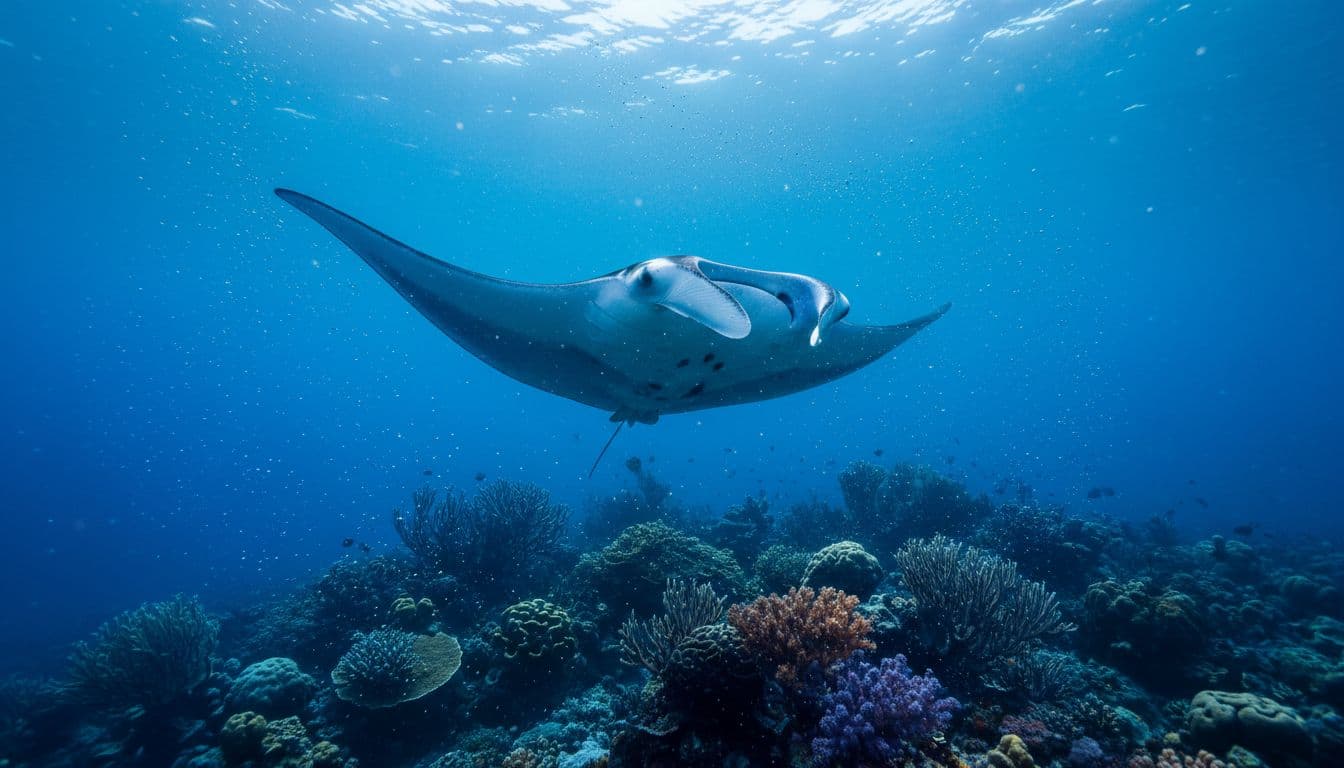
Manta rays are built for feeding on plankton, not for defending themselves.
Why manta rays are different from stingrays
A quick side-by-side view makes the difference easier to see.
| Feature | Manta rays | Stingrays |
|---|---|---|
| Tail defense | No stinger or barb | Barbed spine for defense |
| Diet | Plankton | Small sea life on the bottom |
| Usual habitat | Open water | Sand and seafloor |
That table is the whole story in plain form. Manta rays are graceful filter feeders, while stingrays are bottom dwellers with a defensive spine. So when you search snorkeling Big Island or plan a reef trip in Kona, the animal you’re meeting matters.
That difference also changes how you should think about the water. A manta snorkel is about floating, watching, and staying still enough for the rays to pass close by. A stingray encounter calls for a different kind of caution because the animal uses its tail differently.
People often ask whether a manta can hurt you by accident. It can brush past you, but that is not the same as a sting. When you snorkel Big Island at night, the goal is observation, not contact. Keep your hands in, stay level in the water, and give the animal room to move.
What a Kona manta snorkel feels like
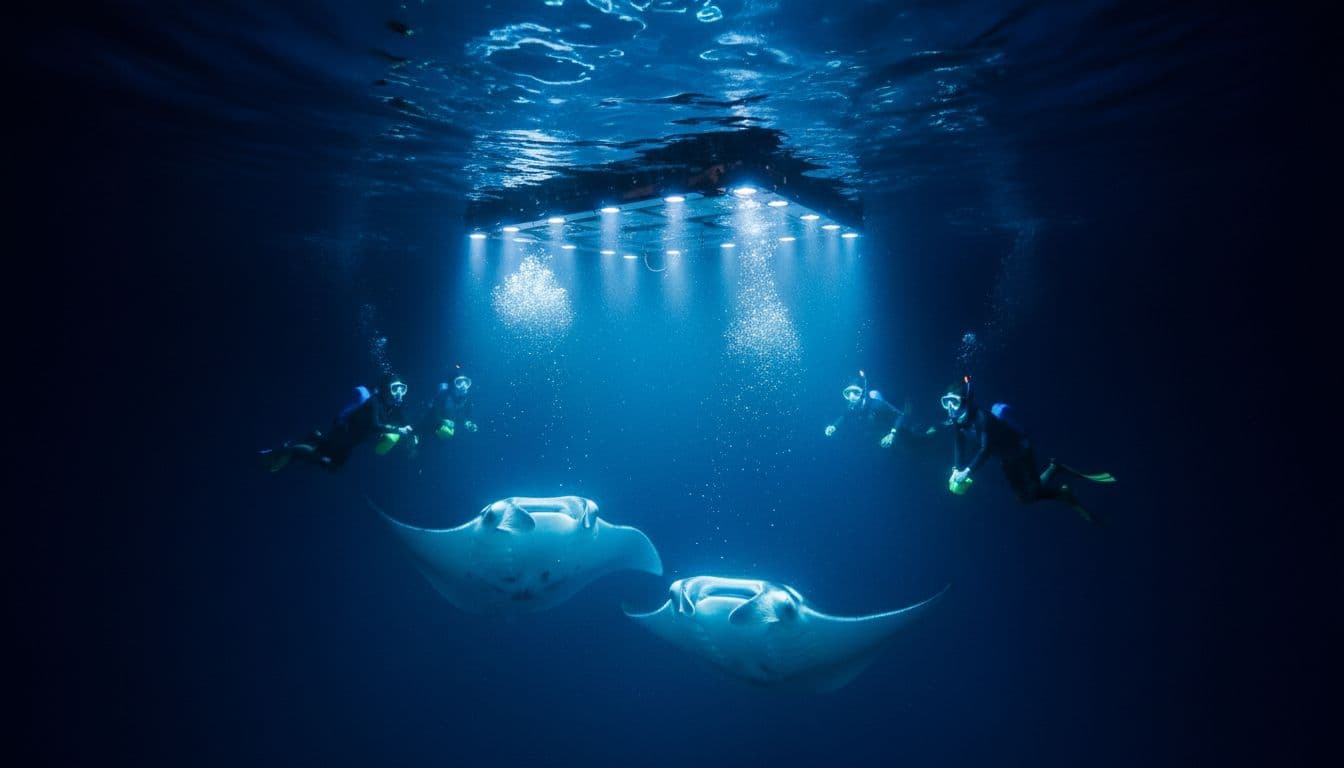
At night, the water changes the whole scene. Lights draw plankton, plankton draws mantas, and you get a front-row seat to the feeding pattern. On a guided trip, you usually float near a lighted board, watch the rays glide below, and stay out of their way.
The mood is calmer than most first-timers expect. The boat ride is short, the water is dark, and the lights create a bright pocket of activity below you. It can feel like watching a quiet stage from the front row, except the performers are giant rays and the audience is floating on the surface.
Kona Snorkel Trips uses small groups, strong gear, and lifeguard-certified guides, so you spend less time sorting out details and more time watching the ocean. If you want a deeper look at the trip, Kona manta ray snorkel trip is the page to open.
If you are ready to hold a spot, check availability.
If you want a second perspective on safety, Manta Ray Night Snorkel Hawaii’s guide explains why the encounter stays calm.
When a private charter makes sense
If you’re traveling with kids, new swimmers, or a mixed-age group, space matters. A private boat lets you set the pace, which can make the outing easier. Private Kona boat charters are a smart fit when you want more room, more flexibility, or a quieter trip.
Private time on the water also helps when someone in your group wants a break between swims or prefers to stay near the ladder. That can turn a good evening into a better one, especially if you like a slower rhythm and fewer distractions. Kona Snorkel Trips keeps those options organized in one place, so you can choose the setup that matches your group.

Conclusion
Manta rays in Kona do not have stingers, so the main worry comes from a common mix-up with stingrays. Their tails help them move, but they are not built to sting.
If you are planning snorkeling Big Island Hawaii, that fact should make the manta trip feel a lot less intimidating. With the right guide, you can focus on the glide, the lights, and the calm water beneath you. The ocean feels a lot bigger when you know what you are looking at.